
OEM CNC Machined 6061 Aluminum Parts From China Per Drawing
We are a China-based precision CNC machining workshop dedicated to manufacturing OEM CNC machined 6061 aluminum parts strictly per customer drawing, CAD model or physical sample. From a single CNC milled 6061 aluminum prototype to repeated high-volume production runs, every custom 6061 aluminum component is machined to the exact dimensions, tolerances, threads, surface quality and finish requirements marked on your drawing. We work from 2D PDF drawings, STEP / IGES / X_T 3D models, reverse-engineered samples, or a combination of all three.
6061 aluminum is one of the most widely specified general-purpose heat-treatable aluminum alloys in precision machining, and CNC machined 6061-T6 and 6061-T651 parts are found across automation equipment, automotive systems, electronic enclosures, hydraulic systems, test instruments, robotics, marine equipment and industrial machinery. Our China CNC shop mills, turns, drills, taps, bores and finishes custom 6061 aluminum brackets, plates, housings, manifolds, covers, shafts, flanges, impellers and many other machined 6061 aluminum components for buyers searching for a reliable source of machined 6061 aluminum from China.
Whether you need one CNC machined 6061 aluminum show part, a small pilot batch, or ongoing mass production with stable repeatability, the same drawing-controlled process applies: material confirmation, DFM review, CNC programming, fixturing, first-part verification, in-process inspection, deburring, requested surface treatment and final dimensional inspection before packaging.
CNC Machined 6061 Aluminum Parts We Produce
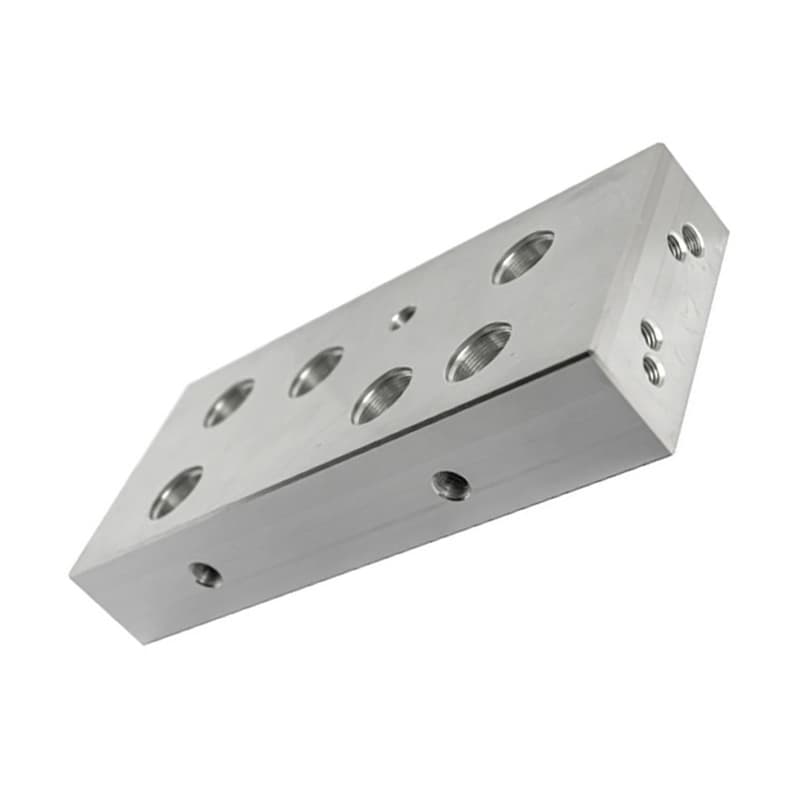
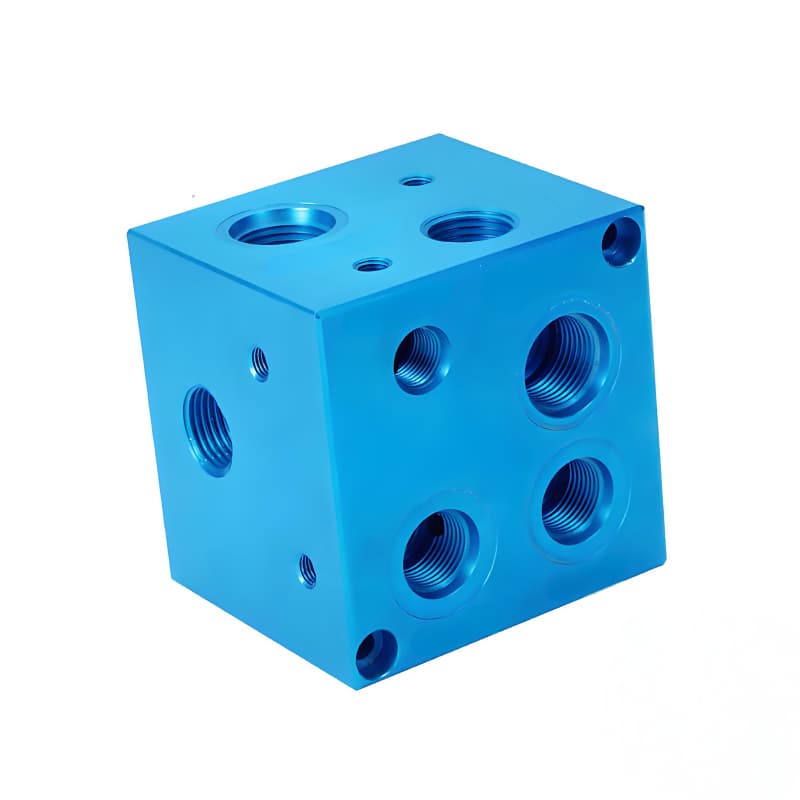
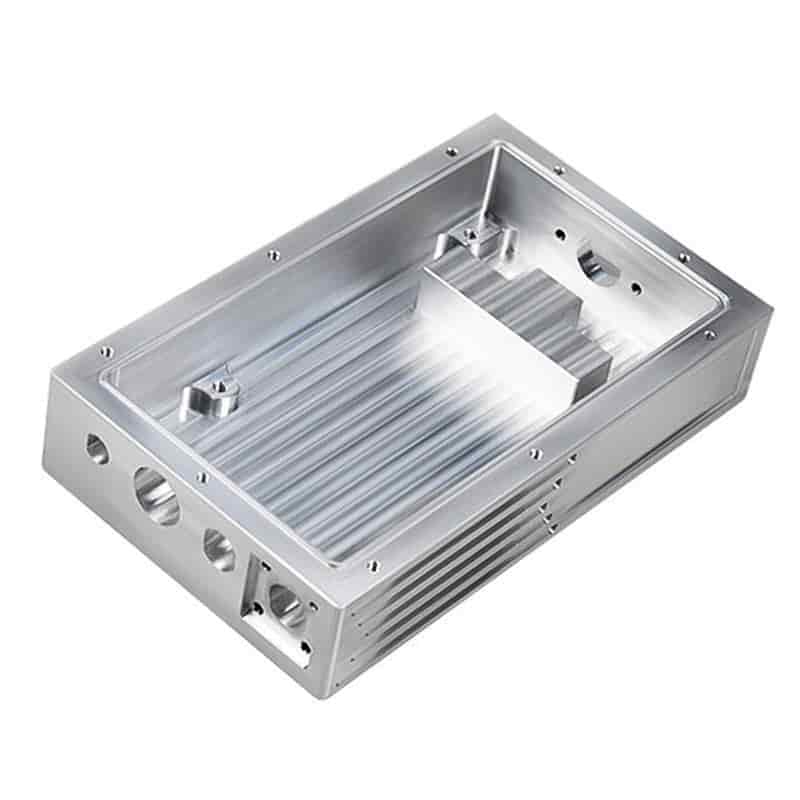
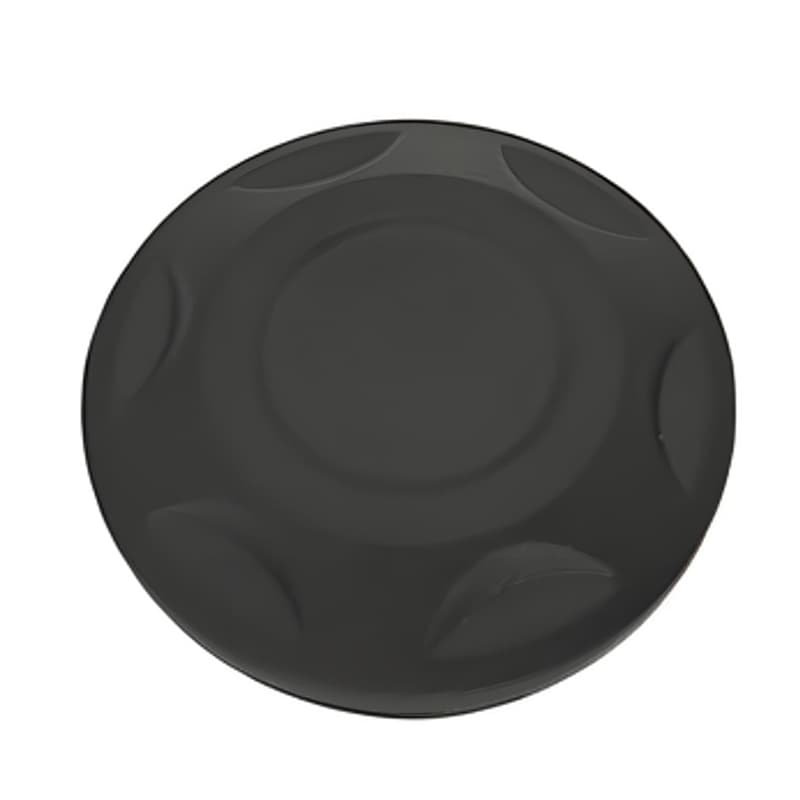
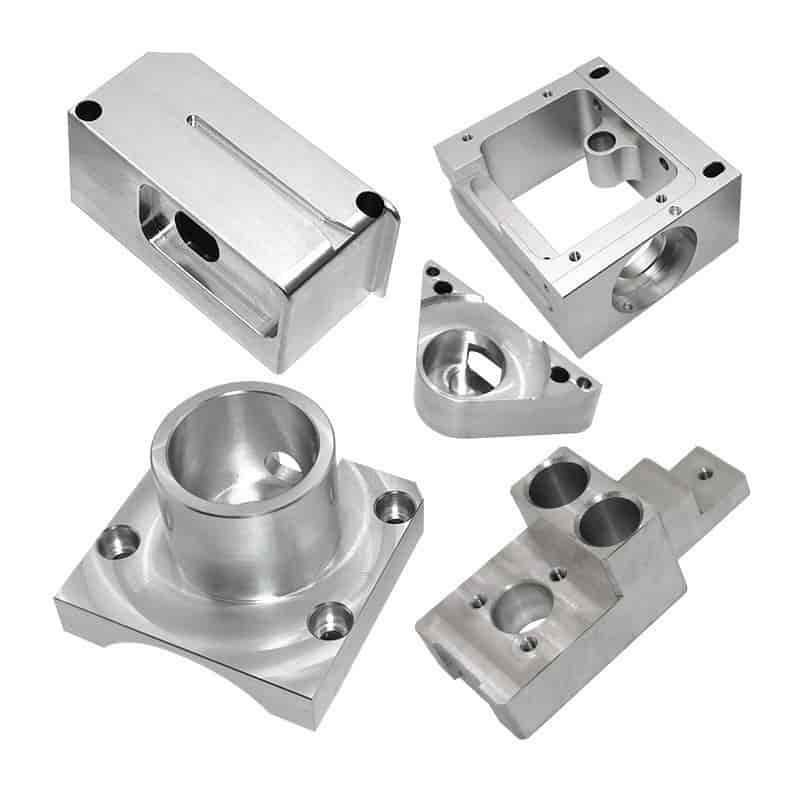
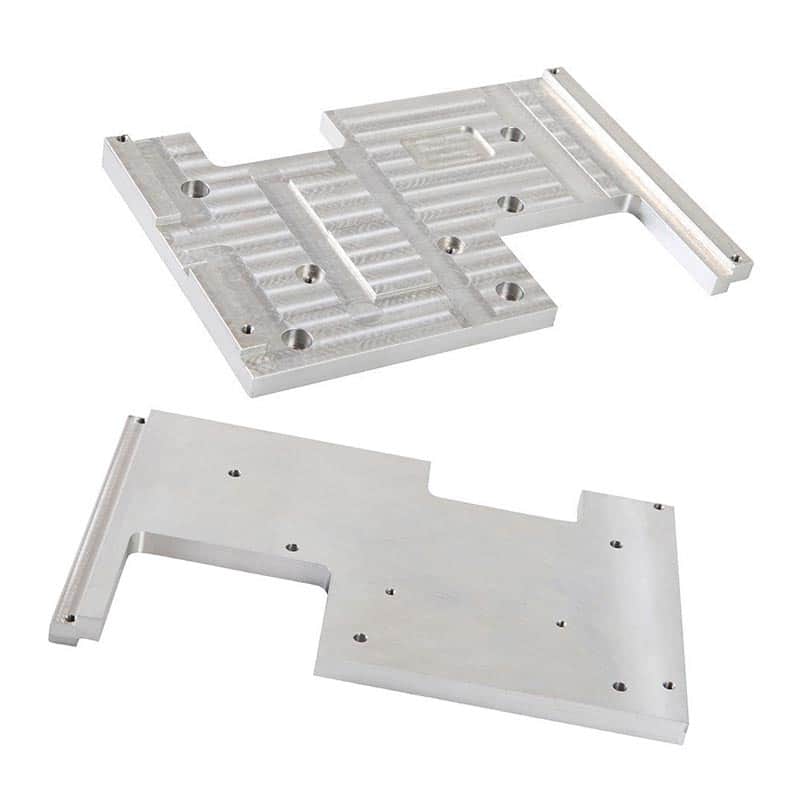
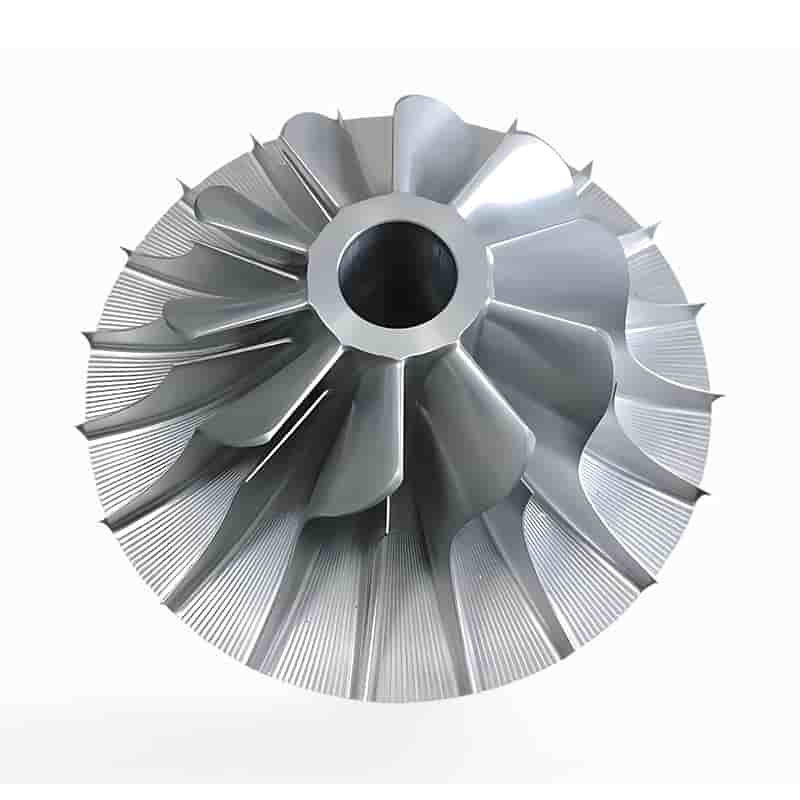
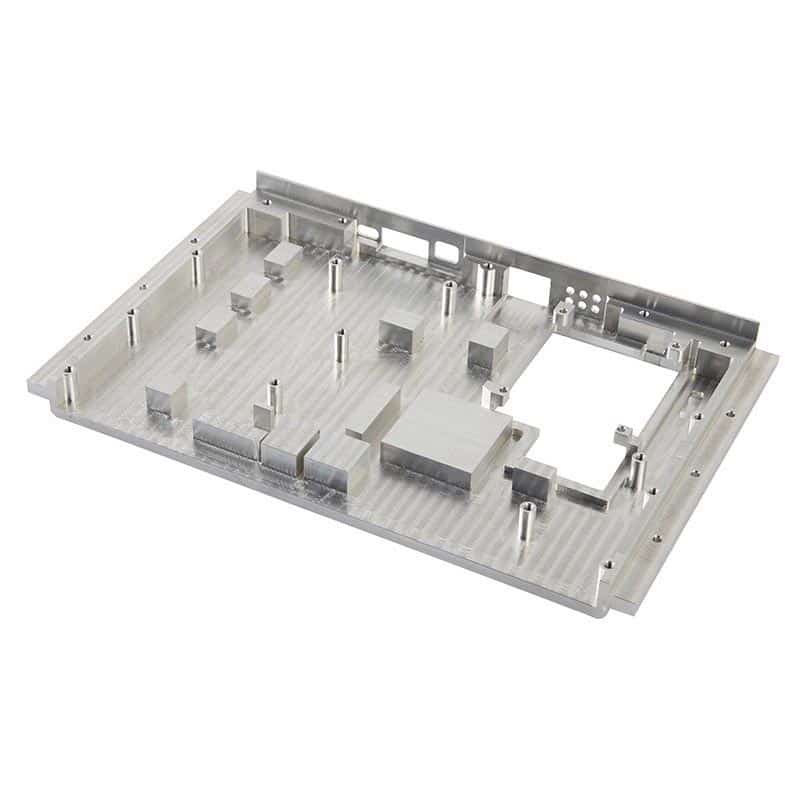
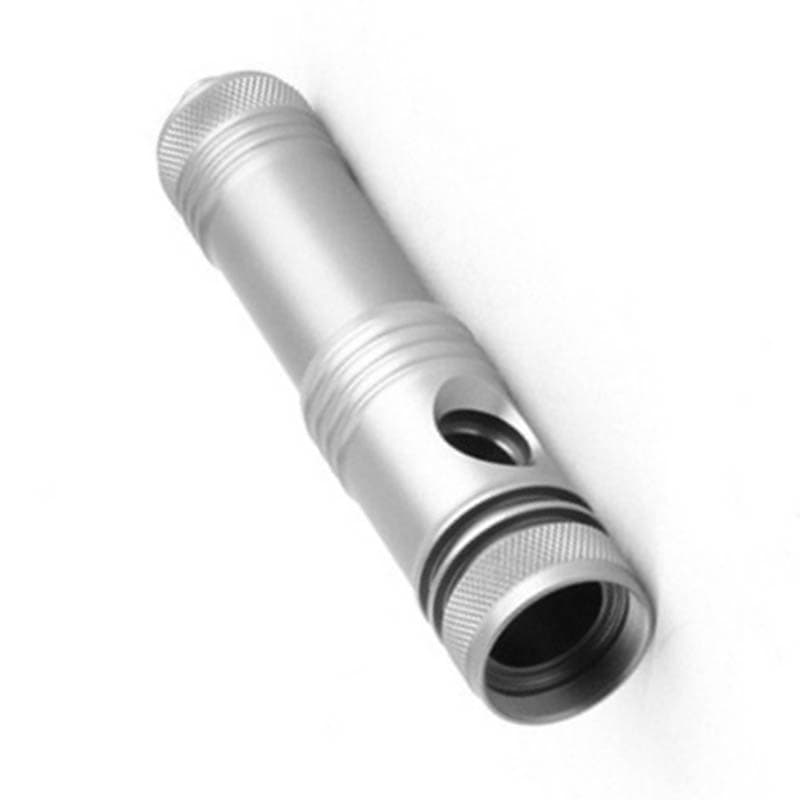
A selection of custom machined 6061 aluminum parts manufactured per customer drawing. Every part below is made to order rather than stocked, and the same machining, inspection and finishing workflow applies to your custom components.
About 6061 Aluminum for CNC Machined Parts
6061 is an Al-Mg-Si heat-treatable wrought aluminum alloy (UNS A96061), valued for its balanced combination of medium-high strength, low weight, good corrosion resistance, excellent machinability, weldability and outstanding response to anodizing. It is the default engineering grade for a very large share of custom CNC machined aluminum parts.
In the T6 and T651 tempers, 6061 reaches a typical ultimate tensile strength around 310 MPa and yield strength around 276 MPa, while its density is only about 2.70 g/cm³ — roughly one third that of steel. Its elastic modulus is about 68.9 GPa, its thermal conductivity is approximately 167 W/(m·K), and its melting range is roughly 582–652 °C. These values make CNC machined 6061 aluminum parts especially suitable for lightweight structural components, heat-transfer parts and precision parts that must keep stable dimensions after machining.
Compared with 6063, 6061 offers noticeably higher strength while still anodizing evenly; compared with 7075, 6061 trades some peak strength for better corrosion resistance, weldability, anodizing uniformity and lower cost. That balance is why 6061-T6 / T651 is specified so often for OEM machined aluminum parts made per drawing in China.
| Element | Si | Fe | Cu | Mn | Mg | Cr | Zn / Ti |
|---|---|---|---|---|---|---|---|
| Typical wt-% | 0.40–0.80 | ≤0.70 | 0.15–0.40 | ≤0.15 | 0.80–1.20 | 0.04–0.35 | ≤0.25 / ≤0.15 |
| Role | Main strengthening element with Mg | Impurity, controlled for machinability | Adds strength | Controls grain structure | Forms Mg₂Si precipitates in T6 | Stress-corrosion resistance | Residual / grain refinement |
Aluminum makes up the remaining balance. Stock forms we routinely machine include 6061 plate and precision cast plate, 6061 solid and hollow bar, 6061 square and rectangular bar, 6061 seamless tube and 6061 extruded profiles.
Why 6061 Aluminum Is Specified for Custom Machined Parts
The material properties below explain why 6061 is chosen for such a wide range of CNC machined aluminum components, and they are all taken into account when we plan fixturing, feeds and speeds, and finishing for your parts.
High Strength-to-Weight Ratio
In the T6 / T651 condition, 6061 combines roughly 310 MPa tensile strength with a density of only 2.70 g/cm³. CNC machined 6061 aluminum brackets, frames and load plates stay light while replacing heavier steel components in moving assemblies and portable equipment.
Natural Corrosion Resistance
6061 forms a protective oxide layer in air and performs well in atmospheric, humid and many industrial environments. Machined 6061 aluminum parts resist everyday corrosion without coating, and anodizing or chemical conversion coating further hardens and stabilizes the surface.
Excellent CNC Machinability
6061-T6 and 6061-T651 cut cleanly at high spindle speeds, form short manageable chips, generate low cutting forces and hold tight dimensional accuracy with good edge definition. Deep pockets, thin walls, fine threads and smooth cosmetic faces are all routine on 6061.
Good Weldability and Formability
6061 welds well by TIG and MIG processes and can be bent or formed in the O or T4 tempers. Welded 6061 frames and assemblies can be machined afterwards, and welded zones can be re-aged to recover part of their strength when the design requires it.
Outstanding Anodizing Response
Few alloys anodize as uniformly as 6061. Clear anodizing, black or color anodizing and hard anodizing all build even, consistent layers on machined 6061 surfaces, making the grade the first choice for visible cosmetic parts and wear-resistant functional surfaces.
Thermal Conductivity and Stability
With thermal conductivity near 167 W/(m·K), machined 6061 aluminum heat sinks, cold plates, cooling blocks and hydraulic manifolds spread and transfer heat efficiently, while stress-relieved T651 stock keeps parts dimensionally stable after heavy material removal.
Common CNC Machined 6061 Aluminum Parts We Make Per Drawing
The list below covers the 6061 aluminum components most frequently produced on our CNC milling and turning equipment. It is not a fixed catalog — any custom geometry can be quoted from your drawing or sample, including combinations of milled and turned features on the same part.
CNC Machined 6061 Aluminum Brackets
Mounting brackets, angle brackets, L-brackets, motor brackets, sensor brackets and test-system module brackets with precisely located hole patterns, counterbores and tapped holes.
CNC Machined 6061 Aluminum Plates and Base Plates
Fixture plates, mounting boards, adapter plates, spacer plates and machine base plates machined flat and parallel with grids of threaded holes and precision dowel holes.
CNC Machined 6061 Aluminum Housings and Cases
Equipment housings, instrument cases, electronic cases, motor housings and protective shells with pockets, recesses, sealing grooves and mating shoulders.
CNC Machined 6061 Aluminum Enclosures and Boxes
Sealed aluminum boxes, PCB enclosures, junction boxes and two-piece lid-and-body enclosures milled from solid 6061 for shielding, stiffness and clean appearance.
CNC Machined 6061 Aluminum Manifold Blocks
Hydraulic blocks, pneumatic manifolds, valve blocks and fluid-distribution blocks with cross-drilled galleries, threaded ports, O-ring grooves and flat sealing faces.
CNC Machined 6061 Aluminum Covers and Panels
Front panels, access covers, protective lids, gearbox covers and decorative face panels with cosmetic brushed or anodized surfaces and precisely aligned mounting holes.
CNC Turned 6061 Aluminum Shafts, Sleeves and Bushings
Precision shafts, stepped shafts, sleeves, spacers, bushings, collars, ferrules and barrels turned concentric on CNC lathes, with keyways or flats added by milling.
CNC Machined 6061 Aluminum Flanges and Fittings
Mating flanges, adapter flanges, hose fittings, pipe connectors, threaded adapters and quick-coupling bodies turned and milled to match standard or custom interfaces.
CNC Machined 6061 Aluminum Heat Sinks and Cold Plates
Skived or milled fin heat sinks, liquid cold plates, water-cooling blocks and thermal distribution plates with embedded channels and flat mounting interfaces.
CNC Machined 6061 Aluminum Impellers and Rotors
Pump impellers, fan wheels, turbine-style rotors and blade carriers produced on 4-axis / 5-axis equipment from solid 6061 for balanced, smooth-running geometry.
CNC Machined 6061 Aluminum Gears, Pulleys and Adapters
Timing pulleys, belt pulleys, gear blanks, cam wheels, coupling halves and mechanical adapters combining turned diameters with milled teeth, slots and bores.
CNC Machined 6061 Aluminum Jigs, Fixtures and Tooling Parts
Custom jig plates, locating fixtures, vacuum chucks, robot end-of-arm tooling and machine-tending components where light weight and quick delivery are essential.
6061 Aluminum CNC Machining and Inspection Capabilities
Machining and inspection are kept under one workflow: the same drawing that defines milling and turning also defines how each critical feature is measured before the batch is released.
CNC Milling of 6061 Aluminum
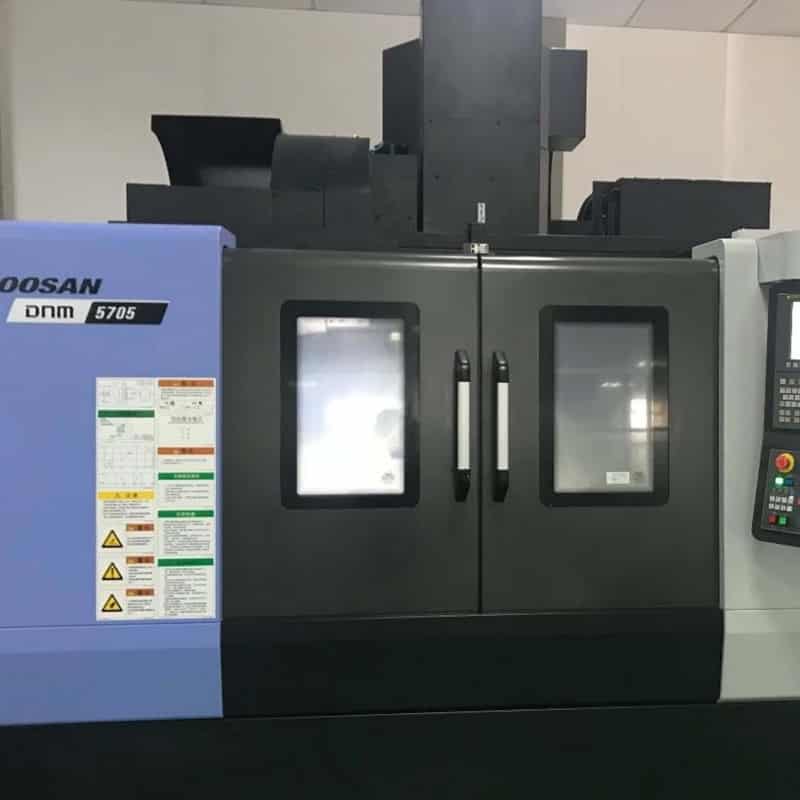
3-axis, 4-axis and 5-axis CNC milling centers produce 6061 aluminum parts with complex pockets, 3D contours, angled faces, multi-sided features and tight hole patterns. Solid-plate housings, manifold blocks, brackets and plates are the typical workpieces, machined from 6061-T6 or distortion-resistant 6061-T651 stock.
CNC Turning of 6061 Aluminum
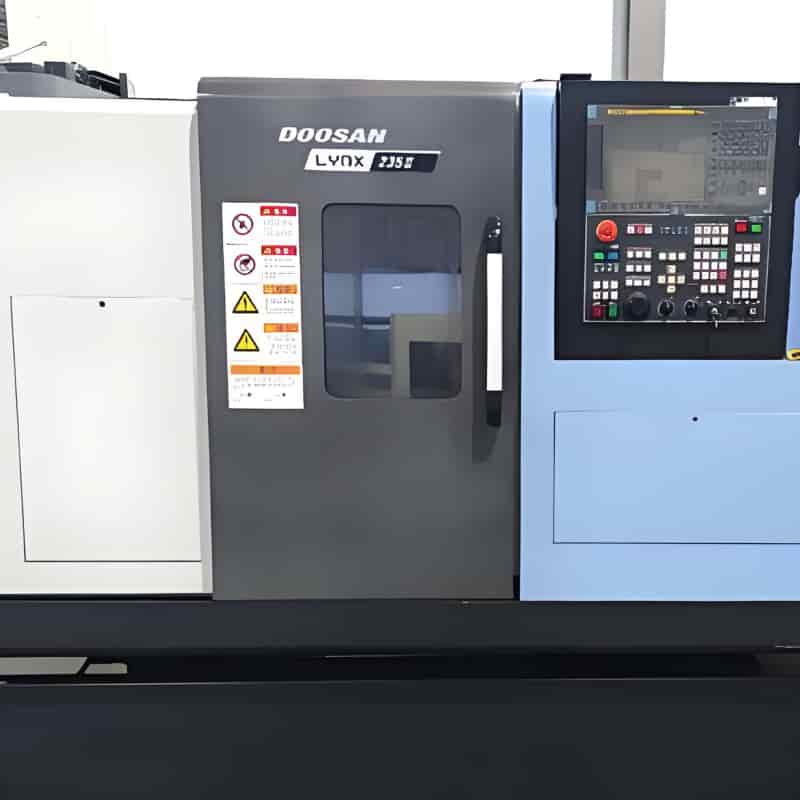
CNC lathes and turn-mill machines turn 6061 bar stock into shafts, sleeves, barrels, bushings, flanges, fittings and rollers with concentric bores, external and internal threads, grooves and polished cylindrical surfaces. Turned blanks can then transfer to milling for cross-holes, flats and slots in one integrated job.
2D Profile Projector Measurement
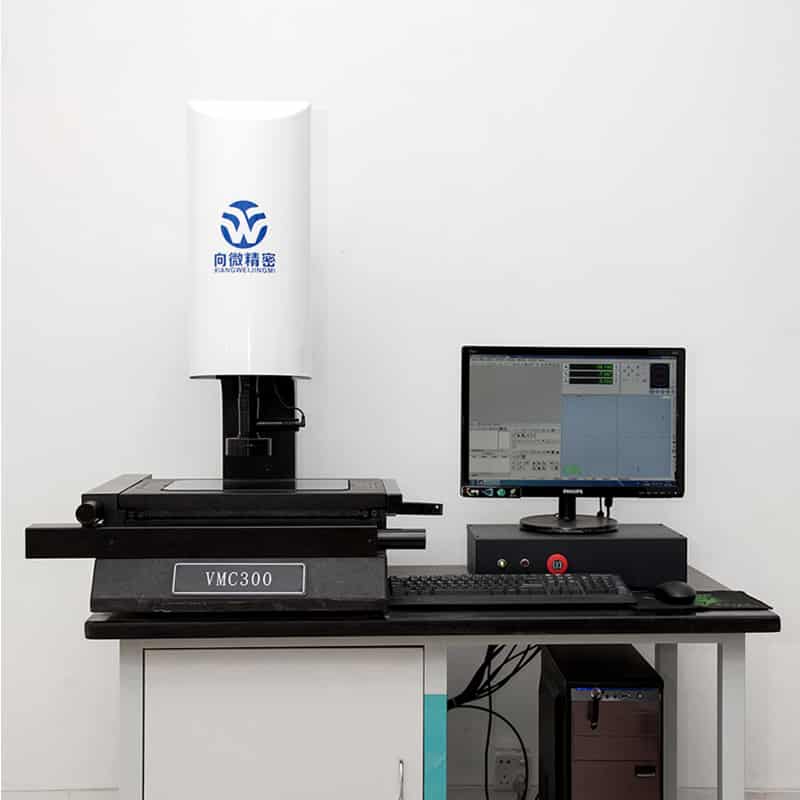
A digital 2D profile projector compares turned and stamped-style profiles, radii, chamfers, thread forms and small stamped or machined outlines against the drawing, magnifying edge geometry so that fine contours, angles and diameters on 6061 parts can be checked quickly and repeatably.
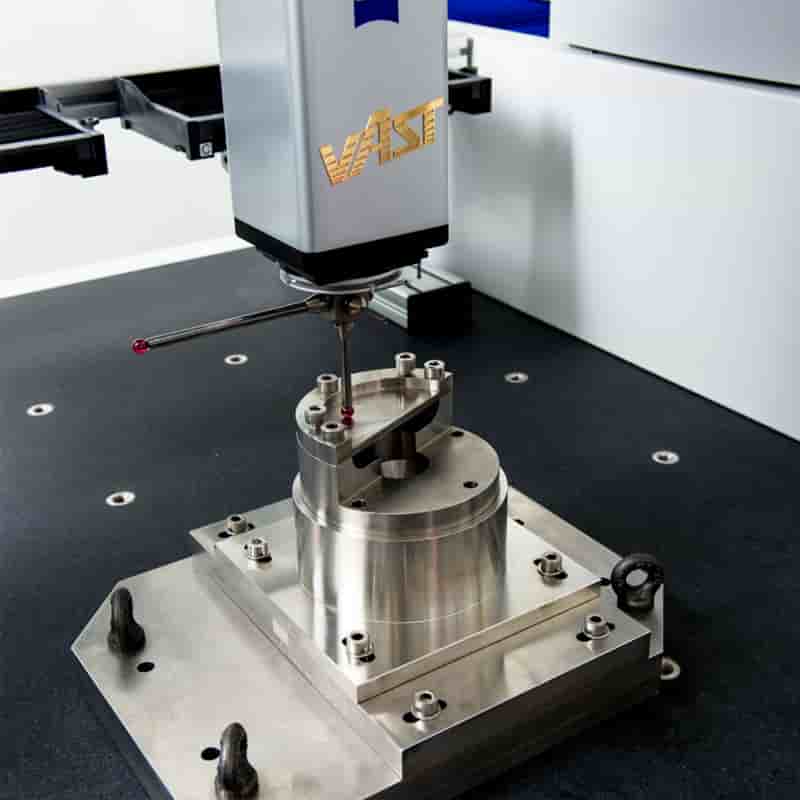
CMM Coordinate Measuring Inspection
A coordinate measuring machine (CMM) verifies critical dimensions, true position, flatness, parallelism, perpendicularity, concentricity and other geometric tolerances on machined 6061 aluminum components using a probe-based 3D inspection routine written from the drawing and the 3D model.
Dimensional Precision and Surface Quality on Machined 6061 Parts
The values below describe what is routinely achievable on 6061 aluminum with sharp tooling, stable fixturing and controlled finishing passes. The drawing always governs: when tighter values are marked, the process is planned around them.
Linear Dimensional Tolerance
General CNC machined features are commonly held within ±0.01 mm; precision-machined datums, bores and mating dimensions can be held around ±0.005 mm. Where a drawing specifies a general tolerance class such as ISO 2768 medium or fine, that standard is followed feature by feature.
Bore Diameter and Hole Accuracy
Reamed and finish-bored holes in 6061 can be produced to IT7 / H7 accuracy with smooth bore walls, while dowel-pin holes and bearing seats are jig-bored or interpolated for true-position accuracy so mating pins, shafts and bearings assemble without rework.
Geometric Tolerance Control
Flatness, parallelism and perpendicularity on milled 6061 plates and block parts, circularity and cylindricity on turned sleeves and barrels, and concentricity, runout and true position called out in GD&T notation are planned into fixturing and verified on the CMM.
Surface Roughness Achievable
A standard finish-milling pass on 6061 typically reaches Ra 1.6–3.2 µm; a high-speed finishing pass reaches around Ra 0.8 µm; fine turning, grinding or polishing can bring sealing and cosmetic surfaces down to roughly Ra 0.4 µm or better where required.
Internal and External Thread Quality
Metric, unified and pipe threads are produced by precision tapping, single-point turning or thread milling, including fine-pitch and multi-start threads in 6061. Thread depth, pitch diameter and chamfer are controlled so steel fasteners and fittings engage smoothly every time.
Edge Quality and Cosmetic Faces
All machined 6061 parts are uniformly deburred, with controlled break edges and no remaining cutter witness on sealing faces. Cosmetic surfaces intended for brushing or anodizing are machined with consistent cutter paths so that anodized color looks even across the whole part.
6061 Aluminum Heat Treatment Tempers Used for Machined Parts
6061 is a precipitation-hardening alloy: magnesium silicide (Mg₂Si) is dissolved by solution heat treatment and then locked in place by natural aging or artificial aging. The temper name on your drawing tells us which stock to machine and how to control distortion. We machine the temper you specify; the most common tempers for CNC machined 6061 aluminum parts are listed below.
O Temper — Annealed, Soft and Formable
In the fully annealed O condition 6061 is soft, highly ductile and easy to bend, spin or deep draw. O-temper parts are usually formed first and then heat treated to T4 or T6 afterwards; O stock is rarely used for finished precision-machined components because of its low as-machined strength.
T4 Temper — Solution Treated, Naturally Aged
T4 material is solution heat treated and then aged naturally at room temperature to a stable medium strength. It offers better ductility than T6 and is chosen when a 6061 part still needs some forming or straightening after machining; it can later be artificially aged to T6 strength.
T451 Temper — Solution Treated and Stress Relieved
T451 is solution heat treated, stretched permanently to relieve internal residual stress and then naturally aged. The stress-relieved condition reduces movement after machining large plates, which helps keep large 6061 tooling plates and machine components flat after heavy stock removal.
T6 Temper — Peak Strength, Most Common
T6 combines solution heat treatment with artificial aging at controlled temperature and is the most widely specified temper for CNC machined 6061 aluminum parts. It delivers the alloy's typical peak strength of about 310 MPa tensile / 276 MPa yield and machines with excellent chip breaking and surface finish.
T651 Temper — Aged and Stress Relieved by Stretching
T651 is artificially aged to T6 strength and stress relieved by controlled stretching, so it cannot be straightened further after heat treatment. It is the preferred stock for precision 6061 plates, base plates, manifold blocks and thick housings, because parts stay dimensionally stable after deep pockets are milled out.
T6511 Temper — Aged, Stress Relieved, Minor Straightening
T6511 follows the same solution, stretching and artificial-aging route as T651 but permits a small amount of straightening after stretching to meet extrusion tolerances. It is the standard temper for 6061 extruded bar and profiles used in CNC turned and milled structural components.
For parts that remove a high percentage of stock from thick 6061 plate, we recommend T651 or T6511 rather than plain T6: the stretching step removes most residual rolling stress, so a milled pocket, cavity or thin-wall frame is far less likely to warp after machining. Additional processing options such as cryogenic-style stress seasoning, staged roughing and finish machining with a rest period, and local re-aging after welding can be arranged when a drawing calls for them.
Surface Treatments and Finishes Available for Machined 6061 Parts
6061 accepts an unusually wide range of mechanical and chemical surface treatments. Machining can be supplied as-machined (deburred and cleaned), or forwarded to the finishes below according to the drawing specification, including masked threads and sealing faces.
Clear / Natural Anodizing
A transparent anodic oxide layer, typically 5–15 µm, that hardens the machined 6061 surface, improves wear and corrosion resistance and keeps the natural silver aluminum look while providing a clean, uniform base appearance.
Color Anodizing
Dyed anodizing in black, blue, red, gold, gray, green and other colors, sealed for color stability. Black anodized 6061 panels, brackets and enclosures are among the most requested cosmetic finishes for equipment-facing parts.
Hard Anodizing (Hardcoat)
A thicker, denser oxide layer (commonly 25–50 µm) with high hardness and abrasion resistance, used on 6061 hydraulic parts, sliding sleeves, pulleys and wear surfaces; hardcoat can also be dyed black and works well with PTFE impregnation.
Bead Blasting / Sandblasting
Fine glass-bead or sand blasting removes cutter marks and produces a matte, uniform satin texture on machined 6061 surfaces before anodizing, hiding tool-path differences and giving enclosures and panels a consistent premium look.
Brushing and Satin Finishing
Directional abrasive brushing creates the familiar linear satin grain on cosmetic 6061 aluminum panels, covers and face plates, with grain direction and roughness controlled to match existing product families or drawing samples.
Polishing — High Gloss and Mirror
Mechanical buffing and polishing bring machined 6061 surfaces to a high-gloss or near-mirror finish, used for decorative trim, optical-style parts and consumer-facing components, often followed by clear anodizing to preserve the shine.
Powder Coating
Durable polyester or epoxy powder layers in RAL-matched colors and matte, satin or textured textures, applied over pretreated 6061 for outdoor, equipment and enclosure parts that need a tough, color-stable skin thicker than anodizing.
Chemical Conversion Coating
Lightweight chromate-free conversion films improve corrosion protection and create an electrically conductive, paint-ready surface on 6061 electronic and aerospace-style components where an insulating anodic layer is not wanted.
Additional cosmetic and marking operations include laser engraving and laser marking of logos, part numbers and serial codes (which show clearly through or on top of anodizing), silk-screen printing, threaded insert installation (Helicoil / press-in inserts), ultrasonic cleaning and vapor degreasing, as well as partial masking so that mating faces, bores and threads remain within tolerance after coating.
From a Single Prototype to High-Volume CNC Machined 6061 Production
The same drawing-controlled CNC process scales across every order size, so a validated 6061 prototype transfers smoothly into repeated batch and mass production without redesigning the part.
One-Off Prototypes and Samples (1–10 Pieces)
Single CNC machined 6061 aluminum prototypes, engineering samples, show models and fit-check parts are produced directly from STEP models and drawings, with fast fixturing, DFM feedback and first-article inspection so design issues are caught before tooling money is committed.
Low-Volume and Pilot Batches (Roughly 10–500 Pieces)
Pilot production, beta-series machines and spare-part programs typically run in small batches where soft-jaw fixtures, optimized tool paths and batch deburring keep unit cost down while preserving prototype-level traceability of critical dimensions on every 6061 component.
Series Production (Roughly 500–5,000 Pieces)
Recurring series orders benefit from dedicated fixtures, qualified cutting tools, stable machining parameters and in-process SPC-style checks on key features, keeping machined 6061 parts consistent batch after batch and supporting scheduled or forecast-based delivery.
High-Volume and Mass Production (5,000+ Pieces)
For large-volume OEM programs, multiple machines run the same qualified 6061 program in parallel, with dedicated packaging, first-piece and periodic patrol inspection, and repeat-order tooling archives so every reorder matches the approved first article in dimensions, finish and appearance.
How Custom 6061 Aluminum Parts Are Made Per Drawing or Sample
You can send a formal drawing, a 3D model, a marked sketch or only a physical sample. Each order follows the same six controlled steps from inquiry to packed parts.
Drawing or Sample Review and DFM Feedback
We review tolerances, wall thickness, internal radii, thread depth, machinability and finish feasibility of the 6061 part, and flag any feature that should be adjusted before metal is cut. A physical sample can be measured and redrawn into a drawing for confirmation.
Quotation and Production Planning
Material temper (6061-T6, T651 or as specified), stock size, machine selection, fixturing strategy, cycle estimate, surface treatment route and inspection plan are defined and reflected in a detailed per-part quotation.
Material Preparation and CNC Programming
Traceable 6061 plate, bar or extrusion is cut to blank size while CAM tool paths are programmed, optimized for high-speed machining of aluminum, and verified in simulation to avoid collisions and protect thin walls and deep pockets.
Fixturing and First-Article Machining
Custom soft jaws, vacuum plates or dedicated fixtures hold the 6061 blank; the first article is machined, fully measured against the drawing and approved before the rest of the batch is released, locking in the proven process.
Batch Machining and In-Process Inspection
The production run proceeds with patrol checks of critical dimensions, tool-wear management and staged roughing / finishing to control heat and distortion, keeping every CNC machined 6061 part inside the drawing envelope across the whole batch.
Deburring, Finishing, Final Inspection and Packing
Parts are deburred, cleaned and sent for the specified anodizing, blasting, brushing, powder coating or other finish, then given final dimensional and cosmetic inspection before protective packaging that prevents surface damage in transit.
Industries Using Our CNC Machined 6061 Aluminum Components
Because 6061 combines light weight, strength, thermal performance and anodizing quality, machined 6061 parts appear in nearly every equipment-building industry. The components below are all produced per customer drawing rather than from a fixed catalog.
Industrial Automation and Robotics
Robot end-of-arm tooling, gripper plates, linear-motion brackets, sensor mounts, conveyor components and automation frame parts where low moving mass matters.
Automotive, Racing and EV Systems
6061 adapter plates, sensor brackets, fluid blocks, pedal components, battery-tray parts and racing components that need light weight and precise fit.
Electronics, Telecom and Enclosures
Shielded 6061 enclosures, chassis, front panels, rack-mount plates, heatsink housings and RF-style components milled from solid aluminum.
Test, Measurement and Laboratory Equipment
Instrument brackets, optical mounting plates, stage components, module frames and test-system structures requiring flat, stable machined surfaces.
Medical and Analytical Equipment
Equipment frames, mounting blocks, cartridge holders, pump components and housings for non-implant medical and laboratory machinery made to drawing.
Hydraulics, Pneumatics and Fluid Systems
6061 manifold blocks, valve bodies, distribution blocks, adapter flanges and cooling blocks with cross-drilled galleries and sealed faces.
Marine, Outdoor and Renewable Energy
Marine fittings, camera and lighting housings, solar and wind equipment brackets, and EV-charging components that benefit from corrosion-resistant 6061.
Packaging, Food Machinery and Special Machines
Custom machine parts, changeover tooling, guide plates, format sets and one-off mechanism components for purpose-built production machinery.
Frequently Asked Questions About CNC Machined 6061 Aluminum Parts
Practical answers to the questions buyers most often raise when sourcing custom machined 6061 aluminum components from a China CNC shop.
Which files are needed to quote a custom 6061 part?
A 3D model in STEP, IGES or X_T format for geometry plus a 2D PDF drawing showing tolerances, threads, surface roughness and surface treatment is ideal. If you only have a hand sketch or a physical sample, the part can be measured and modeled first and the drawing confirmed with you before production.
Which 6061 temper should be chosen for machining?
6061-T6 is the standard choice for general machined parts and turned components; 6061-T651 plate or T6511 extrusion is preferred for thick plates, housings and manifold blocks with heavy material removal, because stress-relieved stock is far less likely to distort after pockets are milled out.
What is the minimum order quantity?
There is no minimum: a single CNC machined 6061 aluminum prototype or spare part can be produced from one piece, and the same program and fixturing data are retained so later pilot batches and mass-production reorders start from an already proven process.
What tolerances and roughness can be achieved on 6061?
Routine features hold ±0.01 mm and precision features around ±0.005 mm, with H7 bores and GD&T-controlled geometry verified by CMM. Standard finish milling gives Ra 1.6–3.2 µm, fine machining around Ra 0.8 µm, and polishing or grinding roughly Ra 0.4 µm where the drawing requires it.
Can a part be copied from a sample without a drawing?
Yes. A physical 6061 sample can be reverse engineered using calipers, micrometers, height gauges, profile projector and CMM, then rebuilt as a 3D model and 2D drawing for your approval, after which custom machined replacements or improved versions can be produced in any quantity.
Which finishes can follow the machining of 6061 parts?
Beyond as-machined deburred surfaces, parts can receive clear or color anodizing, hard anodizing, bead blasting, brushing, mechanical polishing, powder coating, chemical conversion coating and laser marking, with masking of threads and mating faces so finished dimensions still meet the drawing.
Custom Machined 6061 Aluminum From China, Built Exactly to Your Drawing
If your project calls for OEM CNC machined 6061 aluminum parts from China per drawing, we support the complete chain in one place: 6061-T6 and 6061-T651 raw material, 3-axis / 4-axis / 5-axis CNC milling, CNC turning and turn-mill work, precision drilling, tapping and boring, deburring, anodizing and other surface treatments, and 2D projector plus CMM dimensional inspection. CNC milled 6061 aluminum brackets, plates, housings, enclosures, manifold blocks, covers, panels, heat sinks, impellers and CNC turned 6061 aluminum shafts, sleeves, barrels, bushings, flanges and fittings are all produced to the exact geometry, tolerance and finish marked on your drawing.
From a single custom 6061 aluminum prototype to low-volume pilot runs and repeat high-volume production, every order is treated as a drawing-controlled OEM project: material and temper confirmed in advance, DFM points raised before cutting, first article inspected before batch release, and critical features verified before packing. Send your 6061 aluminum drawing, CAD file or reference sample and receive a manufacturability review and a clear production plan for precision CNC machined 6061 aluminum components that fit, function and finish exactly as designed.