
OEM CNC machined stainless steel parts per specific drawings in China
We manufacture custom stainless steel components from customer drawings, CAD files, physical samples, marked sketches, and measured sample parts. Our stainless steel CNC machining in China covers turned, milled, drilled, tapped, bored, ground, and assembly-ready hardware for industrial equipment, fluid systems, machinery builders, pump manufacturers, marine applications, packaging lines, and precision mechanisms. CNC machining stainless steel per drawing allows each dimension, thread, chamfer, radius, surface finish, and material grade to follow the requirements shown on the customer's own design.
Custom machined stainless steel hardware can be produced as a single machined part, a first article, a small engineering batch, a repeat production lot, or a stable high-volume order. Stainless steel prototype machining is available before larger production, especially when fit, function, welding space, thread engagement, fluid passage layout, or assembly clearance needs to be confirmed.
Custom stainless steel parts made for drawing-based production
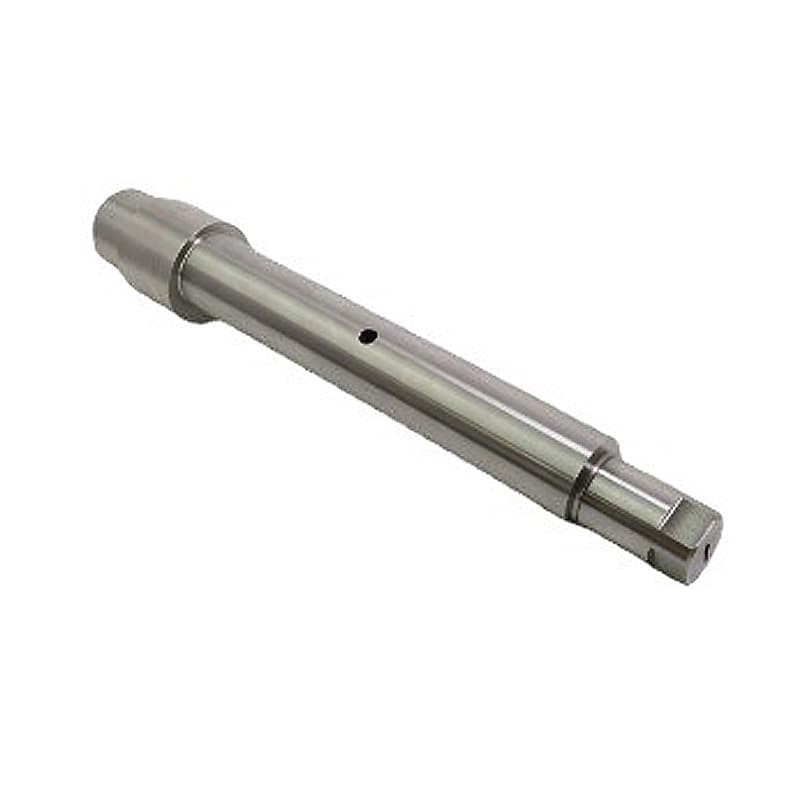
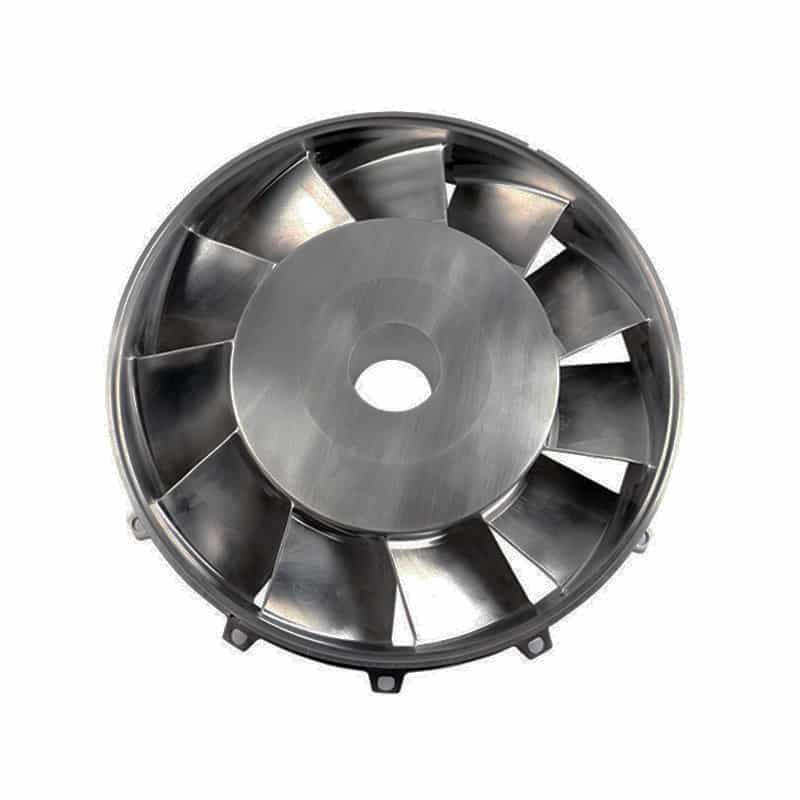
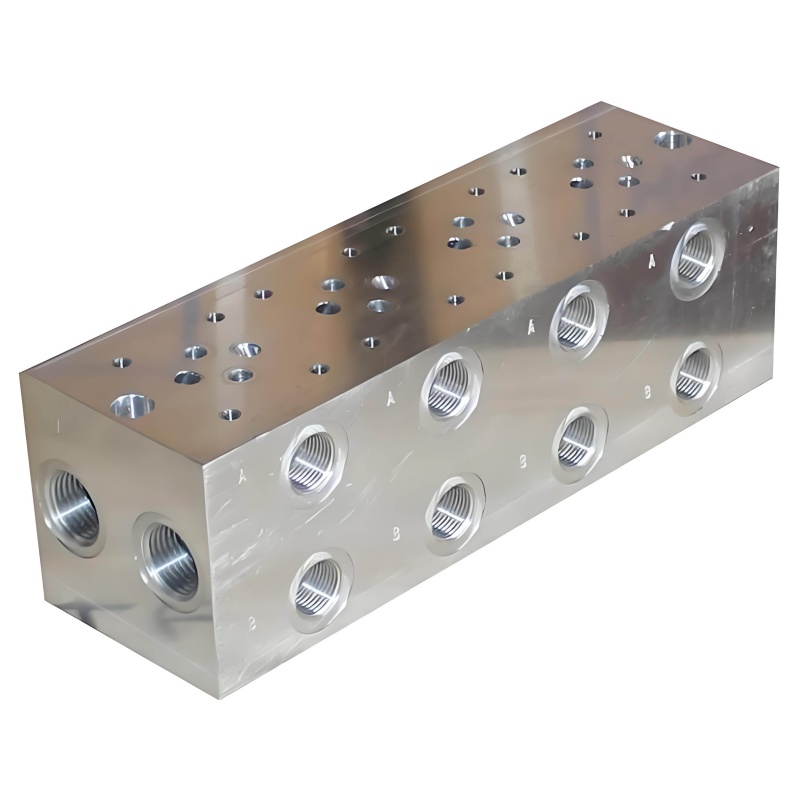
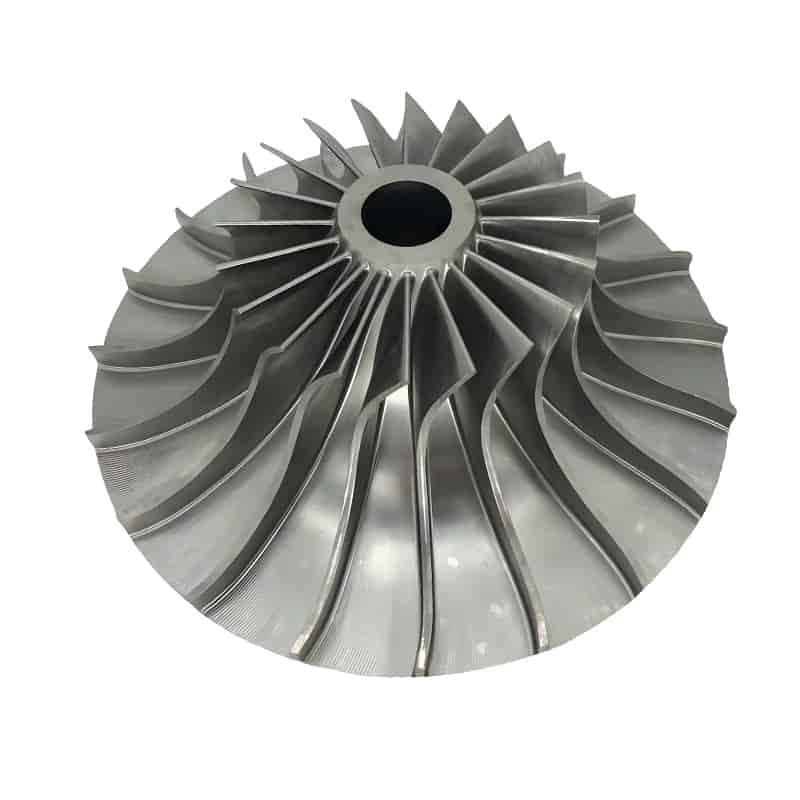
The following examples show the type of precision stainless steel components that can be produced by CNC turning, CNC milling, multi-process machining, and secondary finishing. Each part is made according to the dimensions, geometry, material, and surface requirements defined by the customer.
Flexible quantity support for stainless steel prototype machining and volume supply
Drawing-based CNC machining is suitable for more than mass production. It also supports replacement parts, machine maintenance components, design validation, limited product series, and continuous OEM supply. The production route is selected according to part geometry, material hardness, quantity, tolerance risk, fixture needs, and finishing requirements.
One-off and replacement parts
A single CNC machined stainless steel shaft, sleeve, bushing, bracket, fitting, or worn machine part can be produced from a drawing or sample. This is useful for equipment maintenance, imported machine replacement, design repair, and small custom mechanisms.
Prototype and first article production
Stainless steel prototype machining helps check assembly fit, thread size, bore alignment, wall thickness, fluid passage position, welding interface, and visual finish before a larger batch is released.
Small and medium batches
Small-lot CNC machining stainless steel per drawing is suitable for customized machinery, pilot equipment, limited product series, and multi-model production. Fixtures and process steps can be adjusted as the design matures.
Repeat and high-volume manufacturing
For stable designs, repeated production can use controlled fixturing, consistent tooling routes, batch material preparation, defined inspection points, and uniform finishing to support ongoing OEM demand.
Stainless steel grades under common AISI, ASTM, UNS, EN, DIN, and JIS references
Drawings may identify a stainless material by an AISI number, an ASTM or UNS designation, an EN/DIN number, or a JIS SUS grade. The material can be selected according to corrosion environment, mechanical strength, hardness, heat resistance, machining behavior, welding needs, and cost. The following grades are commonly used for custom machined stainless steel hardware.
AISI 303 Austenitic Free-Machining Grade
UNS S30300 · EN 1.4305 · SUS303
CNC machined 303 stainless steel pins, standoffs, spacers, threaded fittings, bushings, collars, and custom fasteners benefit from its good chip-breaking behavior and suitability for detailed turning and tapping.
AISI 304 and 304L General-Purpose Austenitic Grades
UNS S30400/S30403 · EN 1.4301/1.4306 · SUS304/SUS304L
CNC machined 304 stainless steel brackets, mounting plates, spacers, housings, flanges, rollers, and machine components are widely used in general industrial environments. The low-carbon 304L version is often selected when welding is involved.
AISI 316 and 316L Molybdenum-Containing Grades
UNS S31600/S31603 · EN 1.4401/1.4404 · SUS316/SUS316L
CNC machined 316 stainless steel valve stems, fluid fittings, pump shafts, marine hardware, chemical equipment parts, and sensor bodies offer improved corrosion resistance. CNC machined 316L stainless steel adapters and sleeves are commonly used for welded and polished assemblies.
316Ti Titanium-Stabilized Stainless Steel
UNS S31635 · EN 1.4571 · SUS316Ti
This grade is used for CNC machined stainless steel connector bodies, protective sleeves, threaded inserts, clamp components, and machinery parts exposed to elevated temperatures or more demanding corrosive conditions.
AISI 321 Heat-Resistant Austenitic Grade
UNS S32100 · EN 1.4541 · SUS321
CNC machined 321 stainless steel sensor housings, tube supports, retaining rings, furnace fixture parts, and high-temperature clamps are suitable when the component must remain stable under heated operating conditions.
AISI 310S High-Temperature Grade
UNS S31008 · EN 1.4845 · SUS310S
CNC machined 310S stainless steel brackets, threaded supports, heat-treatment fixtures, chamber components, and high-temperature machine parts are chosen for oxidation resistance and thermal stability.
AISI 410 and 416 Martensitic Grades
UNS S41000/S41600 · EN 1.4006/1.4005 · SUS410/SUS416
CNC machined 416 stainless steel shafts, valve plugs, studs, pins, and machined hardware can achieve higher strength and hardness than common austenitic grades, while 416 is especially adapted to high-speed machining.
AISI 420 and 430F Hardened or Free-Machining Grades
UNS S42000/S43020 · EN 1.4028/1.4104 · SUS420/SUS430F
CNC machined 420 stainless steel wear parts, cutting mechanism components, rollers, nozzles, guide pieces, and precision pins are used where moderate hardness, edge retention, or free-machining behavior is required.
17-4 PH Precipitation-Hardening Grade
UNS S17400 · EN 1.4542 · SUS630
CNC machined 17-4 PH stainless steel impellers, blade wheels, high-strength shafts, hydraulic components, spindles, brackets, and mechanical actuator parts combine strength with corrosion resistance.
15-5 PH High-Strength PH Grade
UNS S15500 · EN 1.4545 · SUS632
CNC machined 15-5 PH stainless steel valve internals, precision spindles, pump components, structural hardware, and high-load mechanism parts are selected for toughness, uniform properties, and detailed machined geometry.
13-8 Mo Precipitation-Hardening Grade
UNS S13803 · EN 1.4534
CNC machined 13-8 Mo stainless steel actuator parts, precision sleeves, locking components, torsion-resistant fittings, and high-strength custom hardware are used where compact dimensions must carry mechanical load.
2205 Duplex Stainless Steel
UNS S32205 · EN 1.4462
CNC machined 2205 duplex stainless steel pump shafts, couplings, valve spindles, seawater hardware, fluid control parts, and high-strength connectors offer a combination of mechanical strength and chloride-related corrosion resistance.
2507 Super Duplex Stainless Steel
UNS S32750 · EN 1.4410
CNC machined 2507 super duplex stainless steel valve seats, pump components, marine spindles, nozzle bodies, and severe-environment fluid parts are used when higher strength and corrosion resistance are required.
904L High-Alloy Austenitic Stainless Steel
UNS N08904 · EN 1.4539
CNC machined 904L stainless steel acid-environment fittings, pump components, processing hardware, threaded bodies, and fluid-handling parts are selected for demanding chemical industry applications.
254 SMO Super-Austenitic Stainless Steel
UNS S31254 · EN 1.4547
CNC machined 254 SMO stainless steel spray nozzles, valve components, seawater system fittings, pump wear parts, and high-corrosion hardware are used in aggressive fluid and chloride environments.
Nitronic 60 High-Strength Wear-Resistant Grade
UNS S21800 · Alloy 218
CNC machined Nitronic 60 stainless steel hinge pins, bushings, sliding components, wear blocks, locking hardware, and galling-resistant parts are suitable for repeated movement and metal-to-metal sliding interfaces.
CNC machined stainless steel parts for rotating, fluid, structural, and assembly applications
The same machining workshop can support simple turned rings as well as complex milled manifold blocks. The examples below show how material grades, part names, processes, and drawing requirements are combined into custom production.
Shafts, spindles, rollers, and eccentric shafts
CNC machined stainless steel shafts, precision spindles, eccentric shafts, stepped rollers, drive pins, and rotary axles can include keyways, flats, cross holes, retaining-ring grooves, center holes, polished journals, and controlled concentricity. Typical long-tail phrases include CNC machined 303 stainless steel shafts, CNC machined 316 stainless steel pump shafts, and CNC machined 17-4 PH stainless steel eccentric shafts.
Manifold blocks and hydraulic components
CNC machined stainless steel manifold blocks, valve blocks, hydraulic bodies, fluid distribution blocks, crossover plates, and internal passage components require precise hole intersection, port positioning, thread depth, flat sealing surfaces, and careful deburring.
Impellers, blade wheels, and pump components
CNC machined stainless steel impellers, blade wheels, pump sleeves, wear rings, diffuser parts, suction rings, and rotor components can be produced from 304, 316, 17-4 PH, duplex, or other named grades according to the drawing.
Valve stems, valve plugs, and internal valve parts
CNC machined stainless steel valve stems, spindles, plugs, seats, cages, bonnet components, gate parts, ball blanks, and regulating sleeves require controlled roundness, surface smoothness, thread accuracy, and fit between moving components.
Fittings, adapters, connectors, and couplings
CNC machined stainless steel fittings, hose adapters, tube connectors, reducing couplings, threaded bosses, compression bodies, pipe fittings, and transition connectors can be made with metric, unified, NPT, BSPP, BSPT, or custom thread forms.
Bushings, sleeves, spacers, and collars
CNC machined stainless steel bushings, bearing sleeves, spacer tubes, locating collars, shoulder rings, wear sleeves, and alignment tubes are suitable for precise inner and outer diameter control and repeatable assembly stack-up.
Custom fasteners and threaded hardware
CNC machined stainless steel bolts, special screws, thin nuts, lock nuts, washers, standoffs, threaded rods, anchor parts, adjustment screws, and custom inserts can follow non-standard head shapes, unusual lengths, special pitches, or drawing-specific drive features.
Brackets, plates, housings, and mounting parts
CNC machined stainless steel brackets, mounting plates, motor housings, sensor housings, support blocks, enclosure components, clamping plates, and welded sub-assembly parts can include tapped holes, counterbores, pockets, locating faces, and machined reference surfaces.
CNC machining and inspection support for stainless steel custom parts
Production can combine milling, turning, hole making, thread machining, grinding, deburring, and surface finishing. Inspection follows the dimensions and characteristics shown on the drawing, including size, profile, angle, thread, roughness, flatness, parallelism, perpendicularity, position, concentricity, and runout.
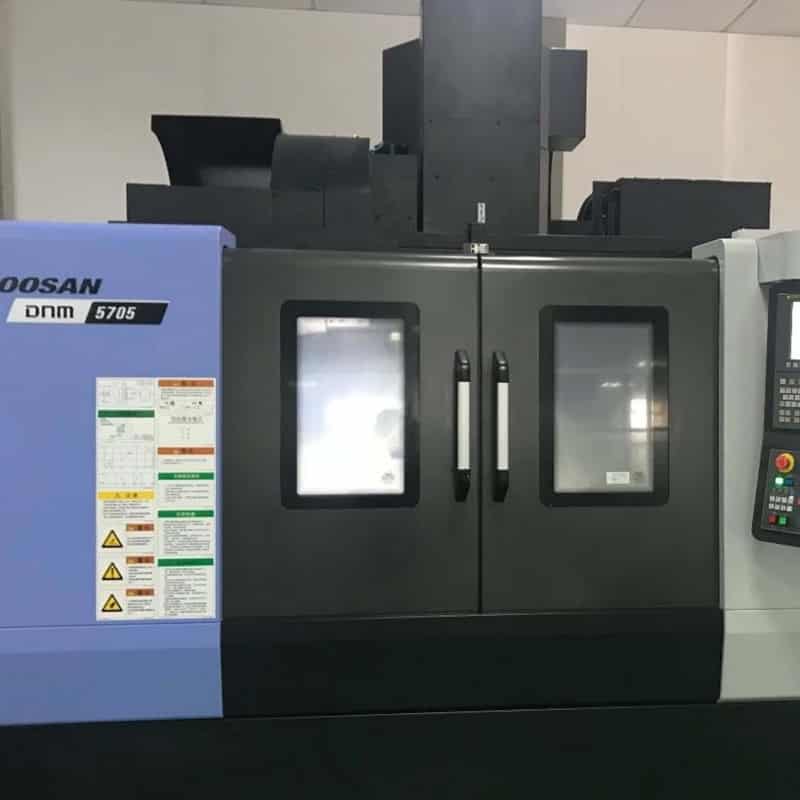
CNC Milling Service
CNC milling produces flat faces, pockets, slots, grooves, drilled and tapped holes, counterbores, complex contours, mounting patterns, and fluid passage layouts on stainless steel plates, blocks, housings, brackets, and manifold bodies.
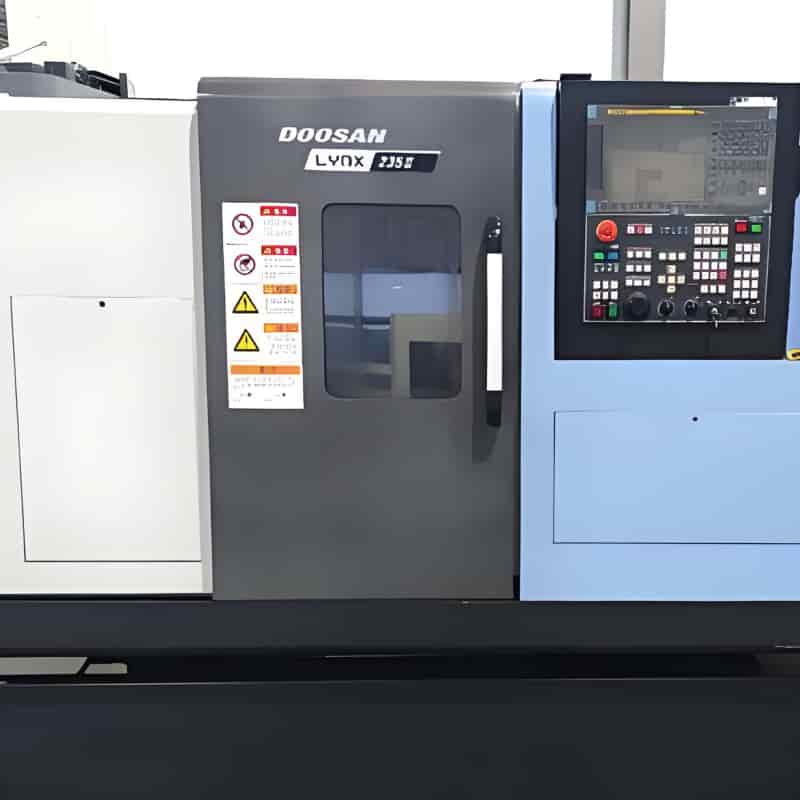
CNC Turning Service
CNC turning creates cylindrical diameters, bores, tapers, grooves, shoulders, external and internal threads, chamfers, radii, and sealing surfaces for shafts, fittings, sleeves, rings, bushings, and rotary components.
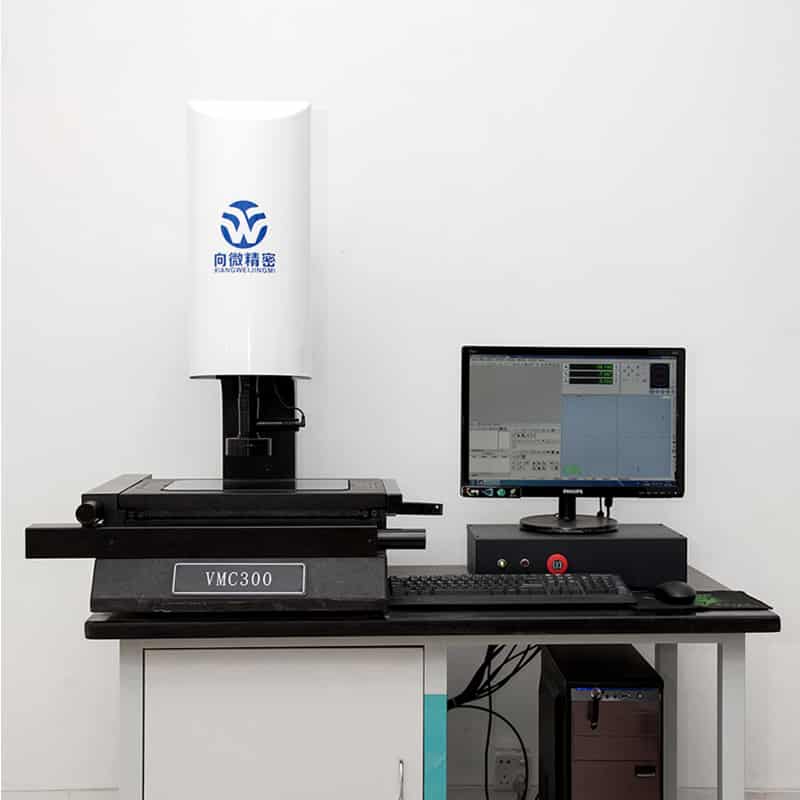
2D Profile Projector Measuring
A profile projector is used to inspect small contours, radii, angles, edge profiles, thin-section shapes, and complex part silhouettes that are difficult to evaluate with standard hand tools.
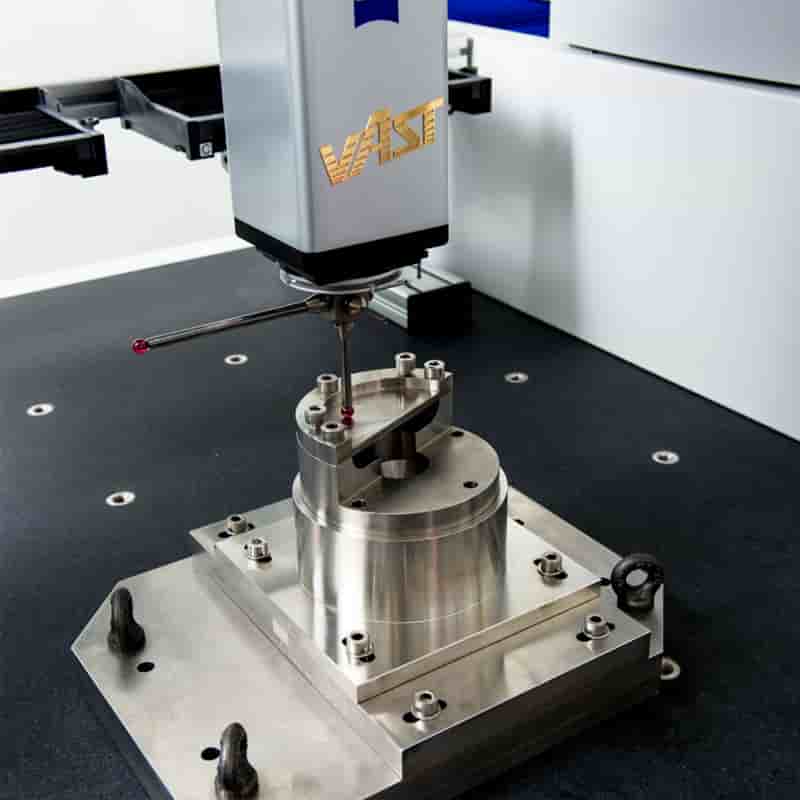
CMM Inspection
Coordinate measuring supports dimensional checks for hole position, datum relationship, flatness, parallelism, perpendicularity, profile, concentricity, runout, and other geometry defined on the drawing.
Common supporting inspection tools include micrometers, bore gauges, calipers, height gauges, thread ring and plug gauges, radius gauges, angle measuring tools, surface roughness testers, hardness testers, plug gauges, and custom GO or NO-GO checking fixtures when the part design requires them.
Multi-process CNC machining for detailed stainless steel geometries
Many stainless steel parts require more than one operation. A turned component may later receive milling flats, cross holes, and keyways. A milled block may require precision boring, thread milling, surface grinding, and internal deburring. The process sequence is arranged according to the part shape and critical datums.
Precision CNC turning
Turning services cover outer diameters, inner bores, facing, grooving, taper turning, recessing, knurl-free precision surfaces, internal features, and external or internal threads for round stainless steel components.
CNC milling and indexed machining
Milling operations create multi-face parts, angular features, pockets, reference surfaces, hole patterns, slots, and complex 3D contours. Indexed setups allow features to be machined from several sides with controlled datum relationships.
Drilling, reaming, boring, and tapping
Hole-making operations can produce pilot holes, through holes, blind holes, reamed precision bores, bored locations, counterbores, countersinks, spotfaces, and tapped threads in stainless steel bars, blocks, cast forgings, or cut plate.
Internal and external thread machining
Threads can be formed by tapping, single-point turning, thread milling, or die finishing. Metric M, unified UNC and UNF, NPT, BSPP, BSPT, G threads, and special drawing-defined profiles can be handled according to the part design.
Precision grinding and fine finishing
Cylindrical grinding, surface grinding, fine turning, and polishing can improve diameter accuracy, flatness, sealing surfaces, bearing journals, and visual or functional surface quality.
Deburring and edge control
Sharp edges, cross holes, internal passages, threaded ports, and intersecting bores receive controlled deburring. Edge breaks can follow a drawing-defined chamfer, radius, or functional sealing requirement.
Samples and reverse dimensioning
When only a physical sample is available, its dimensions, threads, angles, and fitting relationship can be measured and translated into a production reference. A drawing or confirmed dimension sheet should be settled before repeat manufacturing.
Assembly-ready component production
Finished parts can be cleaned, deburred, surface-treated, separated by size, and prepared for direct assembly. Matching components such as shafts and bushings or valve stems and sleeves can be produced with coordinated fit requirements.
Surface finishes and drawing details that affect stainless steel machining
The final appearance and function of a stainless steel component depend not only on the material grade but also on tooling, cutting conditions, abrasive finishing, edge treatment, and surface requirements. Clear drawing notes help avoid ambiguity in production.
Bead-blasted matte surfaces
Bead blasting produces a uniform matte surface on CNC machined stainless steel housings, panels, brackets, covers, and visible components. The finish can reduce tool marks and create a consistent appearance.
Brushed and satin finishes
Brushed or satin finishing creates directional grain on stainless steel plates, brackets, covers, handles, and visible machine parts. Grain direction and finish consistency should be described on the drawing.
Fine and mirror polishing
Fine polishing is used for smooth functional surfaces, fluid-contact components, food machinery parts, decorative hardware, and sealing areas. Mirror-level polishing requires attention to geometry, corner radius, and surface accessibility.
Electropolishing and passivation preparation
Electropolishing and surface cleaning can improve smoothness and cleanliness on stainless steel parts used in fluid, laboratory, packaging, and clean mechanical environments. Final treatment is based on drawing requirements and part geometry.
What should be shown on a drawing for CNC machining stainless steel per drawing
Complete drawings help match the intended function and reduce repeated communication. The following details are especially useful when custom machined stainless steel hardware has tight fits, moving surfaces, threaded connections, or fluid passages.
Dimensions, datums, and critical fits
Overall size, bore depth, shoulder location, fit diameter, datum face, symmetrical relationship, and critical assembly clearance should be dimensioned clearly. Fits such as clearance fit, transition fit, sliding fit, or named numerical tolerance ranges can be followed when specified.
Thread standards and port geometry
Thread size, pitch, class, depth, through or blind condition, chamfer, sealing face, and port orientation should be identified. This is especially important for valve stems, fittings, manifold blocks, and sensor housings.
Roughness and functional surfaces
Ra roughness requirements can be marked on bearing journals, sealing faces, mating bores, sliding surfaces, fluid-contact passages, and visible external surfaces. Non-critical surfaces can retain a standard machined finish.
Grade, raw form, and batch size
The drawing should identify the stainless grade, hardness condition if applicable, preferred bar or plate form, quantity, prototype or production purpose, and any special marking or packaging requirements.
Industries and equipment that use custom CNC machined stainless steel components
Stainless steel is selected when corrosion resistance, clean appearance, mechanical strength, heat resistance, hygiene requirements, outdoor use, or repeated cleaning is important. The following applications frequently require drawing-based machined parts.
Hydraulic and pneumatic equipment
Manifold blocks, valve stems, cylinder components, adapter plates, piston-related hardware, connector bodies, and fluid ports are commonly produced from stainless steel for corrosion-resistant power systems.
Pumps, valves, and fluid control
Pump shafts, impellers, valve internals, sleeve bearings, seat rings, fluid connectors, and sealing components require precise roundness, surface quality, and material compatibility.
Food processing and packaging machinery
Mounting blocks, guide parts, adjustment shafts, conveyor components, bracket assemblies, cleaning system fittings, and visible machine parts can be machined from 304 or 316 stainless steel.
Marine and coastal equipment
Marine hardware, deck fittings, shaft components, sensor brackets, pump parts, and corrosion-resistant connectors often use 316, duplex, or super duplex grades depending on the service environment.
Chemical and processing equipment
Spray nozzles, fluid distribution parts, reactor hardware, pipe connectors, support blocks, valve components, and processing tooling can be produced from higher-alloy stainless grades.
Laboratory and analytical instruments
Small precision housings, probe holders, sample fixtures, fluid connectors, adjustment mechanisms, mounting stages, and custom instrument hardware benefit from stable material and fine machining.
Automation and robotic equipment
Robot end-effector parts, sensor brackets, linear guide blocks, clamping jaws, linkages, shafts, spacers, and mounting plates require accurate datum faces and repeatable batch dimensions.
Energy, environmental, and water treatment systems
Pump components, filtration hardware, dosing equipment parts, sensor protection tubes, valve spindles, pipe connectors, and structural support parts are frequently machined from stainless steel.
Practical notes for OEM stainless steel CNC machining projects
These notes help engineers, purchasers, product designers, and equipment maintenance teams describe a custom stainless steel part in a way that supports accurate production planning.
Can a part be made from a physical sample without a complete drawing?
A sample can be measured and used as a production reference, especially for replacement shafts, sleeves, fittings, pins, and simple hardware. For complex parts, a confirmed drawing or dimension sheet is recommended so hidden features, internal threads, tolerances, and material grade are not misunderstood.
Can production begin with one prototype and continue with a larger batch?
Yes. Stainless steel prototype machining can confirm the first design, after which dimensions, fixturing, deburring method, surface finish, tooling route, and inspection points can be stabilized for small or larger repeat batches.
Which stainless steel grade is suitable for a custom part?
The choice depends on corrosion environment, strength, hardness, heat, magnetic behavior, welding, polishing, machining cost, and expected service life. General machinery often uses 303, 304, or 316; high-strength parts may use 17-4 PH or 15-5 PH; marine and chemical environments may consider duplex or higher-alloy grades.
What details affect machining cost and lead time?
Material grade, raw stock size, removed volume, number of setups, hole depth, internal passages, thread type, tight tolerance, thin walls, surface finish, heat treatment, polishing complexity, quantity, and inspection difficulty all influence production planning.
Which parts are especially suitable for combined turning and milling?
Shafts with flats and cross holes, fittings with side ports, valve stems with locking features, housings with cylindrical bosses, complex couplings, and custom fasteners often require both turning and milling to complete all features in a coordinated process.
How are drawing-specific dimensions controlled during production?
Critical dimensions are identified from the drawing before machining, then checked during setup, after first operation, at process completion, and before final packing. Hand tools, gauges, profile projectors, CMM inspection, roughness checking, and thread gauges can be used according to feature type.
In summary, OEM CNC machined stainless steel parts per specific drawings in China can cover a broad range of custom components: CNC machined 303 stainless steel fasteners, CNC machined 304 stainless steel brackets, CNC machined 316L stainless steel fittings, CNC machined 17-4 PH stainless steel impellers, CNC machined 2205 stainless steel pump shafts, and many other forms of custom machined stainless steel hardware. Production can begin with a single stainless steel prototype and expand into repeatable small batches or high-volume manufacturing when the design is finalized.