
Custom precision CNC machining titanium alloy TC11 parts in China
High-temperature α+β titanium alloy components for aerospace propulsion, gas turbines and demanding industrial applications
We deliver custom CNC machining TC11 titanium alloy parts in China, from one-off prototypes through medium-volume production runs. TC11 — nominal composition Ti-6.5Al-3.5Mo-1.5Zr-0.3Si — is a martensitic α+β heat-resistant titanium alloy engineered for continuous service at temperatures up to 500 °C. Its combination of high specific strength, creep resistance and thermal stability makes it a preferred material for compressor disks, blades, diffusers and rotating structural components in aero engines and industrial turbomachinery.
Understanding TC11 Titanium Alloy
A metallurgical profile of the Ti-Al-Mo-Zr-Si heat-resistant alloy behind every component we machine
Alloy chemistry and microstructure
TC11 belongs to the Ti-Al-Mo-Zr-Si family of near-α / martensitic α+β titanium alloys. Aluminium (≈6.5 %) stabilises the α phase and delivers solid-solution strengthening at elevated temperature. Molybdenum (≈3.5 %) is a β-stabilising element that improves hardenability and room-temperature ductility. Zirconium (≈1.5 %) substitutes for titanium in both phases and reinforces high-temperature strength, while silicon (≈0.3 %) forms silicide precipitates that significantly enhance creep resistance.
After solution treatment and ageing, TC11 develops a fine bimodal or lamellar α+β microstructure that balances tensile strength, fracture toughness and fatigue life. The alloy can be hot forged, rolled, welded and machined, and is supplied as bars, forgings, rings and die forgings.
Every custom CNC machining TC11 titanium alloy parts in China project begins with a full material review — chemistry, heat-treatment condition and incoming microstructure — so that machining parameters and tooling are matched to the actual stock, not a generic datasheet.
Key physical and thermal properties
| Property | Value / Range |
|---|---|
| Nominal composition | Ti-6.5Al-3.5Mo-1.5Zr-0.3Si |
| Alloy type | Martensitic α+β (heat-resistant) |
| Density | ≈ 4.48 g/cm³ |
| Melting point | ≈ 1630 – 1660 °C |
| Maximum continuous service temp. | Up to 500 °C |
| Young's modulus | ≈ 115 GPa |
| Thermal conductivity | ≈ 6.5 W/(m·K) at room temp. |
| Coefficient of thermal expansion | ≈ 9.0 × 10⁻⁶ /K (20 – 500 °C) |
| Room-temp. tensile strength (annealed) | ≥ 1030 MPa |
| Room-temp. yield strength | ≥ 900 MPa |
| Elongation | ≥ 9 % |
Why engineers choose TC11 for hot-section components
Six material properties that define TC11 as a high-temperature titanium workhorse
Sustained strength at 500 °C
TC11 retains useful tensile and creep strength at temperatures where Ti-6Al-4V begins to soften, allowing it to replace heavier stainless steels and superalloys in compressor sections.
Superior creep resistance
Silicide precipitates and a stable α+β microstructure limit time-dependent deformation under load at elevated temperature, a critical requirement for rotating disks and blades.
High strength-to-weight ratio
With a density of roughly 4.48 g/cm³ and tensile strength above 1000 MPa, TC11 delivers a specific strength that reduces centrifugal loads and improves fuel efficiency in rotating machinery.
Excellent corrosion resistance
A self-healing titanium oxide passive film protects TC11 against atmospheric, marine and many chemical environments, reducing maintenance and extending component service life.
Good thermal stability
Long-term exposure at service temperature does not cause brittle phase formation or significant property drift, supporting reliable operation over thousands of hours between overhauls.
Weldable and hot-formable
TC11 can be inert-gas welded, hot forged, rolled and superplastically formed, giving design engineers flexibility beyond pure subtractive machining for complex near-net shapes.
TC11 equivalent grades across national standards
How Ti-6.5Al-3.5Mo-1.5Zr-0.3Si is designated in major material standards worldwide
| Region / Standard | Designation | Standard reference | Notes |
|---|---|---|---|
| China | TC11 | GB/T 3620.1 (titanium alloy designations and chemistry) | Primary designation used for domestic aero-engine and industrial turbine supply chains. |
| Russia / CIS | BT9 (ВТ9) | GOST 19807-91 (wrought titanium alloys) | Direct compositional and microstructural equivalent; TC11 was developed from the Russian BT9 alloy system. |
| United States | No direct AMS / ASTM equivalent | — | Closest commercially available heat-resistant titanium analog is Ti-6Al-2Sn-4Zr-2Mo (Ti-6242, AMS 4975 / 4976), used for similar 500 °C-class compressor components, but chemistry and properties differ. |
| Europe / International | No unified EN / UNS designation | — | Typically specified by nominal composition Ti-6.5Al-3.5Mo-1.5Zr-0.3Si or by the Chinese TC11 / Russian BT9 designation on engineering drawings. |
Because TC11 has no exact Western equivalent, cross-border projects often specify the alloy by composition and require incoming material test reports. When you source custom CNC machining TC11 titanium alloy parts in China through our workshop, we verify chemistry and heat-treatment condition on every batch of raw stock before a single chip is cut.
CNC machining capabilities for TC11
Precision processes tuned for the low thermal conductivity and high reactivity of titanium alloys
5-axis CNC milling
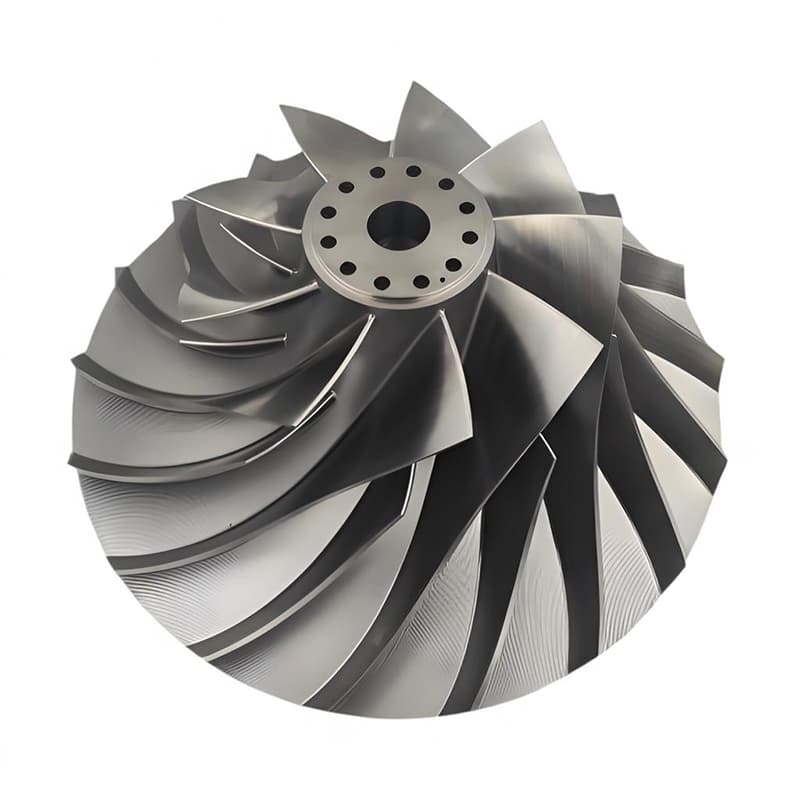
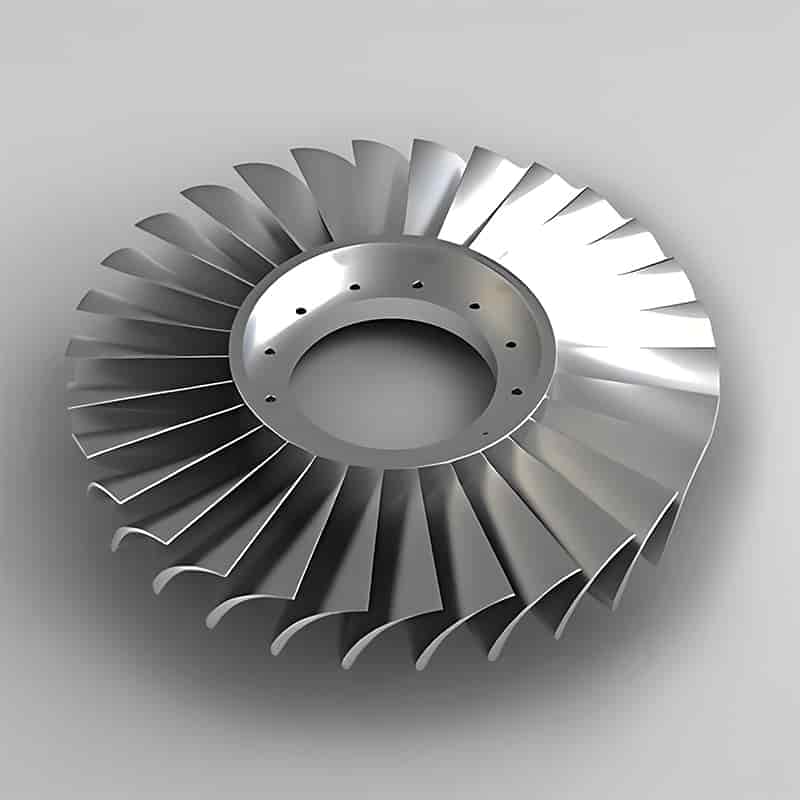
Continuous 5-axis machining of complex impeller blades, diffuser vanes and freeform surfaces with tight profile tolerances and excellent surface finish.
CNC turning
High-precision turning of shafts, sleeves, rings and rotational components, including live-tool milling for integrated cross-holes and keyways.
Wire & sinker EDM
Electrical discharge machining for intricate internal geometries, thin-walled features and tight-tolerance slots that are impractical to reach with conventional cutters.
Surface & cylindrical grinding
Precision grinding to achieve fine surface finishes (down to Ra 0.4 μm or better) and close dimensional tolerances on sealing faces and bearing journals.
Deep-hole drilling & tapping
Gun-drilling and high-precision tapping of coolant passages, bolt holes and threaded features with controlled chip evacuation and consistent thread quality.
Polishing & deburring
Manual and automated polishing, vibratory finishing and edge-break operations to remove machining marks and produce aerodynamically smooth blade surfaces.
Where TC11 parts go into service
Industries and component types that rely on TC11's 500 °C strength and light weight
Aero-engine compressor disks & blades
Rotating compressor stages in turbofan and turbojet engines where TC11 replaces heavier alloys to reduce centrifugal stress and improve thrust-to-weight ratio.
Industrial gas turbine components
Compressor blades, spacer rings and structural housings for stationary power-generation turbines and mechanical-drive gas compressors.
Rocket & propulsion hardware
Rotating and structural components in liquid-propellant rocket engine turbopumps and booster-stage assemblies where high strength at moderate temperature is essential.
UAV & drone structural parts
Lightweight brackets, mounts, shaft couplings and engine components for unmanned aerial vehicles where every gram of saved mass extends payload and endurance.
High-temperature fasteners
Bolts, studs and nuts rated for hot-section assembly in engines and turbines, combining TC11's strength with titanium's natural corrosion resistance.
Specialised industrial machinery
Custom wear parts, tooling components and high-performance mechanical elements for chemical processing, marine and energy equipment operating under heat and load.
Machined TC11 products in our portfolio
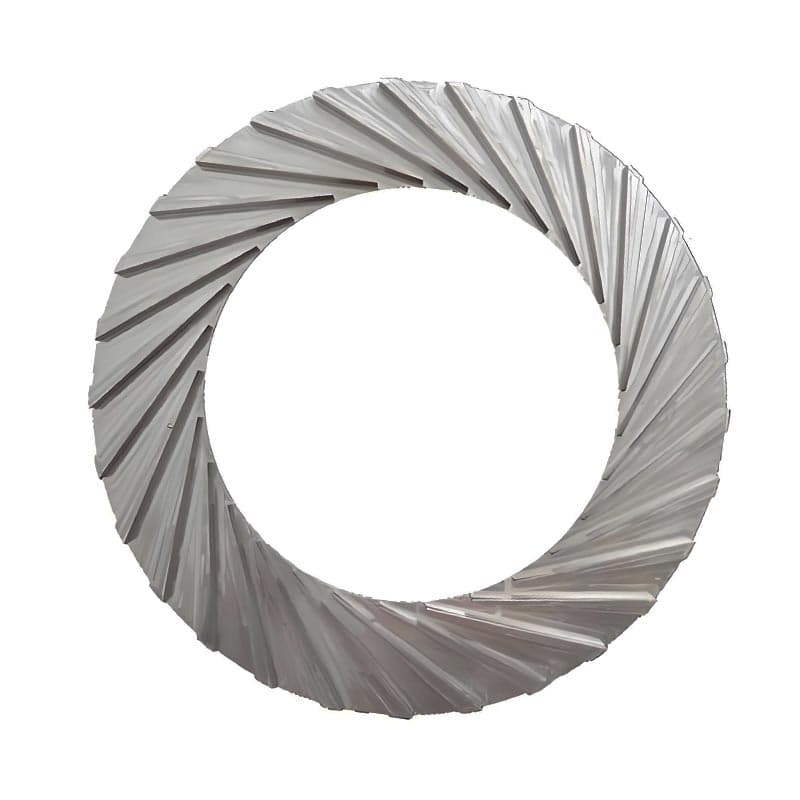
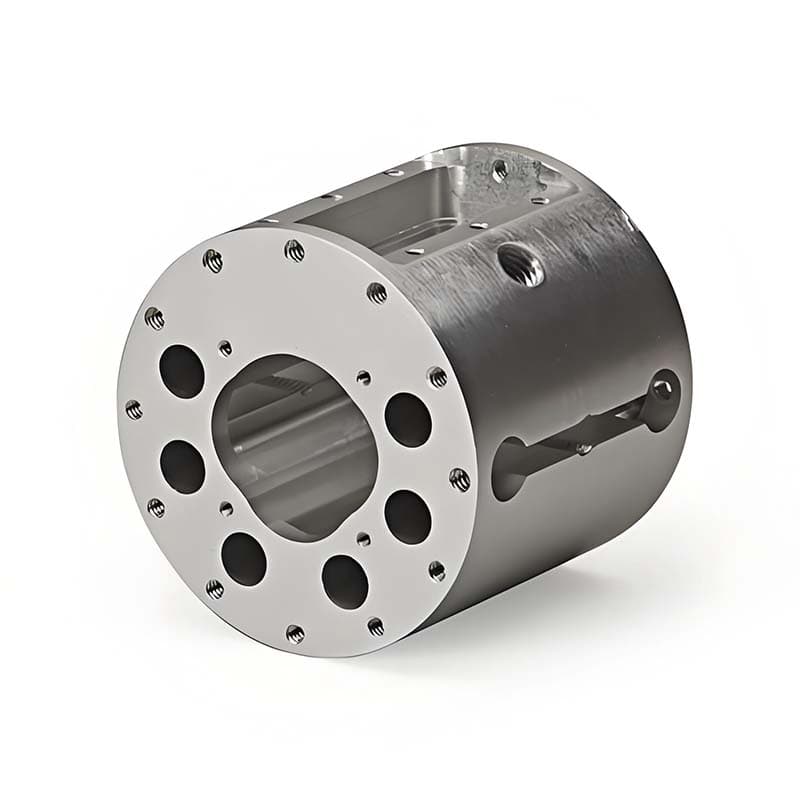
A selection of representative components produced via custom CNC machining TC11 titanium alloy parts in China
From raw bar to finished component
A six-stage production workflow used for every custom CNC machining TC11 titanium alloy parts in China order
Material sourcing & verification
TC11 bars or forgings are procured from qualified mills; each batch is checked for chemistry, hardness and microstructure before acceptance.
DFM & CNC programming
Our engineers review drawings for machinability, select tooling strategies and generate verified CNC programs with simulation before setup.
Rough & finish machining
Roughing removes bulk material with high-feed strategies; finishing passes use sharp carbide or polycrystalline diamond tooling with flood coolant for tight tolerances.
In-process inspection
Dimensional checks are performed at key stages using CMM, optical comparators and calibrated gauges to catch drift before the part is completed.
Surface treatment & finishing
Deburring, polishing, anodising or other specified surface treatments are applied to meet cosmetic, corrosion or friction requirements.
Final inspection & packaging
A full dimensional and visual inspection against the drawing is recorded; parts are individually wrapped and packed to prevent damage in transit.
Why partner with us for TC11 machining
Four reasons buyers worldwide rely on our workshop for custom CNC machining TC11 titanium alloy parts in China
Titanium-specialised engineering team
Our programmers and machinists work with titanium alloys daily. We understand TC11's low thermal conductivity, high chemical reactivity and spring-back behaviour, and we translate that knowledge into feeds, speeds and tool paths that produce consistent parts without burning or chatter.
Late-model CNC equipment
Our shop floor is equipped with 5-axis machining centres, high-rigidity turning centres, wire and sinker EDM machines and precision grinders. This equipment range allows us to complete nearly every TC11 operation in-house, reducing lead time and keeping quality under one roof.
Process-driven quality control
Every job follows a documented control plan with incoming material checks, in-process first-article inspection and final dimensional verification. We maintain calibrated CMM and measuring equipment, and we provide inspection reports with every shipment so you can trace results back to the machining stage.
Flexible production from prototype to batch
Whether you need a single development part or a production run of several hundred components, we scale our setup and pricing accordingly. Prototype orders benefit from rapid programming and short setup times, while repeat orders are locked into standardised work instructions for consistent quality batch after batch.
TC11 technical data at a glance
Chemical composition ranges and typical mechanical properties for machined TC11 components
Chemical composition (wt. %)
| Element | Min. | Max. |
|---|---|---|
| Aluminium (Al) | 5.8 | 7.0 |
| Molybdenum (Mo) | 2.8 | 3.8 |
| Zirconium (Zr) | 1.0 | 2.0 |
| Silicon (Si) | 0.15 | 0.40 |
| Carbon (C) | — | 0.10 |
| Iron (Fe) | — | 0.25 |
| Nitrogen (N) | — | 0.05 |
| Oxygen (O) | — | 0.15 |
| Hydrogen (H) | — | 0.012 |
| Titanium (Ti) | Balance | |
Typical mechanical properties (annealed bar)
| Property | Value | Condition |
|---|---|---|
| Tensile strength, Rm | ≥ 1030 MPa | Room temp. |
| Yield strength, Rp0.2 | ≥ 900 MPa | Room temp. |
| Elongation, A | ≥ 9 % | Room temp. |
| Reduction of area, Z | ≥ 25 % | Room temp. |
| Impact toughness, KCU | ≥ 25 J/cm² | Room temp. |
| Tensile strength at 500 °C | ≥ 640 MPa | 500 °C |
| Creep limit (500 °C, 100 h) | ≥ 200 MPa | 0.2 % strain |
| Hardness | ≈ 320 – 360 HB | Annealed |
| Fracture toughness, KIC | ≈ 55 – 70 MPa·m^½ | Room temp. |
| Fatigue limit (10⁷ cycles) | ≈ 420 – 480 MPa | Room temp., R = −1 |
Frequently asked questions
Common questions from engineers and buyers sourcing custom CNC machining TC11 titanium alloy parts in China
What lead times can we expect for TC11 parts?
Prototype parts typically ship within 15 to 25 working days after drawing approval, depending on complexity and raw-stock availability. Production batches are quoted with a dedicated schedule; repeat orders with locked work instructions usually run faster than first articles.
What dimensional tolerances can you hold on TC11?
General CNC machining holds ±0.02 mm on linear dimensions. Grinding and lapping operations can achieve ±0.005 mm or tighter on critical sealing and bearing surfaces. Profile tolerances on 5-axis-machined blade surfaces are typically held within ±0.03 mm, with final values confirmed by CMM or optical scanning.
Do you provide material documentation with each shipment?
Yes. Every batch of TC11 raw material is accompanied by a mill test report confirming chemistry and mechanical properties. We also provide our own incoming inspection records and a final dimensional inspection report with each shipment, giving you full traceability from raw bar to finished part.
What surface finishes are available for TC11 components?
As-machined finishes typically range from Ra 1.6 to Ra 3.2 μm. Precision grinding delivers Ra 0.4 to Ra 0.8 μm, and polishing or vibratory finishing can achieve Ra 0.2 μm or smoother for aerodynamic blade surfaces. Anodising, passivation and other specified coatings can also be applied per drawing requirements.
Your reliable partner for custom CNC machining TC11 titanium alloy parts in China
From compressor impellers and diffusers to UAV components and precision-turned machine parts, we combine titanium-specific machining expertise, late-model CNC equipment and rigorous in-process inspection to deliver TC11 components that meet your drawing requirements and performance expectations. Whether you are developing a first-article prototype or scaling to repeat production, our team is ready to support your project with accurate quoting, transparent scheduling and consistent quality.