
CNC machining steel parts China per drawing
Custom CNC machining steel parts in China manufactured from customer drawings, 3D models, technical specifications, or physical samples. We provide precision steel CNC machining for prototypes, single-piece orders, small batches, medium-volume production, and large-volume manufacturing.
Our CNC machining steel service covers CNC milling, CNC turning, drilling, tapping, boring, reaming, grinding, multi-axis machining, and other precision machining operations for custom steel components. Steel parts can be produced according to required dimensions, tolerances, geometries, surface conditions, and functional requirements.
1 Piece+
Prototype and low-volume CNC machining steel production
3 / 4 / 5 Axis
Multi-axis CNC machining for complex steel components
High Precision
Controlled dimensions, geometry, fits, and surface finish
Drawing Based
Parts made according to drawings, models, or physical samples
Custom CNC Machining Steel Parts from China
A complete steel CNC machining solution for customers who need dependable custom machined components built to engineering requirements.
CNC machining steel is widely used when a component requires higher strength, wear resistance, rigidity, dimensional stability, or structural performance than many lightweight materials can provide. With the correct material grade, tooling strategy, cutting parameters, workholding method, and finishing process, steel can be machined into precise shafts, housings, brackets, gears, sleeves, blocks, plates, valve components, machine components, tooling components, fixtures, and other industrial parts.
Our custom CNC machining steel service is designed around the customer's actual drawing and functional requirements. Instead of offering only standard catalog parts, we support custom CNC steel parts manufactured to specified dimensions, tolerances, fits, threads, hole patterns, radii, chamfers, surface finishes, and geometric relationships.
For customers searching for CNC machining steel China, CNC machining steel parts China, steel CNC machining China, CNC machined steel components, or a China CNC steel machining factory, the manufacturing approach is centered on engineering review, efficient CNC production, dimensional control, and repeatable processing from prototype to production quantities.
CNC Machining Steel Capabilities
Different steel parts require different machining methods. The process can be selected according to material hardness, component geometry, tolerance requirements, production volume, and final application.
CNC Milling Steel Parts
CNC milling is suitable for steel blocks, plates, brackets, machine bases, housings, fixtures, valve bodies, manifolds, gears, tooling parts, structural components, and complex 3D steel components. Depending on the geometry, 3-axis, 4-axis, or 5-axis CNC machining can be used to improve accessibility, reduce setups, and maintain accurate relationships between multiple surfaces.
CNC milling steel can include face milling, slot milling, pocket milling, contour machining, drilling, tapping, chamfering, boring, and complex simultaneous multi-axis cutting.
CNC Turning Steel Parts
CNC turning is commonly used for shafts, pins, sleeves, bushings, rollers, threaded components, couplings, bearing seats, hydraulic components, cylindrical housings, stepped shafts, and other rotational steel parts.
CNC turning steel parts can include external diameters, internal bores, threads, grooves, shoulders, tapers, chamfers, undercuts, and precision fits. Turning and milling operations can also be combined for parts containing both rotational and prismatic features.
5-Axis Steel Machining
Five-axis CNC machining is useful for difficult steel components containing deep cavities, compound surfaces, angled faces, curved passages, multiple intersecting features, and complex spatial relationships. It can reduce the number of setups and provide better tool access for difficult geometries.
Typical applications include impeller-related components, turbine components, complex molds, advanced machine parts, energy equipment components, and specialized steel components with demanding geometry.
Precision Steel CNC Machining
Precision CNC machining steel production focuses on dimensional control, geometric accuracy, feature-to-feature relationships, hole position, concentricity, parallelism, perpendicularity, flatness, cylindricity, runout, and other engineering requirements.
The exact achievable result depends on material grade, part size, geometry, machining strategy, thermal conditions, tool selection, workholding, and inspection requirements. Tolerances are reviewed according to the actual drawing rather than applying one generic tolerance to every part.
Custom CNC Machined Steel and Industrial Components
Representative product types related to CNC machining, precision component manufacturing, shafts, brackets, structural components, and custom industrial parts.
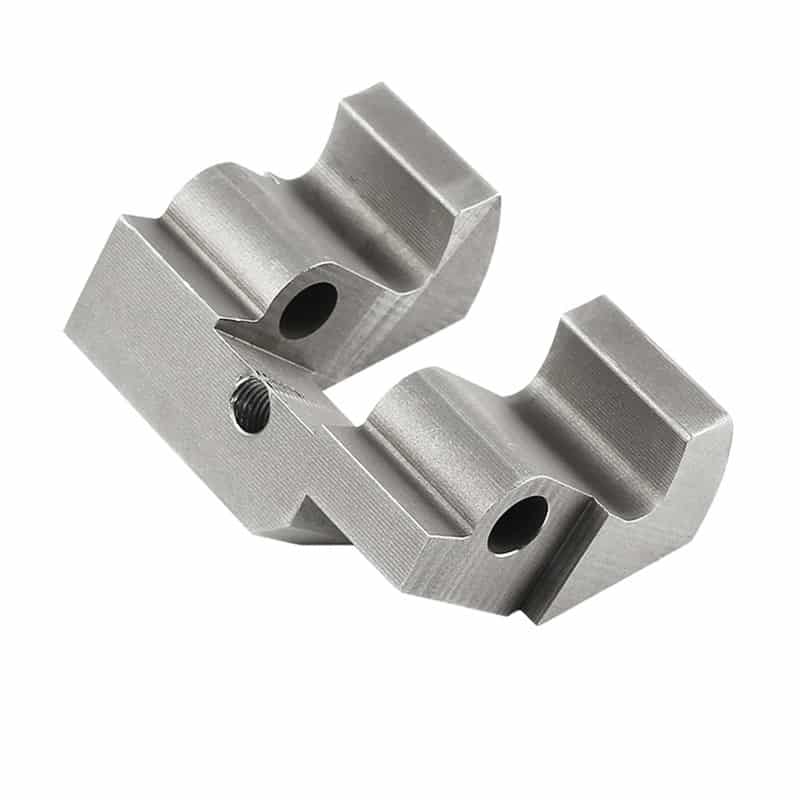
CNC Machining Component
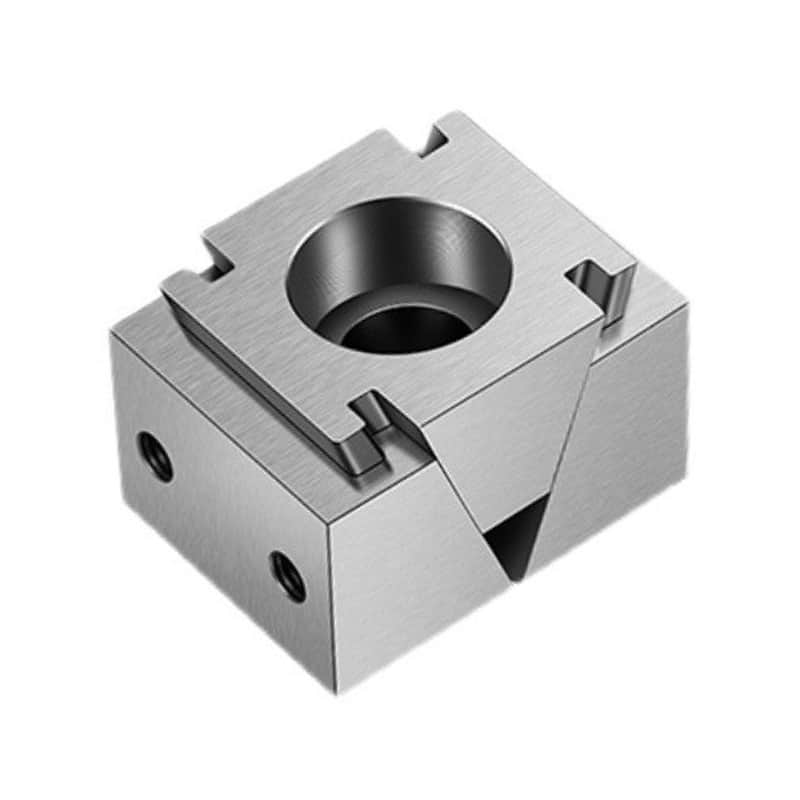
Centering Adjustment Module
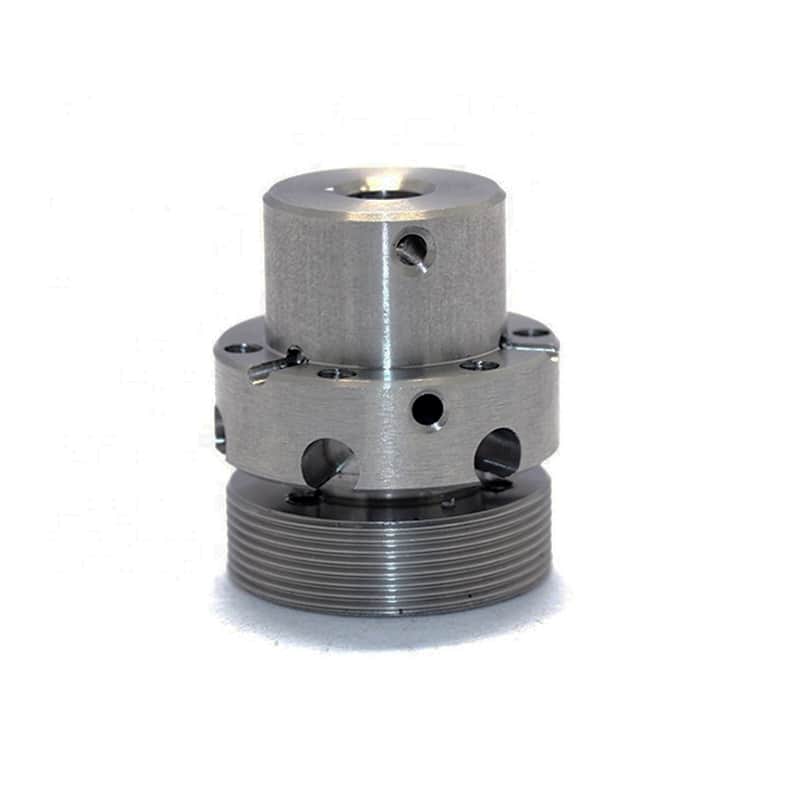
Precision CNC Machined Part
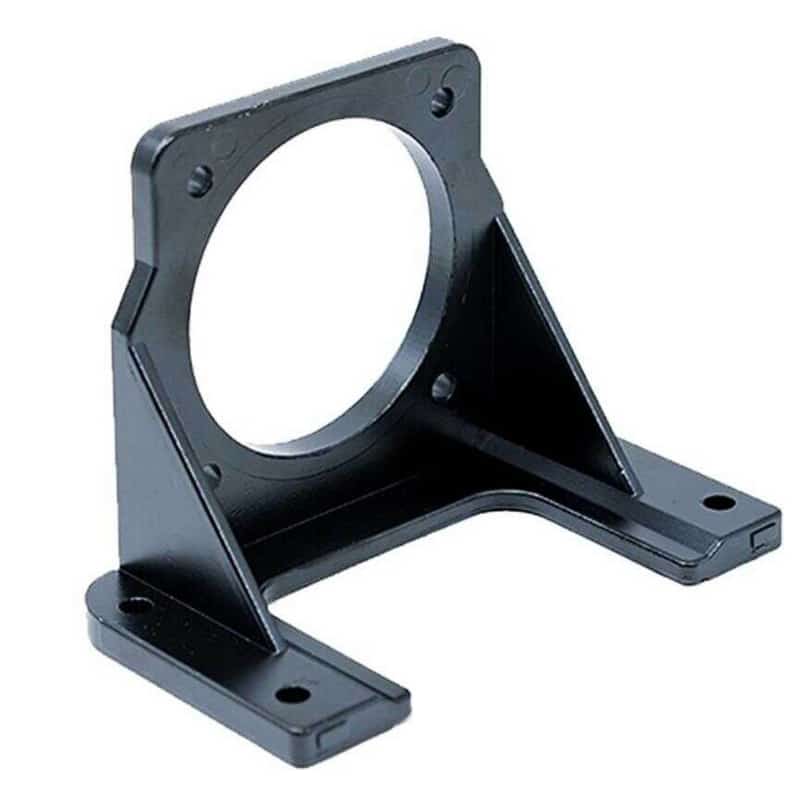
Motor Bracket
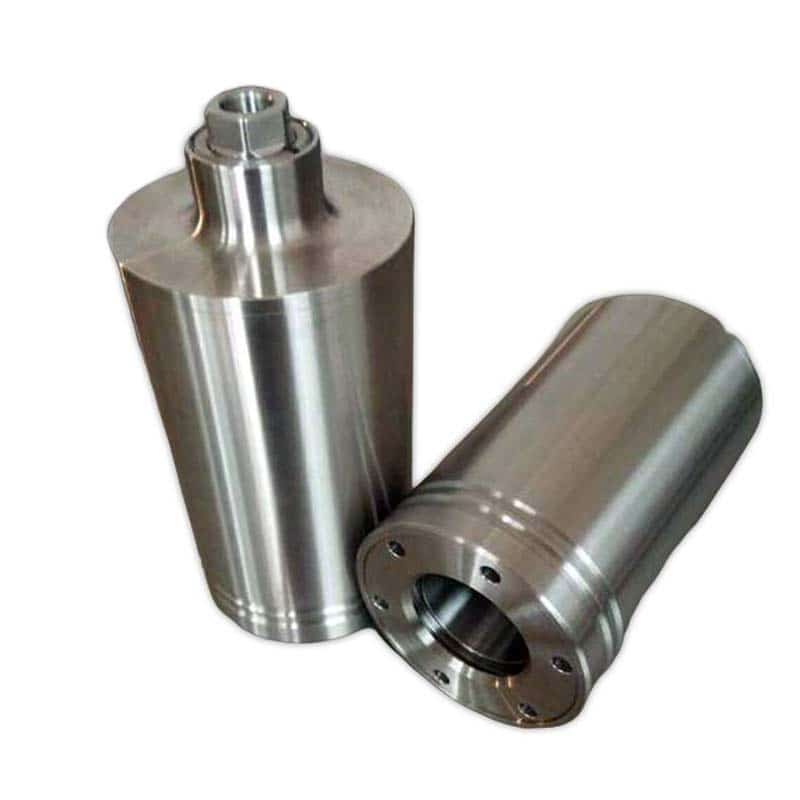
OEM Precision Machined Component
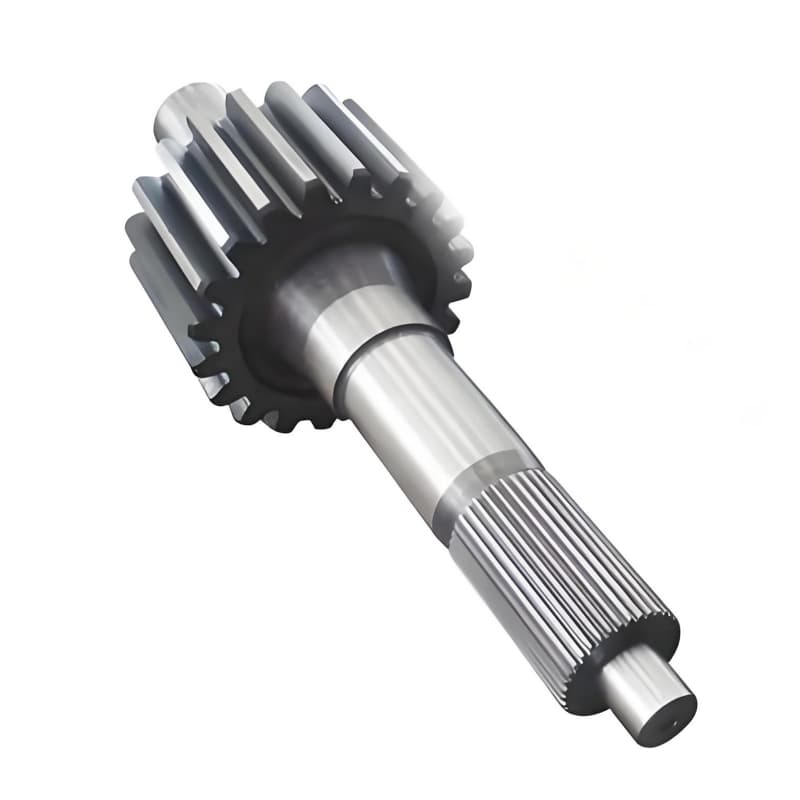
Gear Shaft / Spline Shaft
Common Steel Grades for CNC Machining
Steel selection depends on strength, hardness, corrosion resistance, wear resistance, heat treatment requirements, machinability, operating temperature, and application conditions.
| Steel Material | Typical Characteristics | Common CNC Machined Parts | Typical Applications |
|---|---|---|---|
| 1045 Carbon Steel | Good strength, practical machinability, and widely used for general mechanical components | Shafts, pins, gears, brackets, couplings, machine components | General machinery, transmission systems, fixtures, industrial equipment |
| 1018 / 1020 Low Carbon Steel | Good machinability and suitable for many general-purpose components | Blocks, plates, shafts, pins, brackets, bushings | General machinery, fixtures, structures, industrial equipment |
| 4140 Alloy Steel | High strength, good toughness, and suitable for heat-treated components | Shafts, axles, gears, pins, couplings, heavy-duty machine parts | Automation, machinery, transportation equipment, power transmission |
| 4340 Alloy Steel | High strength and toughness for demanding mechanical loading | Heavy-duty shafts, gears, structural machine components | Industrial machinery, demanding mechanical assemblies |
| Tool Steel | High hardness and wear resistance depending on grade and heat treatment | Dies, punches, fixtures, tooling inserts, wear components | Tooling, molds, production fixtures, industrial manufacturing |
| Stainless Steel | Excellent corrosion resistance with many grades available for different mechanical requirements | Valve components, shafts, housings, fittings, brackets, precision parts | Food machinery, chemical equipment, marine equipment, process machinery |
| 17-4 PH Stainless Steel | High strength, corrosion resistance, and good mechanical performance | Shafts, valve parts, fittings, machine components | Industrial equipment, aerospace-related components, energy equipment |
| 2205 Duplex Stainless Steel | High strength and strong corrosion resistance for demanding environments | Shafts, valve components, fittings, structural machine parts | Chemical processing, marine applications, energy and process equipment |
Carbon Steel CNC Machining
Carbon steel is widely selected for cost-effective CNC machined components requiring practical strength and good machinability. Common carbon steel CNC parts include shafts, pins, brackets, plates, gears, couplings, sleeves, supports, machine blocks, and structural components.
Alloy Steel CNC Machining
Alloy steel is frequently selected when higher strength, toughness, fatigue resistance, or heat-treatment performance is required. Alloy steel CNC machining can be used for shafts, gears, transmission components, heavy-duty pins, machine parts, and load-bearing components.
Common CNC Machining Steel Parts We Can Manufacture
Custom steel CNC parts can be produced in many shapes and configurations based on customer drawings, CAD models, technical specifications, or physical samples.
Steel Shafts
Precision shafts, stepped shafts, drive shafts, transmission shafts, spline shafts, gear shafts, rotor shafts, support shafts, and custom mechanical shafts.
Steel Bushings
Bushings, sleeves, bearing seats, wear sleeves, spacer sleeves, guide sleeves, and precision cylindrical components.
Steel Gears
Machined gear blanks, custom gear components, transmission-related components, gear carriers, and associated precision steel components.
Steel Brackets
Structural brackets, motor brackets, mounting brackets, support brackets, machine frames, and custom mechanical supports.
Steel Housings
Bearing housings, machine housings, protective housings, equipment covers, mounting bodies, and custom enclosures.
Steel Valve Components
Valve bodies, blocks, stems, spools, plugs, sleeves, connectors, manifolds, and other custom flow-control components.
Steel Plates and Blocks
Precision plates, mounting blocks, fixture bases, machine blocks, tooling blocks, support plates, and custom structural pieces.
Steel Pins and Fastening Components
Precision pins, locating pins, dowel components, threaded parts, studs, bushings, spacers, and custom fastening components.
CNC Steel Machining Process
A controlled machining sequence helps maintain dimensional consistency while reducing unnecessary setups and improving production efficiency.
1. Drawing and Engineering Review
The machining process starts with a customer drawing, 3D CAD model, sample, or engineering specification. Important features such as critical dimensions, tolerances, threads, fits, surface roughness, material grade, heat treatment, and special inspection requirements are reviewed before production.
2. Material Selection and Preparation
Steel raw material is selected according to the specified grade and part geometry. Bar stock, plate, block, tube, forged material, cast material, or other suitable forms can be considered depending on the component.
3. CNC Programming and Tool Planning
CNC programming considers workholding, stock allowance, cutting direction, tool reach, cutting depth, machining sequence, finishing strategy, and the need to control heat and deformation.
4. Rough Machining and Semi-Finishing
Rough machining removes excess material efficiently while leaving controlled stock for finishing operations. Semi-finishing establishes more accurate intermediate geometry before the final machining stage.
5. Finish CNC Machining
Finishing operations focus on final dimensions, surface quality, geometric relationships, hole accuracy, thread quality, and the functional features specified by the customer drawing.
6. Deburring and Surface Treatment
Parts can be deburred and prepared for subsequent processes such as grinding, polishing, black oxide, plating, coating, passivation, heat treatment, or other surface or finishing operations according to the project requirements.
CNC Machining and Inspection
Steel CNC machining combines machining processes with dimensional inspection to verify that critical part features conform to the approved engineering requirements.
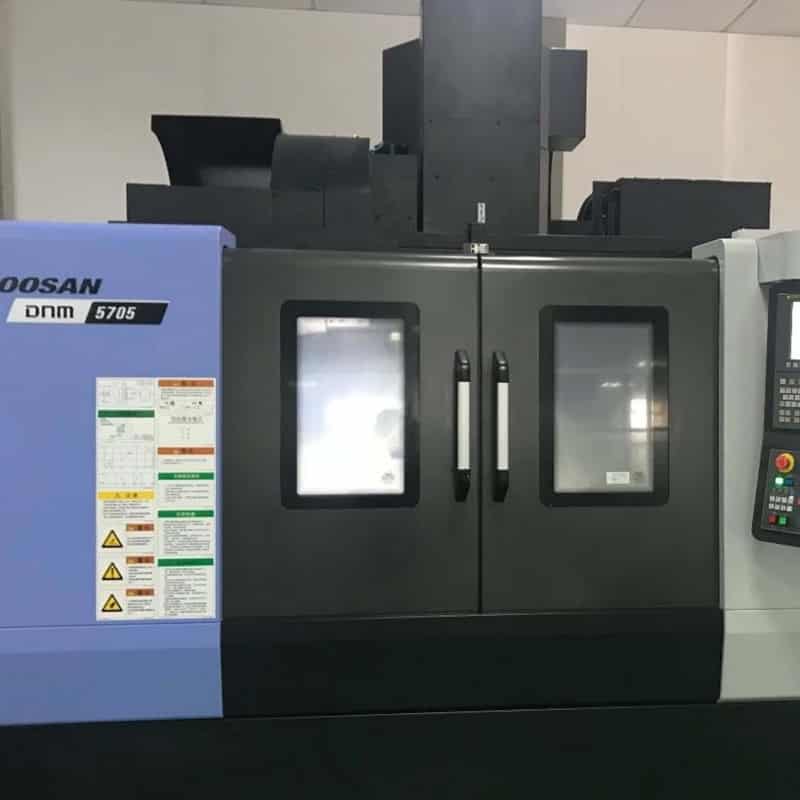
CNC Milling
CNC milling for steel blocks, brackets, housings, plates, machine components, tooling components, and complex custom parts.
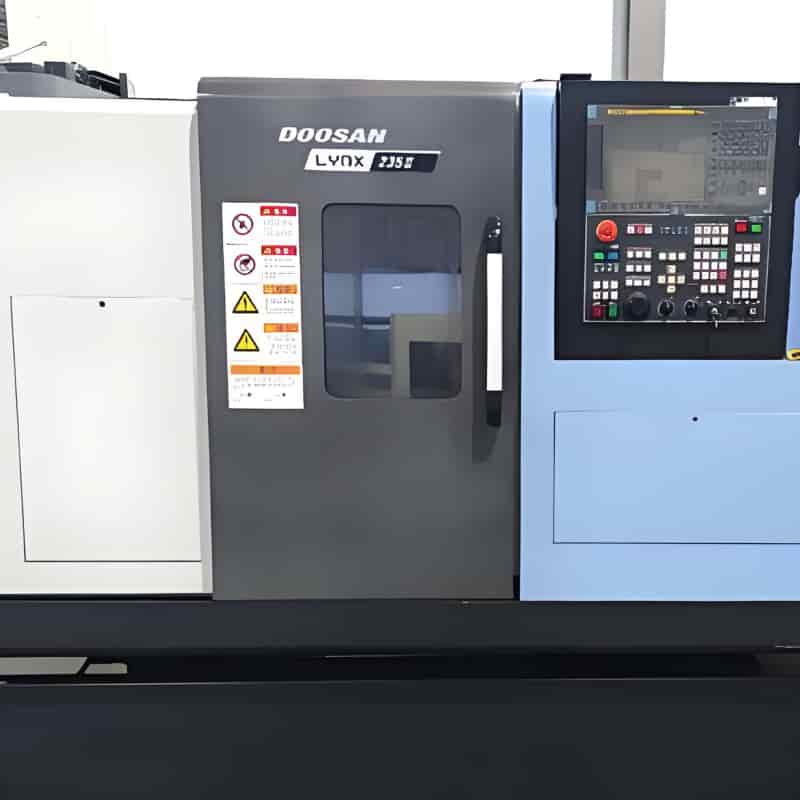
CNC Turning
CNC turning for shafts, sleeves, pins, bushings, cylindrical components, threaded parts, and precision rotational steel parts.
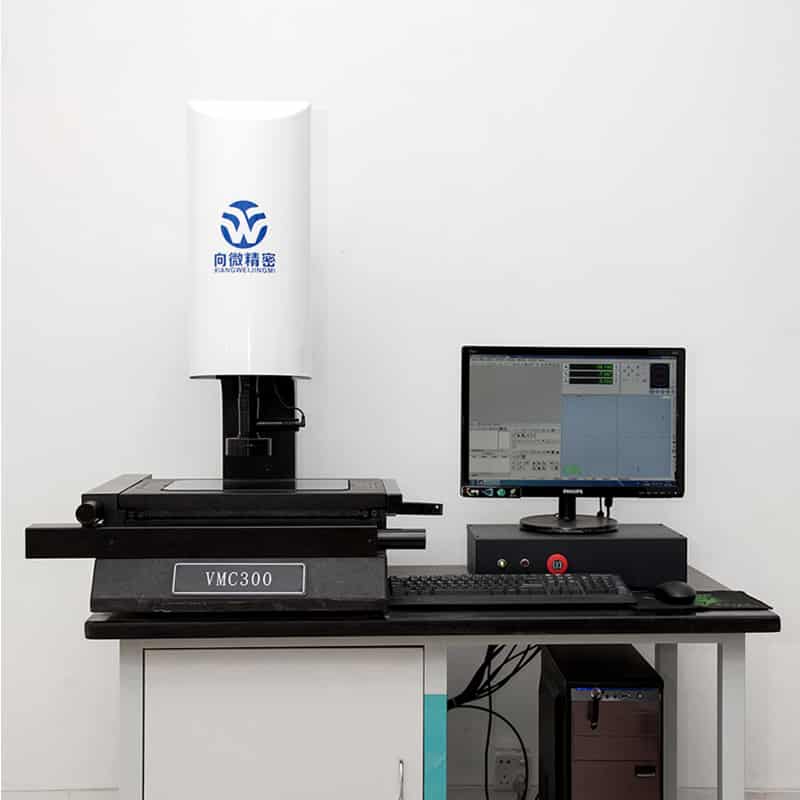
2D Optical Measurement
Optical measurement can be used to inspect profile dimensions, hole locations, contours, angles, radii, and other two-dimensional features.
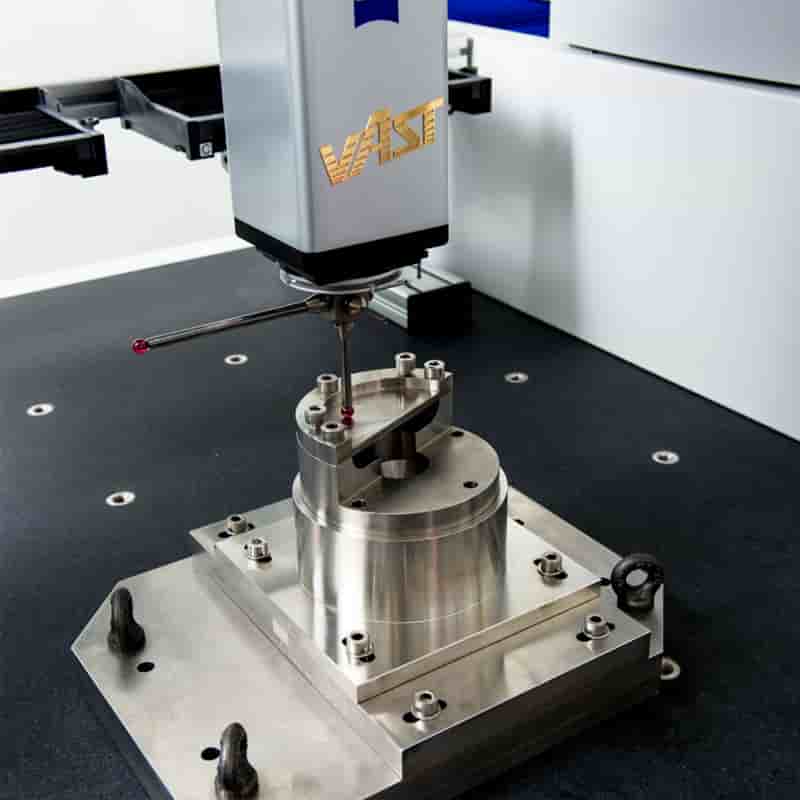
CMM Inspection
Coordinate measuring equipment can be used for accurate dimensional and geometric inspection of critical CNC machined steel components.
Surface Quality and Dimensional Accuracy of CNC Machining Steel
Surface finish and dimensional accuracy are determined by the drawing, material, part geometry, machine capability, cutting conditions, finishing process, and inspection method.
Typical precision machining capability for suitable features and production conditions
Fine surface finish can be achievable with appropriate finishing operations
Very tight geometric requirements can be considered for suitable part geometries
High-resolution measurement capability can support precision dimensional inspection
Dimensional Accuracy
Depending on component size and geometry, CNC steel machining can be applied to tight dimensional tolerances for diameters, lengths, widths, depths, hole sizes, bore dimensions, thread dimensions, and other critical features.
Tolerances such as ±0.01 mm and tighter requirements may be achievable on appropriate features under controlled conditions. Actual tolerance capability should always be evaluated against the specific drawing, material, part size, and machining process.
Geometric Accuracy
Precision CNC machining steel parts can also require control of flatness, parallelism, perpendicularity, concentricity, symmetry, cylindricity, circular runout, total runout, and true position.
For complex steel parts, controlling the relationship between multiple datums and features can be more important than simply achieving an individual dimensional tolerance.
Surface Roughness
Surface quality varies according to machining method, cutter geometry, feed rate, spindle speed, tool condition, material hardness, vibration control, and finishing strategy. Rough machining, semi-finishing, finish milling, turning, grinding, and polishing produce different surface conditions.
Precision Fits and Threads
CNC machined steel components can incorporate precision shafts, bearing seats, sliding fits, press fits, threaded holes, external threads, internal threads, locating features, and mating surfaces. Thread specifications and fit requirements are manufactured according to the customer's engineering documentation.
Typical Precision Requirements for Custom Steel CNC Parts
The following values represent types of precision requirements that may be encountered in CNC machining steel projects. The achievable result depends on part geometry and process conditions.
Position
Position requirements can be used to control the relationship of holes and other features relative to established datums.
Parallelism
Precision CNC machining can maintain controlled relationships between opposing or reference surfaces.
Concentricity
Critical rotational components may require close control between bores, diameters, shafts, and reference axes.
Perpendicularity
Perpendicular relationships between holes, faces, shafts, and datum surfaces can be controlled through process planning and inspection.
Total Runout
Rotational components can require runout control to improve functional performance during assembly and operation.
Symmetry
Symmetry requirements can be important for balanced and accurately positioned mechanical components.
Flatness
Precision surfaces can be machined and inspected to maintain controlled flatness according to the drawing.
Cylindricity
Precision bores, shafts, rollers, and cylindrical components may require control of form accuracy across the complete surface.
Industries Using CNC Machining Steel Parts
Steel CNC machined components are used wherever mechanical strength, wear resistance, rigidity, dimensional stability, or durable industrial performance is required.
Industrial Machinery
Custom steel shafts, brackets, housings, rollers, fixtures, machine bases, gears, pins, and transmission components for industrial equipment.
Automation Equipment
Precision machine components, actuator parts, support brackets, guide components, shafts, fixtures, and custom automation mechanisms.
Hydraulic Equipment
Valve bodies, valve blocks, spools, sleeves, adapters, hydraulic components, and precision flow-control parts.
Pumps and Fluid Equipment
Shafts, impeller-related components, housings, covers, brackets, bushings, sleeves, connectors, and precision fluid-control components.
Chemical Equipment
Corrosion-resistant steel components, valve parts, shafts, fittings, supports, brackets, and custom process-equipment components.
Transportation Equipment
Shafts, brackets, supports, housings, pins, mechanical connectors, and other precision steel components used in transportation systems.
Shipbuilding and Marine Equipment
Heavy-duty steel mechanical components, shafts, bushings, fittings, brackets, housings, and corrosion-resistant components for demanding environments.
Food Machinery
Stainless steel CNC machined components, shafts, housings, supports, machine blocks, fittings, and other custom machine parts.
Complex Steel Components Made Per Drawing
Custom CNC machining is not limited to simple rectangular or cylindrical components. Complex geometries can be planned according to the actual manufacturing requirements.
Rotational Components
Shafts, stepped shafts, rollers, sleeves, bushings, hubs, threaded cylindrical parts, gear shafts, and precision rotary components.
Prismatic Components
Blocks, plates, bases, brackets, fixtures, valve bodies, machine housings, support plates, and custom structural parts.
Complex 3D Components
Curved components, multi-surface parts, deep cavities, angled surfaces, complex pockets, and five-axis steel machining components.
From One Custom Steel Part to Large-Volume Production
CNC machining steel is suitable for development projects as well as repeat production programs with established drawings and production requirements.
Prototype Machining
Single-piece and prototype CNC steel parts for new product development, design verification, equipment development, and engineering trials.
Small Batch
Small quantities of custom steel CNC parts where flexibility, engineering responsiveness, and repeatability are important.
Medium Volume
Repeated production of CNC machined steel components with established processes, tooling, inspection standards, and manufacturing documentation.
Large Volume
Higher-volume CNC steel machining programs can use optimized machining sequences and production planning to support consistent output.
Engineering-Focused CNC Machining Steel Manufacturing
Successful CNC steel machining depends on more than simply cutting material. Engineering decisions made before production can directly affect accuracy, surface quality, cost, tool life, and repeatability.
Drawing Review
Important dimensions, datums, tolerance zones, threads, holes, mating surfaces, radii, chamfers, material grades, surface requirements, and critical features can be reviewed before production.
Manufacturing Process Planning
Operation sequencing is selected to establish reliable datums, minimize accumulated error, reduce unnecessary workholding changes, and maintain important geometric relationships.
Workholding and Deformation Control
Thin walls, long shafts, interrupted surfaces, deep cavities, and large steel components may require specific workholding and machining strategies to reduce vibration or deformation.
Inspection Planning
Inspection points are selected according to part function and drawing requirements, including dimensions, hole position, geometry, fit-related features, and critical surfaces.
CNC Machining Steel Solutions for Custom Industrial Parts
Custom CNC steel machining can cover a wide range of component types and search requirements, including CNC machining steel, CNC machining steel parts, CNC machining steel China, CNC machining steel parts China, steel CNC machining, CNC steel machining, precision steel CNC machining, custom CNC steel parts, custom steel machining, CNC machined steel components, precision machined steel parts, steel CNC parts, CNC turning steel parts, CNC milling steel parts, 5-axis steel machining, CNC machining carbon steel, CNC machining alloy steel, CNC machining stainless steel, CNC machining 4140 steel, CNC machining 1045 steel, and China CNC machining steel factory services.
Custom CNC Machining Steel Parts per Drawing or Sample
A drawing-based manufacturing process makes it possible to produce steel parts that match the customer's actual design rather than forcing the project into standard dimensions.
Customer Drawing
2D mechanical drawings can define dimensions, tolerances, threads, material, surface finish, and other production requirements.
3D CAD Model
STEP, STP, Parasolid, IGES, and other common CAD formats can provide complete geometric information for complex CNC components.
Physical Sample
Existing physical components can be used as a manufacturing reference when a complete drawing is not available, subject to engineering review.
Reverse Engineering Support
Geometry can be reconstructed from an existing component when appropriate measuring, scanning, modeling, and engineering information is available.
CNC Machining Steel Parts FAQ
Common questions about custom CNC machining steel components for industrial applications.
What steel materials can be CNC machined?
Common options include carbon steel, low-carbon steel, medium-carbon steel, alloy steel, stainless steel, tool steel, and other engineering steel grades. The appropriate material depends on the strength, hardness, corrosion resistance, wear resistance, and operating requirements of the part.
Can CNC machining steel parts be made according to drawings?
Yes. Custom CNC machining steel parts can be manufactured from 2D engineering drawings, 3D CAD models, technical specifications, or suitable physical samples. Critical features and tolerances are interpreted from the customer's engineering requirements.
Can steel parts be produced in one piece?
Yes. CNC machining is suitable for prototype parts, one-piece development components, replacement parts, trial production, and small quantities, as well as repeat production and larger-volume manufacturing.
Can CNC machining steel achieve tight tolerances?
Precision steel CNC machining can achieve tight dimensional and geometric tolerances when the component geometry, machine capability, tooling, fixturing, process conditions, and inspection method are suitable. The required tolerance should always be evaluated against the actual drawing.
Can you CNC mill and CNC turn the same steel part?
Yes. Many steel components contain both rotational and prismatic features. CNC turning can create diameters, bores, threads, and shoulders, while CNC milling can create flats, slots, holes, pockets, and other non-rotational features.
What steel CNC parts are commonly manufactured?
Common CNC machining steel parts include shafts, sleeves, bushings, gears, brackets, housings, valve components, machine blocks, plates, pins, couplings, fixtures, structural components, tooling components, and custom equipment parts.
China CNC Machining Steel for Custom Parts and Industrial Components
Custom manufacturing from prototypes to production quantities.
CNC machining steel parts remains an important manufacturing solution for industrial components that require strength, rigidity, wear resistance, dimensional stability, and precise mechanical interfaces. From simple turned shafts and bushings to complex milled housings, valve bodies, gear-related components, brackets, fixtures, and five-axis steel components, the machining process can be selected according to the actual engineering requirements.
For customers looking for CNC machining steel China, CNC machining steel parts China, CNC steel machining suppliers, steel CNC machining factories, or custom CNC steel parts manufactured per drawing, the production approach can cover material preparation, CNC programming, rough machining, semi-finishing, finish machining, deburring, surface treatment coordination, dimensional inspection, and production for repeated quantities.
Whether the requirement is a single prototype, a small batch of custom steel parts, a recurring production order, or a large-volume CNC machining program, the objective is to produce components that match the specified material, geometry, dimensions, tolerances, surface requirements, and functional expectations.
CNC machining steel, CNC machining steel parts, precision steel CNC machining, custom steel machining, CNC turning steel parts, CNC milling steel parts, CNC machined steel components, and steel parts made in China can all be organized around the customer's drawing and application requirements, providing a flexible solution for industrial machinery, automation, hydraulic equipment, pumps, chemical equipment, transportation systems, shipbuilding, marine equipment, food machinery, and other engineering applications.