
CNC Machined Die Casting A380 Aluminum Heat Sink from China
We are a China-based manufacturer focused on high-pressure aluminum die casting and secondary precision CNC machining of custom heat sinks and thermal management components. Our CNC machined die casting A380 aluminum heat sinks combine the near-net-shape efficiency of high-pressure die casting with the tight dimensional accuracy of CNC milling, turning, drilling and tapping, giving customers repeatable, dimensionally stable and cost-efficient thermal parts from a single prototype to full high-volume production.
Every die cast aluminum heatsink is manufactured strictly according to customer 2D/3D drawings or reverse engineered directly from physical samples. Fin pattern, base thickness, pin-fin layout, mounting holes, threaded inserts, airflow channels, cosmetic surfaces and surface treatments can all be tailored to the application. A380 aluminum alloy is our default heat sink material because of its balanced thermal conductivity, excellent die-fill behavior and dependable mechanical performance; ADC12, A383, A413, A360 and other die casting aluminum alloys are available on request.
By keeping mold design, aluminum die casting, CNC machined finishing, deburring and surface treatment under coordinated process control, we deliver a finished CNC machined A380 heat sink that is ready to assemble — with machined mounting faces, precise tapped holes and a controlled thermal interface surface — instead of a raw casting that still needs multiple outside vendors.
Die Cast Aluminum Heat Sinks and Related Machined Parts
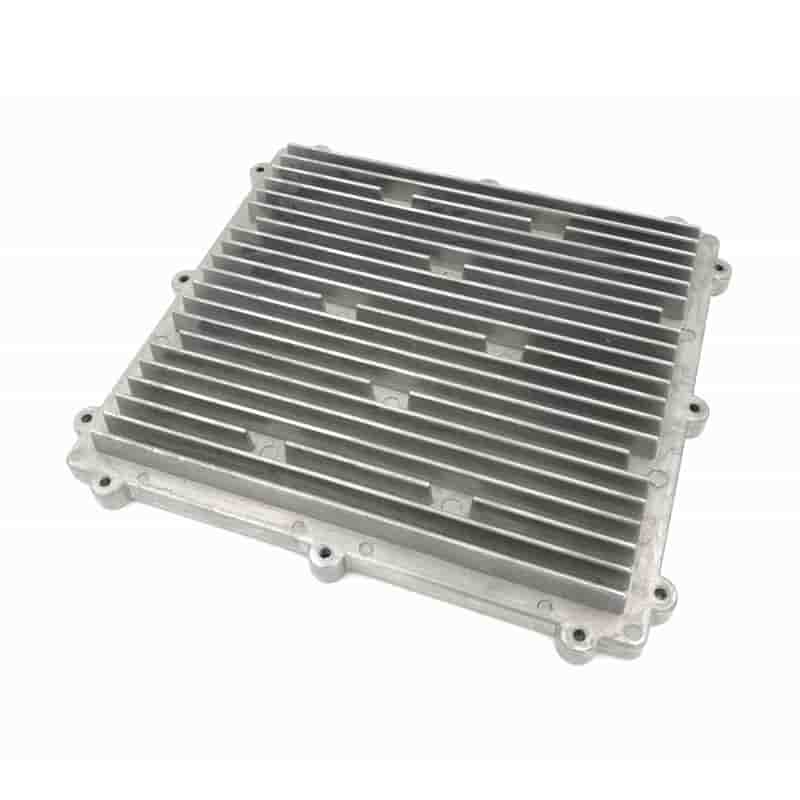
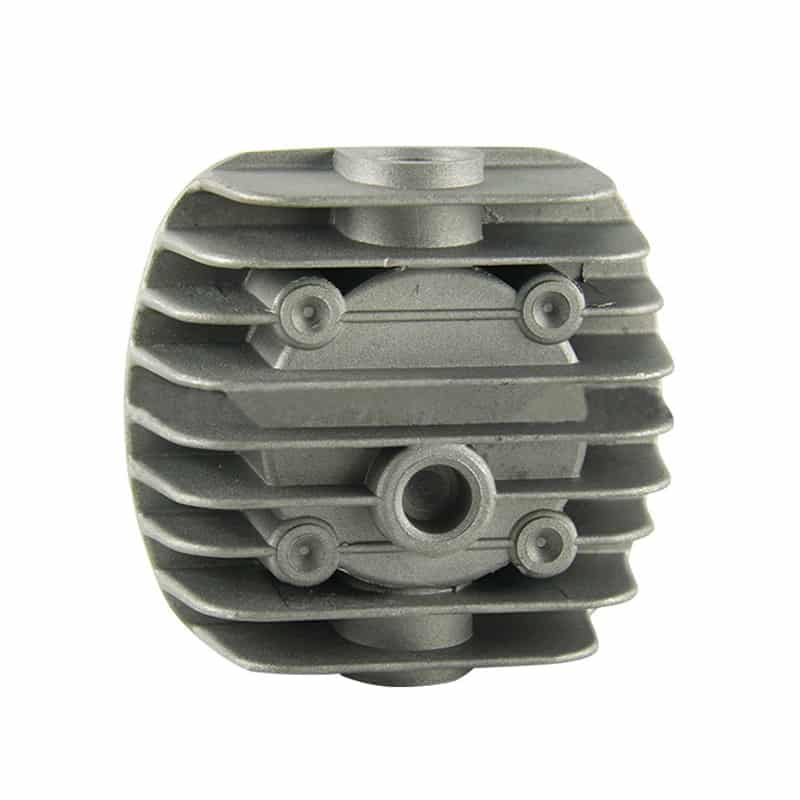
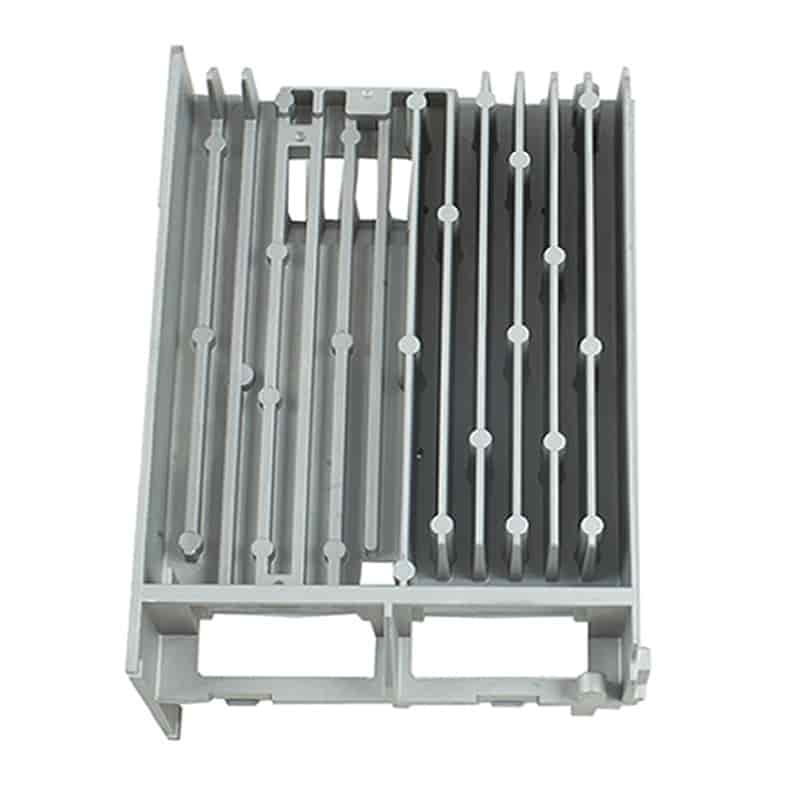
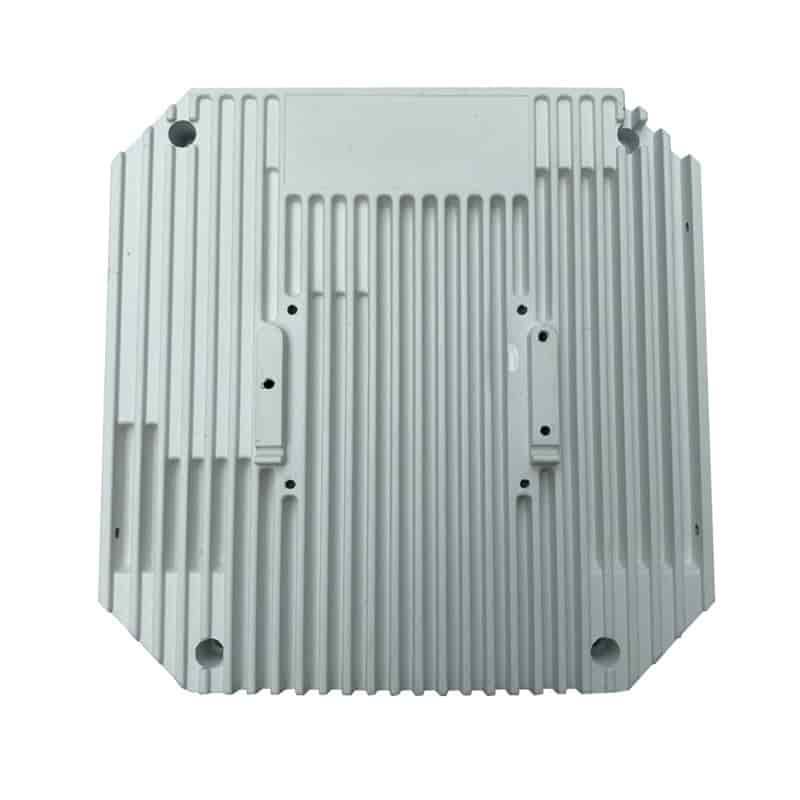
A representative selection of high-pressure die casting and CNC machined aluminum components produced for thermal management, automotive and industrial customers. Product names are recorded in the image metadata; the gallery itself stays clean and visual.
Why A380 Is the Standard Alloy for Die Cast Heat Sinks
A380 (AlSi8Cu3 class, close to ADC10 in the JIS system) is the most widely specified general-purpose die casting aluminum alloy. Its property balance is the reason most CNC machined die casting aluminum heatsink programs start with A380.
Balanced thermal performance
A380 spreads and dissipates heat quickly through densely cast fins and a flat base, making it suitable for natural convection, forced-air and fan-assisted cooling of electronics, power modules and lighting.
Excellent die-fill fluidity
Its silicon content near 8–9.5% gives the molten alloy outstanding fluidity, so thin, tall and closely spaced straight fins, pin fins and curved airflow channels fill completely in a single high-pressure shot.
Dense, pressure-tight structure
High-pressure die casting produces a fine, dense A380 skin with controlled internal porosity, giving leak-resistant housings and stable heat transfer across the base-to-fin junction without bonded interfaces.
Light weight, low inertia
With a density around 2.72 g/cm³, die cast A380 heat sinks are substantially lighter than copper or steel equivalents, reducing payload in EV, drone, portable and aerospace-adjacent equipment.
Good strength and rigidity
A380 offers an ultimate tensile strength around 317 MPa and useful hardness, so slim fins resist bending, mounting bosses survive repeated screw assembly, and the heat sink keeps geometry under vibration.
Machinability and finishing
A380 mills, drills and taps cleanly with predictable tool wear, and it accepts shot blasting, anodizing, powder coating, chromate conversion and brushing, allowing cosmetic and corrosion-resistant finishes on the same part.
Common Die Casting Materials We Routinely Machine
Although A380 is the default choice for CNC machined die casting aluminum heat sink production, our tooling and machining cells handle the full family of aluminum die casting alloys, plus zinc and magnesium alternatives when a design calls for them.
A380 / ADC10 class
AlSi8Cu3(Fe) general-purpose alloy. The default for heat sinks, electrical housings, brackets and covers where thermal transfer, castability and strength must be balanced.
ADC12 / A383
AlSi11Cu3(Fe), selected for thin-wall, complex geometry such as servo motor shells, communication covers and tightly finned thermal parts.
A413 / AlSi12 class
High-silicon alloy with exceptional fluidity and pressure tightness, often chosen for leak-sensitive enclosures and very thin section heat spreaders.
A360
Offers better atmospheric corrosion resistance than A380; suited to outdoor lighting, marine-adjacent and humid-environment heat sink applications.
A356 with T6 temper
Heat-treatable aluminum used in gravity or low-pressure castings that later require CNC machined precision surfaces and higher mechanical strength.
Zamak 3 / Zamak 5
Zinc die casting alloys for ultra-thin walls, fine surface detail, decorative hardware and structural parts that need precise post-machining.
AZ91D magnesium
Lightweight magnesium die casting alloy for weight-critical EMI shields, frames and thermal components where every gram counts.
Equivalent custom alloys
EN AC-AlSi9Cu3, YL113, AlSi12Fe and customer-designated equivalents can be quoted; alloy choice is confirmed against drawing and cooling target.
Surface Treatments and Finishing Options
A die cast A380 heat sink can be delivered as-cast, precision machined, or finished for corrosion protection, cosmetic appearance, emissivity and touch safety. Treatments below are applied in-house or through coordinated finishing partners as part of one order.
As-die-cast finish
Natural as-cast surface after trimming and cleaning, typically Ra 3.2–6.3 µm; economical for internal, non-cosmetic heat sinks.
Shot / sand blasting
Uniform matte texture that hides flow marks and gate shadows, evokes a clean aluminum look and slightly raises surface emissivity.
Vibratory deburring
Tumbling and vibratory finishing remove parting-line flash, sharp edges and burrs between fins for safe handling and even airflow.
CNC machined finish
Face-milled base and machined mounting surfaces at Ra 0.8–1.6 µm, creating a flat, low-resistance thermal interface plane.
Brushing and polishing
Directional brushed lines or buffed cosmetic faces for visible heat sinks in consumer electronics, audio and lighting products.
Anodizing
Clear, dyed (black, blue, silver and more) or hard anodizing that builds a protective oxide layer and can improve radiative cooling.
Powder coating / painting
Durable polyester powder or wet paint in RAL colors; black matte coatings are common where high emissivity and appearance matter.
Conversion coating
Chromate or chromium-free passivation and electrophoretic coating (e-coating) for stable conductivity and corrosion protection.
CNC Machined Die Cast Heat Sink Applications
Die cast A380 aluminum heat sinks appear wherever concentrated heat must be spread into moving or still air. The same process route also produces the housings, plates and shells mounted around those heat sources.
LED lighting cooling
Street lights, floodlights, downlights, stage lights and grow-light housings with integrated fin arrays that keep junction temperature low.
Power supplies and chargers
Switch-mode power supplies, fast chargers, adapters and UPS units requiring quiet, fanless natural-convection heat dissipation.
Solar and energy inverters
PV string inverters, converters, wind-power controllers and rectifiers where IGBT/MOSFET heat is spread into sealed enclosures.
Electric vehicle systems
On-board chargers, DC/DC converters, motor controllers, inverter cooling plates and auxiliary drive heat sinks for EV and HEV platforms.
Telecom and 5G networks
Base station units, AAU/RRU modules, routers, repeaters and baseband equipment needing weather-sealed die cast thermal structures.
Computers and servers
CPU, GPU, chipset and IGBT cooling, plus northbridge, memory and peripheral heat sinks with precision machined contact surfaces.
Motor drives and automation
Servo drives, VFD frequency converters, stepper motor housings, PLC controllers and robotics control boxes running around the clock.
Storage, medical and audio
Battery energy-storage BMS plates, medical device cooling, high-fidelity audio amplifiers and rail-transit traction electronics.
Industries Served by Our Die Casting Machining Workshop
Engineering language, drawing standards and inspection habits differ by sector; our teams build CNC machined die casting aluminum parts for the following industry groups on a daily basis.
Automotive and e-mobility
Thermal and structural die cast aluminum parts for conventional vehicles, electric and hybrid drivetrains, charging infrastructure and onboard power electronics.
LED and lighting
Integrated die cast heat sink bodies for indoor, outdoor, architectural and horticultural lighting, often with machined sealing grooves for gasketed lenses.
Telecommunications
Sealed, finned 4G/5G enclosure castings with machined connector bores, waveguide faces and precisely located mounting patterns.
Renewable energy
Solar photovoltaic, wind power and stationary energy-storage hardware that must sustain thermal cycling over long service life.
Consumer electronics
Cosmetic heat sinks and internal structural castings for projectors, appliances, audio equipment, gaming PCs and smart-home devices.
Industrial automation
Robotics, servo systems, pneumatic and hydraulic components, sensor housings and machinery parts combining cast complexity with machined precision.
Surface Quality and Dimensional Accuracy: As Cast vs. CNC Machined
Our process is deliberately two-stage: high-pressure die casting creates a near-net-shape A380 body with all fins and bosses, then CNC machining finishes only the datums, contact faces, holes and threads. Customers therefore pay casting economics while receiving machining-grade precision where it actually matters. The reference values below are typical and are always confirmed against part size, geometry and drawing requirements.
- Casting tolerance gradeISO 8062 / GB-T 15114 grade CT5–CT7 for high-pressure die castings
- Linear dimensional toleranceTypically around ±0.10 mm on dimensions up to 100 mm; scales with overall size
- As-cast surface roughnessGenerally Ra 3.2–6.3 µm on properly gated and shot-blasted surfaces
- Minimum wall / fin thicknessAbout 0.8–1.2 mm for A380, depending on fin height and fill length
- Draft angle on finsApproximately 1°–1.5° standard; reduced draft available with mold-flow optimization
- Casting weight rangeFrom a few grams (small chip heat sinks) to 8–10 kg per shot on larger machines
- Machining tolerance±0.005–±0.01 mm on critical features, generally IT5–IT7 grade work
- Machined surface roughnessRa 0.8–1.6 µm by milling/turning; finer values by grinding or polishing
- Bore and hole accuracyReamed bores to H7; drilled, counterbored and countersunk hole patterns to drawing
- Geometric tolerancesFlatness, parallelism and perpendicularity controlled within 0.02–0.05 mm
- Positional accuracyHole and thread position held within about 0.02 mm from machined datums
- Threads and interfacesPrecision tapped threads, helicoil/insert seats, O-ring grooves and burr-free thermal contact faces
In practice, the flat base of a CNC machined die casting A380 aluminum heat sink is face-milled so that it sits squarely against a heat source with thin, uniform thermal interface material, while the as-cast fins retain the low-cost geometry that maximizes convective area — the two tolerances coexist on one component.
Design Features of a Custom Die Cast Heat Sink
Unlike extruded profiles, high-pressure die casting forms three-dimensional geometry in one shot. The features below are routinely integrated into CNC machined A380 aluminum heat sink programs and reduce the number of separate parts in an assembly.
Mixed fin architecture
Straight fins, circular pin fins, square pins and hybrid arrays can be combined on one base to steer airflow exactly where the hottest components sit.
Thin-wall high fin density
A380 fluidity supports tall, thin, closely spaced fins that maximize surface area within a constrained footprint and weight budget.
Machined flat contact base
The base contact zone is CNC face-milled to a controlled flatness and Ra value, lowering thermal resistance at the chip or module interface.
Integrated mounting structure
Bosses, standoffs, mounting ears, snap hooks, positioning pins and shielding walls are cast with the heat sink instead of assembled later.
Holes, threads and inserts
Cast pilot holes are finished by CNC drilling and tapping; brass inserts, threaded steel sleeves and helicoils can be installed for repeated fastening.
DFM-optimized geometry
Draft angles, fillet radii, wall-thickness transitions, gate and overflow layout are reviewed before tooling is cut, avoiding sinks, cold shuts and porosity.
Customized from Drawings or Samples, One Piece to Mass Production
We machine and die cast all kinds of custom die casting aluminum heat sink parts. Either a complete engineering package or a single physical sample is enough to start, and order quantities scale smoothly from a single machined prototype to repeated high-volume deliveries.
Custom manufacturing from drawings
Send 2D/3D data in STEP, IGES, X_T, STL, DWG, DXF or PDF format. Our engineers review wall thickness, draft, tolerance stack-up, fin fill length and finish call-outs, then propose a mold and machining plan that matches the target price — whether the part is a compact board-level heat sink or a large inverter cooling plate.
Custom manufacturing from samples
If no drawing exists, ship a physical sample: we measure it, reconstruct 3D models and 2D drawings, identify the likely A380/ADC12-equivalent alloy, produce first-article samples and confirm fit and cooling performance before any production tooling is committed — a practical route for replacement parts and legacy equipment.
Prototype and small-batch supply
Single-piece CNC machined prototypes from solid A380-equivalent aluminum block, rapid soft-tool or gravity-cast trials, and bridge batches let engineering teams validate fit, airflow and assembly before scaling, with no pressure to commit to large minimum quantities.
High-volume series production
Once validated, hardened multi-cavity die casting molds, stable cycle parameters and dedicated CNC fixtures support repeatable batches from thousands to hundreds of thousands of units, with first-article, in-process patrol and final inspection keeping batch-to-batch consistency under control.
In-House CNC Machining and Precision Inspection
Casting is only half of a CNC machined die casting A380 aluminum heat sink. The cells below turn raw A380 castings into finished thermal parts and verify the dimensions that matter for assembly and heat transfer.
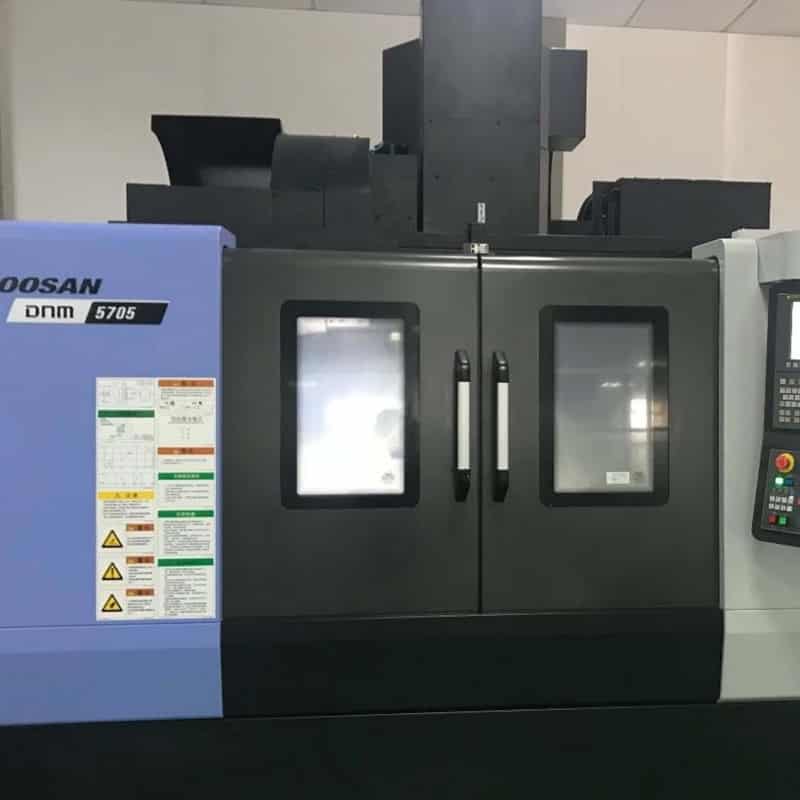
CNC milling
3-axis and 4-axis milling of heat sink bases, fin tops, mounting faces, pockets and sealing grooves, controlling flatness and surface roughness on every thermal interface.
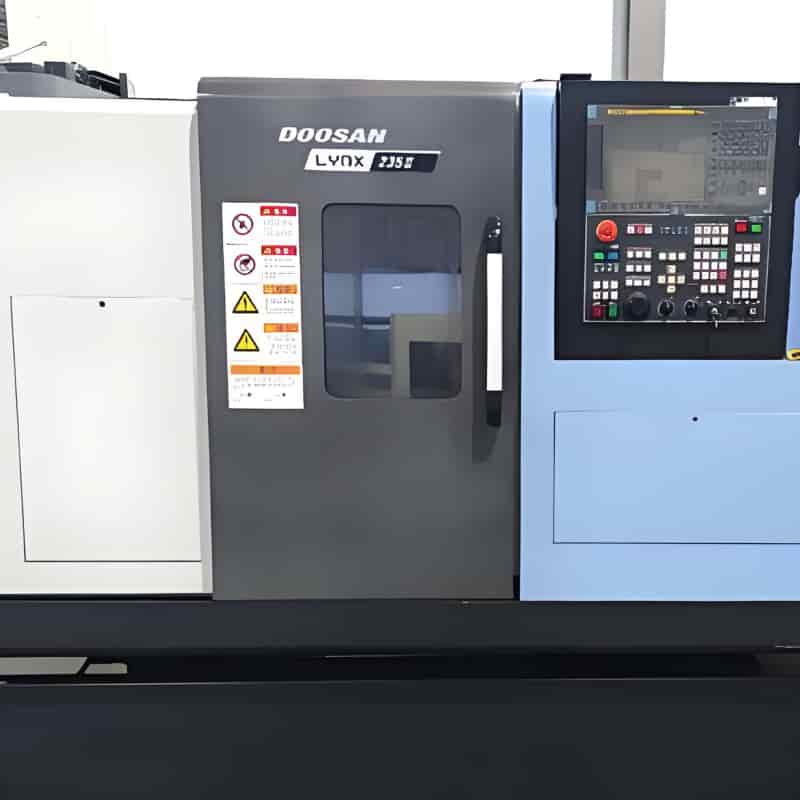
CNC turning
Turned rings, cylindrical housings, connector bosses, threaded interfaces and round heat spreaders, with concentricity and bore quality held to drawing.
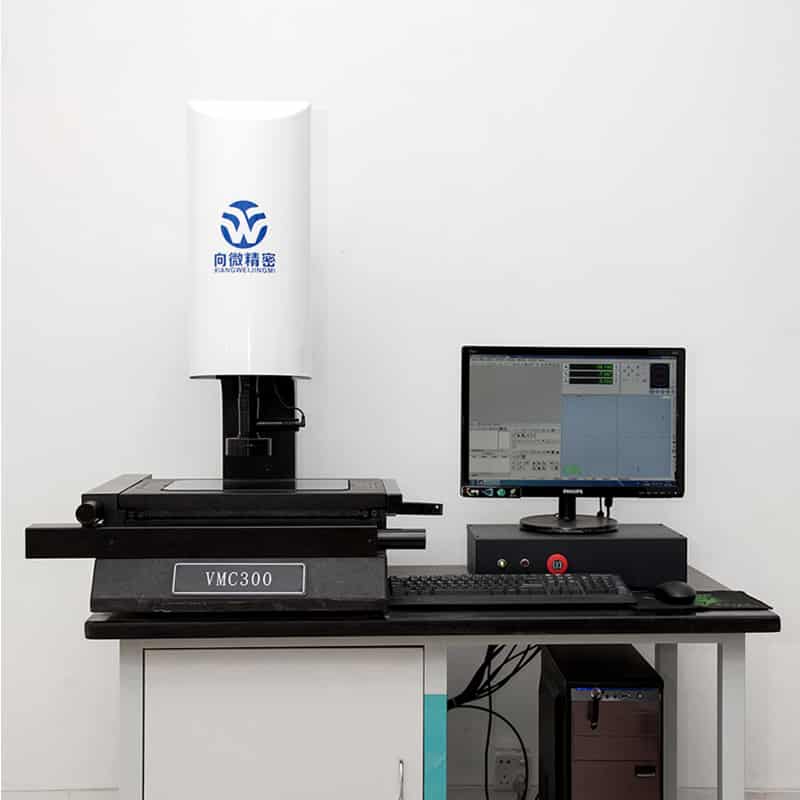
2D profile projector
Non-contact optical measurement of thin fin thickness, tip radii, draft angles and complex profiles that are too delicate or small for reliable hand gauging.
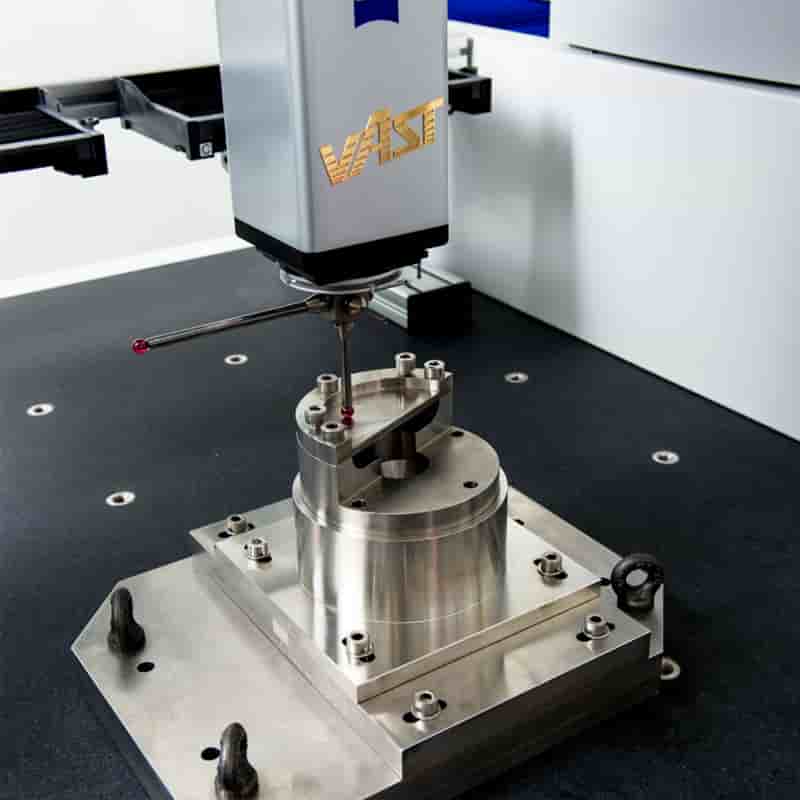
CMM testing
Coordinate measuring machines verify hole position, true position, flatness, parallelism and full 3D dimensions, with recorded reports for first-article and batch release.
Calibrated hand gauges
Vernier and digital calipers, outside/inside micrometers, height gauges, bore gauges, pin gauges and thread gauges cover routine dimension checks at every setup.
Surface and geometry checks
Surface roughness testers confirm Ra on machined bases; flatness blocks, dial indicators and granite surfaces verify contact-plane quality.
Thread and assembly trials
Go/no-go thread gauges, torque-controlled screw tests and fit-up jigs confirm that tapped holes and inserts survive real assembly conditions.
Staged inspection flow
Incoming alloy and casting checks, first-article inspection, in-process patrol inspection and final random inspection bracket every production lot.
Why Source a CNC Machined Die Casting Heat Sink from Our China Workshop
A finished A380 heat sink crosses mold making, casting, machining and finishing. Keeping those steps coordinated in one China manufacturing chain removes tolerance disputes between suppliers and shortens the path from revision to delivery.
Die casting plus CNC in one chain
High-pressure die casting, trimming, CNC milling/turning, drilling, tapping, deburring and finishing are coordinated by one engineering team, so cast datums and machined features are designed together rather than reconciled afterward.
Tooling and DFM support
Mold flow, gating and overflow design, cooling-line layout and draft strategy are handled in-house; customers receive design feedback before mold steel is cut, reducing sampling rounds.
No rigid minimum quantity
The same line supports a single CNC machined A380 sample, a few-hundred-piece pilot run and ongoing mass production, so products can scale without changing supplier.
Cost efficiency at volume
Near-net-shape castings remove only a small amount of metal during CNC work, which cuts cycle time, tooling cost and per-part price compared with machining heat sinks entirely from solid plate.
Repeatable process control
Die temperature, shot curve, alloy composition and machining parameters are fixed per part number, and first/middle/last article checks keep long production runs consistent.
English engineering communication
Drawings, revision marks, deviation requests and inspection reports are handled in English, which keeps overseas OEM and ODM projects aligned on dimensions and tolerances.