
China factory custom CNC machined plastic parts per drawing
Custom CNC machined plastic parts manufactured in China according to customer drawings, 3D CAD models, 2D engineering drawings, samples, or specified dimensions. We provide precision plastic CNC machining for prototypes, one-off components, low-volume orders, medium-volume production, and large batch manufacturing.
Our plastic machining capabilities cover CNC milling, CNC turning, drilling, tapping, boring, reaming, slotting, contour machining, precision hole machining, thread machining, and complex multi-axis machining for engineering plastic components and industrial plastic parts.
Precision Plastic Machining
Machined plastic components made from engineering plastics for demanding industrial applications.
Custom CNC Machined Plastic Parts
Examples of CNC machined plastic components, plastic CNC turned parts, precision plastic milling parts, gears, seals, clamps, screws, shafts, liners, and other custom plastic products.
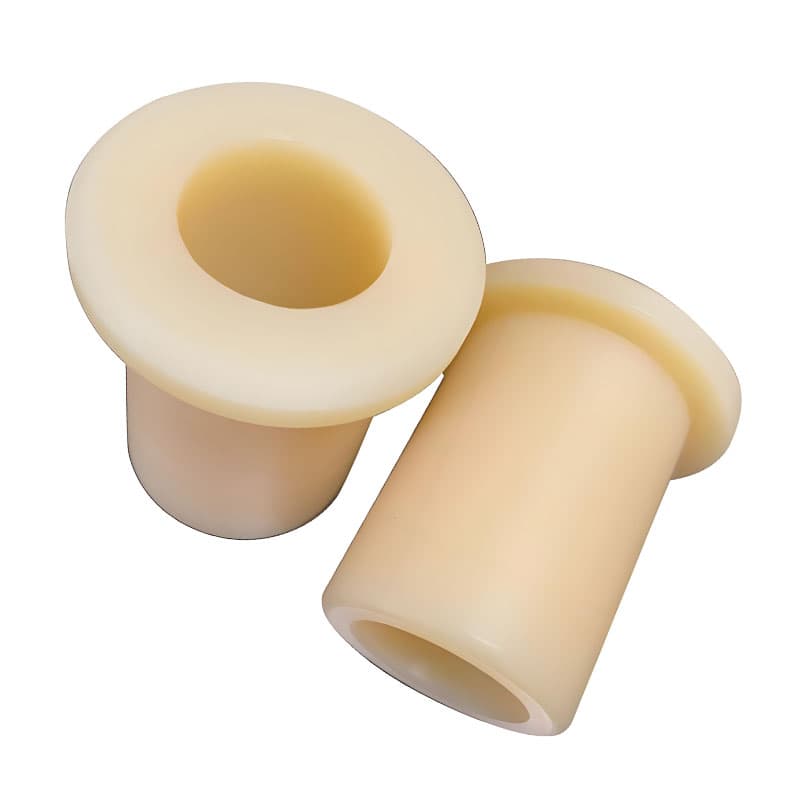
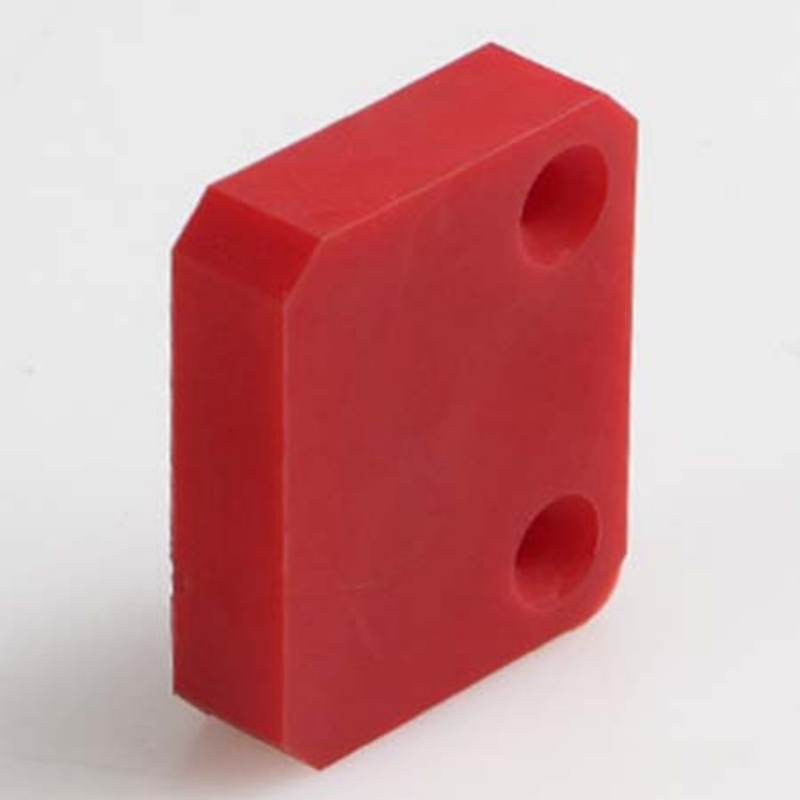
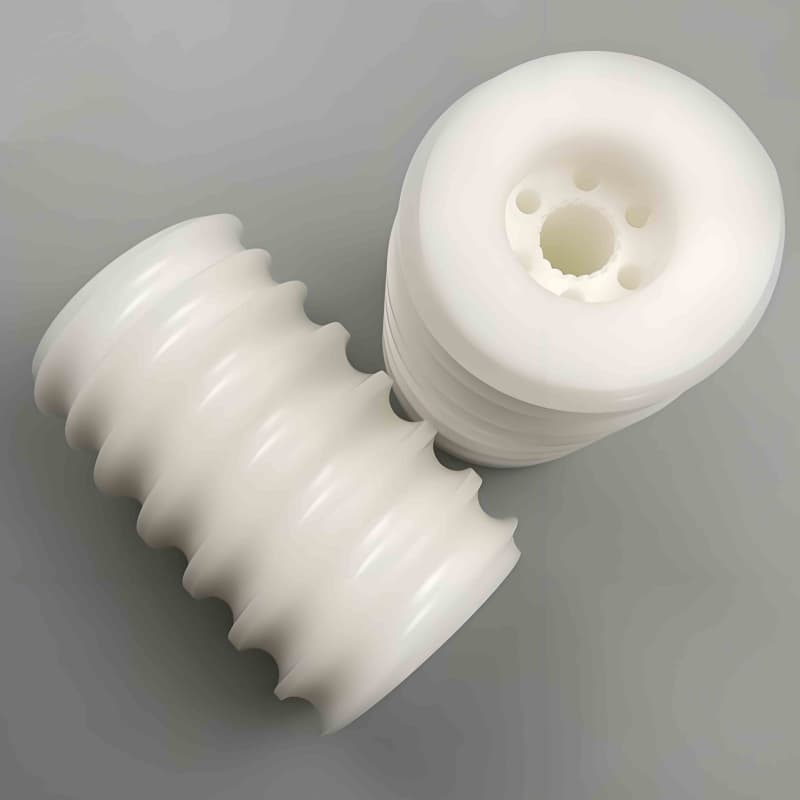

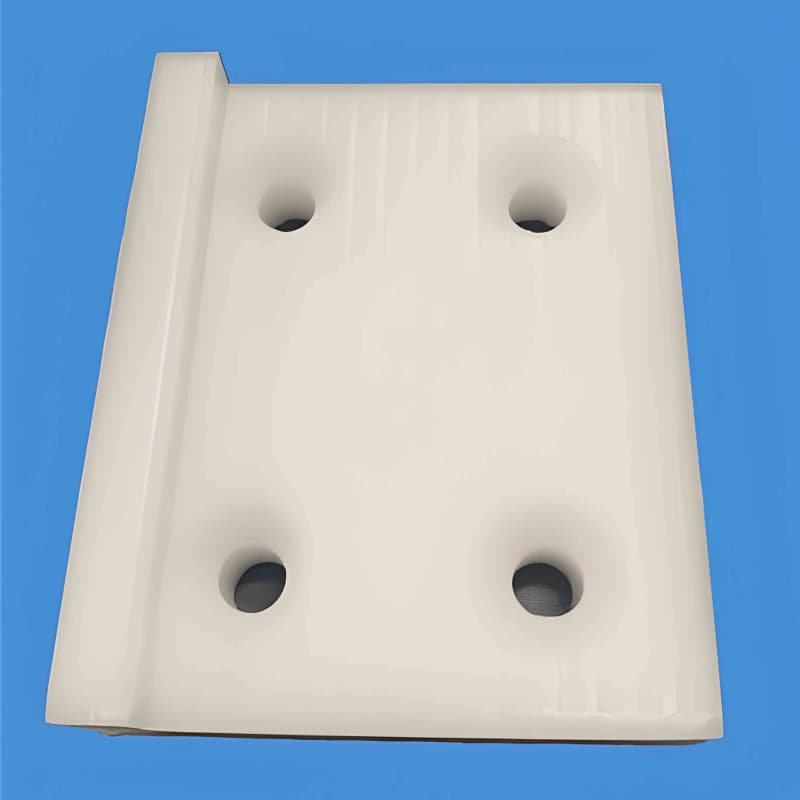
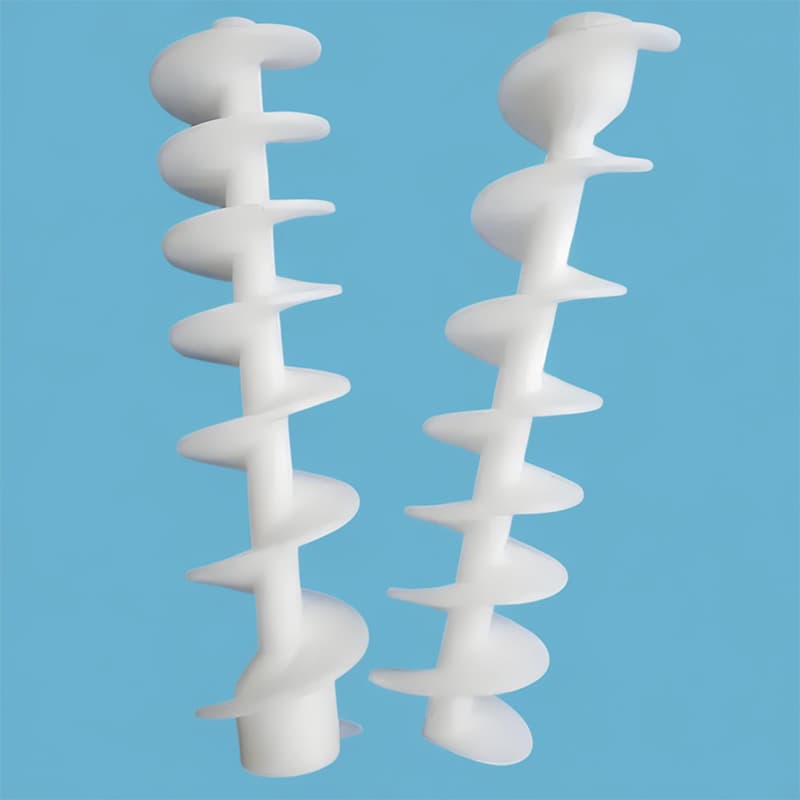
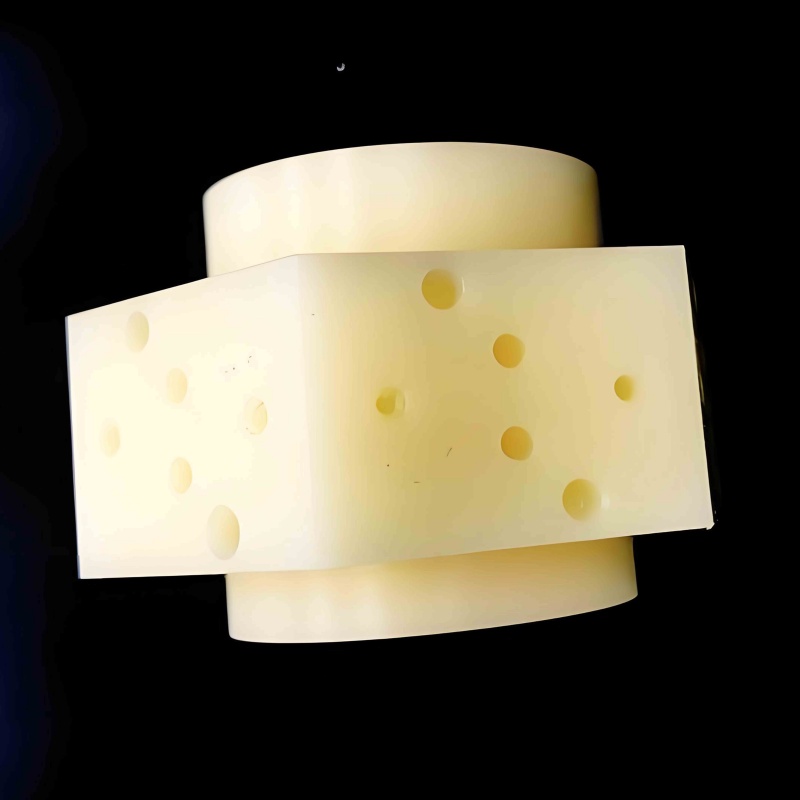
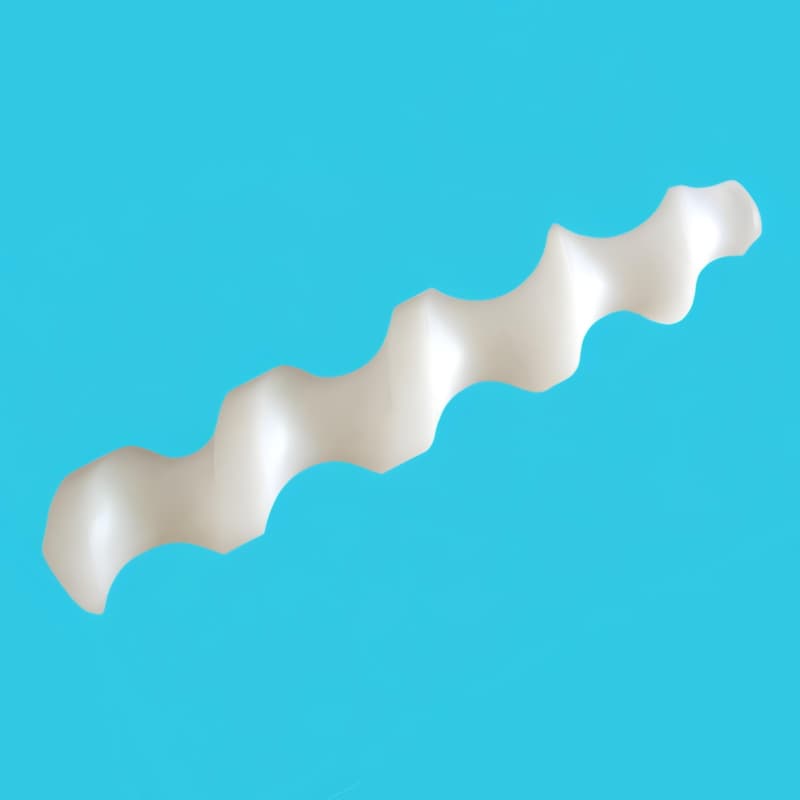
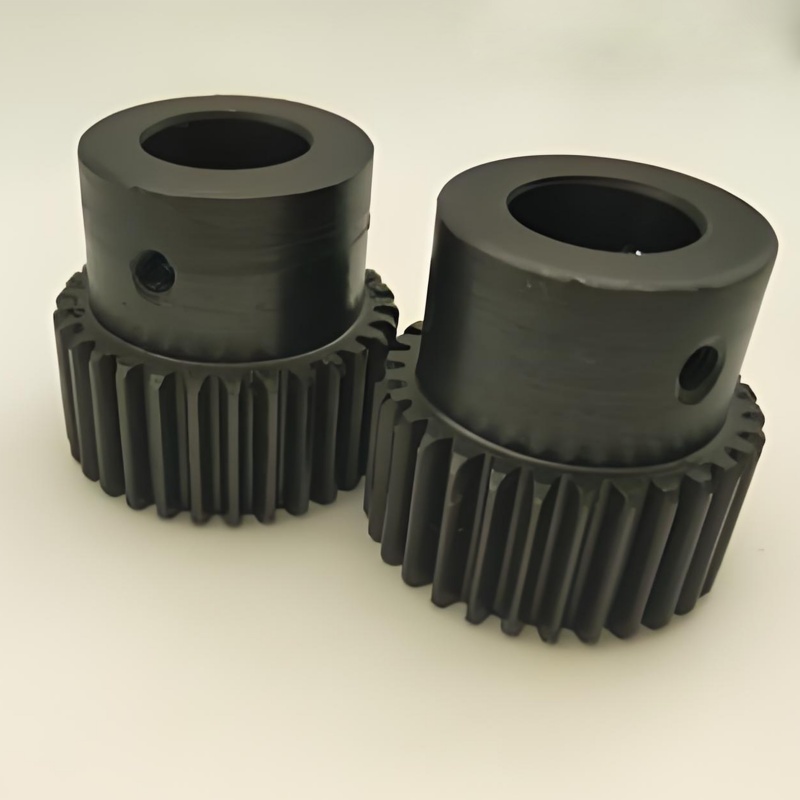
Plastic CNC Machining in China for Custom Parts
We manufacture custom machined plastic components for customers who need dimensional accuracy, repeatability, clean machining, functional performance, and reliable production of non-metallic parts.
Custom Plastic Parts per Drawing
Custom CNC plastic parts can be produced directly from customer-provided 2D drawings, 3D STEP files, IGES files, SolidWorks models, CAD data, technical specifications, or physical samples. Drawing dimensions, tolerances, hole locations, threads, radii, surface requirements, material specifications, and functional requirements can be considered during the machining process.
This makes the service suitable for OEM plastic parts, replacement components, prototype plastic parts, engineering samples, production components, and custom industrial plastic products.
Machined Plastic Components from China
Plastic machining is different from metal machining because many engineering plastics have lower rigidity, higher thermal expansion, different cutting behavior, and greater sensitivity to clamping pressure and heat. Proper tool selection, cutting conditions, workholding, chip evacuation, and dimensional control are important for producing stable plastic parts.
CNC machining allows complex plastic geometries to be produced without requiring injection molds, making it particularly useful for prototypes, low-volume production, customized industrial parts, and components with frequently changing designs.
China Plastic CNC Machining Capabilities
A combination of CNC milling, CNC turning, precision drilling, threading, boring, reaming, contour machining, and multi-axis machining allows different types of custom plastic components to be manufactured from engineering plastics.
CNC Plastic Milling
Precision milling for flat surfaces, pockets, slots, steps, contours, cavities, mounting features, complex profiles, and three-dimensional plastic components.
CNC Plastic Turning
CNC turning for plastic shafts, bushings, sleeves, rings, rollers, spacers, plugs, threaded components, cylindrical housings, and rotational parts.
Precision Plastic Drilling
Drilled and reamed holes, precision bores, mounting holes, blind holes, through holes, counterbores, countersinks, and hole patterns.
Plastic Thread Machining
Internal and external threads, custom threads, tapped holes, threaded bushings, plastic fittings, connectors, and screw-type components.
Complex CNC Profiles
Curved surfaces, irregular contours, pockets, grooves, thin-wall features, and complicated three-dimensional geometries can be machined from solid plastic stock.
Multi-Axis Plastic Machining
Multi-axis machining can reduce setups and improve access to complex surfaces, angled features, deep cavities, and difficult-to-machine plastic geometries.
Prototype Plastic Parts
CNC machining is suitable for functional prototypes when customers need actual engineering plastic instead of a visually similar printed prototype.
Production Plastic Parts
Repeat production of identical plastic components can be supported from single-piece prototypes through low-volume, medium-volume, and larger batch production.
Common Plastics for CNC Machined Parts
Different engineering plastics provide different combinations of strength, wear resistance, chemical resistance, dimensional stability, friction characteristics, electrical insulation, temperature resistance, impact resistance, and machinability.
| Plastic Material | Typical Characteristics | Common Machined Parts and Uses |
|---|---|---|
| POM / Acetal / Delrin | Good dimensional stability, low friction, good wear resistance, excellent machinability. | Plastic gears, bushings, rollers, guides, pulleys, shafts, fixtures, precision mechanical parts. |
| PEEK | High-performance engineering plastic with excellent temperature, chemical, wear, and mechanical properties. | Seals, bushings, valve components, insulation parts, pump components, aerospace and industrial components. |
| PTFE | Very low friction, excellent chemical resistance, good non-stick properties, electrical insulation. | Seals, rings, washers, valve seats, chemical equipment components, sliding parts. |
| UHMW-PE | High abrasion resistance, low friction, impact resistance, suitable for sliding applications. | Wear strips, liners, guides, rollers, conveyor components, wear-resistant plastic parts. |
| HDPE | Good chemical resistance, moisture resistance, impact resistance, lightweight construction. | Containers, liners, guides, machine components, chemical equipment parts, industrial plastic components. |
| PP / Polypropylene | Lightweight, good chemical resistance, moisture resistance, fatigue resistance, suitable for many industrial applications. | Plastic screws, clamps, bottle handling components, conveyor parts, pump components, food machinery parts. |
| PA / Nylon | Good mechanical strength, wear resistance, impact resistance, and sliding performance. | Gears, rollers, bushings, bearings, pulleys, structural plastic parts, machine components. |
| ABS | Good impact resistance, easy machining, stable general-purpose engineering plastic. | Housings, covers, prototypes, brackets, enclosures, fixtures, equipment components. |
| PC / Polycarbonate | High impact resistance, transparency options, good dimensional performance. | Protective covers, transparent machine components, housings, inspection components. |
| PMMA / Acrylic | Optical clarity, attractive appearance, good machinability. | Transparent covers, windows, display components, optical parts, equipment panels. |
| PEEK GF / CF | Reinforced PEEK with increased stiffness and dimensional stability. | High-performance mechanical parts, precision supports, industrial components. |
| PTFE Filled Grades | Modified friction and wear characteristics for specific mechanical applications. | Sealing components, sliding rings, wear components, valve parts. |
| PVDF | Excellent chemical resistance and useful mechanical and temperature performance. | Chemical equipment components, pump parts, valve components, pipe-related parts. |
| PPS | Good dimensional stability, chemical resistance, and temperature resistance. | Industrial machinery parts, electrical components, pump and valve components. |
Common Plastic Colors
CNC machined plastic parts can be manufactured in different standard material colors depending on the plastic grade and stock availability. Common colors include natural, white, black, blue, red, green, yellow, gray, orange, brown, and other specified colors.
Natural and black engineering plastics are widely used for industrial components, while white, blue, red, green, and other colors can be selected when visual identification, product appearance, assembly differentiation, or application-specific requirements are important.
For transparent or translucent components, materials such as polycarbonate and acrylic can provide different optical characteristics depending on the required application.
How to Select the Right Plastic
Material selection depends on the working environment rather than appearance alone. Important factors can include operating temperature, load, friction, wear, chemical exposure, moisture, impact, electrical insulation, dimensional stability, stiffness, flexibility, surface contact, and expected service life.
For example, POM is often selected for precision mechanical components and gears, PTFE for low-friction and chemical-resistant components, PEEK for demanding environments, UHMW-PE for wear applications, and PP for lightweight chemical-resistant components.
China Factory Machined Plastic Parts by Product Type
CNC machining can produce a broad range of custom plastic components. The final geometry, material, tolerance, surface requirement, and production quantity can be based on the customer's design.
Industrial Applications for Machined Plastic Components
CNC machined plastics are used where a combination of low weight, corrosion resistance, electrical insulation, low friction, wear resistance, chemical resistance, or design flexibility is required.
Food Machinery
Plastic screws, guides, clamps, rollers, bottle handling components, conveyor components, bushings, wear strips, and custom machine parts.
Packaging Machinery
Plastic gears, guides, spacers, rollers, fixtures, clamps, change parts, and customized machine components.
Conveyor Systems
UHMW-PE wear strips, POM guides, plastic rollers, sprocket-related components, clamps, supports, and conveyor machine parts.
Pumps and Valves
Plastic valve seats, seals, bushings, spacers, liners, pump components, manifolds, impeller-related components, and chemical-resistant parts.
Chemical Equipment
Chemical-resistant plastic fittings, liners, valve components, sealing components, supports, and custom process equipment parts.
Automation Equipment
Precision plastic brackets, guides, fixtures, rollers, gears, spacers, sensor mounts, and machine automation components.
Electronics Equipment
Insulating components, housings, spacers, covers, supports, connectors, mounting parts, and custom non-conductive components.
Industrial Machinery
Custom plastic mechanical components used for sliding, positioning, guiding, insulating, sealing, protecting, and supporting machine assemblies.
CNC Plastic Machining and Dimensional Inspection
Precision plastic machining requires both controlled cutting processes and dimensional inspection. Plastic components can be inspected according to the critical dimensions and tolerances specified on the engineering drawing.
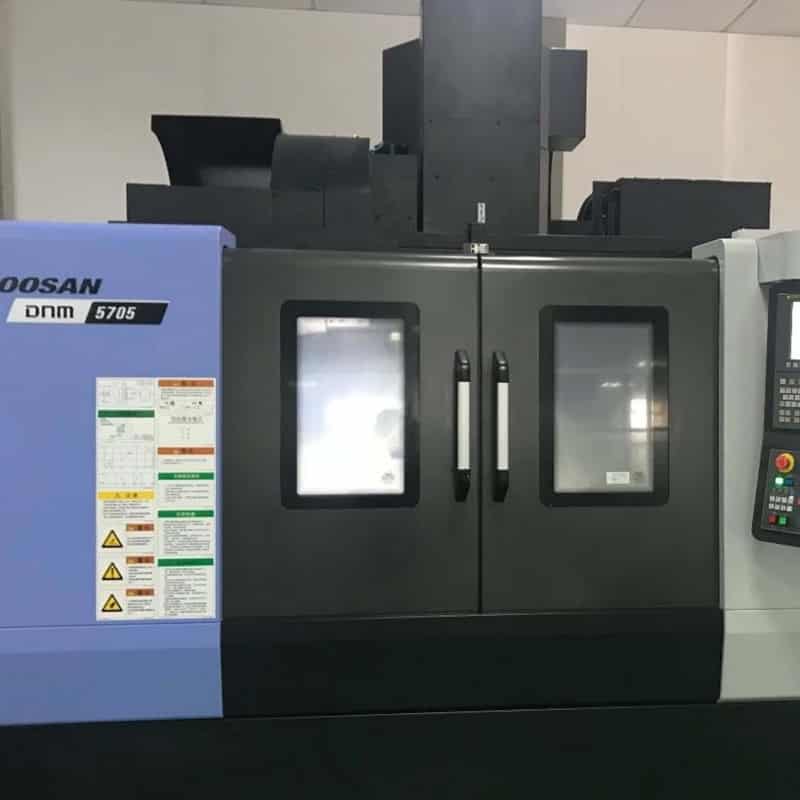
CNC Milling
CNC milling is used for plastic blocks, plates, housings, gears, brackets, fixtures, pockets, slots, contours, and complex three-dimensional components.
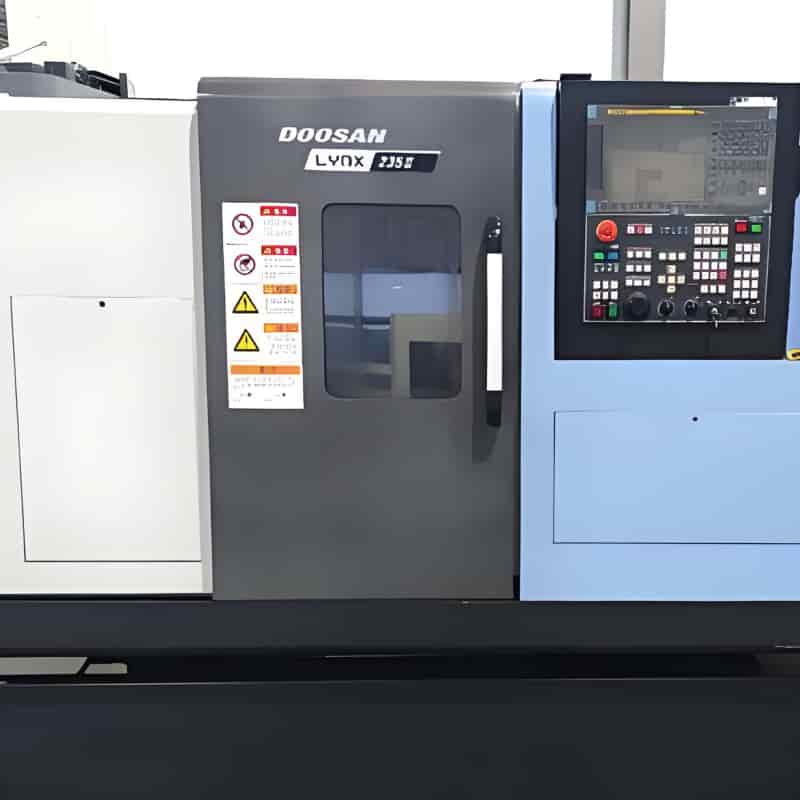
CNC Turning
CNC turning produces cylindrical plastic parts such as bushings, shafts, sleeves, rings, rollers, plugs, spacers, and threaded components.
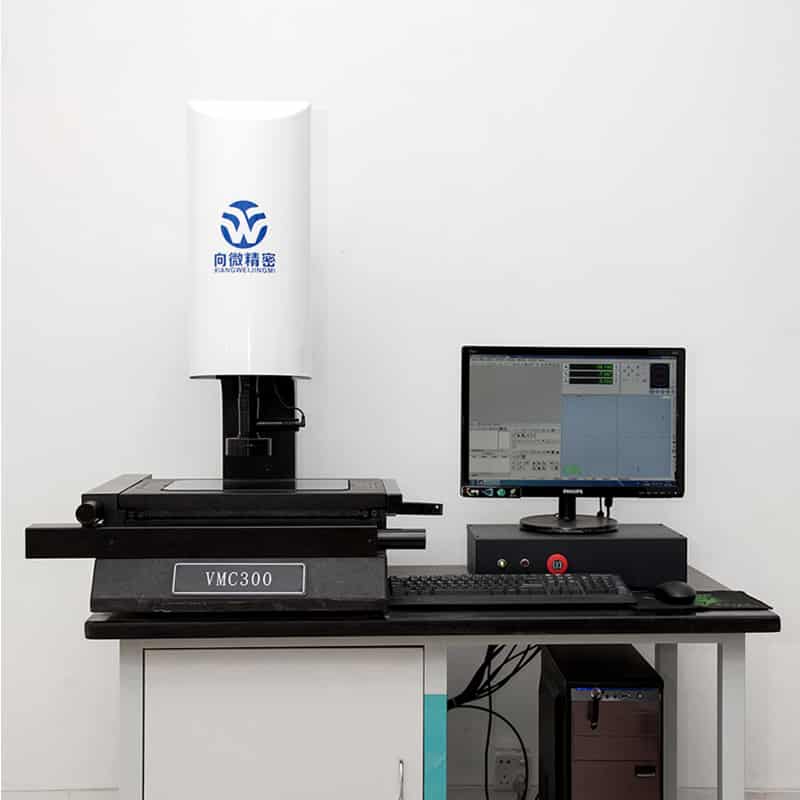
2D Optical Measurement
Optical measurement can be used for profiles, dimensions, hole locations, angles, radii, contours, and other two-dimensional characteristics.
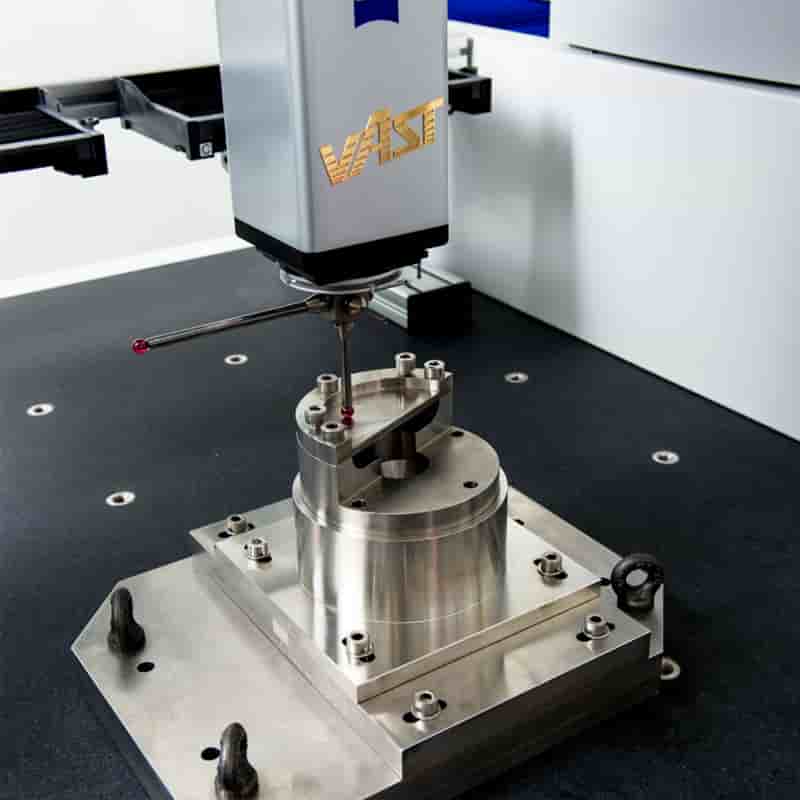
CMM Inspection
Coordinate measuring equipment can be used to inspect critical dimensions, geometric relationships, positional accuracy, and other drawing-defined requirements.
Plastic CNC Machining Accuracy and Surface Quality
The achievable dimensional accuracy and surface finish of a machined plastic component depend on the material grade, part geometry, wall thickness, feature size, machining method, tool geometry, clamping condition, thermal conditions, and drawing requirements.
Dimensional Accuracy
CNC machining can provide accurate external dimensions, internal dimensions, hole diameters, shaft diameters, slot widths, pocket dimensions, step heights, thread dimensions, and positional relationships. Suitable machining strategies can be selected according to the required tolerance and geometry.
For critical plastic components, thermal expansion and material deformation should be considered during process planning because plastic generally behaves differently from steel and aluminum during machining.
Surface Finish
CNC machined plastic surfaces can be produced with a clean and uniform finish suitable for functional mechanical applications. Fine finishing strategies, appropriate cutting tools, controlled feeds and speeds, and stable workholding can improve surface quality.
Surface requirements may include smooth sealing surfaces, sliding surfaces, bearing surfaces, cosmetic surfaces, optical surfaces, or specified roughness values according to the engineering drawing.
Engineering Considerations for Precision Plastic Machining
Plastic machining requires process planning that considers the physical characteristics of non-metallic materials.
Thermal Expansion
Engineering plastics generally have higher thermal expansion than metals. Heat generated during machining can influence final dimensions, particularly on precision components.
Material Rigidity
Some plastics are relatively flexible compared with metals. Clamping force and machining direction must therefore be considered to minimize deformation.
Tool Selection
Sharp cutting edges and appropriate tool geometry can help produce clean plastic surfaces, improve chip evacuation, and reduce heat generation.
Dimensional Stability
Material condition, machining temperature, storage environment, and part geometry can influence the dimensional stability of precision plastic components.
Thin-Wall Parts
Thin-wall plastic components require careful workholding and machining strategies to reduce vibration, distortion, and dimensional variation.
Deep Cavities
Deep pockets and narrow cavities require suitable tools, chip evacuation, machining sequences, and sometimes multiple setups.
Threads and Holes
Plastic threads and precision holes can require specific machining parameters because different materials have different strength, elasticity, and chip characteristics.
Repeatability
Consistent tooling, controlled machining parameters, inspection procedures, and stable workholding are important when producing repeated batches of plastic parts.
From One Custom Plastic Part to Large Batch Production
CNC plastic machining is flexible for different production quantities and is particularly useful when tooling costs for molding would not be economical for a prototype or smaller production run.
One-Piece Prototype
One custom plastic component can be machined directly from a drawing or CAD model for prototype testing, fit checks, assembly verification, functional evaluation, and design validation.
Low-Volume Production
Small production quantities are suitable for customized industrial parts, replacement parts, engineering components, pilot production, and products with variable demand.
Medium and Large Batches
Repeated CNC production can be arranged for larger quantities where consistent dimensions, stable processes, inspection, and repeatable part quality are important.
OEM CNC Machined Plastic Parts from China
OEM plastic machining is suitable for customers who already have a product design and need a manufacturing supplier to produce the physical components. Parts can be manufactured according to customer drawings, CAD models, samples, material specifications, and dimensional requirements.
Typical OEM plastic machining projects include custom plastic gears, precision bushings, plastic shafts, sealing rings, machine guides, rollers, clamps, housings, brackets, plastic fittings, valve components, pump parts, conveyor components, and automation parts.
Custom Plastic Parts from Sample
When an original drawing is unavailable, a physical sample can provide useful information for reverse engineering and replacement-part manufacturing. Dimensions, geometry, holes, threads, profiles, and other visible features can be measured and reconstructed into a manufacturing model.
This approach is useful for obsolete machine components, replacement plastic parts, difficult-to-source components, maintenance parts, and customized machinery.
Plastic CNC Machining China for Different Industrial Needs
Our custom machining scope covers different combinations of manufacturing method, material, component type, application, and performance requirement.
China Factory Machined Plastic Parts for Specific Functions
Plastic components can be machined according to their required mechanical or functional role, including guiding, sliding, sealing, supporting, insulating, protecting, conveying, positioning, fastening, rotating, and wear-resistant applications.
Low-Friction Plastic Parts
CNC machined POM, PTFE, UHMW-PE, and other suitable materials can be used for sliding, guiding, bearing, and low-friction mechanical applications.
Wear-Resistant Plastic Parts
Plastic liners, wear strips, rollers, guides, bushings, and other components can be manufactured for continuous sliding or contact applications.
Chemical-Resistant Plastic Parts
Materials such as PTFE, PP, PE, PVDF, and selected engineering plastics can be machined for chemical processing and fluid-handling applications.
Insulating Plastic Parts
CNC machined plastic spacers, brackets, housings, supports, covers, and other non-conductive components can be used in electrical and electronic equipment.
Food Machinery Plastic Parts
Custom plastic screws, clamps, guides, bottle turners, rollers, and conveyor components can be machined for food processing and packaging machinery.
Sealing Plastic Components
Rings, seals, valve seats, washers, gaskets, and custom sealing components can be machined from suitable plastic and elastomeric materials.
Lightweight Machine Parts
Plastic can replace heavier metal components in selected applications where reduced weight, corrosion resistance, insulation, or low friction is beneficial.
Replacement Plastic Parts
Custom CNC machining can reproduce discontinued, damaged, worn, or difficult-to-source plastic components for industrial equipment and machinery.
Dimensional Quality Control for CNC Machined Plastic Parts
Inspection requirements can be established according to the drawing and the functional importance of each feature. Critical dimensions can receive additional measurement attention during production.
Dimensional Inspection
Depending on the component, inspection may include outside diameter, inside diameter, length, width, thickness, hole diameter, hole position, thread dimensions, slot width, pocket dimensions, angles, radii, and other specified dimensions.
Calipers, micrometers, gauges, optical measurement equipment, and coordinate measuring equipment can be selected according to the required measurement accuracy and part geometry.
Geometric Inspection
For precision plastic parts, geometric relationships such as flatness, parallelism, perpendicularity, concentricity, symmetry, position, cylindricity, and runout may be evaluated when these requirements are specified on the drawing.
Inspection results can be compared with the engineering drawing requirements to verify that the machined component meets the specified dimensional criteria.
Common China CNC Plastic Parts Search Categories
Custom plastic machining covers many material-and-application combinations used by engineers, purchasing teams, maintenance departments, machinery manufacturers, and OEM product developers.
POM Plastic Parts
CNC machined POM gears, POM bushings, POM rollers, POM shafts, POM guides, POM pulleys, POM spacers, POM blocks, POM brackets, and other precision acetal components.
PEEK Plastic Parts
CNC machined PEEK rings, PEEK bushings, PEEK seals, PEEK valve components, PEEK supports, PEEK electrical insulation components, and high-performance engineering parts.
PTFE Plastic Parts
CNC machined PTFE seals, PTFE rings, PTFE washers, PTFE valve seats, PTFE bushings, PTFE chemical equipment components, and low-friction plastic parts.
PP Plastic Parts
CNC machined PP screws, PP clamps, PP bottle handling parts, PP machine components, PP chemical-resistant components, and custom polypropylene parts.
Custom CNC Machined Plastic Parts Manufacturer in China
For companies searching for CNC machined plastic parts China, plastic CNC machining China, machined plastic China, or plastic machining China, CNC machining provides a flexible method for manufacturing custom engineering plastic components directly from digital designs.
A China factory custom CNC plastic machining service can manufacture plastic parts per drawing without the need to create an injection molding tool for every new design. This is particularly useful for prototypes, replacement parts, engineering samples, customized machine components, low-volume production, and products that require frequent design changes.
Custom CNC plastic parts can include CNC machined plastic gears, CNC plastic bushings, CNC plastic shafts, CNC plastic rollers, CNC plastic seals, CNC plastic rings, CNC plastic clamps, CNC plastic guides, CNC plastic liners, CNC plastic screws, CNC plastic fittings, CNC plastic housings, CNC plastic brackets, and many other precision machined plastic components.
Materials can include POM, Delrin, PEEK, PTFE, PP, PE, HDPE, UHMW-PE, nylon, PA, ABS, polycarbonate, acrylic, PVDF, PPS, and other machinable engineering plastics according to the requirements of the component.
CNC milling and CNC turning can be combined with precision drilling, tapping, boring, reaming, contour machining, and multi-axis machining to produce complex plastic components with controlled dimensions and functional surfaces.
Complete Custom Plastic Machining Scope
The machining service is designed for customers who need custom plastic components manufactured from drawings or samples, from the first prototype through repeat production.
Drawing-Based Manufacturing
Manufacturing according to 2D drawings, 3D CAD models, dimensional specifications, tolerance requirements, and engineering notes.
Sample-Based Manufacturing
Custom plastic components can be developed from existing samples when an original manufacturing drawing is unavailable.
Prototype Development
CNC machined prototypes can be produced from actual engineering plastics for dimensional checking, assembly testing, and functional evaluation.
Repeat Production
Established CNC machining processes can be used for repeated production of consistent plastic components in different order quantities.
Precision Plastic Milling
Suitable for complex profiles, pockets, slots, holes, mounting surfaces, brackets, housings, gears, and three-dimensional plastic components.
Precision Plastic Turning
Suitable for cylindrical plastic components including shafts, bushings, rings, sleeves, rollers, spacers, and threaded parts.
Custom Engineering Plastics
A wide range of engineering plastic materials can be machined according to the required mechanical, chemical, thermal, electrical, and dimensional properties.
Inspection and Measurement
Dimensional and geometric characteristics can be inspected using appropriate measurement equipment according to the drawing requirements.
Frequently Requested Custom Plastic Machining Requirements
Can plastic parts be machined from a drawing?
Yes. Custom plastic parts can be manufactured from 2D drawings, 3D CAD files, technical specifications, or physical samples. Critical dimensions and tolerances can be interpreted according to the supplied engineering information.
Can CNC machining produce one plastic part?
CNC machining is suitable for one-piece prototypes and custom replacement components. It does not require the same dedicated mold investment associated with many molding processes.
Can CNC plastic machining be used for production?
Yes. CNC machining can be used for low-volume, medium-volume, and larger production quantities when the component geometry and economics are suitable for machining.
What plastic materials can be CNC machined?
Common materials include POM, Delrin, PEEK, PTFE, PP, PE, UHMW-PE, nylon, PA, ABS, PC, PMMA, PVDF, PPS, and other engineering plastics suitable for machining.
Can complex plastic parts be CNC milled?
Yes. CNC milling can produce pockets, slots, contours, curved surfaces, irregular profiles, precision holes, thin-wall structures, and other complex geometries.
Can plastic gears be CNC machined?
Custom plastic gears can be CNC machined from suitable engineering plastics such as POM and nylon, depending on the gear design, load, wear, speed, and operating environment.
Can plastic shafts and bushings be CNC turned?
Yes. CNC turning is commonly used for plastic shafts, bushings, sleeves, rollers, rings, spacers, plugs, and other rotational components.
Can precision plastic parts have smooth surfaces?
Yes. Suitable engineering plastics can be machined with controlled cutting parameters and finishing strategies to achieve smooth functional surfaces and specified roughness requirements where the material and geometry allow.