
Custom CNC Machined Shafts for Machinery as Per Drawing
We machine all kinds of shaft components according to customer drawings, CAD files or physical samples. Every custom CNC machined shaft is produced as a custom precision machined shaft according to customer drawings: a custom turned shaft, a precision turned shaft or a ground shaft can be made from a single one-off piece to stable large-batch production. When only a worn sample is available, the part is measured, re-drawn and remanufactured as a faithful machined shaft per drawing or per sample.
From a CNC turned custom shaft with strict tolerance to a stainless steel custom machined shaft for machinery equipment, custom shaft machining covers material selection, turning, milling, spline cutting, grinding, hardening and surface finishing, so that each custom machined shaft matches its bearing seats, gears, couplings and seals at assembly.
Per Drawing or Sample
Machined shaft per drawing, per sample or built as a custom dimension shaft from sketched dimensions.
Strict Tolerance
High tolerance machined shaft with controlled diameter, roundness, coaxiality, runout and roughness.
Full Material Range
Stainless steel, alloy steel, carbon steel and aluminum machined shaft options, with grade selection.
Any Order Size
From one custom CNC machined shaft prototype to repeat, high-volume batch production.
Custom Machined Shaft Product Examples
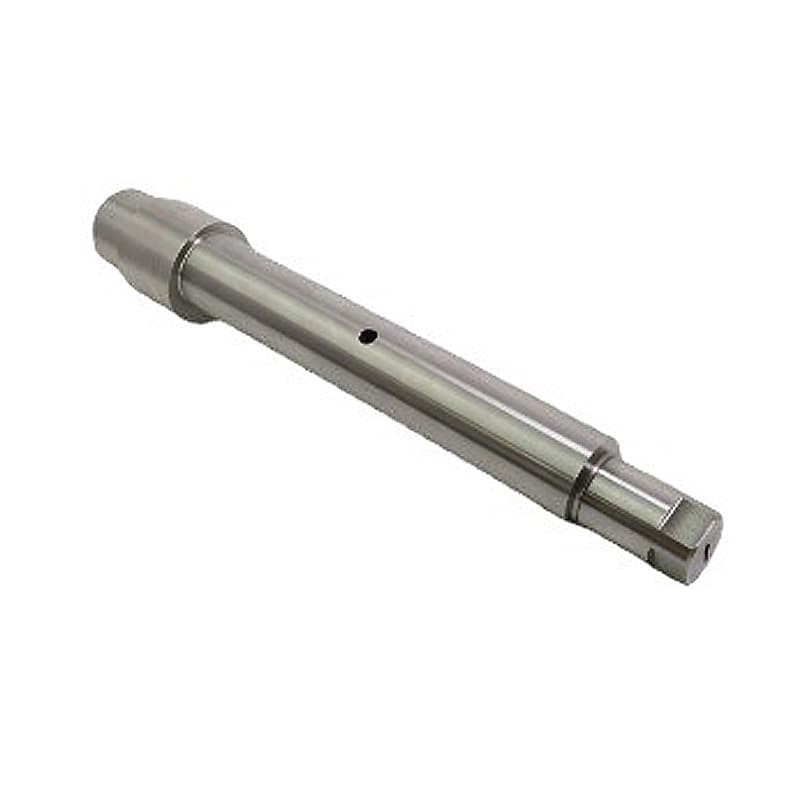
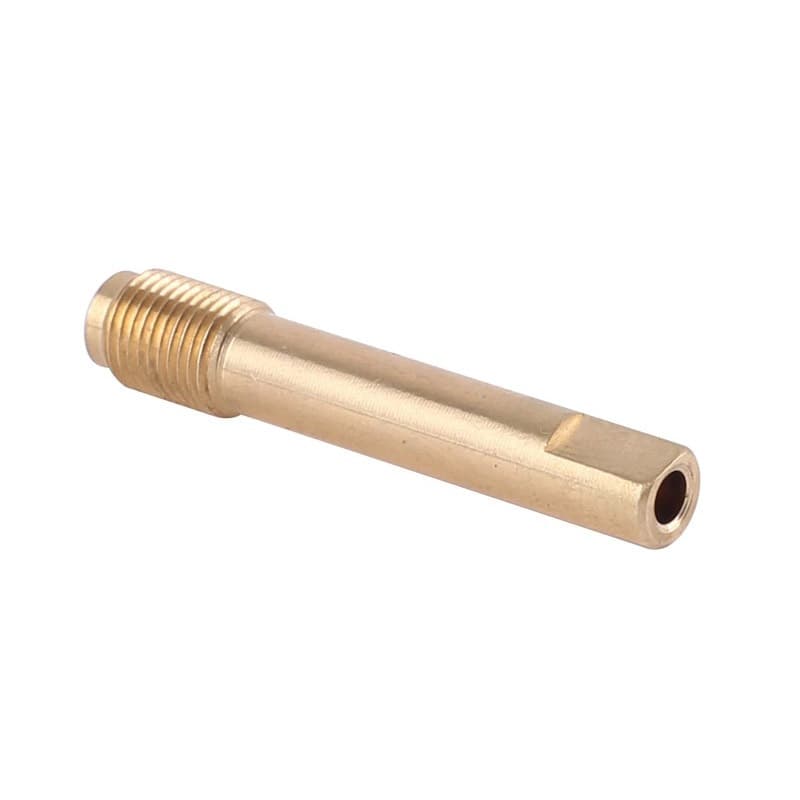
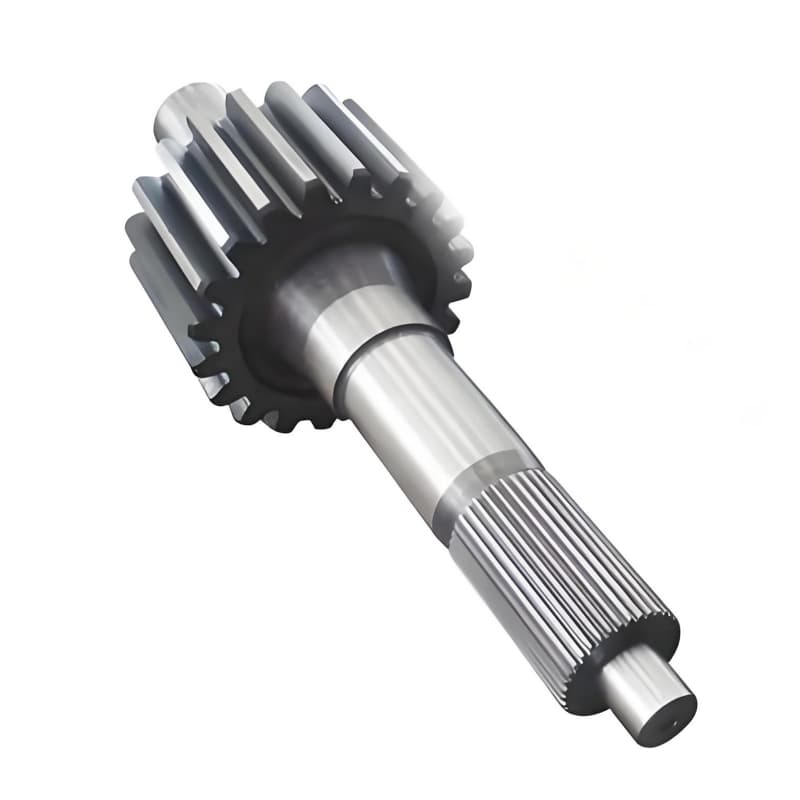
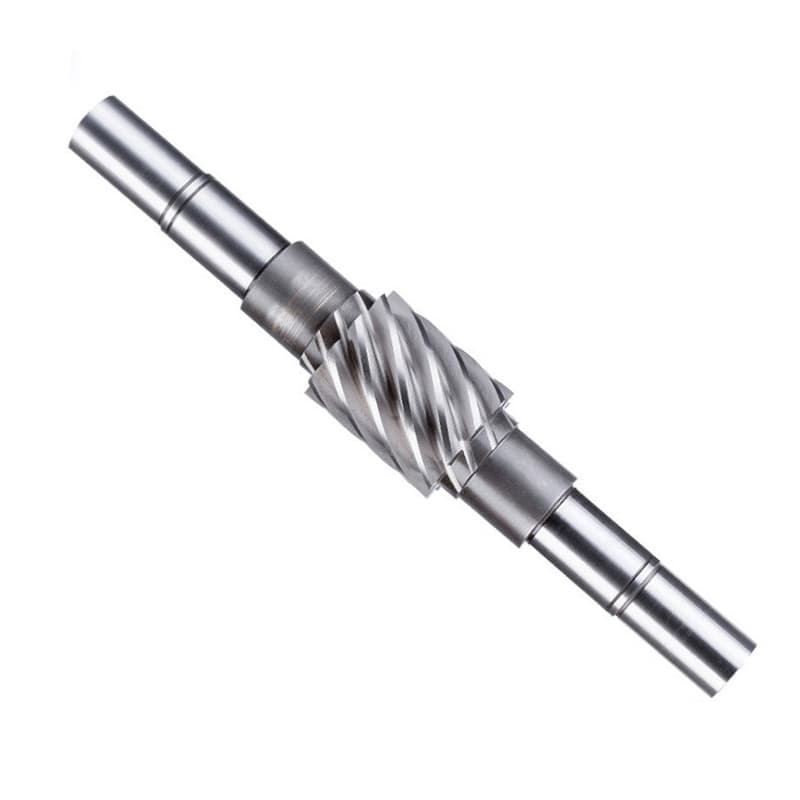
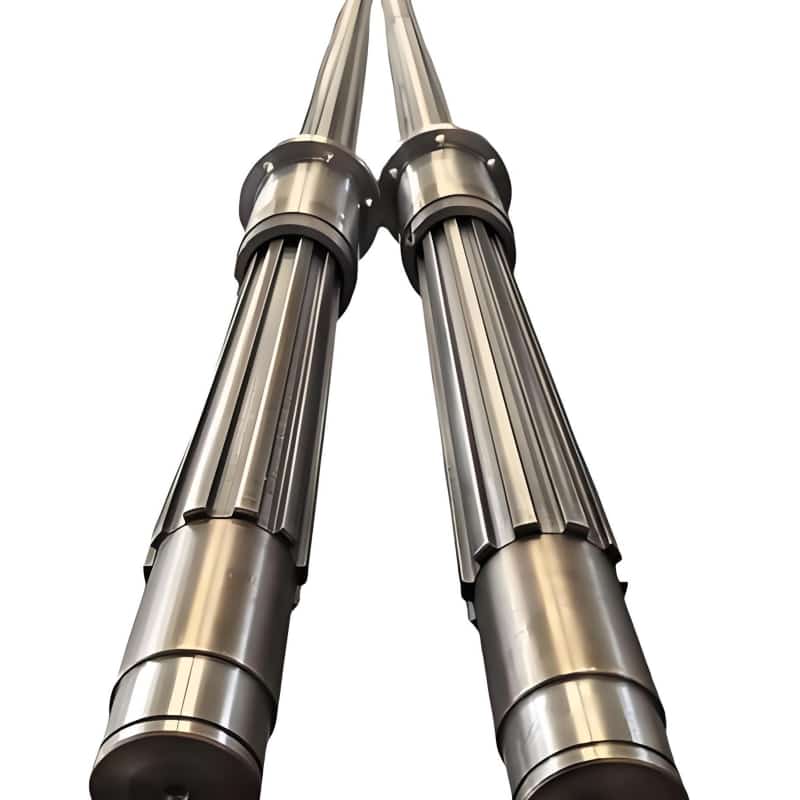
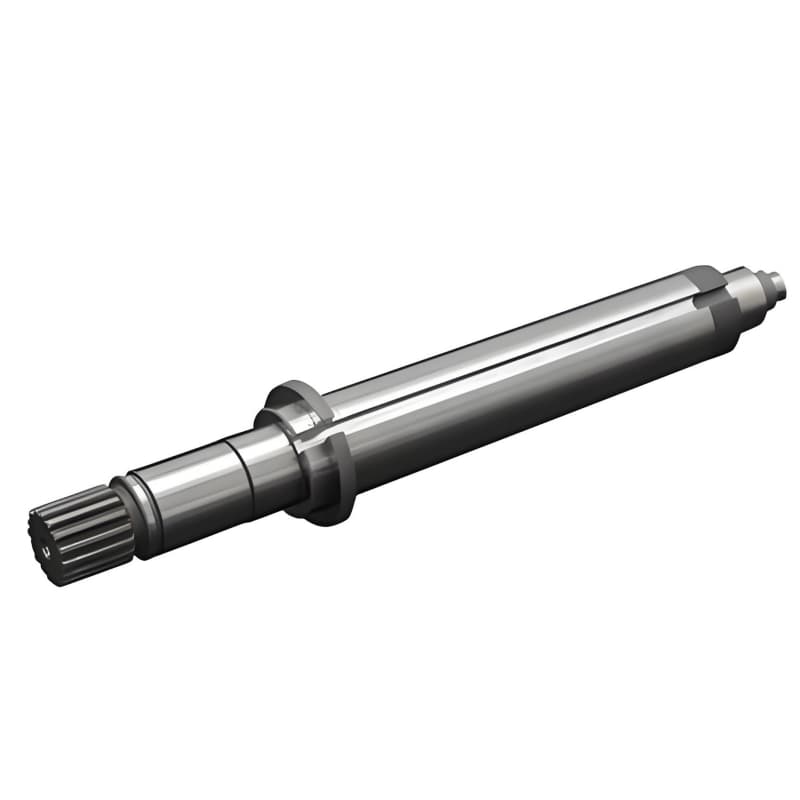
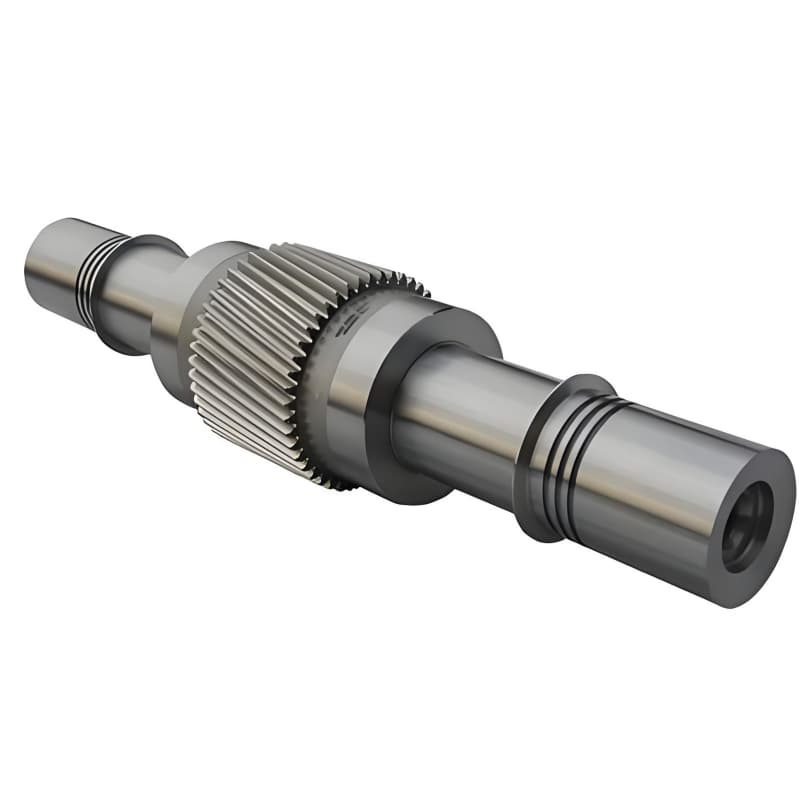
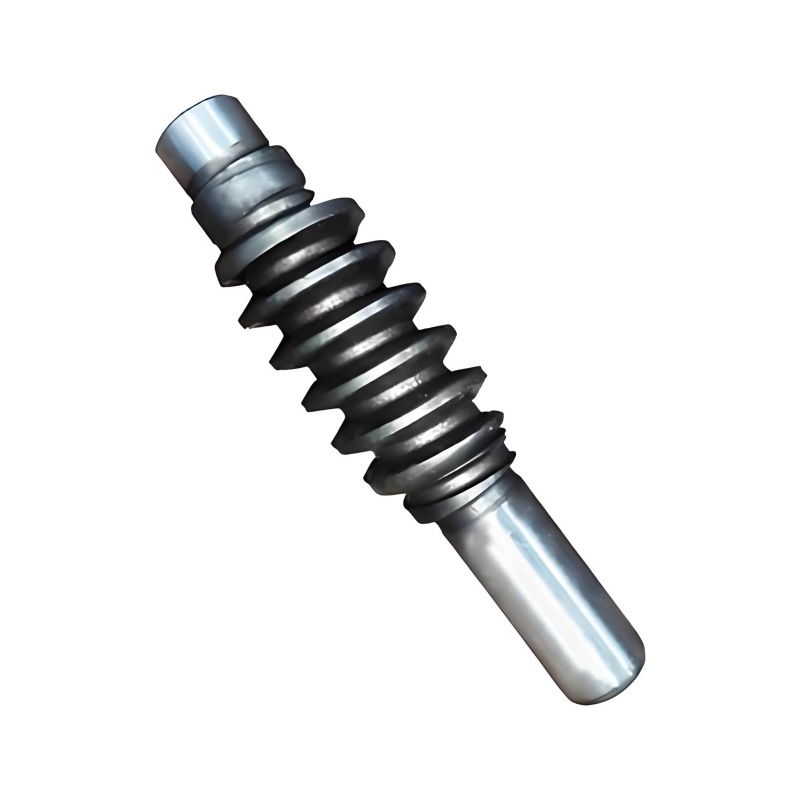
A selection of custom machined shaft, custom spline shaft, gear shaft, spindle shaft and worm shaft parts produced on customer drawings. Every product below is a real example of a machined shaft per drawing made for machinery builders and equipment makers.
Main Characteristics of Precision Machined Shaft Parts
A shaft is a rotating machine element that transmits torque and carries gears, pulleys, bearings and couplings. Understanding these characteristics is the basis of reliable custom shaft machining.
Stepped Multi-Diameter Geometry
Most shaft parts are stepped rotating bodies. Bearing journals, seal seats and gear or coupling seats are separated by shoulders and locating faces, so diameter transitions and shoulder squareness decide the final assembly position of every custom machined shaft.
Coaxiality and Runout Control
A precision machined shaft rotates around a single datum axis. Journals, tapers and threads must stay concentric with the center holes, while circular runout and total runout are tightly held so the precision turned shaft runs without vibration at high speed.
Combined Machined Features
One shaft often combines keyways, spline teeth, cross holes, retaining-ring grooves, internal and external threads, flats and taper sections. A custom spline shaft is a typical combined-feature part requiring both turning and milling.
Material and Heat-Treatment Dependence
Shafts carry torque, bending and alternating loads, so material strength, core toughness and surface hardness are designed together. A hardened machined shaft is specified whenever wear resistance or high torque capacity is required.
Interchangeability Across Batches
Because bearings, seals and gears are standard purchased parts, a custom dimension shaft must be repeatable. Tolerance bands, fillet radii and datum consistency stay identical from the first article to the last piece of a large batch.
Surface Integrity for Fatigue Life
Shaft fatigue failure usually starts at the surface. Roughness level, grinding direction, edge break and compressive residual stress on a ground shaft all influence service life under rotating and reversing loads.
Materials for Custom CNC Machined Shafts
Material is selected around torque, rotating speed, corrosion environment and bearing fit. The same custom shaft machining process is adapted to each material family below.
Stainless Steel Machined Shaft
304/304L, 316/316L, 416, 420 and 17-4 PH stainless steel shafts for pump shafts, valve stems, food machinery and medical equipment. A stainless steel machined shaft can be passivated, electropolished or precision ground for clean, corrosion-resistant service.
Alloy Steel Machined Shaft
40Cr, 42CrMo (4140/4145), SCM440 and 20CrMnTi alloy steels, quenched and tempered for high torque. Typical for a gearbox shaft, spindle shaft, reduction gear shaft or heavy drive shaft requiring a hardened machined shaft core.
Carbon Steel Machined Shaft
1045/C45, Q235/A36 and 1020 carbon steel for economical general-purpose transmission, conveyor and support shafts. A carbon steel machined shaft is commonly delivered with black oxide, zinc plating or phosphating.
Aluminum Machined Shaft
6061, 6063, 7075 and 2024 aluminum for lightweight CNC turned shafts used in automation equipment, robot joints and linear motion systems, finished with clear or hard anodizing.
Key Considerations in Custom Shaft Machining
A high tolerance machined shaft is not produced by one operation alone. The points below are controlled throughout CNC turning, milling and grinding of every custom turned shaft.
Drawing Review and Datum Definition
Before cutting, each drawing is reviewed for datum scheme, critical fits, tolerance stack-up and ambiguous dimensions. Center holes are established as the unified finishing datum for the whole precision machined shaft.
Deflection and Workholding Control
Slender shafts bend under cutting force. Between-center turning, follow rests and steady rests, tailstock support and balanced cutting passes keep long, thin shafts straight and free of taper or waist-shaped error.
Rough, Semi-Finish and Finish Sequence
Rough turning removes excess stock, semi-finish turning leaves a controlled grinding allowance, and finish turning or grinding reaches final size. A stress-relief step is inserted before finishing high-precision journals.
Keyways, Splines, Flats and Holes
Keyways, spline teeth, cross holes and flats are milled after turning. Symmetric features are balanced so the part does not behave like an unbalanced eccentric shaft, and intersection burrs are fully removed.
Thermal and Cutting-Parameter Control
Coolant supply, tool wear and feed rate are controlled to avoid thermal-expansion error on a high tolerance machined shaft, and finish grinding starts only after the workpiece has returned to ambient temperature.
Staged In-Process Inspection
First-article inspection, in-process diameter checks and final verification of dimensions, runout and roughness keep each precision turned shaft inside the drawing tolerance band before it leaves the workshop.
Common Heat Treatment Methods for Metal Shafts
Heat treatment sets the hardness, strength, toughness and wear resistance of a metal shaft, and is planned together with the machining sequence so that final precision is reached after treatment distortion.
Annealing and Normalizing
Applied to bar stock or forgings to refine the grain structure, relieve internal stress and improve machinability before rough turning of alloy steel and carbon steel machined shaft blanks.
Quenching (Through Hardening)
Through-hardening transforms steel into a martensitic structure for high strength, producing a hardened machined shaft able to carry heavy torque and load-bearing service.
Tempering
Always paired with quenching. The tempering temperature sets the final balance of hardness, strength and toughness, while relieving quenching stress in transmission and drive shafts.
Induction Surface Hardening
Bearing journals and seal seats are locally hardened to a specified case depth while the core remains tough — the standard route for a wear-resistant transmission shaft or rotating shaft.
Carburizing / Case Hardening
Low-carbon alloy steels such as 20CrMnTi gain a hard, wear-resistant case over a tough core, a typical process for gear shafts, reduction gear shafts and custom spline shafts.
Nitriding
A low-distortion hard-surface process needing no quenching, suited to precision ground shafts that cannot tolerate distortion after final machining, such as machine tool spindle shafts.
Surface Treatment Options for Machined Shafts
Surface treatment protects the shaft, adjusts friction and wear behavior and prepares sealing surfaces. Coating buildup is always accounted for in the pre-treatment dimensions of a custom dimension shaft.
Black Oxide
A thin conversion coating for carbon and alloy steel shafts with negligible dimensional change. It improves oil retention and gives mild corrosion protection to transmission and conveyor shafts.
Zinc Plating
Galvanic corrosion protection for carbon steel machined shafts used in conveyor systems, automotive spares and outdoor equipment, with clear, blue or colored passivation films.
Nickel and Hard Chrome Plating
Electroplated nickel or hard chromium raises wear resistance and can rebuild worn journals; common on hydraulic motor shafts, guide shafts and long-life support shafts.
Anodizing
For aluminum machined shafts: hard anodizing increases wear resistance, while clear or colored anodizing protects 6061 and 7075 automation and robot joint shafts.
Passivation and Electropolishing
For stainless steel machined shafts: passivation removes free surface iron, and electropolishing produces a clean, smooth, corrosion-resistant surface for food and medical equipment shafts.
Phosphating, Sandblasting and Polishing
Phosphating improves lubricant and paint bonding, sandblasting gives a uniform matte texture, and fine polishing reaches very low roughness on positioning shafts and guide shafts.
Achievable Dimensional Precision and Surface Quality
The values below describe the typical precision a custom CNC machined shaft reaches in our workshop. Exact requirements always follow the customer drawing; tighter limits can be quoted after drawing review.
Dimensional Tolerance
Finish CNC turning of a custom turned shaft generally holds standard tolerance grade IT6–IT7; precision cylindrical grinding reaches IT5, with ground journal limits controlled to around ±0.005 mm for a high tolerance machined shaft.
Geometric Accuracy
Roundness and cylindricity down to 0.002–0.005 mm; coaxiality between journals, shoulder perpendicularity and circular or total runout are controlled against the center-hole datum axis.
Surface Roughness
Fine turning reaches Ra 1.6–0.8 μm; a precision ground shaft reaches Ra 0.4–0.2 μm; lapping and mirror polishing reach Ra 0.1 μm and below for sealing and high-speed journals.
Size Range and Consistency
Typical capacity covers diameters from a few millimeters to roughly 300 mm and lengths to about 1,500 mm. Fixed programs and inspection plans keep every batch piece of a custom dimension shaft identical.
Shaft Machining and Inspection Capabilities
Custom shaft machining runs through CNC turning and CNC milling, followed by contact and non-contact inspection so that every machined shaft per drawing is verified against its dimensions before delivery.
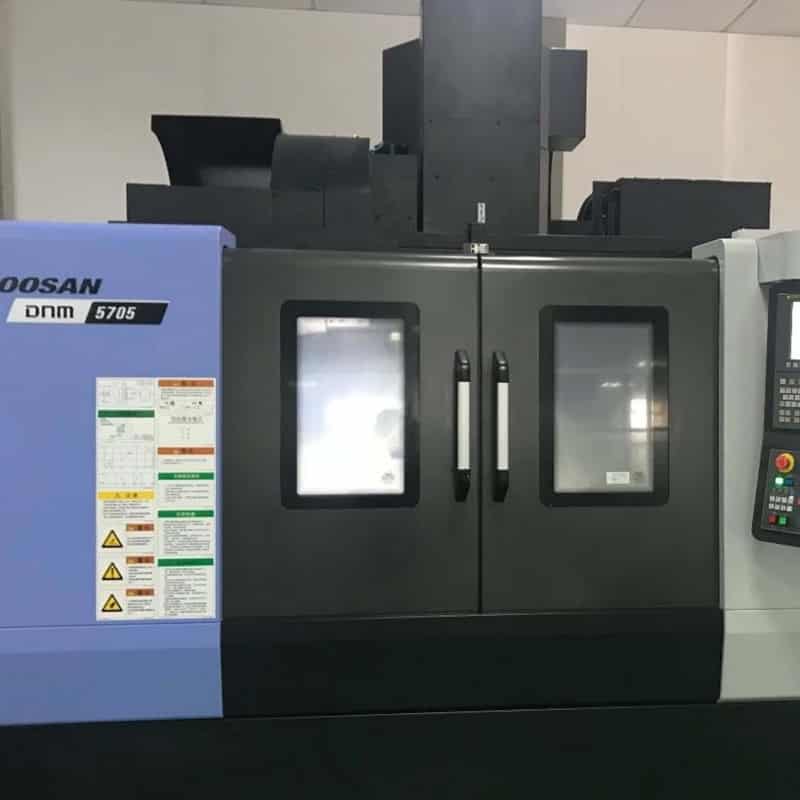
CNC Milling
Keyways, spline teeth, flats, cross holes and end features machined on 3-axis and 4-axis CNC milling centers.
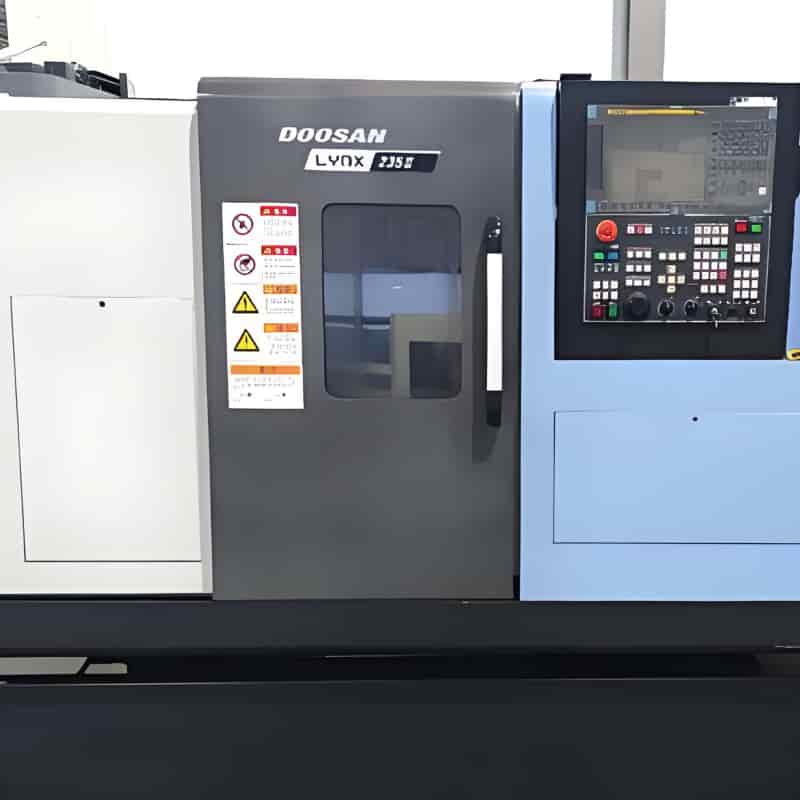
CNC Turning
Rough, finish and hard turning of stepped journals, tapers and threads for every custom CNC machined shaft.
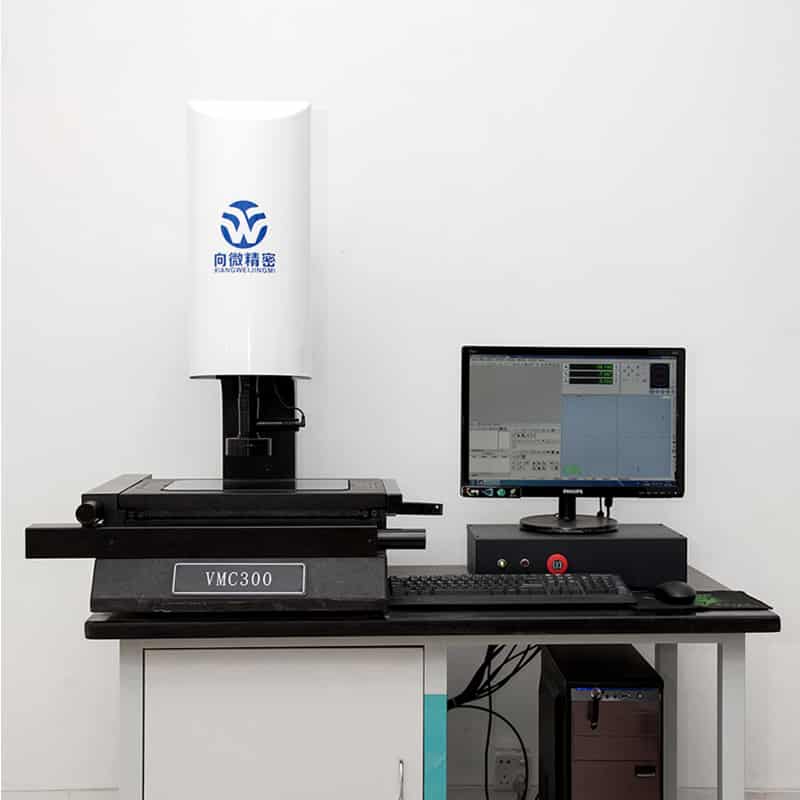
2D Profile Projector Measuring
Non-contact profile measurement of radii, chamfer angles, thread forms and small or delicate features.
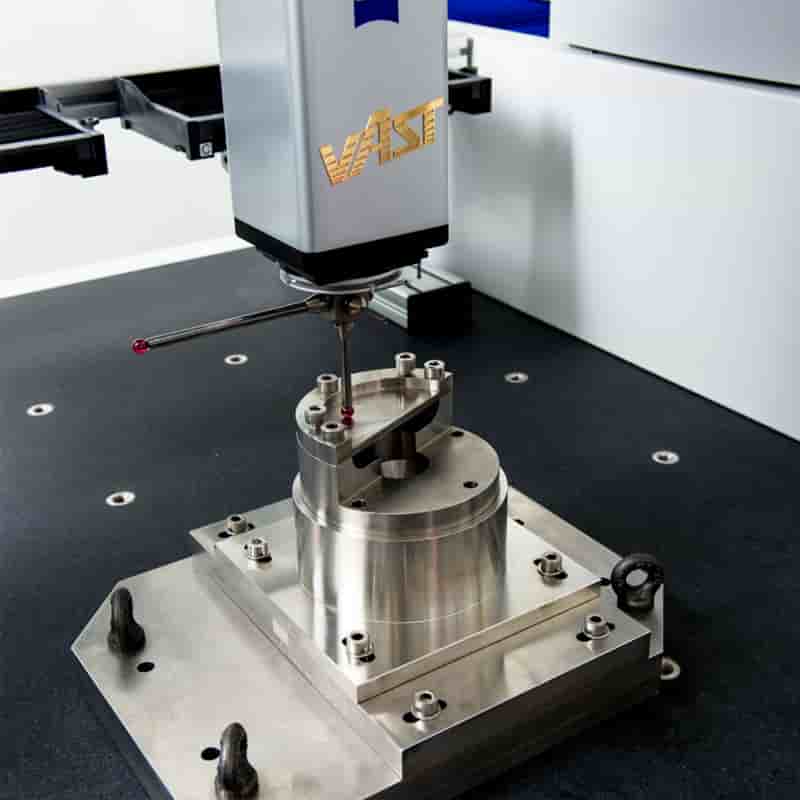
CMM Dimensional Inspection
Coordinate measuring of diameters, feature positions, coaxiality and runout for the final inspection report.
Custom Machined Shafts by Function
CNC machined shafts are named by the job they perform in the assembly. The functional shaft types below are all produced as a machined shaft per drawing.
Transmission, Gearbox and Drive Shafts
Pump, Motor and Valve Shafts
Custom CNC Machined Shafts by Equipment Application
From a machinery equipment shaft and industrial equipment shaft to an automation equipment shaft, each application changes the load case, material and finish — and each is machined strictly to the customer drawing.
Conveyor, Automation and Robotics Shafts
Heavy Equipment, Vehicle and Specialized Machinery Shafts
Industries Using Our Custom Machined Shafts
The same custom shaft machining capability serves equipment builders and maintenance teams across the industries below, each with its own material, hardness and cleanliness requirements.
From One Single Shaft to Large-Batch Production
Order quantity never changes the drawing-first approach. The custom CNC machined shaft process scales smoothly from a maintenance spare to repeat volume orders.
One-Off and Prototype
A single custom machined shaft made per drawing or reverse-engineered from a worn sample — ideal for equipment maintenance spares and design validation.
Small Batch
Tens of precision turned shaft pieces with first-article confirmation before the rest of the batch runs, suited to machinery builders and engineering projects.
Medium Batch
Hundreds of pieces with dedicated fixturing and optimized cycle times, keeping cost and lead time stable for a custom dimension shaft series.
Large-Volume Production
Thousands of repeating pieces with fixed tooling, process parameters and final inspection plans, guaranteeing identical precision from first to last part.
Whether the requirement is a custom precision machined shaft according to customer drawings, a CNC turned custom shaft with strict tolerance, or a stainless steel custom machined shaft for machinery equipment, every order is handled as a complete custom shaft machining project: drawing review, material selection, CNC turning, keyway and spline milling, precision grinding, hardening or other heat treatment, surface treatment and dimensional inspection are arranged around the actual load, speed and fit conditions of the shaft.
We manufacture a custom machined transmission shaft for gearbox use, a precision CNC turned pump shaft for an industrial pump, a stainless steel drive shaft for automation machinery, a custom support shaft as per drawing for a conveyor system, an alloy steel rotating shaft for agricultural equipment, a custom CNC machined gear shaft for a gear reducer, a precision ground pump shaft for an industrial centrifugal pump, a stainless steel conveyor drive shaft for a material handling system, an alloy steel spindle shaft for machine tool equipment, and a custom transmission shaft as per drawing for heavy machinery. Provided with a drawing or a sample, each part is delivered as a machined shaft per drawing — built to the specified custom dimension shaft geometry, high tolerance and surface finish, whether the order is one piece or a full production batch.