
CNC Machining Aluminum Parts
Our CNC machining aluminum service converts your CAD files, engineering drawings and physical samples into precise, repeatable aluminum CNC machining parts. From a single CNC machined aluminum prototype to ongoing high-volume production, we mill, turn, drill, tap and finish aluminum components for engineers, product developers and equipment builders who demand tight dimensions, clean cosmetic surfaces and dependable lead times.
Aluminum is one of the most frequently machined metals in modern manufacturing, and CNC machining aluminum is the core of our workshop. Whether a project calls for a lightweight 6061 mounting bracket, a high-strength 7075 load-bearing structure, a heat-treated 2024 aerospace component or a color-anodized 6063 front panel, our aluminum CNC machining capacity is built to hold close tolerances, machine complex five-axis geometries and carry out the exact heat treatment and surface treatment called out on the drawing.
Drawings & Samples Welcome
Production from CAD files, 2D drawings or reverse-engineered samples.
One-Off to High Volume
CNC machining aluminum parts from one piece to thousands of repeat units.
Tight-Tolerance Precision
Close dimensional, geometric and surface-roughness control on every run.
Alloys & Finishes in House
Broad aluminum grade selection with heat treatment and surface finishing.
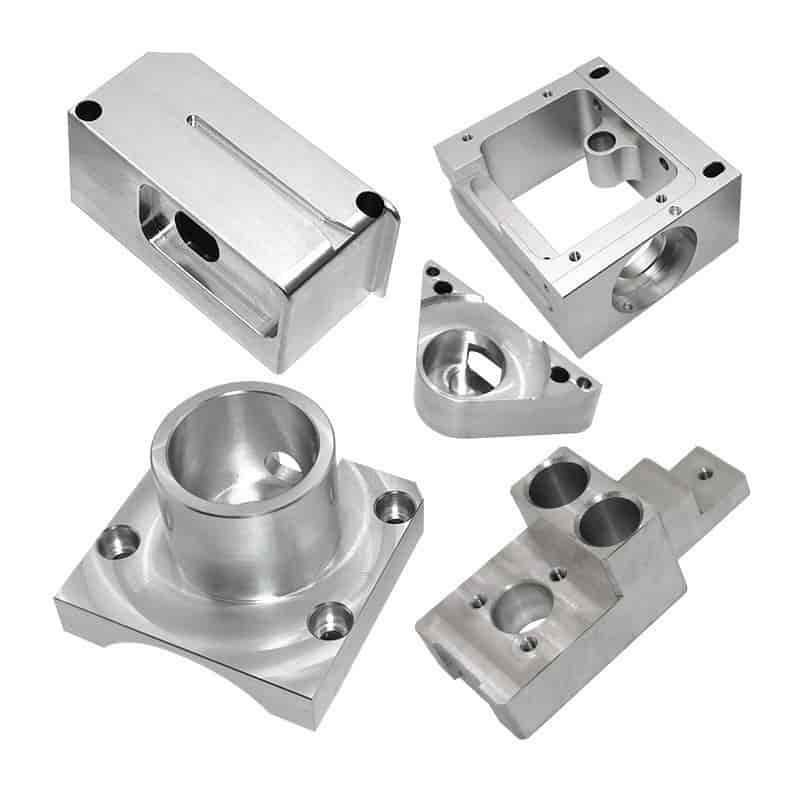
Custom Aluminum CNC Machining Parts We Produce
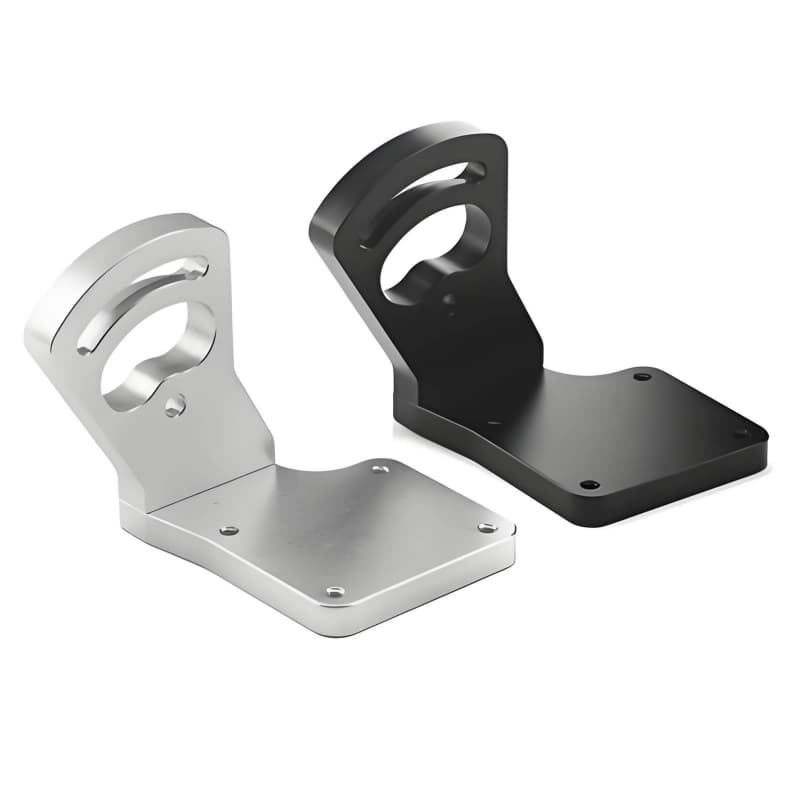
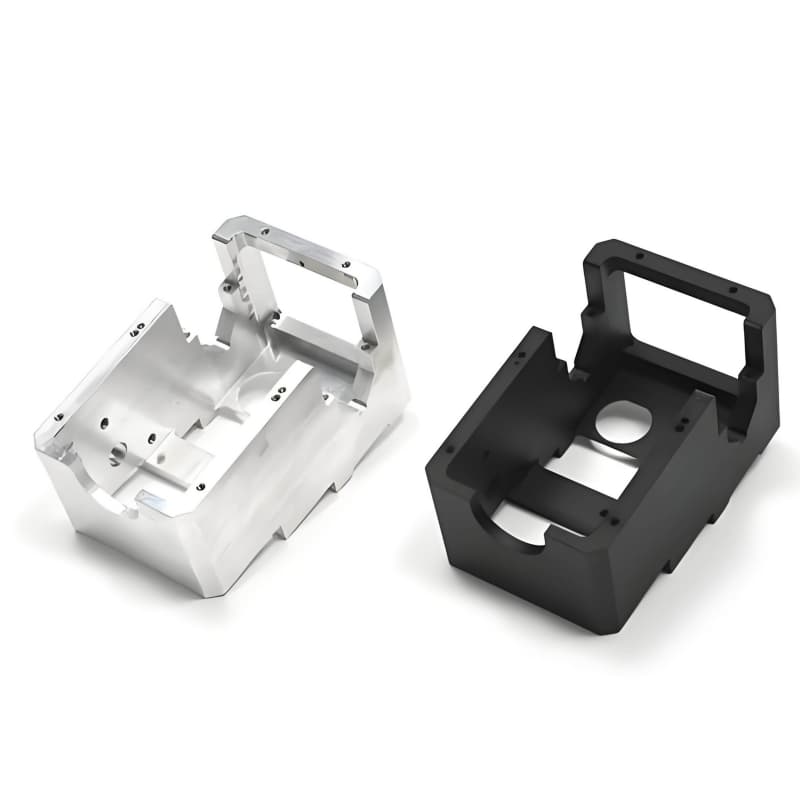
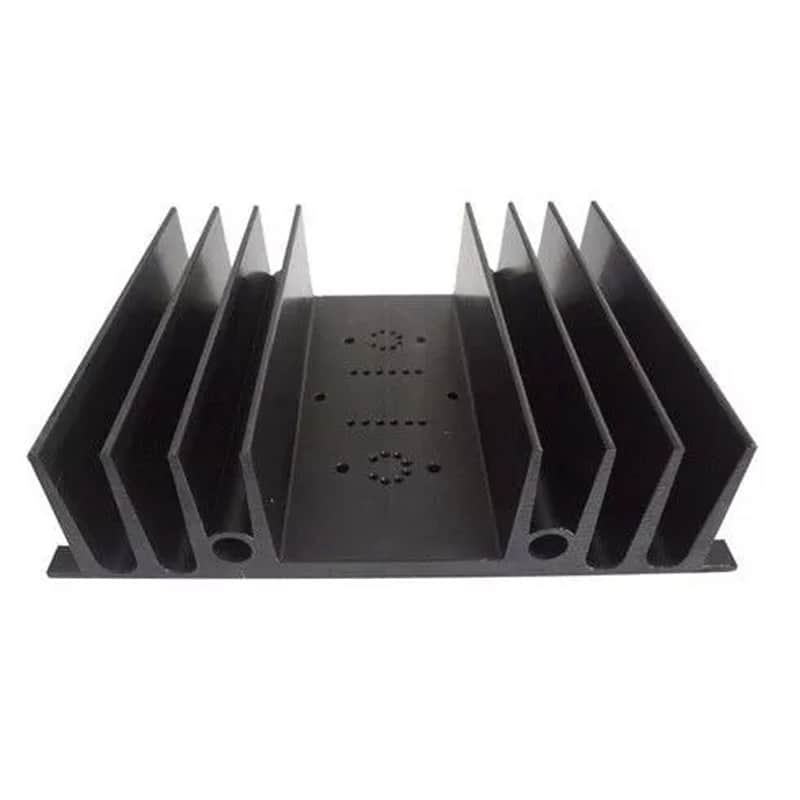
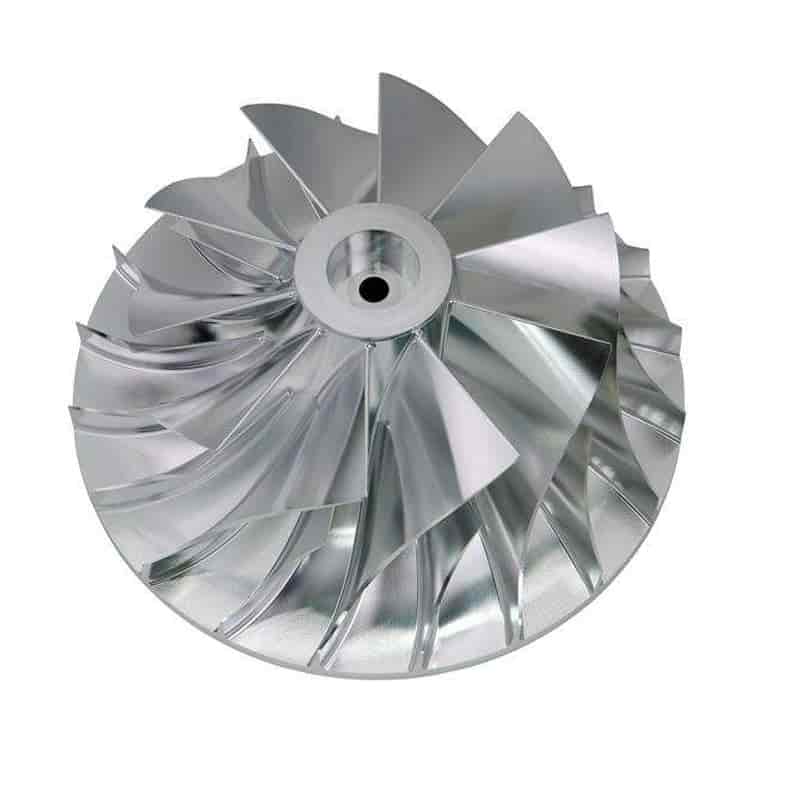
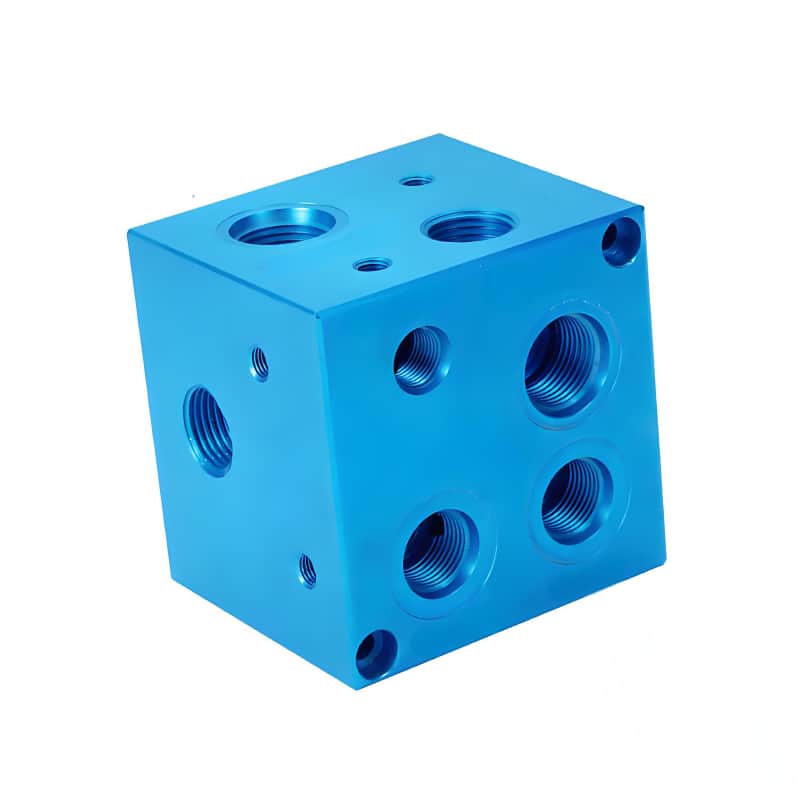
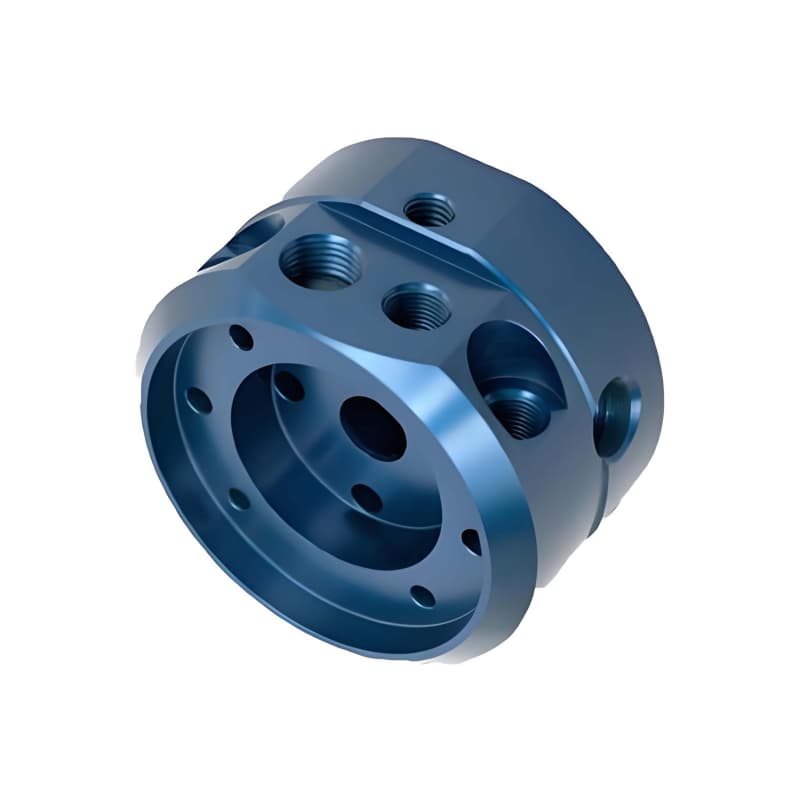
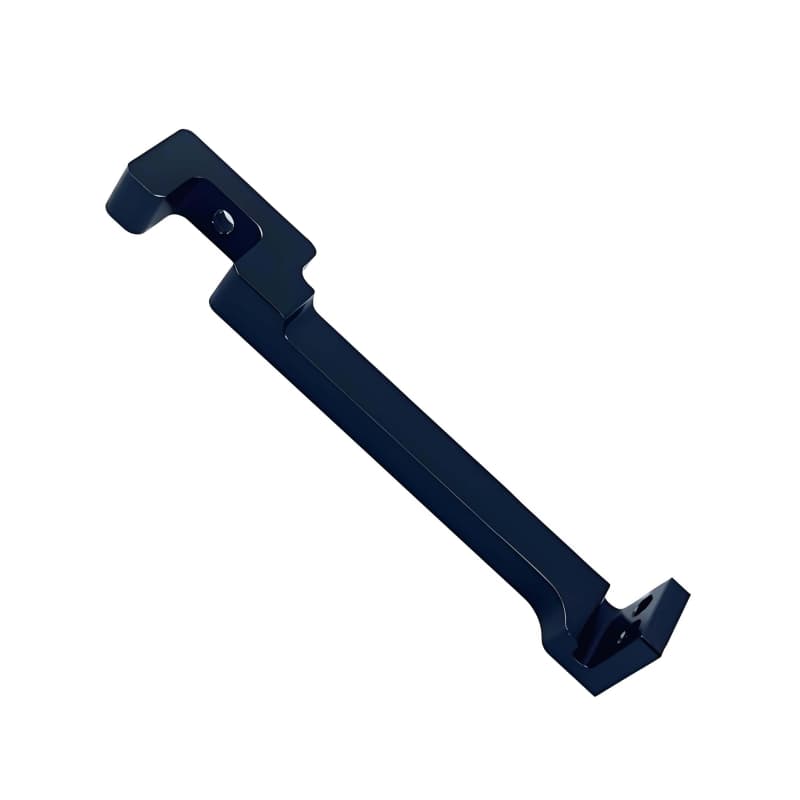
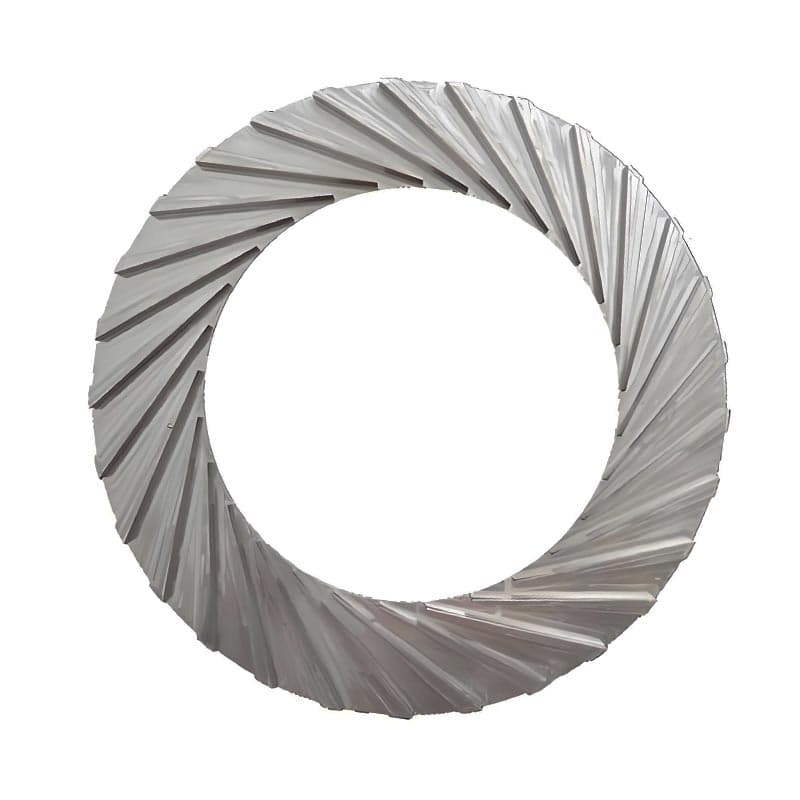
A selection of CNC machining aluminum parts made for customer orders — brackets, enclosures, heat sinks, impellers, hydraulic blocks and other precision aluminum CNC machining parts. Every item is machined to the customer's own drawing or sample, in the specified alloy, temper and finish.
Why Engineers Choose CNC Machining Aluminum
CNC machining aluminum combines low weight, real structural strength and fast, predictable cutting. These material properties explain why aluminum CNC machining parts are found wherever products must be light, stiff, thermally efficient and visually refined at the same time.
Light Weight, High Specific Strength
Aluminum weighs roughly one third as much as steel, while heat-treatable grades deliver strength levels that satisfy many structural duties. CNC machining aluminum parts therefore reduce moving mass, energy consumption and assembly weight in vehicles, aircraft, machines and portable equipment.
Fast, Stable Machinability
Aluminum cuts cleanly at high spindle speeds and feed rates, allowing CNC milling and turning to remove material quickly with low tool wear. Short chips and efficient metal removal shorten cycle time, which makes CNC machining aluminum economical for both prototypes and large batches.
Natural Corrosion Resistance
Aluminum forms a protective oxide layer on its own, and grades such as 5052 and 5083 perform especially well in humid, marine and chemical environments. Anodizing or chromate treatment after CNC machining further hardens and seals the surface of aluminum parts.
Thermal & Electrical Conductivity
Aluminum conducts heat roughly three to five times better than steel, which is why CNC machined heat sinks, cold plates, motor housings and power-electronics enclosures are so common. Its useful electrical conductivity also suits busbars, connector bodies and shielding components.
Heat-Treatable Tempers
Many aluminum alloys respond to solution treatment and aging, so the same grade can be supplied soft for fixturing or hardened to T6, T651 and T7 tempers for strength and stability. CNC machining aluminum parts can therefore be tuned to the exact mechanical behavior an application needs.
Functional & Cosmetic Finishing
Machined aluminum takes anodizing, powder coating, brushing, blasting and polishing exceptionally well. Aluminum CNC machining parts can leave the workshop in a matte, satin or high-gloss surface, in almost any dyed color, with logos and part numbers marked directly onto the metal.
Aluminum Grades Used for CNC Machining Aluminum Parts
We machine the full range of commercially available wrought and cast aluminum alloys. The grade chosen for a CNC machining aluminum project should match its load case, corrosion exposure, forming history and finishing plan; the eight materials below cover the vast majority of custom aluminum CNC machining parts.
6061 Aluminum
The most common general-purpose structural alloy, usually machined in T6 or T651 temper. It combines good strength, corrosion resistance and weldability, and is the default choice for brackets, mounting plates, housings, jigs and machinery components.
7075 Aluminum
A premium zinc-based high-strength alloy for heavily loaded structures. Typical in T6/T651 or T73 temper, 7075 is widely used for aerospace fittings, robotics arms, racing components and any aluminum CNC machining part where strength takes priority over cost.
2024 Aluminum
A copper-bearing alloy valued for high strength and fatigue resistance, commonly supplied in T3, T4 or T851 tempers. It is a standard choice for aircraft structures, wheels, couplings and rotating parts, often protected with cladding or anodizing.
5052 Aluminum
A non-heat-treatable magnesium alloy with excellent saltwater corrosion resistance, high fatigue strength and good formability. It is widely machined into electronic enclosures, marine panels, tanks, covers and cosmetic sheet-metal-style parts.
6063 Aluminum
The classic extrusion alloy with a fine, smooth grain structure that anodizes beautifully. CNC machining 6063 is typical for heat sinks, frame profiles, light fixtures, architectural trims and front panels that require bright, uniform color anodizing.
5083 Aluminum
A true marine-grade alloy that retains strength in seawater, low-temperature and welded constructions. CNC machined 5083 parts appear on ship equipment, offshore modules, cryogenic vessels, armored vehicles and heavy welded structures.
3003 Aluminum
A soft, highly workable and economical alloy for lightly loaded components. It is well suited to covers, shims, nameplates, spacers and shallow-formed CNC machining aluminum parts where formability and cost matter more than peak strength.
7050 Aluminum
A high-strength aerospace plate alloy with good thick-section performance and resistance to stress corrosion, often in T7451 temper. It is machined into bulkheads, structural plates, tooling and large load-bearing aluminum CNC machining parts.
Heat Treatment for CNC Machined Aluminum Parts
Heat treatment sets the strength, hardness and dimensional stability of an aluminum CNC machining part. It can be applied to the raw stock before machining, between roughing and finishing, or after machining according to the drawing; the six processes below are the ones most often specified for CNC machining aluminum components.
Solution Heat Treatment
The alloy is heated to a precise temperature so that soluble phases dissolve into the aluminum matrix, then quenched rapidly in water or polymer to lock the structure in place. It is the foundation step before aging and gives heat-treatable grades the potential for full strength.
T6 / T651 Precipitation Hardening
Artificial aging after solution treatment brings alloys such as 6061 and 7075 to peak strength and hardness. The T651 variant adds controlled stretching to remove internal stress, which helps large CNC machined aluminum plates and pockets stay flat after material is removed.
T4 Natural Aging
After quenching, the alloy hardens gradually at room temperature. T4 temper offers higher ductility and toughness than fully aged stock, suiting aluminum CNC machining parts that will later be formed, straightened or aged again after machining.
T5 Aging After Hot Working
Extrusions and other hot-worked sections are cooled and then artificially aged without a separate solution step. T5 is a cost-effective temper for 6063 heat sinks and profiles that need moderate strength with a smooth, anodizing-friendly surface.
Annealing (O Temper)
Controlled heating and slow cooling soften the alloy, release cold-work stress and restore formability. Annealed stock is used when an aluminum part must be bent or spun before final CNC machining, or when residual stress from earlier processing has to be removed.
Overaging & Stress Relief (T7 Series)
T73, T7351 and similar tempers age the alloy slightly past peak hardness to trade a small amount of strength for greatly improved stress-corrosion resistance and long-term dimensional stability — important for thick 7050/7075 aerospace CNC machining aluminum parts.
Surface Treatment Options for Aluminum CNC Machining Parts
The right surface finish protects a CNC machining aluminum part from wear and corrosion, controls its appearance and prepares it for assembly. We coordinate the following finishes on machined aluminum components, matching film thickness, color and gloss to the drawing or supplied sample.
Clear & Color Anodizing
Sulfuric-acid anodizing (Type II) grows a hard porous oxide film that can be sealed clear or dyed in black, blue, red, gold, gray and many other colors. It is the most popular finish for cosmetic and structural aluminum CNC machining parts.
Hardcoat Anodizing
Hard anodizing (Type III) builds a much thicker, denser layer for abrasion resistance, electrical insulation and heavy-wear service, commonly specified on pistons, guides, gears and hydraulic aluminum components that slide or see repeated friction.
Bead & Sand Blasting
Fine glass beads or sand produce a uniform matte texture that hides cutter marks and handling scratches before anodizing. Blasted CNC machined aluminum carries a soft, even sheen that makes dyed anodized color look consistent across the whole part.
Brushing & Polishing
Mechanical brushing creates directional satin lines for panels and enclosures, while buffing and polishing bring aluminum to a near-mirror gloss. Both prepare the surface for bright anodizing, chemical filming or direct cosmetic use.
Powder Coating
Electrostatically applied and oven-cured polymer powder forms a tough, chip-resistant skin in chosen RAL colors and textures. Powder-coated CNC machining aluminum parts resist outdoor weathering, cleaning agents and repeated handling on equipment housings.
Chromate Conversion Coating
A thin conductive conversion film protects aluminum while keeping electrical contact available, making it useful for chassis, shielding cans and grounding surfaces; it also serves as an excellent adhesion base for paint and primer.
Electrophoretic Coating
Electrodeposition lays down an extremely uniform film that reaches recesses, inner bores and sharp edges where spray coatings are thin. It gives machined aluminum parts a smooth, controlled black or colored surface with high corrosion resistance.
Laser Marking & Silk Screening
Permanent part numbers, logos, serial codes, orientation marks and assembly instructions can be laser engraved or silk-screened onto aluminum CNC machining parts, supporting traceability, branding and error-free assembly in batch production.
Surface Quality & Dimensional Precision of CNC Machining Aluminum
Aluminum machines to very fine limits because it cuts cleanly without the work hardening and tool pressure typical of steel. The values below describe the dimensional accuracy, geometric control and surface roughness routinely achieved on our CNC machining aluminum parts; tighter requirements can be reviewed against the specific geometry and batch size.
Dimensional & Geometric Accuracy
Linear dimensional tolerance
General machined features are held around ±0.01 mm; selected critical dimensions on aluminum CNC machining parts can be controlled to ±0.005 mm with stable fixturing and finishing passes.
Bore diameter & roundness
Reamed and fine-bored holes reach IT6–IT7 quality, and precision fine boring can reach IT5, supporting accurate bearing fits, dowel locations and sealed bores on hydraulic blocks.
Flatness, parallelism & perpendicularity
Ground stock, stress-relieved tempers and symmetric roughing keep flatness, parallelism and squareness typically within 0.005–0.02 mm, even on thin-walled pockets and large aluminum plates.
Five-axis profile & true position
Simultaneous five-axis machining holds curved surfaces, blade profiles and compound-angle holes to the positional and profile tolerances marked on the drawing, verified against the 3D model.
Surface Roughness & Cosmetic Quality
Standard CNC milled finish
Finish milling of aluminum typically reaches Ra 1.6–3.2 µm with clean, uniform cutter paths and no visible chatter — suitable for most structural and enclosure aluminum CNC machining parts.
Fine milled finish
High-feed finishing with sharp polished tooling and controlled stepover brings flat and contoured surfaces to around Ra 0.8 µm, reducing polishing work before anodizing.
CNC turned finish
Fine turning on aluminum shafts, sleeves and rings reaches Ra 0.8–1.6 µm, and diamond or polished turning can approach Ra 0.4 µm on sealing and bearing seats.
Post-processed cosmetic finish
Polishing, blasting and anodizing deliver Ra 0.2 µm or smoother surfaces with a controlled matte, satin or glossy look, free of tool marks on visible faces.
| Machining process | Typical roughness range | Typical application on aluminum parts |
|---|---|---|
| Rough milling / rough turning | Ra 3.2–6.3 µm | Non-cosmetic stock removal, hidden faces, preparation for finishing passes |
| Finish milling | Ra 1.6–3.2 µm | General brackets, plates, housings and enclosure surfaces |
| Fine milling / high-speed finishing | Ra 0.8–1.6 µm | Mating faces, sealing surfaces, parts anodized without polishing |
| Fine turning / diamond turning | Ra 0.4–0.8 µm | Shafts, bearing journals, sealing seats, turned rings and sleeves |
| Grinding / honing / lapping | Ra 0.1–0.4 µm | Precision bores, flat reference surfaces, fluid-control components |
| Polishing + anodizing | Ra 0.2 µm and finer | Visible cosmetic panels, decorative parts, handles and facias |
Aluminum CNC Machining & Inspection Capabilities
Every CNC machining aluminum part moves through matched machining and measuring equipment, so the features cut on the machine can be independently verified against the drawing before shipment.
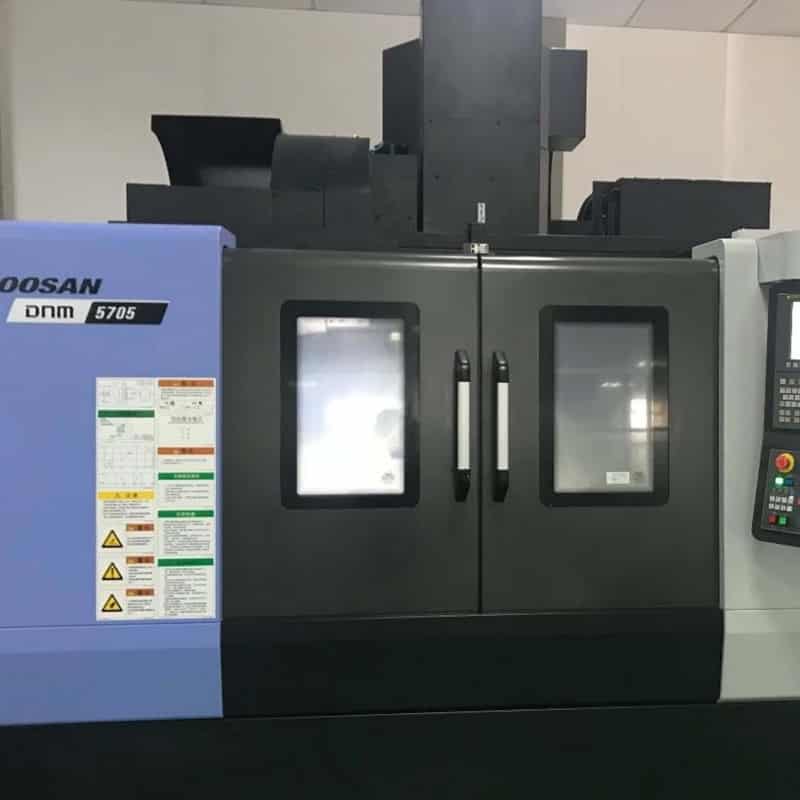
3 / 4 / 5-Axis CNC Milling
Vertical and horizontal machining centers produce pockets, ribs, cavities, contoured surfaces and compound-angle features in aluminum plate, bar and casting stock, including five-axis impellers and curved housings.
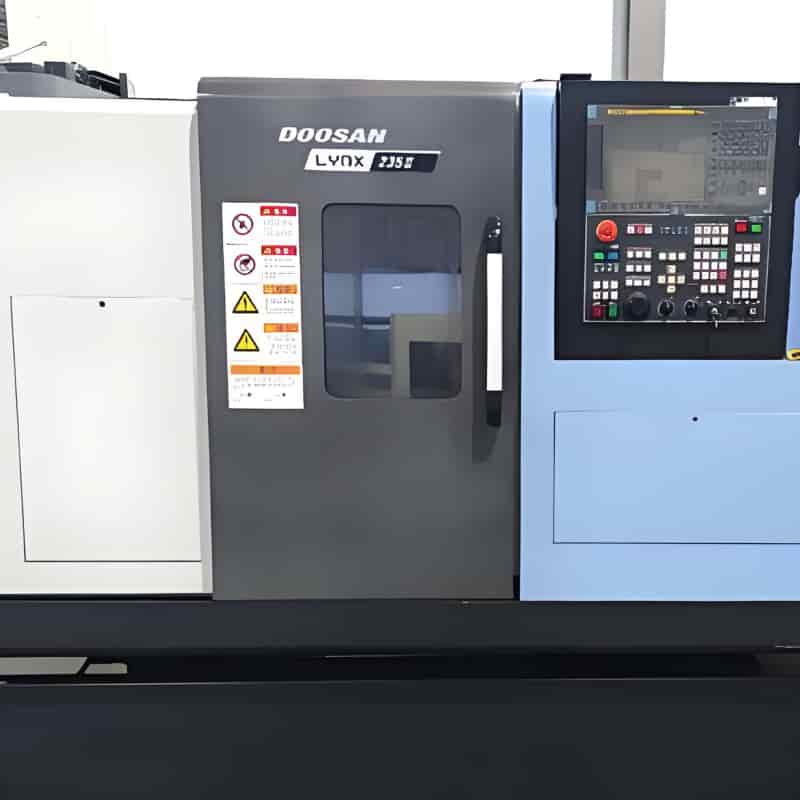
CNC Turning & Mill-Turn
CNC lathes with live tooling turn, drill and mill rotational aluminum parts — shafts, sleeves, rings, fittings, threaded connectors and pistons — often complete in a single clamping for concentricity.
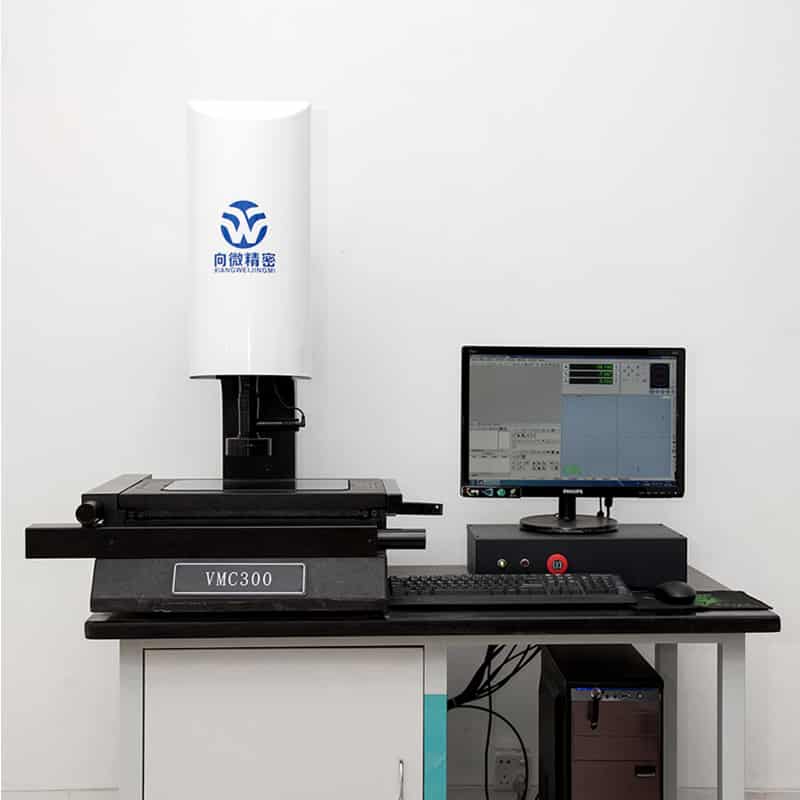
2D Optical Profile Inspection
A profile projector magnifies small profiles, radii, chamfers, thread forms and edge details for non-contact comparison against the drawing, catching tiny profile defects on machined aluminum components.
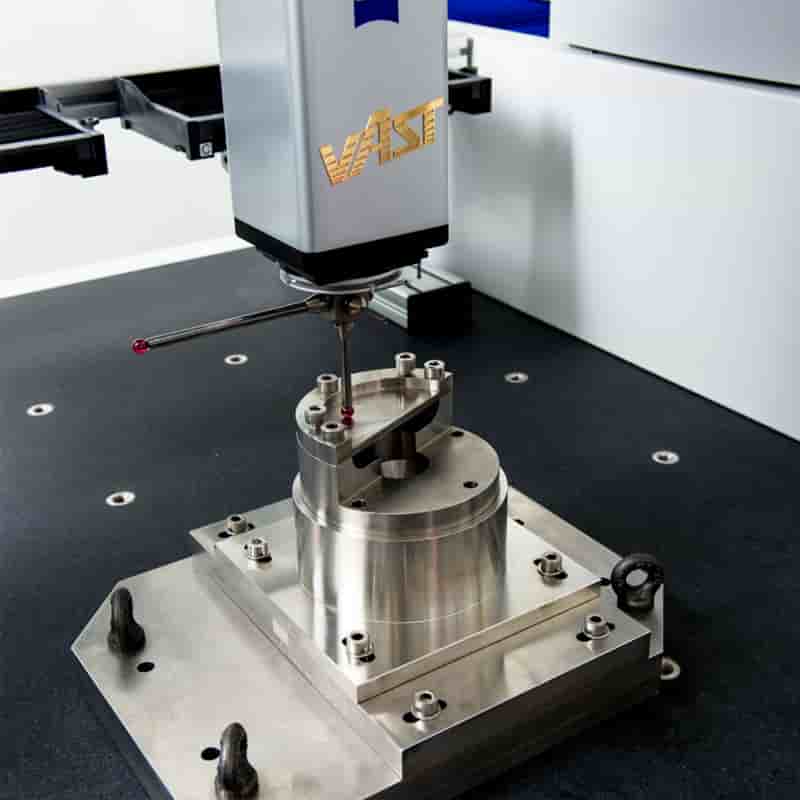
CMM Coordinate Measuring
A coordinate measuring machine checks 3D dimensions, positions and geometric tolerances point by point, recording inspection results so each batch of aluminum CNC machining parts matches the model and drawing.
How a CNC Machining Aluminum Project Progresses
The same controlled sequence is used for a one-off aluminum prototype and for repeat batch production, so quality is built into every CNC machining aluminum order rather than inspected in at the end.
Drawing or Sample Review
Engineers study the CAD model, 2D drawing or supplied sample, flag tight features, thin walls and tolerance risks, and return practical DFM suggestions before any metal is cut.
Alloy & Temper Selection
The correct aluminum grade and temper — 6061-T651, 7075-T6, 5052-H32 and many more — are chosen to match strength, corrosion, weight and finishing requirements.
CAM Programming & Tooling
Tool paths, fixturing, clamping and cutting tools are planned in CAM software, with symmetric roughing that minimizes residual stress movement in aluminum parts.
CNC Roughing & Finishing
3-axis, 4-axis or 5-axis CNC milling and turning remove bulk material first, then finish critical faces, bores and threads in light, dimensionally stable passes.
Deburring & Edge Control
Every edge is deburred and broken to the drawing's chamfer or radius specification, with threads, bores and sealing faces cleaned of aluminum burrs and chips.
Heat Treatment & Surface Finish
Required aging, annealing, anodizing, coating, blasting, brushing or marking is carried out, with masking of mating faces and threads where the drawing requires it.
In-Process & Final Inspection
Calipers, micrometers, height gauges, pin gauges, a 2D profile projector and a CMM verify dimensions, geometry and roughness, with first-article checks on batch work.
Cleaning, Packaging & Delivery
Parts are cleaned and dried, cosmetic surfaces protected, and batches packed to prevent scratching in transit so aluminum CNC machining parts arrive ready for assembly.
From a Single Piece to Large-Batch Production
CNC machining aluminum is flexible by nature: there is no hard minimum order quantity, and the same drawing can move smoothly from a proof-of-concept prototype into repeat series production. We support every stage of that journey with consistent fixturing, programming and inspection.
One-Off & Prototype Quantities
A single CNC machined aluminum part, a spare replacement or a handful of design-validation prototypes can be produced quickly from a 3D model or a measured sample, ideal for R&D and repair work.
Low-Volume Pilot Batches
Small pilot runs of tens of pieces support product launches, field testing and bridge production, letting engineers verify fit and finish before committing to tooling or large CNC machining aluminum orders.
Mid-Volume Repeat Production
Recurring batches of hundreds of aluminum CNC machining parts run on optimized fixtures and saved CAM programs, which shortens lead time and keeps part-to-part consistency under control.
High-Volume Series Manufacturing
For demand reaching thousands of pieces per release, multi-machine scheduling, dedicated fixturing, first-article inspection and batch sampling keep large-volume CNC machining aluminum production stable and traceable.
Typical CNC Machining Aluminum Parts & Applications
Few manufacturing processes are as versatile as CNC machining aluminum. The components below are produced routinely, each tailored to the customer's drawing, alloy choice and surface specification rather than sold from a fixed catalog.
Mounting Brackets & Plates
Load brackets, adapter plates, gussets, motor mounts and fixture plates in 6061 or 7075, machined with precise hole patterns and flat mounting faces.
Enclosures, Cases & Housings
Electronic enclosures, instrument cases, battery boxes and controller housings with pocketed walls, threaded inserts and cosmetic anodized faces.
Heat Sinks & Cold Plates
Skived or machined fin heat sinks, liquid-cooled cold plates and LED cooling bodies in conductive 6061/6063 aluminum for thermal management.
Impellers, Blades & Rotors
Five-axis machined impellers, turbine wheels, fan rotors and diffusers with continuous curved blades, balanced for smooth high-speed rotation.
Hydraulic Blocks & Manifolds
Hydraulic valve blocks, pneumatic manifolds and fluid distributors with intersecting cross-drilled galleries, precise bores and sealed faces.
Front Panels & Control Facias
Brushed, blasted or color-anodized panels with accurately spaced cutouts, countersinks and engraved legends for equipment front faces.
Shafts, Sleeves & Connectors
CNC turned aluminum shafts, bushings, spacers, couplings, threaded fittings and quick-release connectors with fine turned surface finishes.
UAV, Robot & Camera Components
Lightweight airframe parts, gimbal and camera mounts, robotic joints and sensor holders where low inertia and tight geometry matter most.
Industries That Rely on Our Aluminum CNC Machining Parts
CNC machining aluminum serves any sector where weight, heat, precision and appearance intersect. Our aluminum CNC machining parts support product teams and maintenance departments across the following eight industry groups.
Aerospace & Aviation
Structural fittings, cabin brackets, avionics housings and UAV airframe components machined from 7075, 2024 and 7050 series alloys.
Automotive & Electric Vehicles
Motor housings, inverter cooling plates, suspension adapters, racing parts and battery-tray components for cars, trucks, motorcycles and EVs.
Electronics & Telecommunications
Shielded enclosures, chassis, heat sinks, antenna mounts and rack panels that combine thermal control with electromagnetic shielding.
Medical & Laboratory Equipment
Instrument housings, fixture blocks, analyzer frames and ergonomic equipment components in easily cleaned, anodized aluminum.
Robotics & Automation
Robot arms, end-effectors, linear-motion plates, sensor mounts and machine frames where low moving mass improves cycle time and precision.
Marine & Offshore
Deck fittings, watertight housings, navigation mounts and welded sub-assemblies in corrosion-resistant 5052 and 5083 marine aluminum.
Renewable Energy
Solar mounting parts, wind-sensor housings, EV-charging cabinets, battery cooling plates and tracker components built for outdoor service.
Industrial Machinery & Fluid Power
Jigs, fixtures, machine guards, hydraulic manifolds, valve bodies and retrofit spare parts for production lines and processing equipment.
Custom Aluminum Parts Made from Drawings or Samples
Every CNC machining aluminum project is made to order. We can work from a complete digital design package or from a single physical part when no drawing exists, and the two routes often combine on the same order.
Machined to Your Drawings
Send the 3D model together with a 2D tolerance drawing and our engineers review geometry, alloy, temper, finish and batch size before production. We machine the aluminum CNC machining parts exactly as dimensioned and report any feature that benefits from a design adjustment.
- 3D model formats: STEP, IGES, X_T (Parasolid), STL and native CAD files
- 2D drawing formats: PDF, DWG and DXF with tolerances and finish notes
- Tolerances, threads, surface roughness and anodizing colors read directly from the drawing
- DFM feedback on thin walls, deep pockets, internal corners and tool access
- First-article confirmation before continuing with the full production batch
Machined from Your Samples
When a part exists on paper nowhere but on the shelf, send the physical sample. It is measured with hand tools, profile projection and coordinate measuring to reconstruct its geometry, after which custom CNC machining aluminum duplicates it faithfully — or improves it where the original wore out or failed.
- Reverse engineering of obsolete spares, worn machine parts and imported components
- Dimensions, radii, threads and fits captured from the sample and converted into a drawing
- Material and temper upgraded when the original alloy or hardness was inadequate
- Surface finish matched to the sample by blasting, brushing, anodizing or coating
- Sample approval run before batch production of the reproduced aluminum parts
Frequently Asked Questions About CNC Machining Aluminum
Practical answers to the questions engineers ask most often when sourcing custom aluminum CNC machining parts.
Which aluminum alloys can you machine?
We routinely CNC machine 6061, 7075, 2024, 5052, 6063, 5083, 3003 and 7050, along with other wrought and cast aluminum grades on request, in tempers from soft annealed stock to T6, T651 and T7-series hardened plate.
What dimensional tolerance can aluminum CNC machining hold?
General features are commonly held to ±0.01 mm and selected critical dimensions to ±0.005 mm, with fine bores around IT5–IT7 and geometric tolerances such as flatness and true position verified by CMM. The achievable limit always depends on part size, wall thickness and geometry.
Can you produce one piece and also support mass production?
Yes. CNC machining aluminum supports everything from a single prototype or replacement part to batches of thousands of repeat parts. Saved programs, fixtures and inspection records let a design scale from prototype to high-volume production without redrawing or re-engineering.
Can you copy an aluminum part from a physical sample?
Yes. We measure the supplied sample, reconstruct its dimensions into a drawing or model, select a suitable aluminum alloy and temper, machine a first article for approval and then run the required batch — useful for obsolete spares and parts with no surviving documentation.
What surface finishes are available for machined aluminum?
Clear or color anodizing, hardcoat anodizing, bead and sand blasting, brushing, polishing, powder coating, chromate conversion coating, electrophoretic coating and laser marking or silk screening are all available, with roughness down to Ra 0.2 µm on polished surfaces.
What files do you need to quote CNC machining aluminum parts?
A 3D model in STEP, IGES or X_T format plus a 2D PDF, DWG or DXF drawing showing tolerances, threads and finish requirements is ideal. A reference sample, sketch or STL model is also enough to begin a reverse-engineering quotation when formal drawings are not available.
A Practical Partner for CNC Machining Aluminum Parts
Whatever shape an aluminum CNC machining project takes — a single reverse-engineered spare, a five-axis impeller, a color-anodized enclosure family or a recurring high-volume bracket — the workshop is organized to move it from drawing or sample to finished, inspected aluminum CNC machining parts with predictable quality.
Send the model, drawing or sample and specify the alloy, temper, surface treatment and quantity; the CNC machining aluminum process is then planned around those requirements so the delivered parts fit, function and look exactly as the design intends.