Per-drawing production
We accept 2D drawings in PDF, DWG and DXF, plus 3D models in STEP, STP, IGES and X_T format. Every dimension, tolerance note, thread callout and surface requirement is reviewed before the first cut.

We are a China-based custom CNC machining workshop manufacturing made-to-print flanges and flange-like connecting parts for OEM machine builders, equipment manufacturers, engineering contractors and maintenance buyers worldwide. Every custom CNC machined flange is produced from your own drawing, 3D model or physical sample — in the exact material grade, dimension, pressure rating, sealing geometry, surface treatment and batch quantity your project requires, from a single emergency spare to stable, repeatable series production.
Our process chain covers CNC turned flanges, CNC milled flanges, forged-flange finish machining, welded flange fabrication and precision secondary operations — drilling, boring, tapping, grinding, lapping and sealing-face finishing. The sections below collect the materials, starting stock forms, surface treatments, tolerances, achievable surface quality, applications and industries behind a typical custom flange order, so engineering and procurement teams can quickly judge whether our workshop matches the part shown on their drawing.
A selection of flanges and flange-related CNC machined parts produced from customer drawings — robot joint flanges, titanium OEM parts, multi-part titanium assemblies and AI-robot connecting flanges. Every part below is a one-off or batch custom job rather than a catalog item.
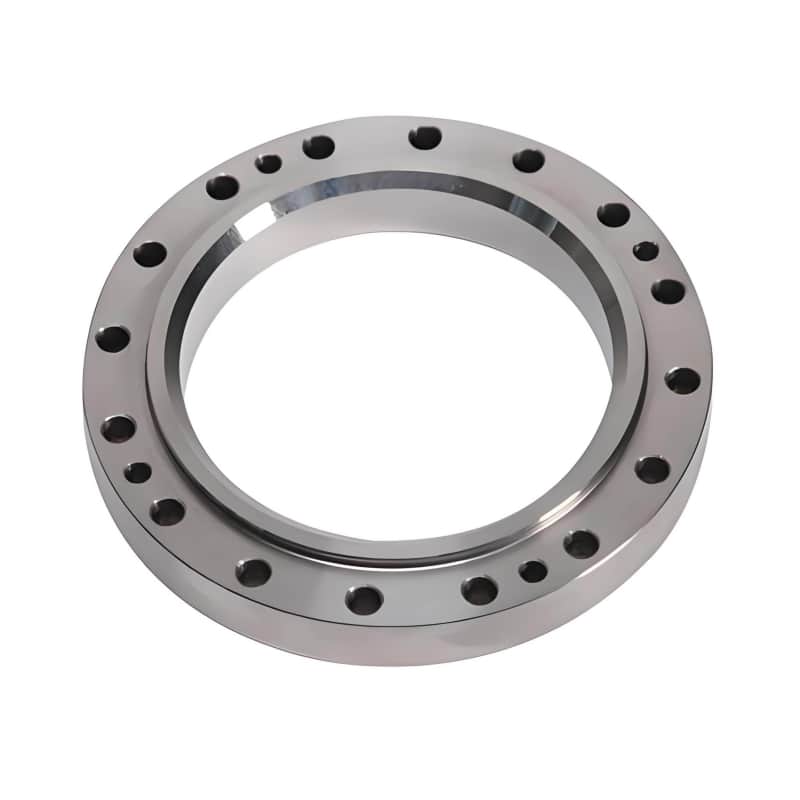
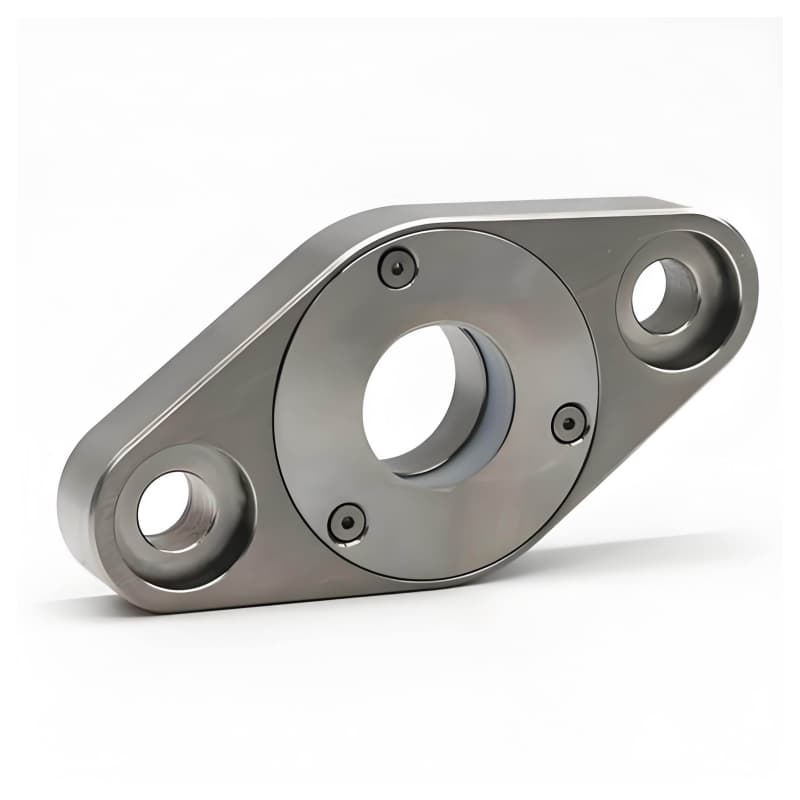
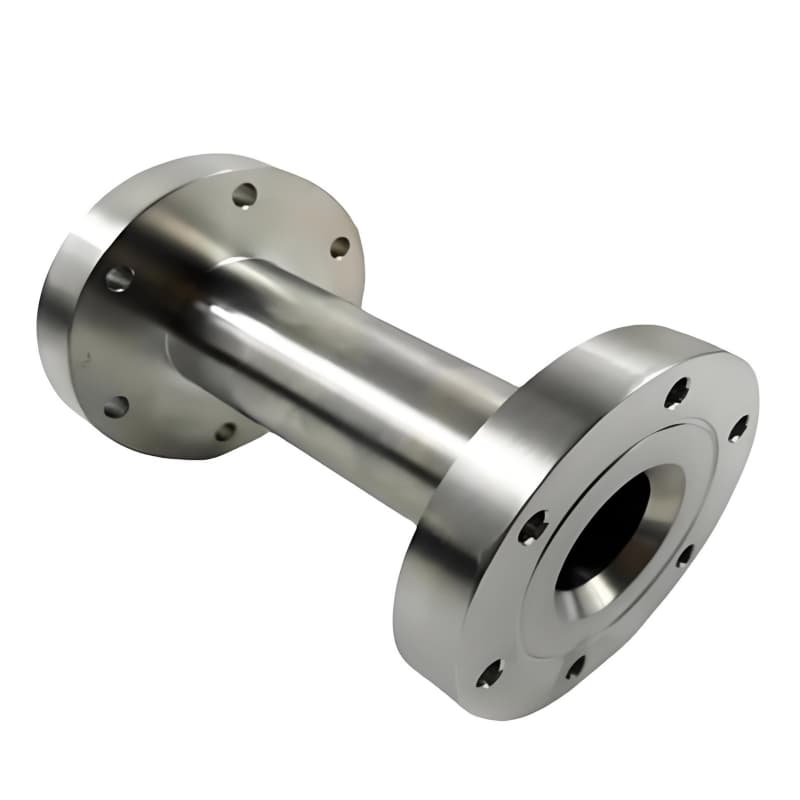
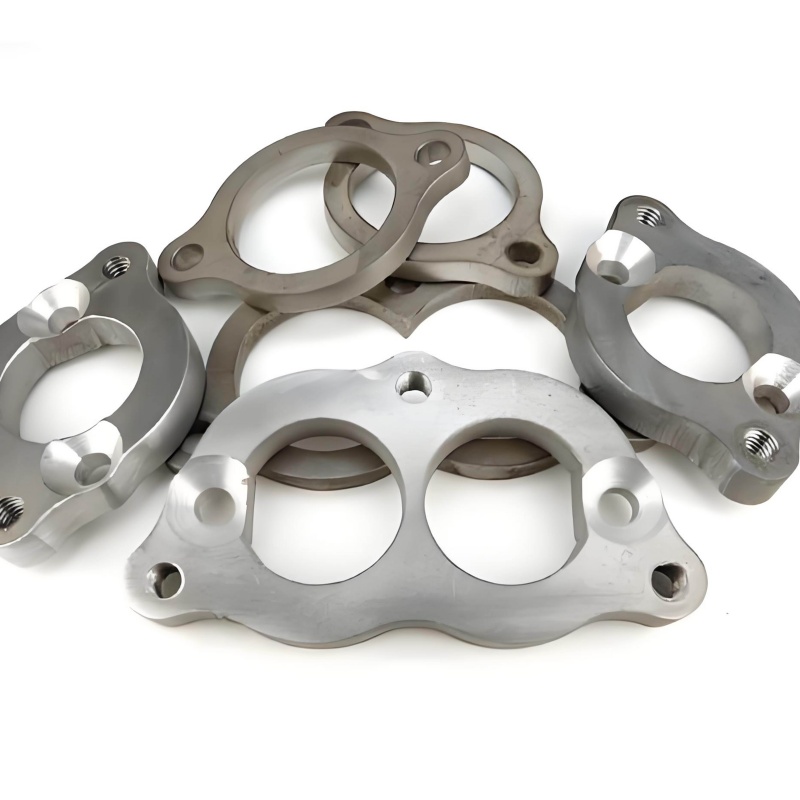
A custom CNC machined flange does not have to fit a catalog series. We work directly from engineering documents or from a physical reference part, and tailor every geometric and precision detail to the function the flange must perform in your assembly.
We accept 2D drawings in PDF, DWG and DXF, plus 3D models in STEP, STP, IGES and X_T format. Every dimension, tolerance note, thread callout and surface requirement is reviewed before the first cut.
When no drawing exists, send the used or reference flange. We measure the part, rebuild a full model and machine a matching replacement — including worn parts recovered from older imported equipment.
From miniature 10 mm instrument flanges to large equipment rings of 1,500 mm and beyond, from thin 1–2 mm spacing shims to thick, heavy load-bearing hubs — size is defined by your drawing, not by a stock list.
Any pitch-circle diameter, hole count, slotted hole, countersunk or counterbored hole can be produced. Inch and metric hole patterns can also be mixed on a single special flange.
Raised faces, flat faces, RTJ ring grooves, O-ring grooves, spigots, recesses, step faces, tongue-and-groove and male/female sealing profiles are machined with controlled groove radii and surface finish.
Stepped bores, tapered bores, keyways, internal and external threads, splines, eccentric outlines and non-circular bolt patterns are all within the same machining workflow.
From general commercial machined fit to precision-ground and lapped fits; critical bores, faces and bolt circles are held to the geometric tolerancing callouts written on your drawing.
Laser-etched part numbers, material grade marks, heat numbers, size marks, flow arrows and orientation marks can be applied exactly where the drawing or the end user specifies them.
Standard dimensional series such as ASME B16.5, EN 1092, DIN and JIS can be followed precisely — or freely combined with custom dimensions. Below are the flange families most frequently produced on our CNC lathes and machining centers.
CNC machined weld neck flanges with tapered hubs for high-pressure, high-stress piping, vessel nozzles and process line tie-ins; bore matched to pipe wall thickness.
Slip-on style rings bored and faced to slide over the pipe, with parallel faces, controlled hub clearance and evenly matched weld bevels on both sides.
Solid CNC machined blank-off and blind flanges for closing pressure lines, vessel openings, test ports and inspection openings, in any bolt pattern.
Threaded flanges with precision-cut NPT, BSPP, BSPT, metric and unified internal threads — a leak-ready connection without on-site welding.
Socket-weld flanges with controlled counterbores and lap-joint backing flanges machined to match stub-end radii and shoulder geometry.
Ring-type joint grooves and metal-to-metal seal faces machined to exact groove profile, angle and finish for high-pressure gasket seating.
Concentric and eccentric reducer flanges, orifice carrier flanges, spacer rings and bleed/flushing flanges of any thickness and step ratio.
Robot joint flanges, servo and motor mounting flanges, gearbox flanges, adapter flanges, index flanges and fully custom one-off shapes.
The right starting form depends on pressure, load, diameter and cost target. We accept and machine three main in-house routes — solid blanks, forgings and welded fabrications — and can also finish-machine stock that you supply.
Small and medium flanges are CNC machined from solid round bar, sawn billet, rolled plate or flame-cut / plasma-cut disc blanks — the fastest and most flexible route for custom sizes.
Flanges machined from open-die forgings, ring-rolled forgings, upset forged discs and near-net forged flanges, with refined grain flow for pressure, fatigue and impact loading.
Welded neck assemblies, fabricated rings, pipe-to-flange weldments and multi-part welded flanges are stress-relieved before final machining to keep faces and bores stable.
We also finish-machine customer-supplied castings, centrifugal cast rings, extruded rings and sawn forgings to the final drawing when material must come from your own chain.
Material grade is selected from the drawing and the service conditions — pressure, temperature, corrosive medium, weight limit and conductivity. The eight material families below cover the vast majority of custom flange orders, and mill material documents can travel with the parts when required.
ASTM A105, Q235, 20#, 45#/S45C, A36 and 1045 — the cost-effective default for general-purpose CNC machined steel flanges, weldable and easy to harden locally.
304/304L, 316/316L, 321, 410 and 17-4PH for corrosion-resistant CNC machined stainless flanges used in chemical, food, outdoor and wet environments.
2205 (S31803/S32205), 2507 and 904L combine high mechanical strength with chloride and seawater resistance for aggressive process media.
42CrMo4/4140, 15CrMo, 12Cr1MoV, Cr5Mo and bearing steels, supplied normalized, quenched and tempered for high-temperature and high-load flanges.
6061-T6, 6063, 5052, 2024 and 7075 for lightweight CNC machined aluminum mounting flanges in robotics, automation frames and mobility equipment.
C36000 brass, C11000 copper, tin bronze and aluminum bronze for conductive busbar flanges, grounding rings and marine wear surfaces.
Grade 1/2 commercially pure titanium and Grade 5 Ti-6Al-4V for high-strength, low-weight CNC machined titanium flanges, including robot and medical-equipment joints.
Inconel 625/718, Hastelloy C276, Monel 400 and Alloy 20 for extreme corrosion and high-temperature service where stainless steel is not enough.
Engineering plastics are also machined into insulating and lightweight flanges: PEEK, POM-C, PVDF, UHMW-PE, MC nylon and filled nylon, with tight bores and burr-free edges for electrical, food-handling and chemical fixtures.
Surface treatment protects the flange, controls friction on threads and sealing faces, or adapts the part to clean-environment service. Mating faces, threads and register diameters are masked whenever coating thickness would interfere with the fit defined on the drawing.
A clean machined surface protected with light anti-rust oil; dimensional accuracy and surface roughness are fully controlled directly at the machine.
A thin, dimension-neutral black conversion coating for steel flanges, sealed with oil or wax for storage and indoor corrosion protection.
Trivalent blue-white, colored or black zinc plating for dependable corrosion protection with minimal thickness build-up on fits.
A thick zinc layer for outdoor, structural and heavy-equipment flanges; threads and register bores are masked or re-tapped as required.
A uniform nickel-phosphorus layer that reaches internal bores and recesses evenly, adding wear and corrosion resistance to steel flanges.
Hard chromium on sealing and wear surfaces for hardness and low friction, followed by finish grinding to restore final dimensions.
Clear, colored or hard-anodized surfaces on CNC machined aluminum flanges, with precision holes and mating faces masked before coating.
Stainless steel flanges are pickled and passivated to remove free iron and heat tint, restoring the natural corrosion-resistant surface.
Smooth, bright, easy-to-clean stainless surfaces for food, pharmaceutical and vacuum flanges that must not trap residue.
A uniform matte texture that removes tool marks and weld discoloration before anodizing, painting or clean-service assembly.
Color powder coat, primer or enamel in specified RAL colors, with gasket faces and mating diameters masked to keep fits intact.
Low-friction fluoropolymer and anti-galling coatings on threaded flanges and parts exposed to sticky or aggressive chemicals.
The figures below describe what our CNC lathes, machining centers, grinding and inspection equipment can hold in normal production. Exact values are always confirmed against the drawing's tolerance stack-up, material and batch size during engineering review.
Routine CNC work is held to IT8; precision bores, register diameters and bolt circles are routinely machined to IT6–IT7 grades.
Critical dimensions such as bore diameter, spigot fit and overall thickness can be held to five micrometres where the drawing requires.
Raised-face and gasket-contact flatness is controlled to 0.01 mm or better, with a uniform spiral or concentric feed pattern.
As-machined faces reach Ra 1.6–3.2; fine turning and grinding reach Ra 0.8; lapped metal-seal faces reach Ra 0.2–0.4.
Face-to-face parallelism and face-to-bore perpendicularity are tightly controlled so the flange mounts leak-free without shimming.
Bore-to-OD concentricity, circular runout and axial runout are controlled for balanced, high-speed rotating coupling flanges.
Hole position and pitch-circle diameter are held within ±0.02 mm, so mating flanges line up without on-site reaming.
Metric and inch threads plus true-position, cylindricity, profile and runout callouts are measured against the drawing, never estimated by eye.
Turning establishes the round body and sealing faces, milling handles holes, slots and complex contours, and dedicated measuring equipment verifies the result before the lot is released. The four processes below form the core loop behind every CNC machined flange order.
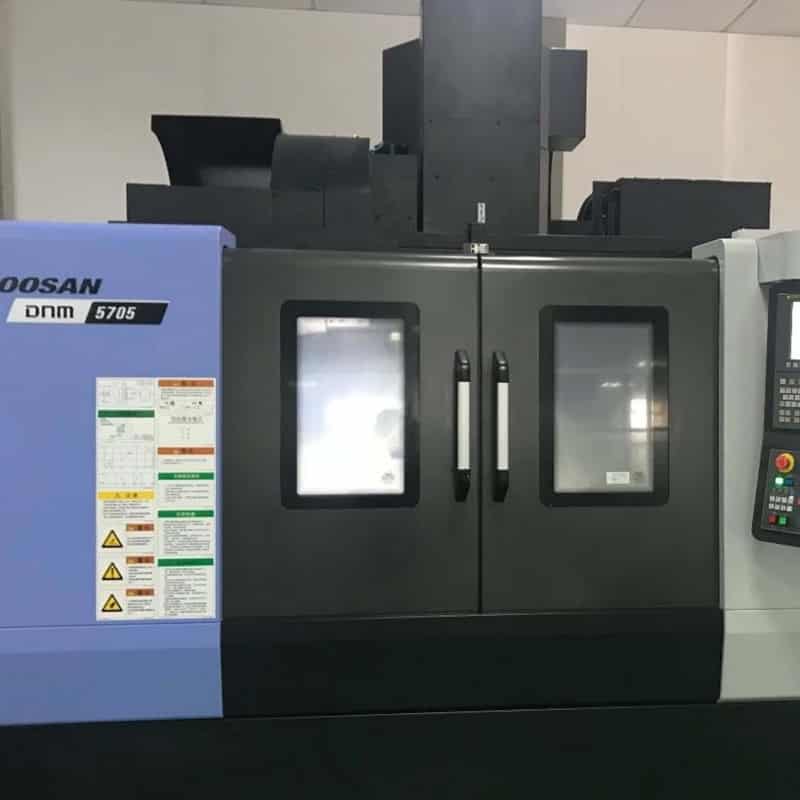
3-axis, 4-axis and 5-axis milling of bolt circles, counterbores, keyways, slots, O-ring grooves and non-circular flange contours.
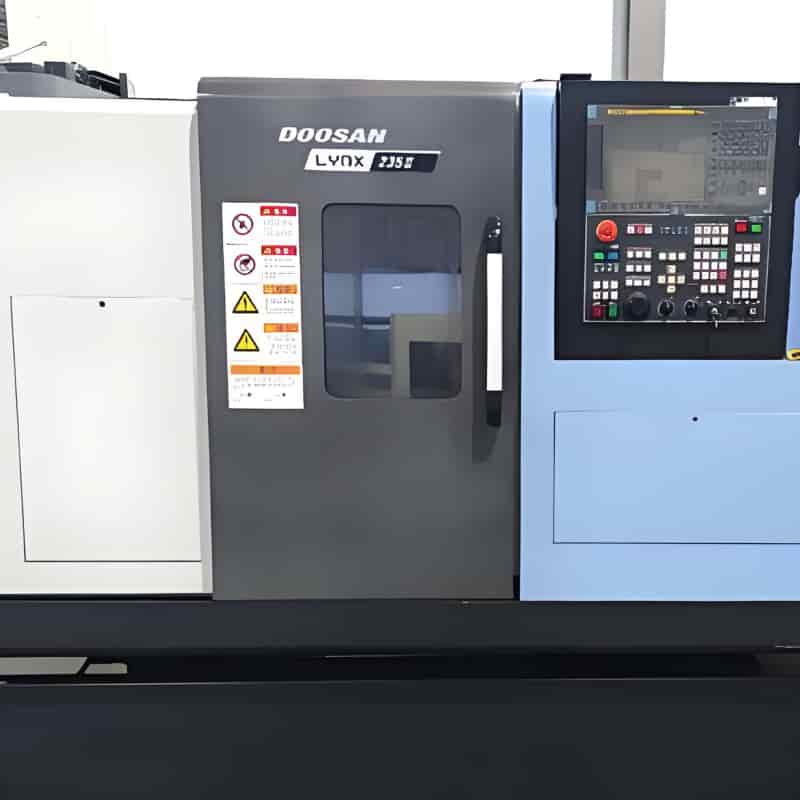
Horizontal and vertical CNC lathes shape the OD, stepped bores, raised faces, chamfers, bevels and fine sealing surfaces of round flanges.
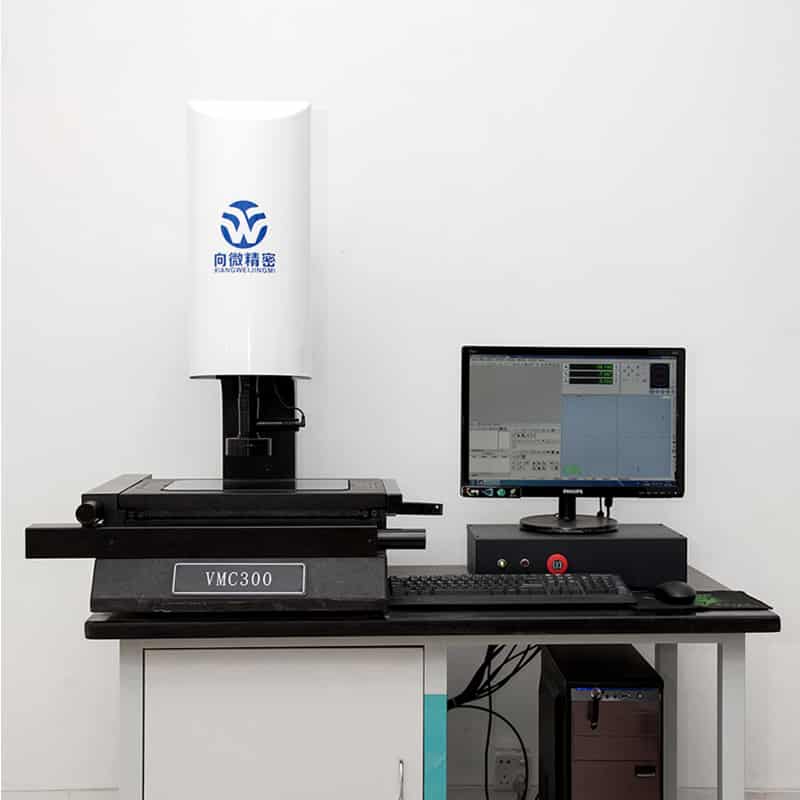
Non-contact optical measurement of small radii, chamfer angles, thread profiles, edge breaks and tiny features on miniature flanges.
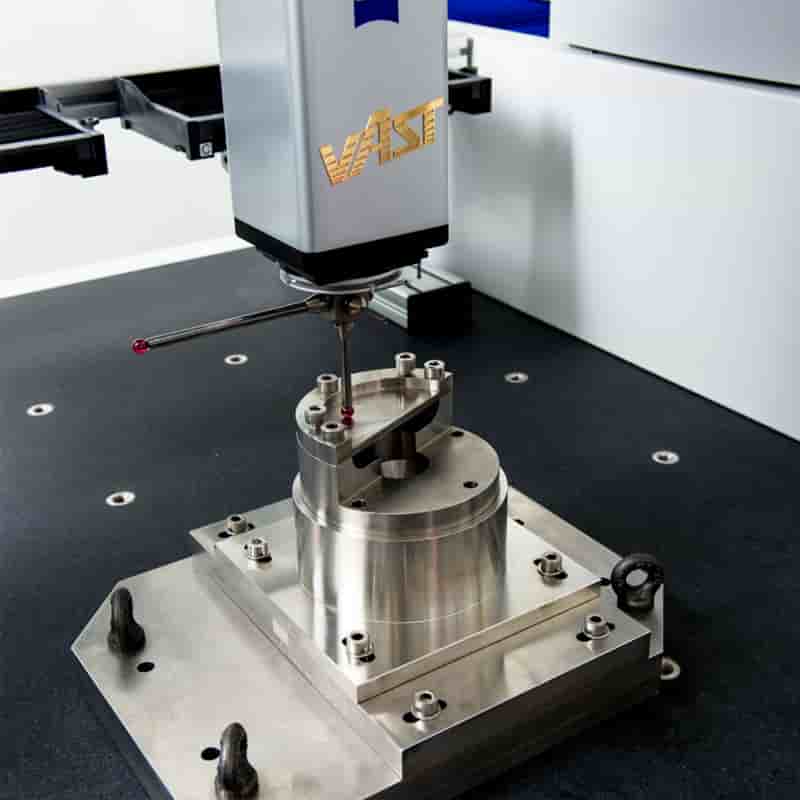
Coordinate-measuring inspection of hole position, flatness, concentricity, perpendicularity and full dimensional reports for first articles.
A flange is any ring-shaped or disc-shaped component that joins, locates or transmits load between two parts. Beyond classic piping, custom machined flanges appear wherever a rotating, pressurized or precisely located connection is needed.
Process piping, utility lines, distribution manifolds and skid-mounted pipework in every common pressure rating and face configuration.
Nozzle flanges, manway rings, blind covers and body flanges for reactors, autoclaves, storage tanks and heat-treatment equipment.
High-pressure hydraulic manifolds, cylinder mounting flanges, piston rod flanges and pneumatic connection rings with fine O-ring grooves.
Body-to-pipe adapter flanges, stuffing-box rings, bonnet rings, compressor case flanges and custom pump pedestal mounting rings.
CNC machined robot joint flanges, end-of-arm connecting flanges, wrist flanges and servo mounting flanges for AI robots and cobots.
Output flanges, mounting rings, coupling flanges and shaft connecting flanges where concentricity and dynamic runout are critical.
Vacuum chamber flanges, viewport and feedthrough mounts with fine Ra surfaces, clean edges and particle-free finishing.
Tubesheet-style rings, exchanger end flanges, filter-housing flanges, clamped connection rings and custom end-cap flanges.
The same core capability — turning, milling, hole making and precision inspection of ring and disc parts — serves a wide spread of industries, each with its own typical material, finish and tolerance expectations.
High-pressure weld neck, blind and RTJ flanges in A105, alloy steel and duplex for upstream, midstream and refinery equipment.
Corrosion-resistant stainless, Hastelloy and lined flanges for reactors, dosing systems and aggressive-media process lines.
Heat-resistant alloy flanges for thermal power, nuclear auxiliaries, wind turbine drivetrains and solar tracking structures.
Batch-machined mounting flanges, cooling-system flanges and battery-pack structural rings for vehicles and charging equipment.
Lightweight titanium and aluminum flanges with tight runout and surface-finish control for ground-support and onboard systems.
Precision robot joint and arm connecting flanges in aluminum and titanium, optimized for concentricity and low mass.
Seawater-resistant bronze, duplex and galvanized steel flanges for deck equipment, piping systems and propulsion auxiliaries.
Polished or electropolished stainless flanges with smooth, crevice-free surfaces for hygienic process and CIP-ready lines.
Clean-finish stainless and titanium flanges for process equipment, analytical instruments and medical machinery frames.
Large-diameter duplex and coated steel flanges for pumps, reverse-osmosis skids, pipelines and municipal treatment plants.
Thick forged alloy-steel adapter and mounting flanges for crushers, conveyors, hydraulic excavators and drilling rigs.
Small precision aluminum and stainless vacuum flanges, chamber rings and fixture flanges for clean manufacturing equipment.
Custom CNC machining needs no molds and no minimum order quantity, so the same drawing can be produced as a lone spare today and as a repeating series later. Programs, fixtures and first-article records are kept so repeat batches match the first lot.
A single custom flange, broken-part replacement or design-validation prototype, machined without tooling investment and delivered quickly for fit trials.
Runs of roughly 10–500 pieces for pilot machines, project orders and maintenance spares, with staged delivery possible against assembly timing.
Scheduled repeat orders built from saved CNC programs, dedicated soft jaws and stored inspection records for lot-to-lot consistency.
Hundreds to tens of thousands per order across paired machines and dedicated fixtures, with sampling plans and stable, monitored cycle times.
The points below summarize the working method behind each order, from drawing review through final inspection and export-ready packing.
Non-standard sizes, mixed inch/metric standards and half-developed concepts are routine work, not special exceptions requiring expensive tooling.
DFM feedback on thin walls, tool access, internal corners, thread depth, tolerance stack-up and material choice is provided before metal is cut.
Switch between carbon steel, stainless, duplex, aluminum, titanium, copper alloys and plastics within one part family without changing supplier.
Turning, milling, drilling, grinding, welding, fabrication and coordinated surface treatment move under a single production workflow.
First-piece dimensional verification, in-process checks and final inspection are completed before each lot leaves the workshop.
Anti-rust wrapping, individual bagging, plywood cases and clear external marking protect precision flanges through long ocean or air transit.
Buyers often search by combining the process, material, function and feature of the part they need. The two columns below describe that long-tail range in plain engineering language — if a phrase matches the flange on your drawing, it is most likely a part we can quote and machine.
On the material and process side, regular work includes a CNC machined stainless steel raised-face flange for corrosive process lines, a CNC machined carbon steel forged weld neck flange for pressure piping, a CNC machined aluminum lightweight mounting flange for robot frames and automation cells, and a CNC machined titanium robot joint flange where strength-to-weight ratio and concentricity decide machine performance. Brass conductive flanges, bronze wear flanges, duplex seawater-service flanges and PEEK insulating flanges are produced with the same made-to-print workflow.
On the function side, the workshop machines CNC machined high-pressure flanges with RTJ grooves, CNC machined vacuum flanges with fine Ra sealing faces, CNC machined blind flanges for pressure testing, CNC machined threaded instrument flanges with precise NPT or metric threads, and CNC machined adapter flanges that bridge two different standards, bore sizes or bolt patterns on a single mating face.
On the feature and geometry side, typical long-tail requests cover a precision CNC machined thin-walled spacer flange, a CNC machined large-diameter flange ring, a CNC machined miniature flange for compact instruments, a CNC machined eccentric reducer flange, a CNC machined splined drive flange, a CNC machined welded assembly flange finish-machined after stress relief, and a CNC machined non-standard special flange that follows no published standard at all.
Every order follows the same path: drawing or sample review, material and stock-form selection, CNC turning and milling, deburring and edge breaking, any specified surface treatment, dimensional and surface inspection, then protective packing. Whether the requirement is one CNC machined replacement flange for a stopped machine or a repeat batch of thousands of identical mounting flanges, the geometry, material, precision and finish are defined by the customer's drawing — and the machining is built around it.
In short, a custom CNC machined flange from this China workshop is defined entirely by the buyer's engineering: per drawing or per sample, in blanks, forgings or welded fabrications, across carbon steel, stainless steel, duplex, alloy steel, aluminum, copper, titanium and engineering plastics, with the surface treatment, sealing geometry, dimensional tolerance and surface roughness the application demands.
Single prototypes, small project batches and stable large-volume series are all produced on the same shop floor — standard catalog flanges, mixed-standard adapter flanges and fully special flanges alike.