
Custom CNC Machining of Gears from China As Per Customer Drawings
We are a China-based custom gear machining workshop supplying custom manufactured gears and custom machined gear parts strictly to customer drawings, technical specifications and supplied samples. From a single custom cut gear for a machine repair to repeat production batches of precision custom machined gears for original equipment manufacturers, every order is handled as a made-to-order project: custom gears to customer specifications are produced as per customer drawing, with module, pressure angle, number of teeth, pitch circle diameter, tooth profile and dimensional tolerance held exactly as defined on the 2D drawing.
Our custom gear fabrication service combines CNC machined turning and milling with dedicated gear cutting processes — gear hobbing, gear shaping, gear milling, gear grinding and broaching — followed by heat treatment and surface finishing selected to match the application. Whether you need custom metal gears for transmission, motion control, reduction gearboxes, conveying, packaging, agricultural machinery or general industrial equipment, the gears made to drawing in our workshop are built for smooth meshing, uniform load distribution, low running noise and long service life, from one prototype piece to high-volume supply.
Related Gear Products
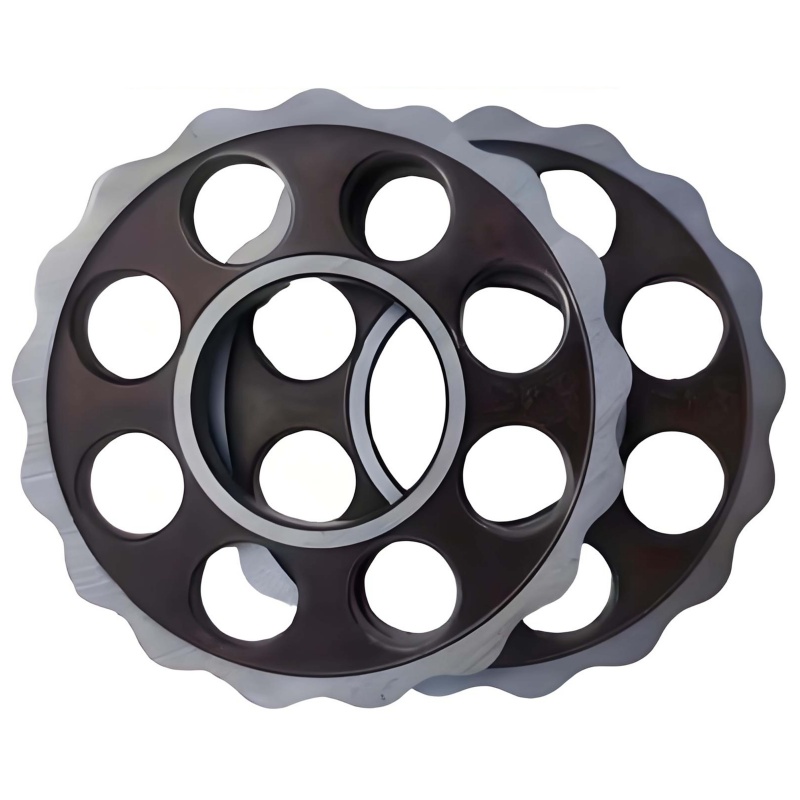
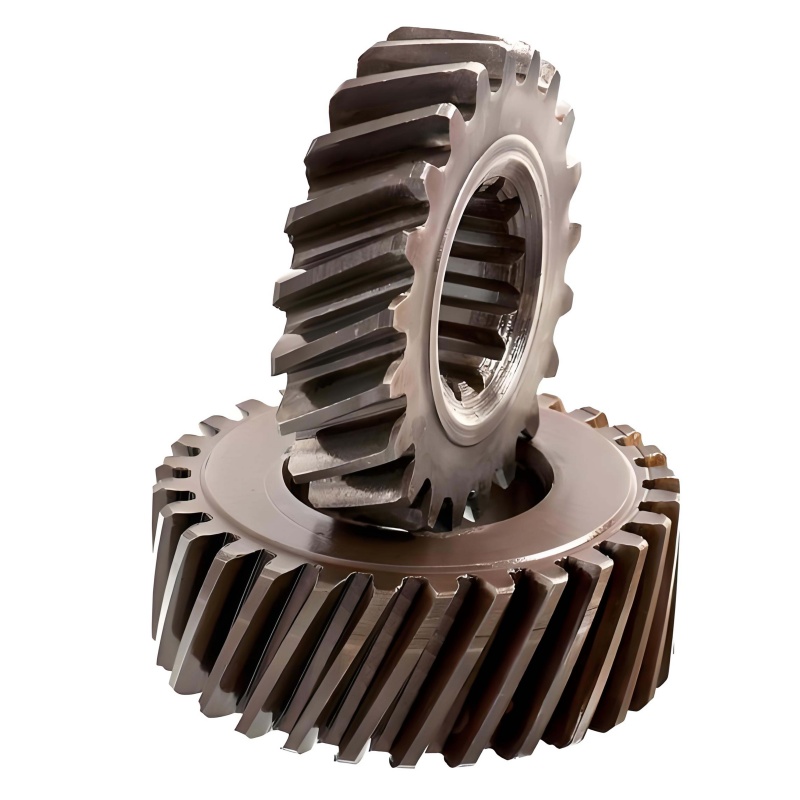
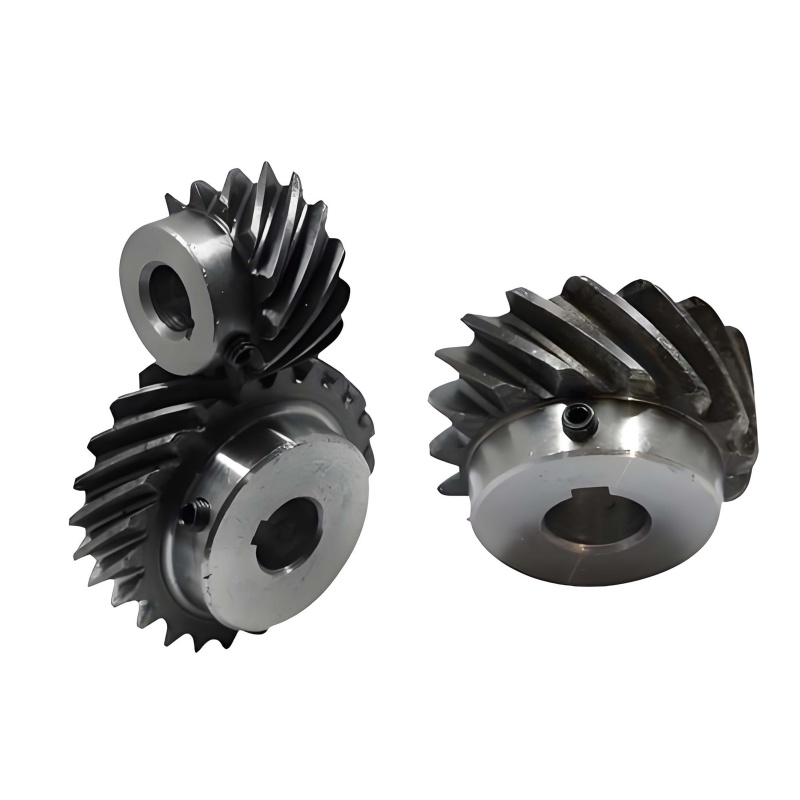
A selection of custom manufactured gears produced for customers worldwide. Every part below was CNC machined and gear cut as per drawing, in the material, hardness and finish defined by the customer.
Gear Types We Custom Machine
Our custom gear machining covers the full family of cylindrical, conical and worm gearing. The eight groups below can be supplied as single custom cut gears, matched gear pairs or complete gear sets, in metal and engineering plastic materials.
Spur Gear
The most common cylindrical gear, with straight teeth parallel to the axis. A custom spur gear machined per drawing transmits motion between parallel shafts with high mechanical efficiency and can be hobbed, shaped or ground to a close tooth profile and dimensional tolerance.
Helical Gear
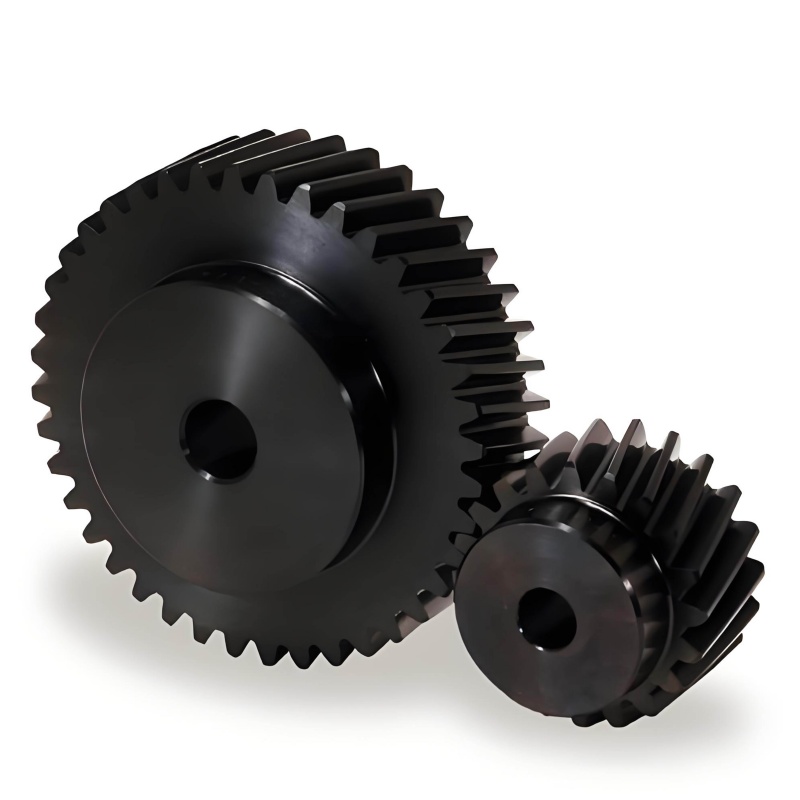
Teeth are cut at a defined helix angle for progressively smoother, quieter meshing and higher load capacity. Custom helical gear CNC machining covers external helical gears, internal helical gears, matched helical pairs and crossed helical gears for high-speed gearboxes.
Bevel Gear
Conical gears transmit torque between intersecting shafts, most commonly at 90 degrees. Straight bevel gears are custom cut to the specified module, tooth count and cone distance, with bore, keyway and mounting face CNC machined as one part.
Spiral Bevel Gear
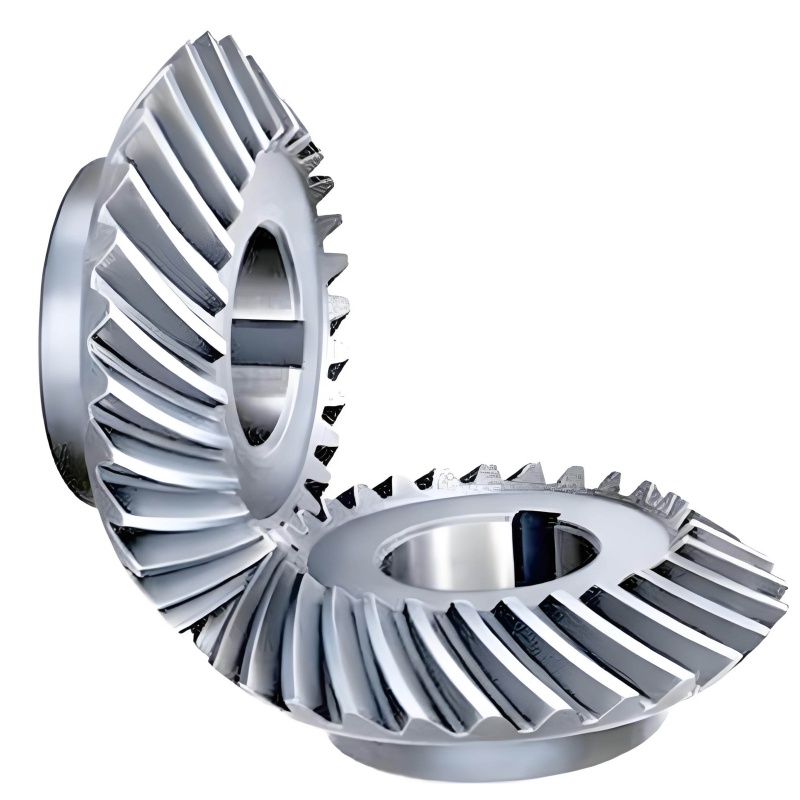
Curved oblique teeth engage gradually for smooth, high-capacity right-angle transmission. Spiral bevel gear sets are manufactured as matched pairs with controlled backlash, optimized contact pattern and hardened, ground or lapped flanks on request.
Worm & Worm Wheel
A worm drives a worm wheel to deliver a large reduction ratio in a compact space, often with a self-locking feature. Hardened steel worms paired with bronze worm wheels are a typical custom gear fabrication combination for quiet, high-torque drives.
Spline Gear
External splines, internal splines, involute splines and spline shafts connect rotating components while allowing controlled sliding. Spline teeth are hobbed, shaped or broached as per drawing, with sliding, close or interference fits held to specification.
Internal Gear
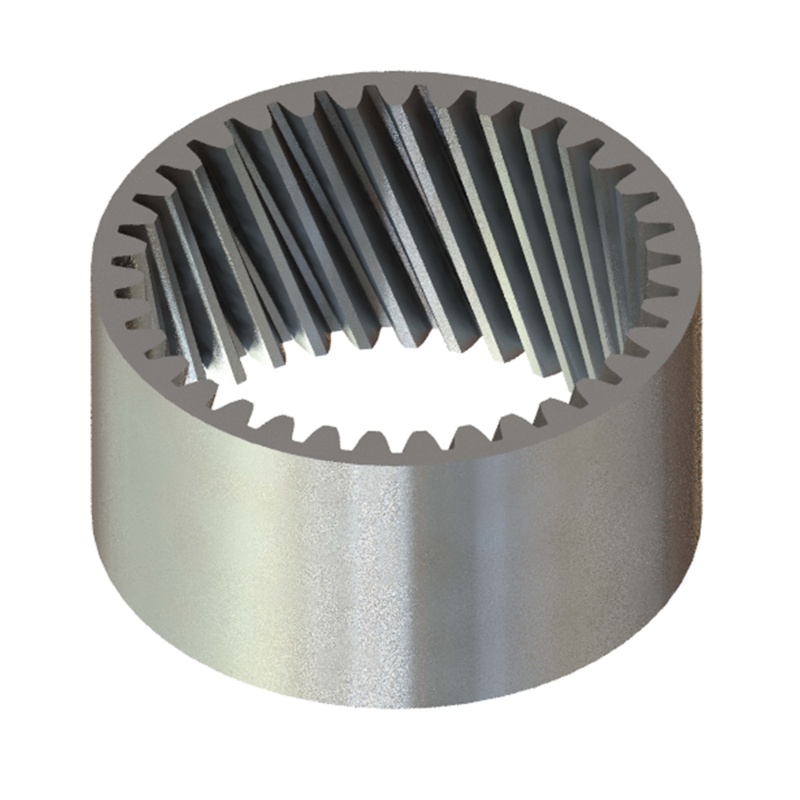
Ring gears with teeth cut on the inner diameter are used in planetary gearboxes and compact coaxial drives. Internal gear teeth are shaped or broached with close control of concentricity between the tooth circle and the outer mounting register.
Pinion & Gear Shaft
Small pinions and integral gear shafts combine teeth and shaft in a single component, eliminating assembly misalignment. A custom gear shaft manufactured to drawing is turned, hobbed or milled, ground and heat treated as one rigid, high-precision part.
Made to Drawings, Technical Specifications and Samples
Every project starts from the customer's 2D drawing and technical specification. We manufacture as per drawing — per drawing — reviewing module, pressure angle, tooth count, pitch circle diameter, tooth profile, material, hardness range and surface requirement before any metal is cut.
When no drawing exists, custom gears can be reverse engineered from a supplied sample: the teeth are measured on a gear tester and a 2D profile projector, key dimensions are reconstructed, and production drawings are confirmed with the customer before manufacture. This makes us a practical source both for gears made to drawing and for replacement custom cut gears used to maintain legacy equipment.
From One Single Piece to Large-Volume Production
Custom gear machining does not require large minimum order quantities. We support one-off prototypes and single replacement gears, small development batches, and serial high-volume production with stable and repeatable processes.
CNC machined blanks are standardized before gear cutting, fixtures and cutters are prepared per part family, and first-article inspection locks the process so that batch one hundred matches batch one. The same drawing, material, heat-treatment route and inspection plan is followed on every repeat order of custom manufactured gears.
Characteristics of Gear Parts and Machining Considerations
Gears are precision motion components: geometry, hardness and surface condition all decide whether a pair runs quietly or wears quickly. The six points below describe how each custom machined gear is controlled through the full process route.
Tooth Profile Accuracy
The involute tooth profile, tooth lead and pitch directly determine meshing smoothness. Gear hobbing or shaping is followed, where required, by gear grinding; each custom machined gear is checked for profile deviation, adjacent pitch error and accumulated pitch error on a gear tester.
Concentricity and Runout
Bore-to-pitch-circle concentricity together with radial and face runout generate vibration and noise when poorly controlled. Blanks are precision CNC turned, bores may be finish ground, and the same locating datums are kept across every operation and inspection step.
Load, Wear and Material Choice
Material and hardness must match load, speed and lubrication. 8620 steel and 4130 alloy steel suit carburized hardened gears, stainless steel gears serve corrosive environments, while brass, bronze, POM/Delrin and PA66 nylon gears deliver quiet, low-load or self-lubricating operation.
Heat-Treatment Distortion Control
Carburizing, quenching and surface hardening raise tooth hardness but introduce distortion. Finish stock is reserved before heat treatment, and gear grinding or bore grinding afterwards removes the distortion so the final dimensional tolerance is met in the hardened condition.
Deburring and Edge Preparation
Burrs at tooth ends, keyways and cross holes damage mating parts and trap swarf. Custom gear parts are carefully deburred with controlled edge break and root blending, while the functional involute tooth profile and tooth thickness are preserved without alteration.
Matched Sets and Backlash
Gear pairs and gear sets require controlled backlash and a favorable contact pattern. Matched helical, bevel and spiral bevel sets are finished together, verified as a pair and marked as a set, so the custom gears assemble exactly the way they were validated.
Machining and Gear Cutting Processes
A complete gear is the result of several complementary processes. CNC machined blanks establish the datums, dedicated gear cutting creates the teeth, and finishing operations after heat treatment achieve the final accuracy and surface quality.
CNC Machined
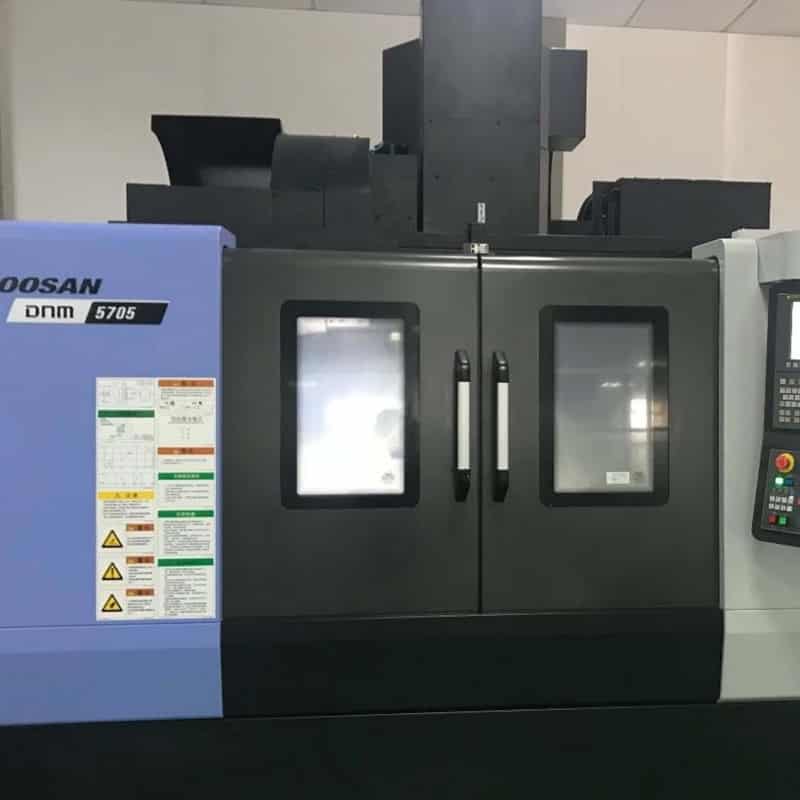
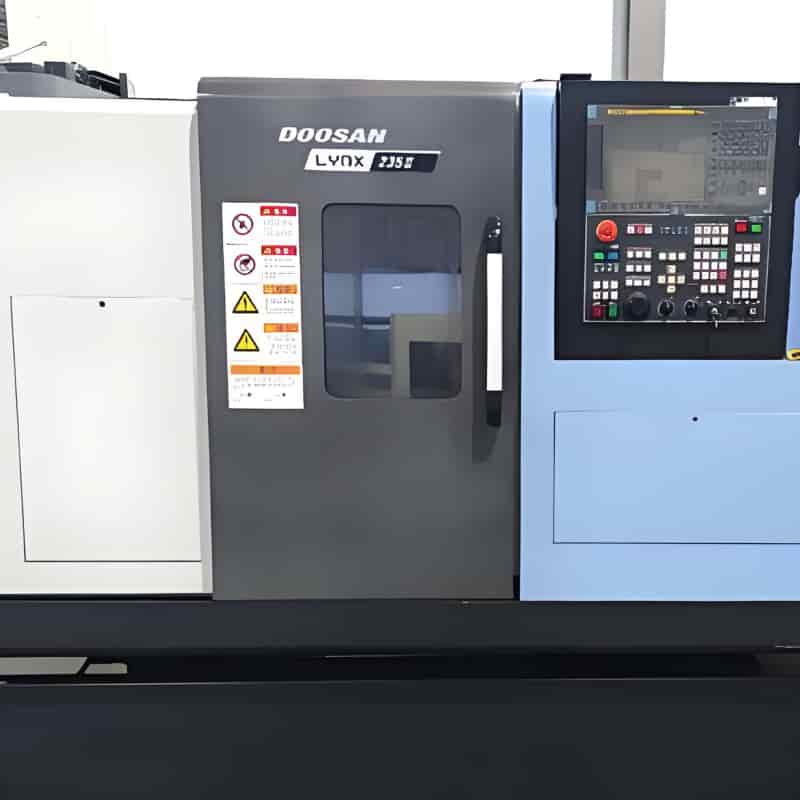
CNC machined gear blanks and complete gear parts are produced on CNC lathes and machining centers, combining turned bores and faces with milled keyways, flats, holes, hubs and webs in tightly controlled, repeatable setups.
Turning
CNC turning establishes the bore, outside diameter, end faces and locating shoulders of every gear blank, creating the reference datums from which all later gear cutting, grinding and CMM inspection operations are referenced.
Milling
CNC milling produces gear blanks with complex bodies, hubs, webs, keyways and mounting holes, and also supports custom cut gears with form-milled teeth whenever hobbing or shaping is not suitable for the geometry.
Gear Hobbing
A continuous generating process for external spur and helical gears. Gear hobbing is efficient and accurate for both a single custom gear and volume runs of custom manufactured gears, with stable pitch and tooth profile quality.
Gear Shaping
Gear shaping uses a reciprocating generating cutter and is the practical method for internal gears, cluster gears, shoulder gears and parts with restricted hob runout space, including internal helical forms.
Gear Milling
Form disc cutters or end mills machine one tooth gap at a time. Gear milling suits large-module gears, special tooth forms, prototype custom cut gears and low-volume work where dedicated cutters are not economical.
Gear Grinding
After hardening, gear grinding finishes the tooth flanks to high profile and pitch accuracy with excellent surface quality. It serves precision custom machined gears required to run quietly at high speed or under heavy load.
Broaching
Broaching produces internal splines, keyways and internal gear forms in a single controlled pass. The process is fast and highly repeatable, which makes it ideal for batches of custom machined gear parts with identical internal forms.
Gear Materials We Machine
Material is selected together with heat treatment and the operating regime of the drive. The ten material groups below cover hardened transmission gears, corrosion-resistant stainless steel gears and quiet-running non-metallic gears, all machined as per customer drawing.
4130 Alloy Steel
Chromium-molybdenum 4130 alloy steel offers good strength and toughness and is widely used for medium-duty gear shafts and custom machined gear parts after quenching and tempering.
8620 Steel
Nickel-chromium-molybdenum case-hardening steel. Carburized 8620 steel gears combine a hard, wear-resistant tooth surface with a tough core — a classic choice for custom metal gears for transmission.
Carbon Steel
Carbon steels such as 1045 provide a cost-effective solution for low-to-medium load gears, supplied normalized, through-hardened or with induction hardened teeth as specified.
Alloy Steel
The broader alloy steel family covers hardened and tempered grades selected for high torque, shock loads and long service life in demanding precision custom machined gears.
304 Stainless Steel
General-purpose austenitic 304 stainless steel serves gears that need corrosion resistance in food, chemical, outdoor and humid environments without additional plating.
316 Stainless Steel
316 stainless steel offers higher corrosion resistance than 304, including improved resistance to chloride environments, for the most demanding stainless steel gear applications.
Brass
Free-machining brass allows clean, precise cuts and quiet running. Brass gears are used in instruments, low-speed drives and components exposed to mild corrosive conditions.
Bronze
Tin bronze and aluminum bronze are standard for worm wheels and wear-resistant gears that run against hardened steel worms, with excellent friction and wear behavior.
POM / Delrin
Dimensionally stable POM/Delrin provides low friction and quiet meshing. CNC machined POM gears often run without external lubrication in light-duty mechanisms and office equipment.
PA6 / PA66 Nylon
Tough, shock-absorbing PA6/PA66 nylon gears reduce noise and protect mating metal gears; oil-impregnated nylon grades carry higher loads in conveyor and appliance drives.
Common Heat Treatment for Metal Gear Parts
Heat treatment balances a hard, wear-resistant tooth surface against a tough, shock-resistant core. The route is selected from the material and the duty cycle defined on the technical specification.
Carburizing
Low-carbon case-hardening steels such as 8620 are carburized to enrich the tooth surface with carbon and then quenched: flanks become hard and wear resistant while the core remains tough, ideal for heavily loaded custom transmission gears.
Quenching
Quenching after controlled heating raises the hardness and strength of carbon and alloy steel gears. Quenching distortion is anticipated by reserving finish stock, which is later removed by post-hardening gear or bore grinding.
Tempering
Tempering follows quenching to relieve internal stress and tune hardness against toughness, reducing brittleness so custom machined gear parts resist tooth breakage under repeated and shock loading.
Surface Hardening
Induction or flame surface hardening hardens only the tooth zone of medium-carbon steels while leaving a ductile core — a common route for large gears and gear shafts calling for selective surface hardness.
Surface Treatment of Custom Gears
Surface treatment protects the gear and its mating components without compromising meshing geometry. Coating thickness is always controlled so tooth thickness, backlash and bore fits remain functional after finishing.
Black Oxide
Black oxide delivers a uniform dark finish with modest corrosion protection when oiled. The conversion coating is dimensionally neutral, so it does not alter gear tooth geometry, tooth thickness or backlash.
Anodizing
Anodizing is applied to aluminum gear components and related drive parts for improved wear and corrosion resistance, supplied in natural or colored finishes exactly as marked on the customer drawing.
Zinc Plating
Zinc plating gives steel gears sacrificial corrosion protection; trivalent blue/white or colored zinc layers are applied with controlled thickness so mating dimensions and running fits stay functional.
As-Machined & Other Finishes
Gears can also be supplied in the as-machined condition, or with bead blasting, phosphating, nickel plating, powder coating and other finishes defined on the 2D drawing and technical specification.
Surface Quality and Dimensional Accuracy Achievable
The values below represent typical ranges achieved in normal custom gear fabrication. Exact results depend on material, part size, geometry and heat-treatment condition, and are confirmed during drawing review; every finished gear is verified by CMM inspection, gear tester or 2D profile projector against the agreed dimensional tolerance.
General Dimensional Tolerance
CNC machined turned and milled features are typically held within ±0.01 mm; tighter limits are applied to ground bores, journals and locating faces when the drawing requires it.
Bore Accuracy
Finish ground bores reach IT6 grade accuracy; precision reamed or fine turned bores are held at IT7 to IT8, giving the concentricity needed for quiet running.
Hobbed Tooth Surface
As-cut teeth from gear hobbing or shaping typically reach a surface roughness of Ra 1.6 to 3.2 µm, suitable for most industrial power transmission gears.
Ground Tooth Surface
Post-hardening gear grinding typically achieves Ra 0.4 to 0.8 µm on tooth flanks, together with improved tooth profile, lead and pitch accuracy for high-speed drives.
Gear Accuracy Grade
Ground gear teeth can be controlled to gear accuracy grades 6 to 7; hobbed or shaped custom cut gears are typically supplied at grades 8 to 9 according to the application.
Runout and Concentricity
Bore-to-pitch-circle and bore-to-face runout on precision custom machined gears is typically controlled within 0.01 to 0.02 mm, limiting vibration at operating speed.
Keyway and Spline Fit
Keyway width and depth, and internal/external spline fits — sliding, close or interference — are held to the fit class defined as per customer drawing.
Hardness After Treatment
Surface hardness follows the technical specification, for example a 58 to 62 HRC carburized case on 8620 transmission gears, with core hardness and case depth recorded.
Gear Drawing Parameters We Work To
A complete gear drawing defines both the gear geometry and the surrounding mechanical features. The six core parameters below are reviewed on every inquiry, together with material, heat treatment and inspection requirements.
Module
The metric module defines tooth size. We cut both standard and non-standard modules exactly as marked on the drawing, including fine-module instrument gears and large-module industrial gears.
Pressure Angle
Commonly 20°, with 14.5° and custom pressure angles also supported; hob, shaper cutter and grinding wheel selection always follows the specified pressure angle.
Tooth Count / Number of Teeth
The number of teeth is verified against the drawing and cross-checked with the mating gear so the required transmission ratio and center distance are achieved.
Pitch Circle Diameter
The pitch circle diameter — module multiplied by number of teeth — is the reference dimension for meshing, center-distance calculation and final gear inspection.
Tooth Profile
Involute tooth profiles are produced with any required profile shift coefficient and profile modification, such as tip relief or lead crowning, per the technical specification.
Dimensional Tolerance
Bore, outside diameter, overall length, keyway and tooth thickness tolerances are reviewed for manufacturability and then held as per drawing throughout production and inspection.
Machining and Inspection Capabilities
Every batch of custom manufactured gears is verified against the drawing: machining stages use in-process checks, while finished gears are measured and functionally inspected before release.
 CNC Milling
 CNC Turning
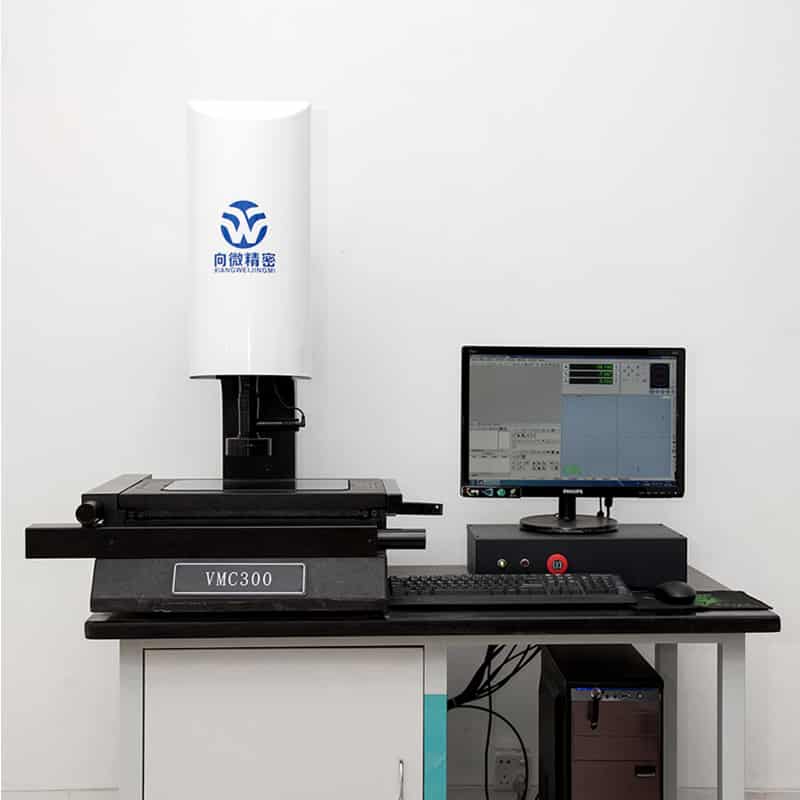 2D Profile Projector Measuring
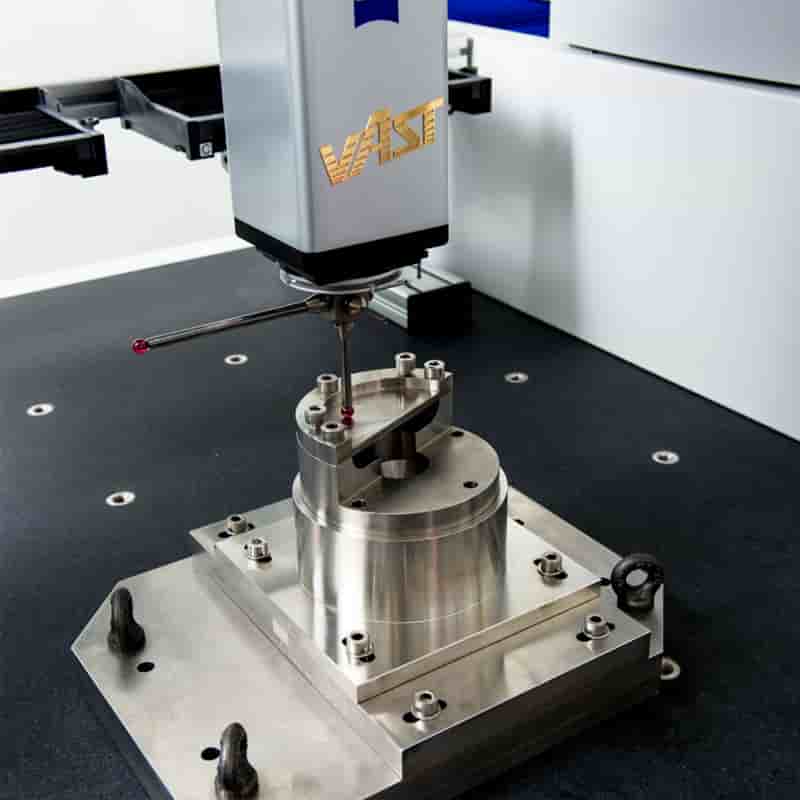 CMM Inspection
In-Process Control
CNC turning and CNC milling stages establish and protect the part datums; gear hobbing, shaping, milling and grinding parameters are set from the first piece and confirmed with in-process measurement of tooth thickness over pins or balls, bore size and runout before the batch continues.
Final Inspection
Finished custom machined gear parts are measured on a CMM for dimensional tolerance and geometric characteristics, checked on a gear tester for pitch, runout and tooth profile, and inspected on a 2D profile projector for small features, tooth edges and surface quality. Inspection records accompany the goods when the customer requires them.
Typical Custom Gear Applications
The requests below show how customers combine gear type, material, process and heat treatment in a single made-to-drawing order. Each can be produced as one piece, a pilot batch or a serial production program.
Custom Spur Gear Machined Per Drawing
Replacement and OEM spur gears in carbon steel, alloy steel, 304/316 stainless steel, brass, bronze, POM/Delrin and PA66 nylon, cut by hobbing or shaping with optional hardening and grinding.
Custom Helical Gear CNC Machining
External and internal helical gears and matched helical pairs for quiet, high-speed reduction gearboxes, including crossed helical gears with defined helix angle and handedness.
Custom Gear Shaft Manufactured to Drawing
Integral pinion shafts and gear shafts with ground bearing journals, keyways, retaining ring grooves and splined ends, heat treated for high torque and shock resistance.
Precision Custom Machined Gears
Ground, heat-treated gears for indexing mechanisms, servo drives, automation and motion-control equipment, where tooth profile accuracy and low backlash are decisive.
Custom Metal Gears for Transmission
Carburized 8620 and 4130 transmission gears, bevel gears, spiral bevel gear sets and worm drives for drivetrains, conveyors, agricultural machines and construction equipment.
Internal, Spline and Worm Wheel Gears
Shaped or broached internal ring gears for planetary drives, involute spline gears and shafts, and centrifugally cast or wrought bronze worm wheels paired with hardened worms.
Custom Gear Fabrication Under One Roof in China
As a China custom gear machining supplier, we bring custom gear machining, custom gear fabrication and CNC machined precision together in one process chain: custom manufactured gears, custom cut gears and custom machined gear parts — spur gear, helical gear, bevel gear, spiral bevel gear, worm & worm wheel, spline gear, internal gear, pinion and gear shaft — are all supplied as gears made to drawing and as custom gears to customer specifications.
Starting from a 2D drawing or a supplied sample, material selection, heat treatment (carburizing, quenching, tempering, surface hardening), surface finish (black oxide, anodizing, zinc plating), dimensional tolerance and the inspection route (CMM inspection, gear tester, 2D profile projector) are reviewed before production begins. From a single custom spur gear machined per drawing to high-volume batches of precision custom machined gears, every order receives the same process discipline and the same attention to tooth profile, surface quality and batch consistency.