
Custom machining service of slender shafts per drawing
We provide slender shaft custom machining strictly based on customer technical drawings, samples and written specifications. As a custom long thin shaft manufacturer and slender shaft custom supplier, we produce custom slender shaft parts for machinery, automation equipment and power transmission systems — from a single CNC turned slender shaft prototype to stable, repeatable large-volume production. Every custom machined slender shaft to drawing is processed under controlled turning, grinding and inspection routines, because a slender shaft made according to a technical drawing must reproduce not only its dimensions, but also straightness, runout and surface quality.
Our slender shaft CNC machining capability covers precision slender shaft turning, grinded slender shaft finishing and complete slender shaft CNC processing for stepped shafts, threaded shafts, grooved shafts, keyed shafts and shafts with cross holes or flats. Whether you need a CNC machined stainless steel slender drive shaft, a CNC turned alloy steel slender spindle shaft, a precision ground carbon steel slender guide shaft, a brass slender connecting shaft or a titanium slender screw shaft, the same drawing-driven standard applies to every high precision slender shaft, thin diameter long shaft and small diameter slender shaft we deliver.
Related slender shaft products we machine
A selection of custom turned slender shaft per drawing products produced for machinery and automation customers.
 Slender drive shaft
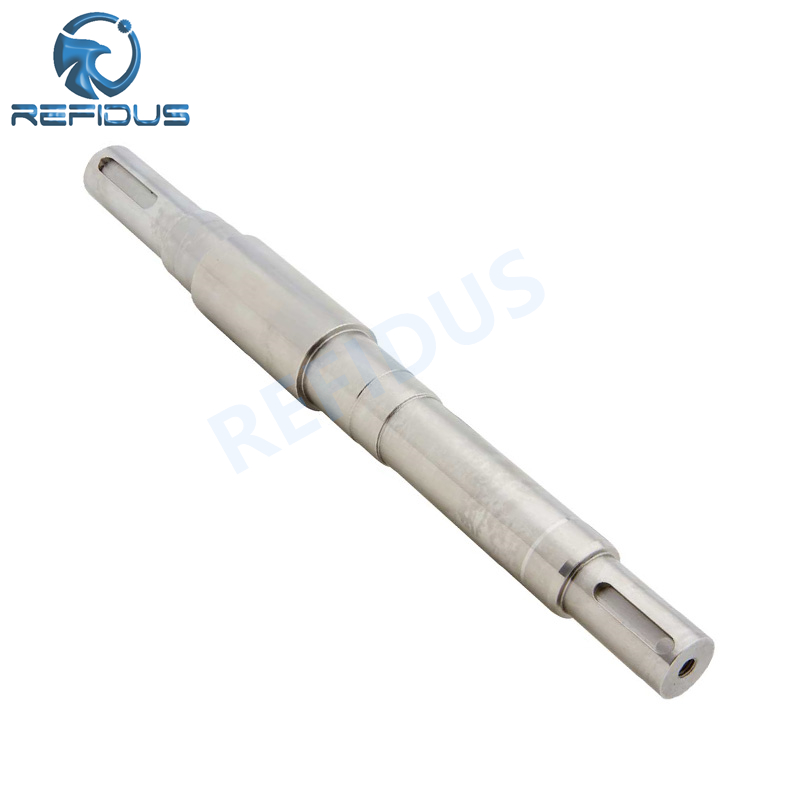 Precision long thin shaft
 Custom slender shaft
 Stainless steel slender shaft
Characteristics of slender shaft parts
A long thin shaft is generally defined by a length-to-diameter ratio above roughly 20:1. The higher this ratio grows, the more carefully every step of precision machined slender shaft production must be planned.
High length-to-diameter ratio
A slender or precision long thin shaft combines a long overall length with a small cross-section, so the ratio between length and diameter becomes the dominant feature that drives fixturing, tooling and cycle strategy.
Low radial stiffness
A thin diameter long shaft deflects easily under cutting force, tailstock pressure and its own weight. Rigidity has to be restored through supports and light cuts rather than through aggressive machining.
Chatter sensitivity
The slender body vibrates easily during turning and grinding and can show chatter or ripple marks. Vibration control directly decides the final surface quality of a precision machined slender shaft.
Thermal deformation sensitivity
Cutting heat expands and bends the workpiece, and a small diameter slender shaft cools unevenly. Thermal growth is one of the main reasons a high precision slender shaft loses straightness after machining.
Strict geometric tolerances
For a slender rotating shaft, straightness, cylindricity, coaxiality and circular runout are frequently as critical as the diameter itself, because the part rotates at speed inside bearings and seals.
Combined structural features
Steps, undercut grooves, external and internal threads, keyways, flats, cross holes and locating journals often appear on a single custom slender shaft, requiring combined turning, milling and grinding operations.
How a custom slender shaft is produced
Our standard workflow for custom fabrication slender shaft orders, from drawing review to packed precision long thin shaft ready for shipment.
Drawing & sample review
Dimensions, fits, tolerances, material, heat treatment and surface requirements are checked; a worn or broken sample can be reverse-engineered when no drawing exists.
Process planning
Blank selection, clamping datums, rough/finish allowance, stress-relief stages and straightening stages are fixed before the first cut, especially for high ratio work.
Rough CNC turning
A CNC turned slender shaft starts with efficient stock removal while a uniform finishing allowance is left on every journal, groove and shoulder.
Finish turning & grinding
Precision slender shaft turning followed by grinded slender shaft finishing brings journals to final diameter, form tolerance and surface roughness.
Heat & surface treatment
Harden, temper, case-harden or nitride as specified, then apply the selected plating, oxide or polished finish while keeping distortion under control.
Inspection & packaging
Every critical dimension and geometric characteristic is verified, ground surfaces are protected, and shafts are packed vertically or supported to prevent bending in transit.
Machining and inspection capability
The equipment behind slender shaft CNC processing and the measurement routines that confirm each custom slender shaft matches the drawing.
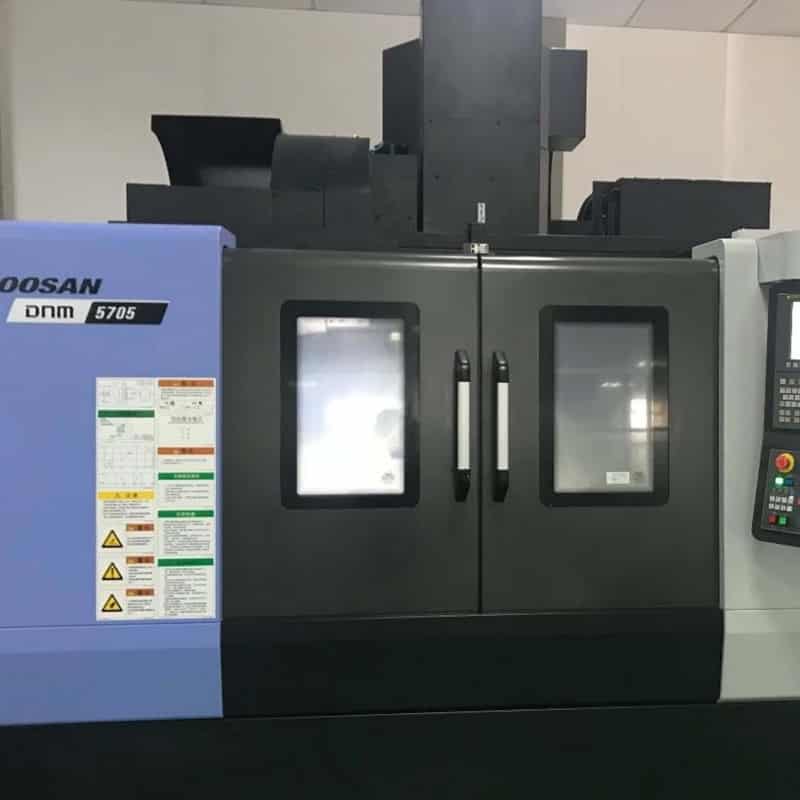
CNC milling
Multi-axis CNC milling for flats, keyways, slots, cross holes and end features on slender shaft blanks.
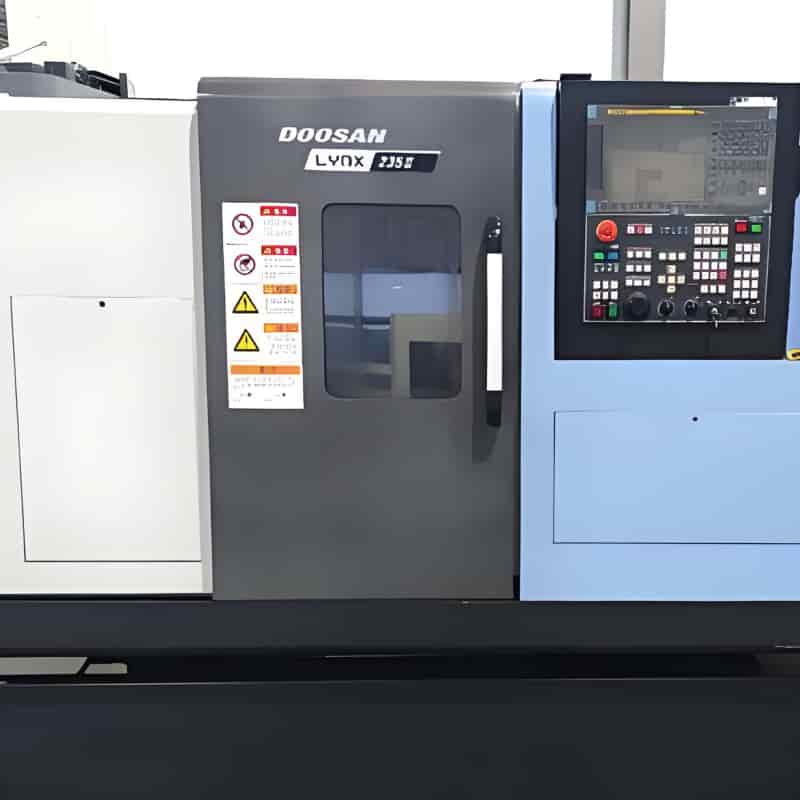
CNC turning
Slender shaft CNC processing with steady rests and follower rests for stable long-axis precision turning.
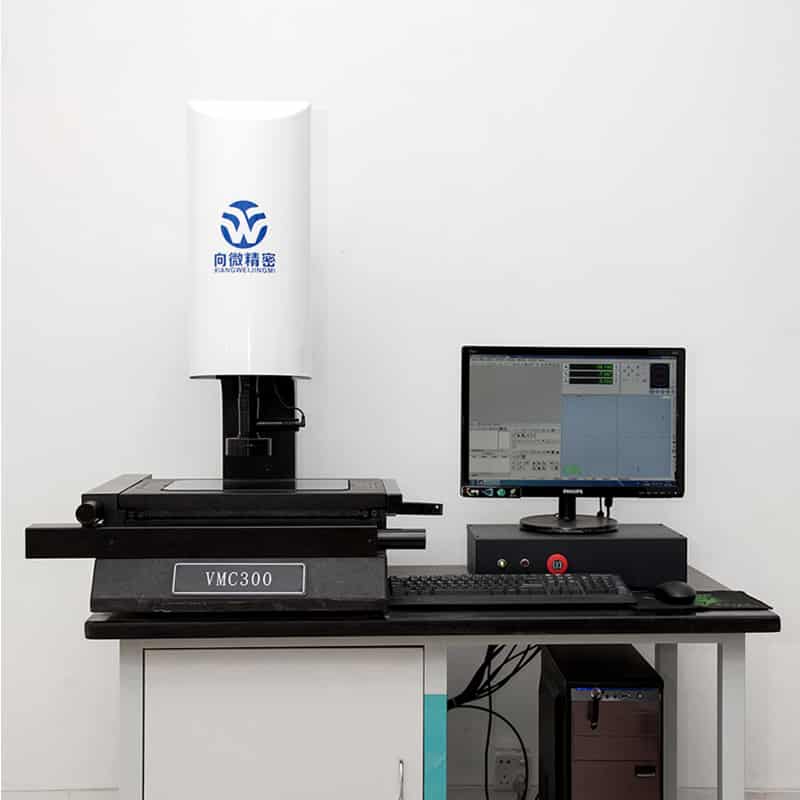
2D profile measuring
Non-contact profile, radius and angle comparison for small features on small diameter slender shaft parts.
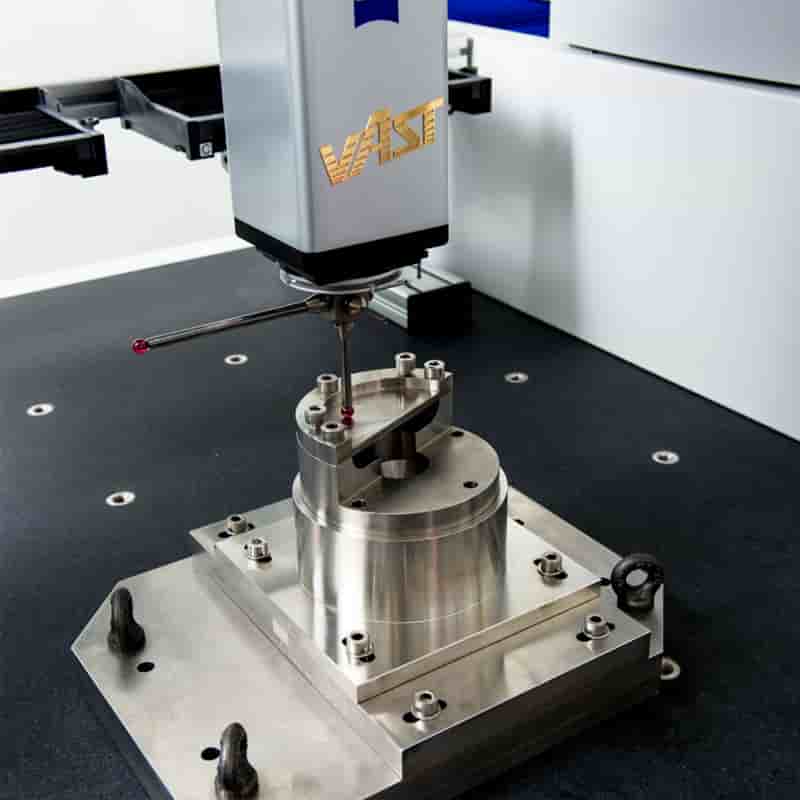
CMM inspection
Coordinate measurement of diameter, position, runout and geometric tolerances on finished slender shafts.
Machining considerations for slender shafts
Deflection, vibration, heat and residual stress are the four enemies of a long thin shaft. The measures below are standard practice in our slender shaft custom machining process.
Added support tooling
Steady rests, follower rests, center frames and custom support sleeves shorten the free span and cut deflection of the thin diameter long shaft.
Center-hole datum strategy
Both ends are faced and centered first; consistent center holes become the unified datum for turning, grinding and inspection of the whole part.
Light cuts, multiple passes
Small depth of cut and controlled feed lower radial cutting force; stock is removed in several light passes instead of one heavy pass.
Sharp positive-rake tooling
Sharp inserts with positive rake geometry and a suitable nose radius minimize the pushing force that bends a slender workpiece.
Segmented turning direction
Turning from center outward or in short supported segments spreads cutting force and limits bowing of the long thin shaft.
Continuous cooling
Flood or high-pressure coolant keeps temperature stable, preventing thermal elongation, dimensional drift and post-machining bending.
Staged stress relief
Roughing, stress-relief or aging, straightening and finishing are staged so released residual stress cannot bend the finished custom slender shaft.
Finished-surface protection
Soft jaws, copper sleeves and dedicated storage racks protect ground journals from clamp marks and handling scratches between operations.
Materials for custom slender shafts
Commonly machined stock grades for CNC machined slender shaft components; other grades are available per drawing.
Stainless steel slender shaft
304, 316L, 420, 440C and 17-4PH for corrosion-resistant shafts used in food processing, medical, chemical and outdoor equipment.
Alloy steel slender shaft
40Cr, 42CrMo, SCM440 and 4140 offering high strength and wear resistance after quenching and tempering for transmission duty.
Carbon steel slender shaft
45# / 1045 and Q235 / A36 for cost-effective general-purpose long thin shaft parts in standard machinery equipment.
Titanium slender shaft
TC4 / Ti-6Al-4V and Grade 2 combine light weight, high strength and corrosion resistance for medical and precision automation use.
Brass slender shaft
H59, H62 and C3604 free-machining brass for quiet, corrosion-resistant guide shafts and slender connecting shafts.
Aluminum slender shaft
6061, 7075 and 2024 lightweight, easily machined shafts for semiconductor machines, printing machines and light automation structures.
Common heat treatment methods for metal shafts
Heat treatment is selected around the function of the shaft — core strength, surface wear resistance or dimensional stability — and is sequenced to keep a slender part straight.
Stress-relief annealing
Low-temperature heating after roughing releases blank and machining residual stress, stabilizing the part before finish grinding.
Normalizing
Refines grain structure and evens the hardness of carbon and alloy steel blanks, improving machinability and consistency.
Quenching & tempering
Builds the balanced strength and toughness core required of a loaded slender drive shaft or slender spindle shaft.
Induction surface hardening
Locally hardens bearing journals and wear tracks at high frequency while keeping the core tough and overall distortion small.
Carburizing & quenching
Adds a hard wear-resistant case to low-carbon steel surfaces, typical for screw shafts, gear shafts and mating journals.
Nitriding
Produces a very hard, low-distortion wear surface — well suited to precision slender shaft parts that cannot tolerate post-treatment distortion.
Tempering
Relieves quenching stress and tunes hardness and toughness to the load case after hardening operations.
Aging treatment
Natural or artificial aging after straightening stabilizes a long thin shaft against slow, later bending in service.
Surface treatment options
Protective and functional finishes applied after machining, chosen to match the material and working environment of the custom slender shaft.
Black oxide
A thin, dimension-neutral black finish for carbon and alloy steel shafts with good oil retention and no measurable build-up.
Zinc plating
A sacrificial corrosion layer for general industrial slender shaft parts, with trivalent passivation options.
Electroless nickel plating
A uniform nickel layer even on complex contours, offering balanced wear and corrosion resistance.
Hard chromium plating
A hard, low-friction wear surface for slender spindle shaft and slender guide shaft journals.
Passivation
A clean, passive corrosion-resistant surface for stainless steel slender shaft components after machining.
Phosphating
A matte conversion coating that improves oil retention and prepares shafts for painting or bonding.
Precision polishing
Mirror or fine satin polished finishes for medical, food and semiconductor applications requiring smooth, clean surfaces.
Satin brushing
A directional brushed texture that hides minor handling marks on visible shaft surfaces.
Achievable dimensional accuracy and surface quality
Typical ranges for precision slender shaft turning and grinded slender shaft finishing; exact values are confirmed against drawing requirements at quotation.
Dimensional and geometric accuracy
Diameter tolerance
Ground journals routinely hold IT6 to IT7; selected fits on a high precision slender shaft can reach IT5.
Straightness
Overall straightness controlled to hundredths of a millimeter over 100 mm and verified on V-blocks with a dial indicator.
Roundness & cylindricity
Cylindrically ground journals achieve fine roundness and cylindricity for smooth, quiet bearing rotation.
Coaxiality & runout
Circular runout and coaxiality between mating journals controlled within several micrometers for rotating assemblies.
Surface finish and size range
As-turned surface
A CNC turned slender shaft typically reaches Ra 1.6 to 3.2 µm after finish turning.
Ground surface
A grinded slender shaft journal reaches Ra 0.4 to 0.8 µm with repeatable batch consistency.
Polished surface
Precision polishing reaches Ra 0.2 µm or finer where sealing, cleaning or visual quality requires it.
Diameter & length range
Small diameter slender shaft work from a few millimeters in diameter, thin diameter long shaft ratios of 20:1 and above, in long overall lengths.
Slender shaft types machined by function
Custom slender shaft for machinery use is named by the role it plays in the assembly. The following functional types are all produced per drawing or sample.
Slender drive shaft
Transmits torque and motion in mechanical transmission and power transmission systems under dynamic load.
Slender connecting shaft
Joins separated components and tolerates minor alignment differences between modules.
Slender rotating shaft
A balanced rotating element for roller trains, conveying systems and continuous-motion assemblies.
Slender spindle shaft
A precision main shaft for high-speed rotating heads, machine units and bearing-supported tools.
Slender screw shaft
A lead or screw shaft converting rotation into controlled linear motion in positioning and automation systems.
Slender guide shaft
A linear-motion guide and support shaft for bearings, slides and pick-and-place units.
Slender mandrel
A thin, precise winding, support or inspection mandrel for coils, rollers and production tooling.
Slender pump & valve shaft
A corrosion-resistant shaft for pump parts and valve assemblies in hydraulic and fluid systems.
Industries and applications served
Custom slender shaft for machinery equipment, long thin shaft for mechanical transmission, custom slender shaft for automation equipment, precision slender shaft for industrial machines and slender shaft for power transmission are produced for the industries below.
Textile machinery
Slender shaft for textile machinery: roller, spindle and guide shafts running at high continuous speed.
Packaging machinery
Slender shaft for packaging machinery: feed, sealing and conveyor shafts for fast cycling equipment.
Food processing machine
Stainless steel slender shaft for food processing machines with smooth, cleanable finishes.
Hydraulic system
Slender shaft for hydraulic systems: precision piston, pump and control shafts with fine surface finish.
Pneumatic equipment
Slender shaft for pneumatic equipment: cylinder rods and actuator shafts requiring smooth linear motion.
Medical equipment
Small diameter slender shaft for medical equipment in stainless steel and titanium grades.
Semiconductor machine
High precision slender shaft for semiconductor machines demanding tight runout and clean surfaces.
Printing machine
Slender shaft for printing machines: roller and guide shafts with controlled straightness.
Robot & automation
Slender shaft for robot automation: custom machined slender shaft for industrial automation axes and modules.
Valve assembly
Slender shaft for valve assembly: stem shafts in stainless, brass and alloy materials.
Pump parts
Slender shaft for pump parts: drive and rotor shafts matched to seals and bearings.
Reducer & gearbox
Slender shaft for reducer and gearbox: pinion and gear shafts hardened at mating surfaces.
From one single piece to large-batch production
Slender shaft custom fabrication is supported at every order volume, with the same drawing-based process control applied throughout.
One-off & prototype
A single custom slender shaft for equipment replacement, design verification or emergency repair, produced from drawing or sample.
Small batch
Pilot lots and spare-part sets with first-piece inspection and documented process parameters.
Medium batch
Recurring production programs running on standardized process sheets and fixed tooling setups.
Large-volume production
Stable mass production of precision long thin shaft parts with process control and batch traceability.
As a custom long thin shaft manufacturer and slender shaft custom supplier, we accept orders from one piece to tens of thousands. Send a technical drawing or a worn sample and we produce a precision long thin shaft for equipment replacement, a custom slender shaft for mechanical spare parts, or a custom machined slender shaft for industrial automation.
CNC machined stainless steel slender drive shafts, CNC turned alloy steel slender spindle shafts, precision ground carbon steel slender guide shafts, brass slender connecting shafts and titanium slender screw shafts are all made to the same drawing-driven standard — a custom slender shaft for machinery, automation equipment and industrial machines, built to print, built to fit and built to run.