CNC Machined Silica Sol Investment Casting Stainless Steel Parts from China

CNC Machined Silica Sol Investment Casting Stainless Steel Parts from China

We manufacture custom silica sol investment casting stainless steel parts and finish every casting in-house with precision CNC machining. Work begins from your drawings, 3D models, CAD files or physical samples: a supplied sample can be measured, re-drawn and reproduced as a fully machined stainless steel investment casting that matches the original assembly interfaces.

As a China silica sol stainless steel casting factory with machining capability, we combine lost wax precision casting with CNC turning, milling, drilling, tapping, grinding and surface treatment on one production routing — from a single prototype piece to stable, repeatable large-volume production.

From drawings or samples

Quotes from PDF, DWG, STEP and IGES files, or reverse engineering from customer-supplied samples and worn spare parts.

Silica sol process

Colloidal silica shell investment casting, also named lost wax precision casting, for smooth, dense stainless blanks.

Full CNC finishing

Investment casting with CNC turning and milling delivers tight tolerance on bores, threads, faces and sealing surfaces.

Any order size

One-off machined silica sol castings, pilot batches and high-volume orders all run on the same quality routing.

Machined components

Silica Sol Cast Stainless Steel Parts On The Floor

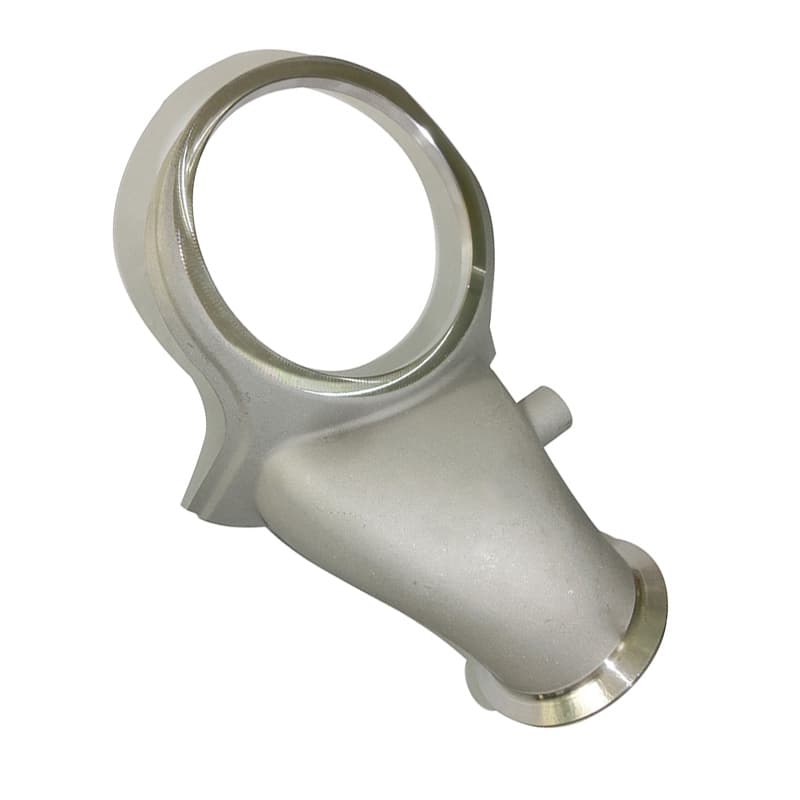
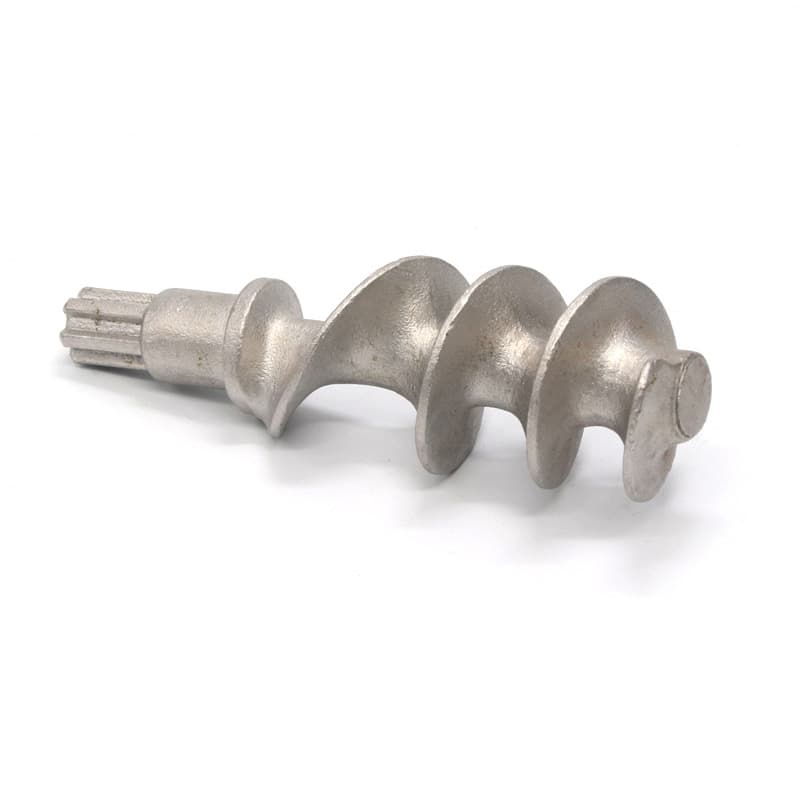
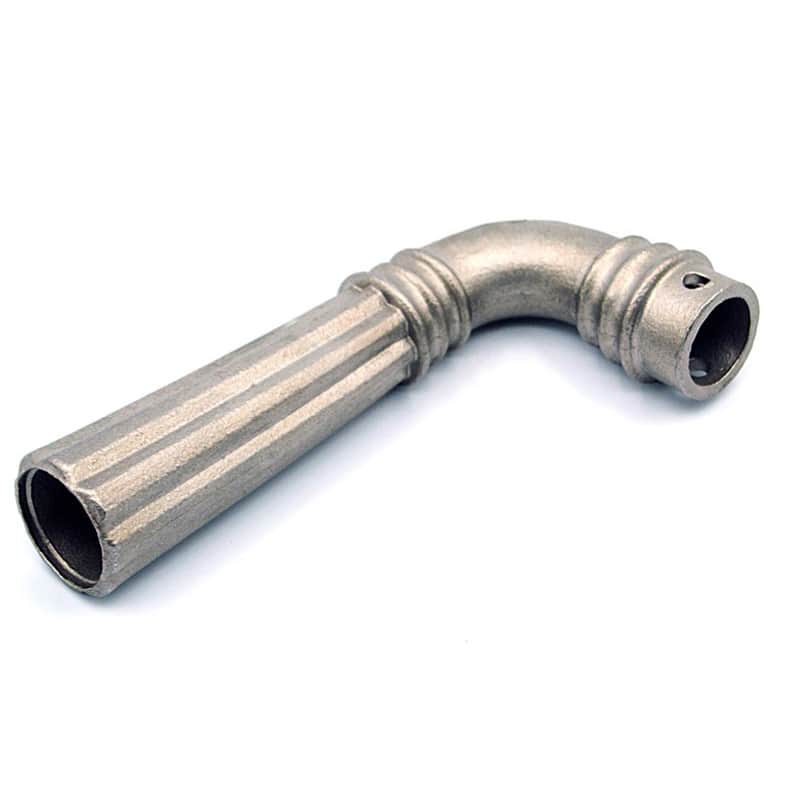
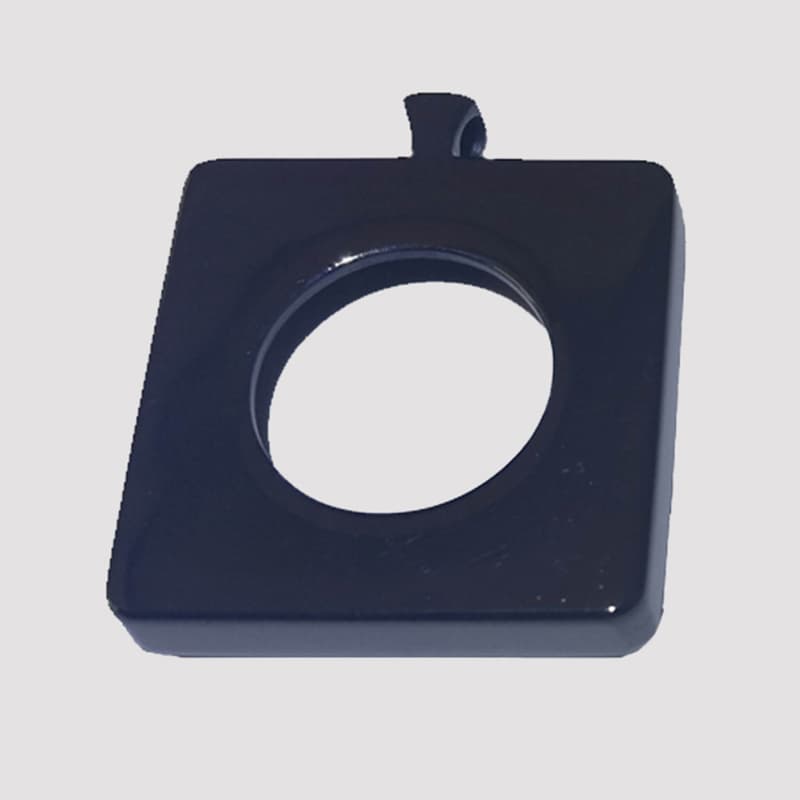
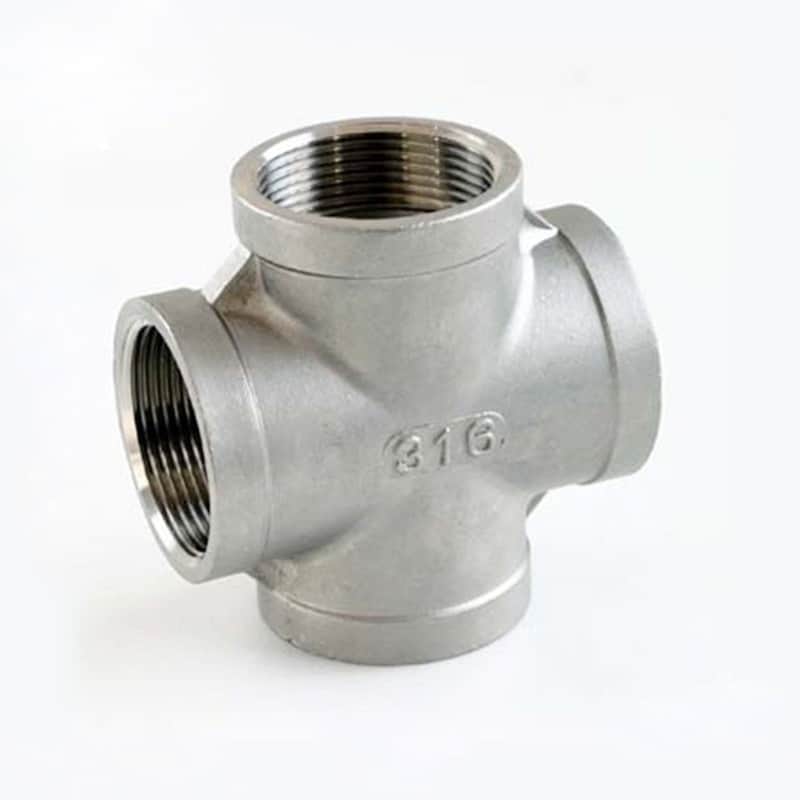
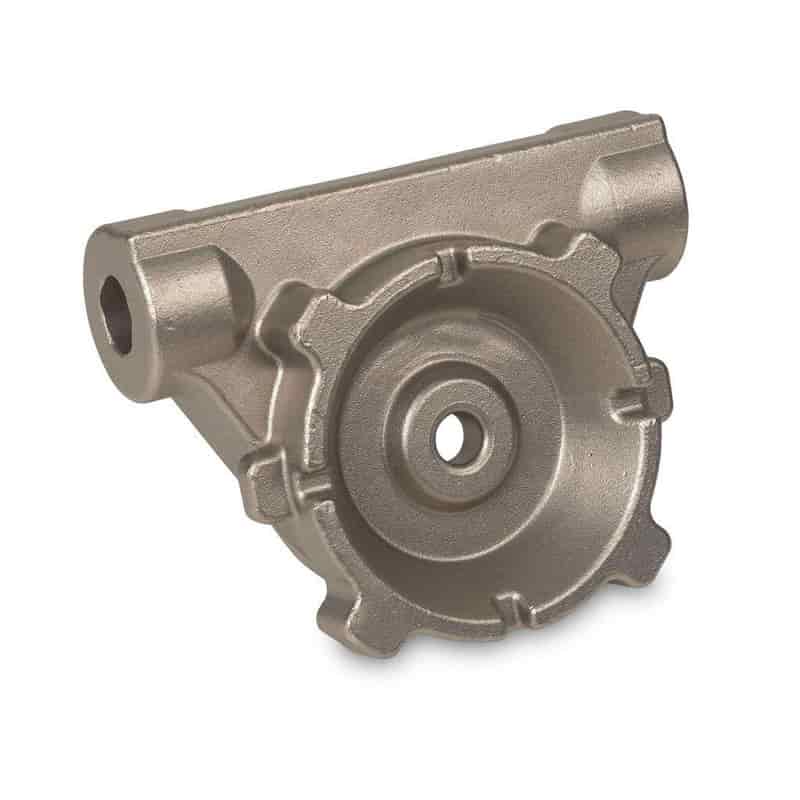
A selection of custom CNC machined stainless steel castings produced from customer drawings — investment cast stainless steel components for valves, pumps, flanges, fittings and non-standard machinery assemblies.

Process & standards

How The Silica Sol Investment Casting Process Works Across Standards

Silica sol process investment casting builds a ceramic shell from colloidal silica binder and refractory coatings around a wax pattern. Because overseas drawings call out different material systems, the same stainless steel silica sol precision casting process is mapped to ASTM/AISI, EN/DIN, JIS and Chinese GB grade tables so chemistry, mechanical properties and tolerance language stay consistent with your drawing.

Colloidal silica shell system

Wax patterns are injected, assembled onto a sprue tree, then dipped in zircon-flour primary coat and mullite backup coats bonded with silica sol. Each coat dries before the next, forming a strong, low-ash shell. After autoclave dewaxing and high-temperature firing, molten stainless steel fills the cavity, reproducing fine detail and thin walls typical of lost wax precision casting.

ASTM / AISI grade mapping

Cast grades follow ASTM A351, ASTM A743 and ASTM A744 logic — CF8 and CF3 correspond to 304 and 304L, while CF8M and CF3M correspond to 316 and 316L stainless steel investment casting chemistry. Drawing callouts in AISI wrought nomenclature are converted to their cast equivalents before tooling begins, so machined surfaces meet the intended strength and corrosion behavior.

EN / DIN grades for Europe

For the European market we pour 1.4308 (GX5CrNi19-10, the cast counterpart of 304) and 1.4408 (GX5CrNiMo19-11-2, the cast counterpart of 316L) under EN 10283 / DIN material logic. 1.4308 and 1.4408 stainless steel silica sol castings accept the same secondary machining, passivation and polishing routes as ASTM grades.

JIS grade mapping

Japanese-spec valve, pump and general machinery drawings commonly call SCS13, SCS14 and SCS16 per JIS G5121. These map to 304, 316 and low-carbon 316L behavior respectively, allowing a JIS-specified stainless steel lost wax casting with machining to be quoted and produced without grade ambiguity.

Chinese GB grade mapping

Domestic GB/T 2100 cast stainless grades such as ZG03Cr18Ni10 and ZG03Cr17Ni12Mo2 align with 304L and 316L cast chemistry, while casting dimensional tolerances follow the GB/T 6414 system, which shares the same technical logic as ISO 8062 casting tolerance grades.

Silica sol vs water-glass shells

Compared with sodium silicate (water-glass) shells, the silica sol route yields a smoother as-cast surface, fewer sand inclusions, tighter dimensional control and a denser, cleaner matrix. That is why a CNC machined stainless steel casting from a silica sol blank needs less stock removal, polishes more evenly and passivates with a more uniform corrosion-resistant surface.

Materials

Stainless Steel Grades Poured For CNC Machined Castings

Grade selection decides corrosion resistance, strength, machinability and polishing behavior. The list below covers the austenitic grades buyers search most often, plus duplex and food-grade specialty grades — each available as a precision stainless steel casting with secondary machining.

304 / 304L stainless steel silica sol casting

The general-purpose austenitic choice for brackets, housings, flanges and ordinary atmospheric or freshwater service. Low-carbon 304L reduces sensitization after welding and is the default for welded CNC machined silica sol investment casting frames and fittings.

316 / 316L stainless steel investment casting

Molybdenum addition lifts resistance to chlorides, acids and salt air. 316L is the standard pour for pump bodies, marine hardware and chemical line components, and it machines, polishes and passivates cleanly after casting.

CF8 / CF8M stainless steel precision casting

CF8 and CF8M are the cast designations behind most valve bodies and impellers specified in ASTM language. CF8M castings are the natural blank for a machined stainless steel investment casting used in wetted valve and pump assemblies.

1.4308 / 1.4408 stainless steel silica sol casting

The DIN/EN cast equivalents of 304 and 316L for drawings written in European nomenclature. We pour 1.4308 and 1.4408 to match EN-standard drawing callouts, then finish datums and threads by CNC machining.

303 / 420 / 430 stainless steel casting

303 offers free-machining behavior for high-volume turned details; 420 is martensitic and hardenable for wear-exposed blades and seats; 430 is a ferritic, magnetic grade used where moderate corrosion resistance is enough and cost matters.

Duplex & super duplex silica sol casting

Duplex stainless steel silica sol casting (e.g. 2205 / CD4MCu) and super duplex stainless steel investment casting (e.g. 2507 / CE8MN) combine high mechanical strength with strong chloride and pitting resistance for seawater, desalination and heavy pump duty.

Food grade 316L stainless steel casting

Food grade stainless steel silica sol casting for food equipment uses controlled 316L chemistry, smooth transition radii and electropolished or passivated surfaces that resist product buildup and support washdown routines in dairy, beverage and filling lines.

Corrosion resistant stainless steel casting

Corrosion resistant 316L stainless steel investment casting for marine, chemical and outdoor service is selected together with the right surface treatment, so a casting exposed to salt spray, process fluids or repeated cleaning keeps its service life.

Part range

Parts Made By Stainless Steel Silica Sol Precision Casting And CNC

Silica sol lost wax casting reproduces complex curved surfaces, internal flow passages, thin walls and integrated lugs in one piece. The families below are typical custom CNC machined investment casting programs; every part can be quoted from a drawing or a physical sample, as a CNC machined silica sol investment casting version, a CNC machined stainless steel version, or a custom CNC machined investment casting built around your existing assembly.

Valve bodies & bonnets

Stainless steel valve body castings for gate, globe, check, ball and butterfly valves. CNC machined silica sol investment casting valve bodies arrive with bored chambers, faced flanges and tapped mounting holes ready for assembly.

Pump bodies & casings

Stainless steel pump body castings for centrifugal, self-priming and magnetic pumps. A CNC machined stainless steel pump casing holds concentric bores and a flat gasket face to protect seal life and hydraulic efficiency.

Impellers & diffusers

Closed and open impellers, inducer blades and diffusers with faithful vane geometry. Custom CNC machined investment casting impellers are balanced after machining for quiet running at speed.

Gears & worm gears

Stainless steel gear and worm gear blanks cast near-net-shape, then CNC turned and milled before final tooth cutting. Cast gear blanks save expensive bar stock on large diameters and unusual alloys.

Flanges & pipe fittings

Stainless steel flange and pipe fitting castings — neck flanges, elbows, tees, reducers, unions and saddle clamps. CNC machined stainless steel flanges keep raised faces, bolt circles and bore diameters on specification.

Hydraulic components

Stainless steel hydraulic component castings such as valve blocks, cylinder ends, manifolds, pistons and connector fittings, where post machining stainless steel castings must hold clean cross-drilled oil passages.

Automotive cast parts

Stainless steel automotive casting parts — sensor brackets, exhaust-related components, chassis mounts, lever housings and actuator bodies engineered for repeatable medium and high volume runs.

Marine hardware

Stainless steel marine hardware castings in 316L and duplex: cleats, hinges, latches, deck fills, chain fittings and propeller-related hardware. Corrosion resistant 316L stainless steel investment casting for marine service is standard.

Food machinery parts

Stainless steel food machinery castings for mixers, fillers, conveyors and pumps. Food grade stainless steel silica sol casting for food equipment is supplied with polished or electropolished wetted surfaces.

Housings & enclosures

Sensor housings, instrument cases, junction boxes, motor bodies and sealed enclosures cast in one piece, eliminating welded seams and leak paths before CNC face milling and boring.

Brackets, levers & linkages

Mounting brackets, control levers, connecting links, frames, handles and hinges with integrated ribs and bosses — typical CNC machined silica sol investment casting replacements for fabricated weldments.

Custom parts to print

Custom stainless steel investment casting parts designed entirely around your drawing or sample: non-standard geometry, mixed wall sections and special alloys are routine, with machining allowance built into the casting model.

Engineering logic

Why A Stainless Steel Lost Wax Casting Needs Machining

Investment casting is near-net-shape, not final-shape. Pairing it with planned CNC stock is how high dimensional accuracy castings still reach precise bores, threads and sealing faces — without machining the entire part from solid bar.

Near-net-shape blanks

Silica sol cast stainless steel parts arrive close to final geometry with a controlled 1–3 mm machining allowance, so the CNC removes only what precision surfaces require instead of carving the whole part from billet.

Complex geometry in one piece

Curved passages, undercuts, internal cavities and three-dimensional transitions that would require multi-part fabrication come out as a single investment cast stainless steel component, removing weld seams and assembly tolerance stacks.

Lower material removal

A CNC machined stainless steel casting consumes a fraction of the bar stock of a fully hogged-out part, shortening cycle time, cutting insert wear and making expensive duplex and 316L alloys economical.

Repeatable batch behavior

Hardened wax tooling fixes shrinkage behavior run after run, so fixtures, offsets and programs for precision stainless steel casting with secondary machining stay valid across batches instead of being reworked for each blank.

Tolerance only where it matters

Non-critical skins stay at the smooth as-cast finish; mating faces, bearing bores, threads and O-ring seats are machined to tight tolerance stainless steel casting requirements, concentrating cost on functional surfaces.

One continuous routing

Stainless steel investment casting with CNC machining, heat treatment, surface finishing and dimensional inspection under one routing removes the gaps — and finger-pointing — that appear when casting and machining are handled by separate vendors.

In-house capability

Secondary Machining And Inspection Of Stainless Castings

Post machining stainless steel castings covers turning, milling, drilling, tapping and grinding, backed by optical and coordinate measuring inspection so every batch of machined stainless steel investment castings ships against the drawing.

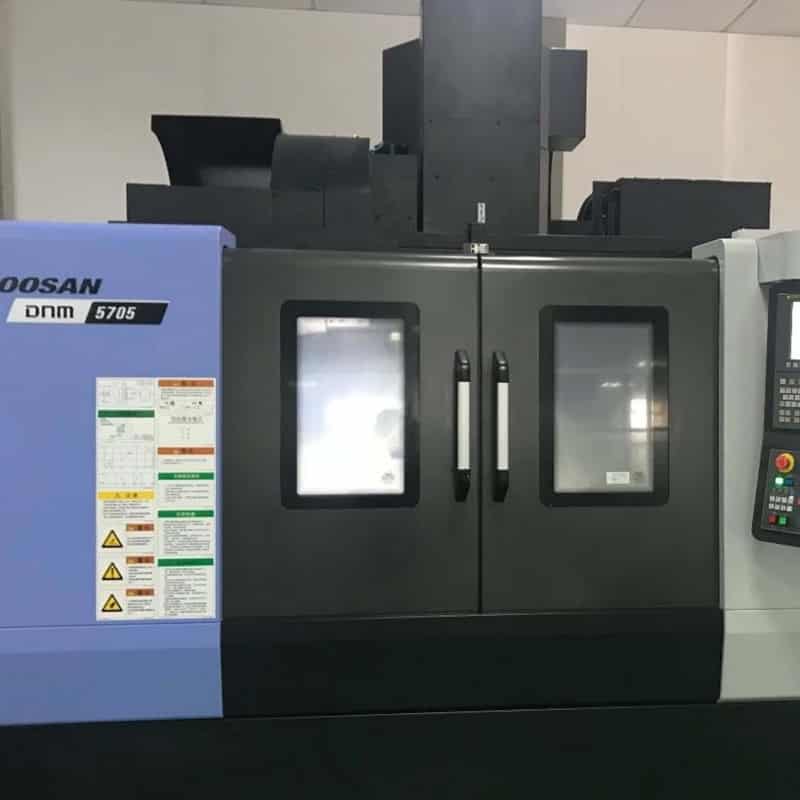
CNC milling service for investment cast stainless steel parts

CNC milling

Three-axis and four-axis investment casting with CNC milling: facing, pocketing, slotting, drilling and tapping of cast lugs, mounting faces and valve bonnet seats from dedicated soft-jaw fixtures.

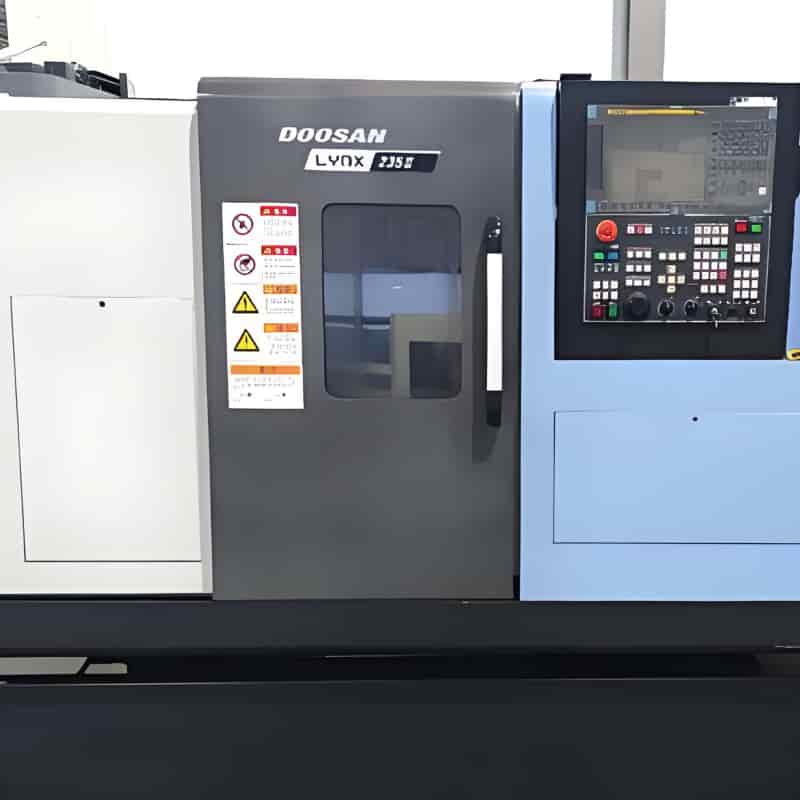
CNC turning service for stainless steel castings

CNC turning

Investment casting with CNC turning finishes outside diameters, concentric bores, grooves, sealing faces and standard or custom threads on pump, fitting and flange castings.

2D profile projector measuring cast and machined profiles

2D profile projection

An optical profile projector compares thread forms, radii, chamfers and complex 2D contours against the drawing during first-article and patrol checks of machined casting features.

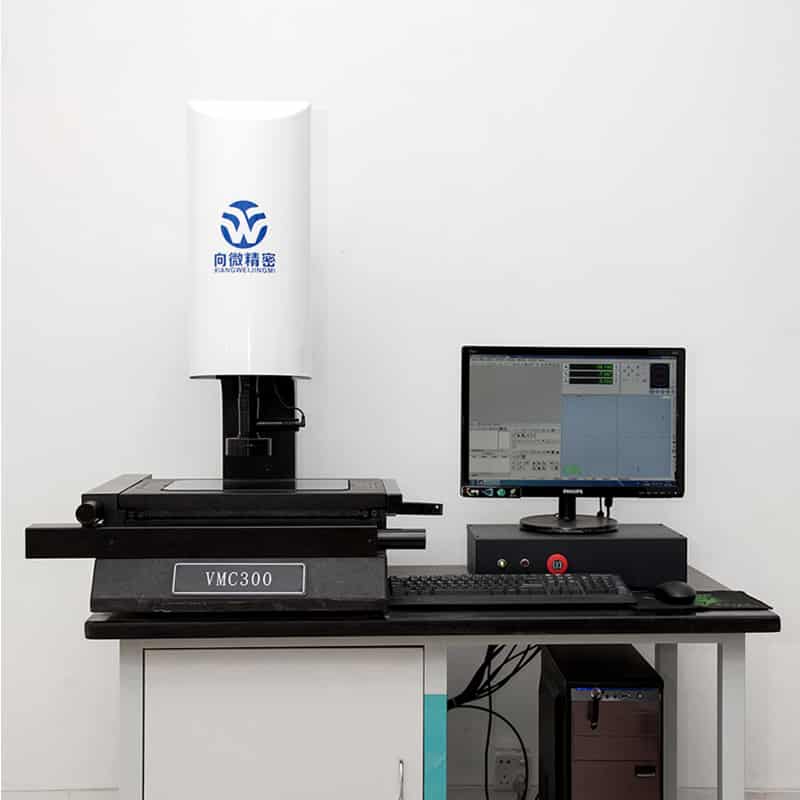
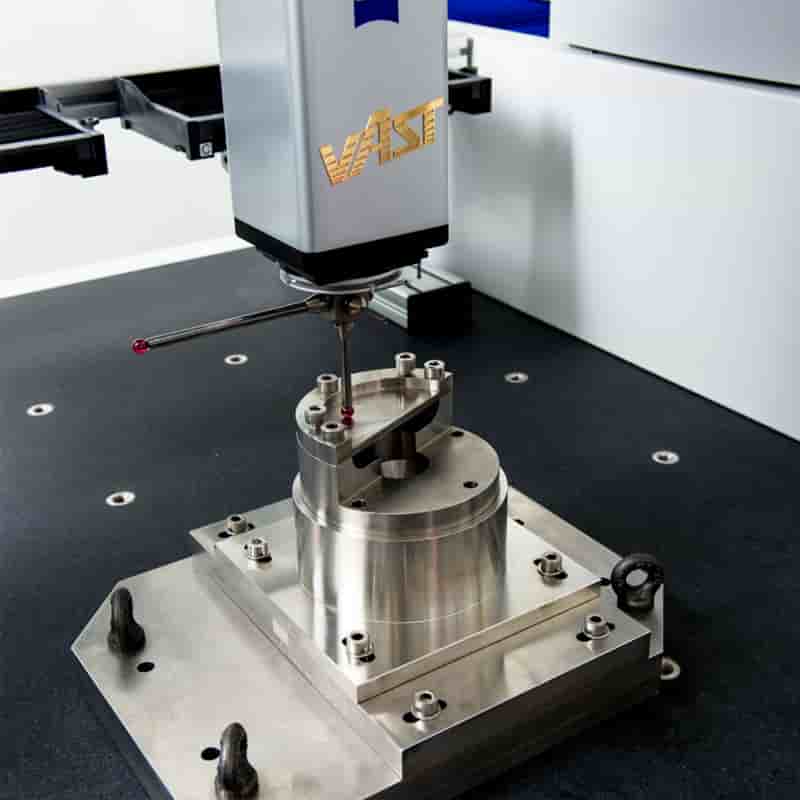
CMM coordinate measuring inspection of machined castings

CMM inspection

A coordinate measuring machine verifies machined datums, position, true position and bore relationships, supplying measured records for high precision silica sol cast stainless steel components with tight tolerance requirements.

Surface finishing

Surface Treatments For Passivated And Polished Stainless Steel Castings

Surface treatment is selected around function — corrosion defense, hygiene, decoration or paint preparation. A passivated or polished stainless steel casting can be routed through one or several of the finishes below after CNC work is complete.

Passivation

Pickling-free acid passivation dissolves embedded free iron left by tooling and lets the chromium oxide film reform. It is the standard final step for a passivated stainless steel casting used in valves, fittings and food equipment.

Electropolishing

Electrochemical leveling strips a microscopic surface layer, brightens the part and lowers roughness at the same time. Electropolished 316L is preferred for hygienic, pharmaceutical and cleanroom-adjacent components.

Mechanical polishing

Sequential grinding and buffing with progressively finer abrasives brings cast surfaces to satin, brushed or bright finishes and blends casting gate marks on visible stainless steel marine hardware and decorative parts.

Mirror buffing

Fine-grade cloth-wheel buffing reaches mirror-level reflectivity for exposed architectural, consumer and food-zone surfaces, starting from the naturally smooth silica sol as-cast face.

Pickling & descaling

Acid pickling removes heat tint and oxide scale after heat treatment or welding, restoring uniform chemistry across the surface before passivation of corrosion resistant stainless steel castings.

Shot & glass bead blasting

Fine stainless shot or glass beads deliver a uniform matte texture, strip residual shell dust and blend casting surfaces; bead-blasted finishes are common on industrial pump and machinery castings.

Tumbling & deburring

Barrel or vibratory tumbling with ceramic media rounds edges, removes CNC burrs and evicts recessed scale from small fittings and fastener-like custom investment casting parts at low unit cost.

Brushed / satin finishing

Directional abrasive belts create a controlled hairline or satin line for visible marine, architectural and consumer hardware, with roughness and grain direction defined at order review.

Achievable quality

Surface Finish And Dimensional Accuracy Of Silica Sol Castings

The figures below describe typical achievable ranges for stainless steel silica sol precision casting; exact values are confirmed at design review against part size, wall section, alloy and machining scope. They are the reference used when a drawing calls for high dimensional accuracy casting features.

Ra 3.2–6.3 µm

Typical as-cast surface roughness from the silica sol shell; fine faces and shallow-detail areas can approach Ra 1.6–3.2 µm, clearly smoother than water-glass lost wax castings.

Ra 0.8–3.2 µm

Typical roughness after CNC turning and milling; grinding reaches around Ra 0.4 and polishing or electropolishing can bring functional faces below Ra 0.4 µm.

CT6–CT8

Usual casting dimensional tolerance grade under the ISO 8062 / GB/T 6414 logic for well-designed stainless components, depending on nominal dimension and section thickness.

±0.02–±0.05 mm

General linear tolerance on CNC machined datums; ground or fine-bored features can hold around ±0.01 mm, with machined holes commonly held at IT7–IT8.

From ~2 mm walls

Minimum practical wall thickness for stainless silica sol castings starts near 2.0–3.0 mm, allowing light, ribbed designs that sand casting cannot fill reliably.

~10 g to 80 kg

Everyday poured weight window spans tiny fittings to substantial valve and pump bodies; most serial production parts sit between roughly 0.05 kg and 50 kg.

Production flexibility

From A Single Machined Casting To Large-Batch Supply

Tooling strategy is matched to quantity, so a maintenance spare and an annual serial program each get an economical route instead of paying the same tooling bill.

STAGE 01

Single piece & prototype

One-off CNC machined silica sol investment casting parts use 3D-printed wax patterns without hard tooling. Supplied samples are measured and re-drawn for spare-part replication and design validation.

STAGE 02

Small pilot batches

Runs from a handful to several hundred pieces suit machinery spares, design iterations and market testing, with first-article dimensional records before batch release.

STAGE 03

Serial production

Aluminum wax-injection dies stabilize geometry for repeat orders of stainless steel lost wax casting parts with secondary CNC machining, with patrol inspection on critical dimensions.

STAGE 04

Large-volume supply

High-volume OEM stainless steel precision casting programs run dedicated casting tooling, CNC fixtures and heat-lot traceability to keep thousands of machined castings interchangeable.

Sourcing reference

Sourcing Custom Silica Sol Cast Stainless Parts With Machining Included

One supplier for casting and machining

Custom silica sol investment casting stainless steel parts with CNC machining remove the classic split-vendor problem: the casting house blames the machine shop for stock shortage, and the machine shop blames the casting for distortion. An OEM stainless steel precision casting manufacturer with machining service controls wax tooling, pour, heat treatment, fixturing and finishing together, so high precision silica sol cast stainless steel components with tight tolerance arrive complete instead of half-finished.

Stainless steel lost wax casting parts with secondary CNC machining suit buyers who need wetted surfaces, precise bearing bores or threaded interfaces on geometry too complex for bar stock — and who would rather machine a purpose-shaped blank than a solid block of 316L.

Drawings, samples and repeat orders

Quotes can be built from formal production drawings, sketch dimensions or a used sample part. Sample-based work measures the existing component, redraws it as a castable model with machining allowance, and then delivers a CNC machined stainless steel casting that drops back into the same assembly — useful for legacy equipment with unavailable spares.

Food and marine application routes

Food grade stainless steel silica sol casting for food equipment follows the 316L route with rounded internal corners, controlled gate placement and electropolished or passivated finishes, supporting filling valves, pump rotors, mixer fittings and conveyor brackets that face daily washdown.

Corrosion resistant 316L stainless steel investment casting for marine environments instead pairs 316L or duplex chemistry with bead-blasted or polished externals and precision machined mating faces for deck hardware, seawater pump parts, manifold fittings and below-deck assemblies. As a China silica sol stainless steel casting factory with machining in the same routing, we scale each program from one development piece to annual large-batch volumes without changing the process route.

Search terms covered by this capability

Silica sol investment casting stainless steel Stainless steel silica sol precision casting Machined stainless steel investment casting CNC machined stainless steel casting Stainless steel lost wax casting with machining Silica sol cast stainless steel parts Precision stainless steel casting with secondary machining Stainless steel investment casting with CNC machining Tight tolerance stainless steel casting High dimensional accuracy casting Post machining stainless steel castings Investment cast stainless steel components