
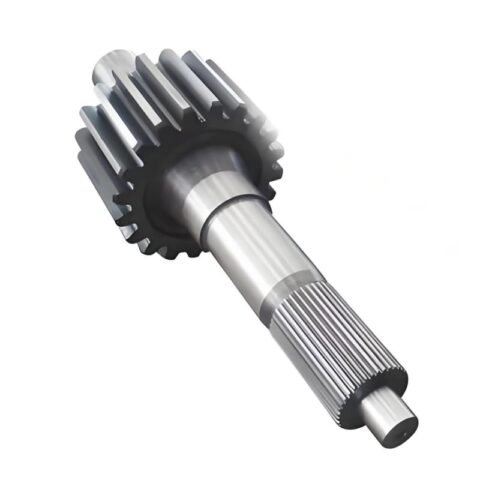
OEM quenched carburized and CNC machined 1020 steel in China
As global supply chains mature, more companies are moving toward integrated manufacturing partners that can handle both heat treatment and precision machining. Our facility specializes in OEM quenched carburized and CNC machined 1020 steel in China, offering a single-source solution for parts that require a hard wear-resistant surface and a tough, ductile core. By combining in-house carburizing furnaces, quenching tanks, tempering ovens, and multi-axis CNC machine tools, we shorten lead times, reduce handling damage, and maintain consistent quality from prototype to volume production.
Material Properties of 1020 Steel
1020 steel is a low-carbon steel with a nominal carbon content of about 0.18% to 0.23%. In its annealed or normalized condition, it is soft enough to machine easily, yet strong enough for many structural applications. The low carbon content gives the material good ductility and toughness after heat treatment. However, 1020 steel cannot be hardened uniformly through its entire cross section by direct quenching. That is why carburizing is used: carbon is added to the outer layer at high temperature, creating a case with higher carbon content that can be hardened, while the core remains low carbon and tough.
The main advantages of 1020 steel after carburizing and quenching include:
-
Surface hardness normally between HRC 55 and HRC 62, depending on case depth and tempering.
-
Core hardness typically in the range of HRC 10 to HRC 25, which provides resistance to shock and bending loads.
-
Excellent machinability in the pre-hardened state, allowing complex shapes to be produced economically.
-
Good dimensional stability after heat treatment when proper stress relieving and straightening procedures are used.
-
Reliable wear resistance for parts subject to sliding, rolling, or moderate contact stress.
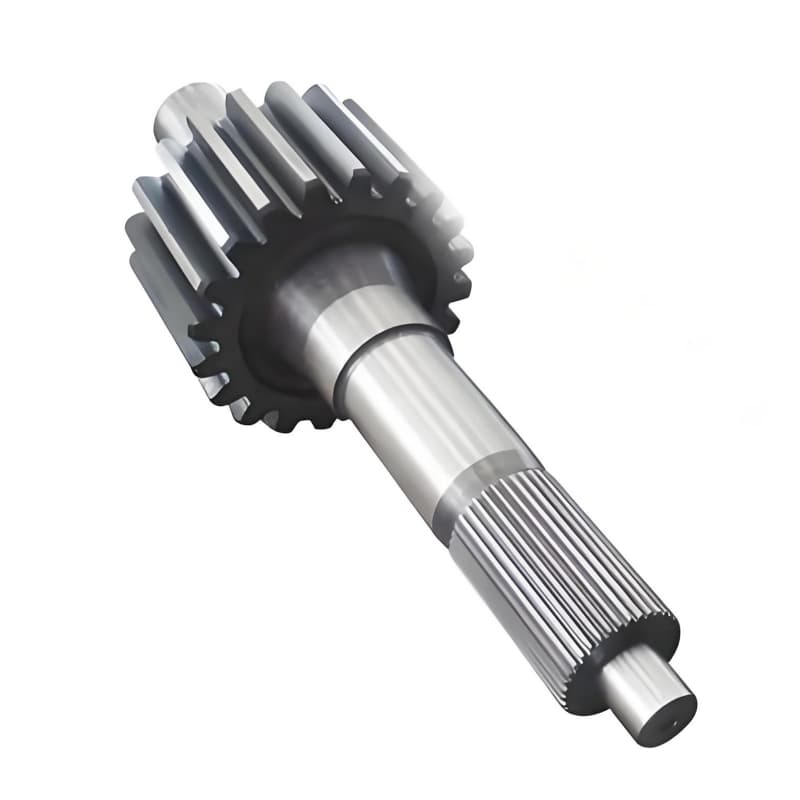
Carburizing and Quenching Process
Our process starts with raw bar stock, forgings, or blanks machined close to final shape. The carburizing cycle is performed in sealed atmosphere furnaces where the carbon potential is controlled to achieve the required case depth. Common case depths for 1020 steel parts range from 0.15 mm to 1.5 mm, depending on the part size and load conditions. During carburizing, the parts are held at temperatures between 880°C and 940°C for a calculated time based on the desired case depth. After carburizing, the parts are quenched in oil or polymer to harden the high-carbon case. Tempering follows immediately to relieve internal stresses and adjust the final hardness.
For OEM quenched carburized and CNC machined 1020 steel in China, the critical process steps are integrated. Because machining and heat treatment are performed in the same facility, we can plan the sequence properly. For many components, rough machining is done before carburizing, leaving a small stock allowance on critical surfaces. After carburizing and quenching, finish machining operations such as cylindrical grinding, hard turning, or jig grinding bring the part to final tolerance. This approach controls distortion and ensures that the hardened case remains intact on the wear surfaces.
We routinely work with case depths from 0.2 mm for small pins and bushings to 1.2 mm or more for larger shafts and rollers. Hardness is checked on every batch using calibrated testers, and case depth is verified on sample parts from each heat treatment lot. The tempering temperature is selected based on the final hardness target and the service conditions. Lower tempering temperatures produce higher surface hardness but lower toughness, while higher tempering temperatures improve core ductility and reduce the risk of cracking under impact.
CNC Machining Capabilities
We operate a range of CNC lathes, 3-axis and 4-axis machining centers, and grinding machines. Our programmers work with solid models from common CAD packages, and we can manufacture parts from a single piece to hundreds of thousands of pieces per year. Because 1020 steel is soft in the annealed or normalized condition, it can be turned, milled, drilled, tapped, broached, and shaped efficiently before heat treatment. This helps keep tooling costs low and machining speeds high.
For carburized and CNC machined 1020 steel in China, the sequence of operations matters. We normally recommend machining the part to near-net shape, leaving about 0.1 mm to 0.3 mm of stock on surfaces that must be precise after hardening. After carburizing and quenching, we perform finish grinding or hard turning to achieve the final dimensions. This method compensates for the small amount of distortion that occurs during heat treatment and produces a smooth, accurate surface on the hardened case.
Typical tolerances we hold on machined features are ±0.01 mm for turning and milling, with tighter tolerances possible on ground surfaces. Surface finishes of Ra 0.8 µm or better are achievable on ground journals and bores. We also perform secondary operations such as keyway cutting, spline rolling or hobbing, cross-hole drilling, threading, and deburring. If a part requires a black oxide finish, zinc plating, nickel plating, phosphating, or a rust-preventive oil coating, we can arrange the surface treatment after finish machining.
Typical Parts and Industries
The combination of a hard surface and a tough core makes carburized 1020 steel suitable for many mechanical components. Below are common part names and the industries where they are used.
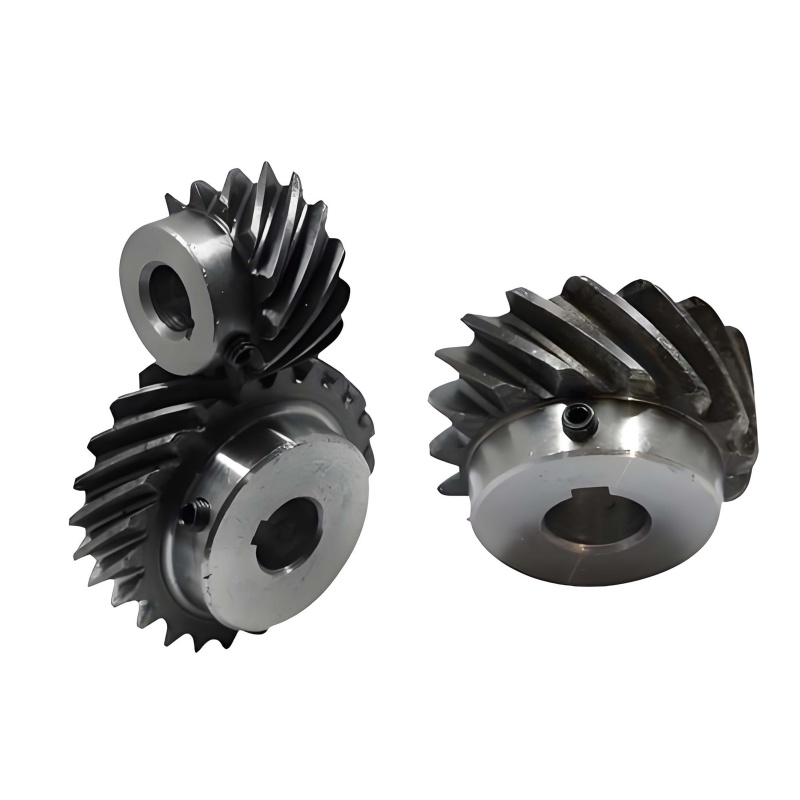
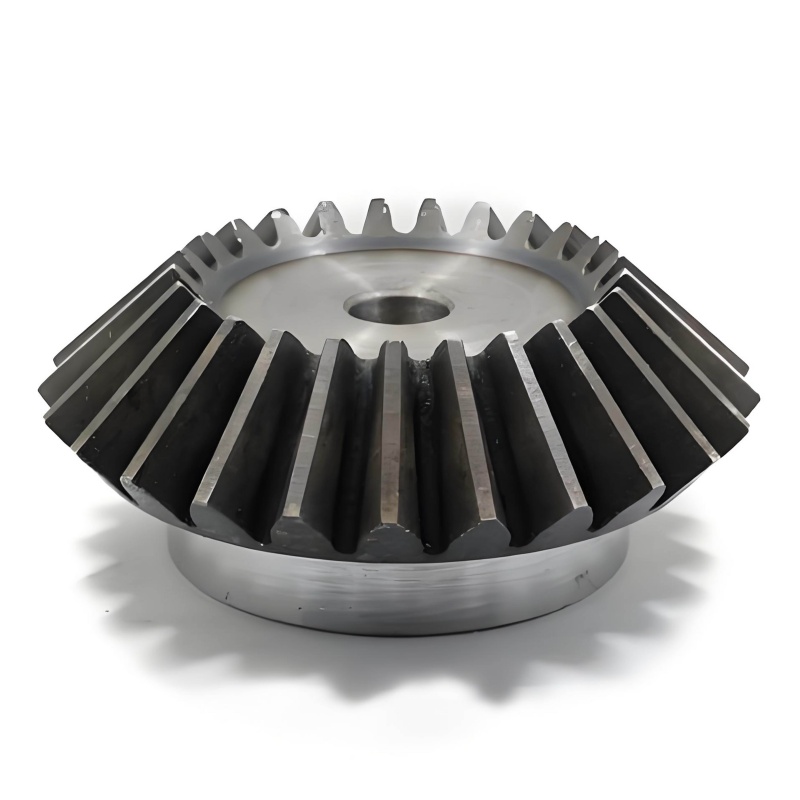
Gears and pinions: Small transmission gears, starter gears, oil pump gears, and timing gears in automotive, motorcycle, agricultural machinery, and power tool applications. The hardened tooth flanks resist wear, while the core absorbs shock loads.
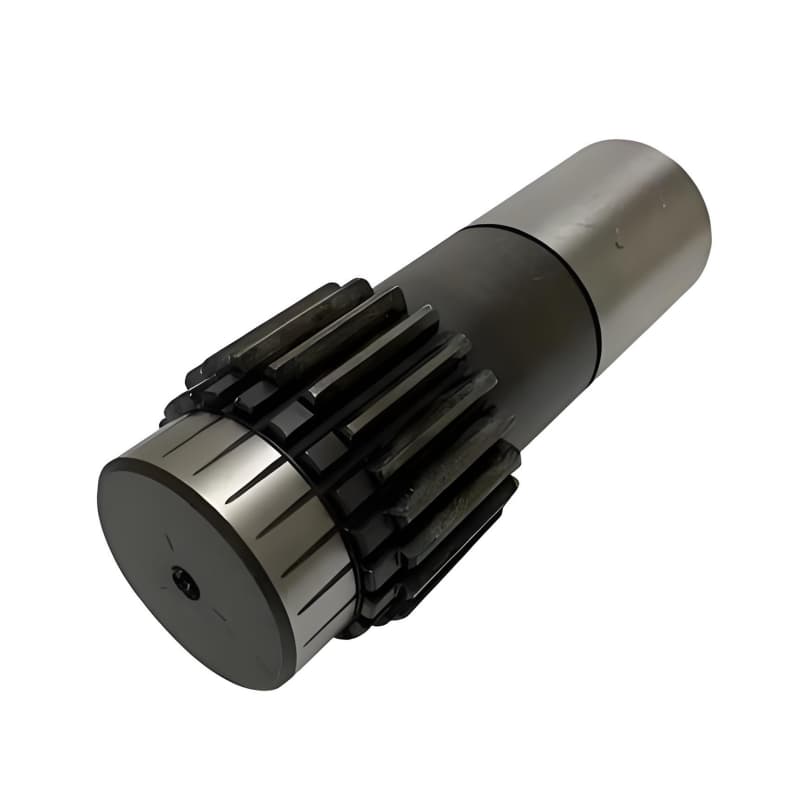
Shafts and axles: Drive shafts, spline shafts, pump shafts, motor shafts, gearbox shafts, input and output shafts, and axle shafts. These parts often need hard journals and spline teeth with a tough center to resist bending and torsion.
Pins and bushings: Dowel pins, clevis pins, king pins, gudgeon pins, hinge pins, spring pins, and hardened bushings. Carburizing provides a wear-resistant outer surface, while the core remains ductile enough to avoid brittle fracture.
Cams and cam followers: Cams, camshafts, eccentric rollers, and cam followers in textile machines, printing presses, packaging equipment, and industrial automation. The hardened surface withstands rolling and sliding contact.
Rollers and wheels: Conveyor rollers, guide rollers, track rollers, feed rollers, and tension rollers used in material handling, printing, packaging, food processing, and textile machinery. The hardened case reduces wear from continuous contact.
Levers and shift forks: Clutch levers, brake levers, gear shift forks, selector forks, and control levers in automotive, motorcycle, agricultural, and construction equipment. These parts require resistance to surface wear at contact points and toughness under repeated loading.
Sprockets and ratchet wheels: Chain sprockets, idler sprockets, ratchet wheels, pawls, and locking plates in conveyors, hoists, bicycles, motorcycles, and packaging machines. The hardened teeth and notches maintain their shape under load.
Hydraulic and pneumatic components: Valve spools, pistons, cylinder rods, seal carriers, and pump components. The hard case resists scoring and abrasive wear from contaminated fluid, while the core handles pressure spikes.
Food and packaging machinery parts: Feed screws, star wheels, knife holders, cam plates, and forming dies. Carburized 1020 steel is cost-effective for these medium-duty wear parts.
Textile machinery parts: Spindles, travelers, yarn guides, and tension discs. The hard surface resists wear from fiber contact, while the core toughness prevents breakage.
Power tool and garden equipment parts: Output shafts, gear shafts, clutch drums, and drive spindles in drills, saws, trimmers, and lawn mowers. These parts need case hardening to survive high-speed contact and shock loads.
Bicycle and motorcycle parts: Bottom bracket axles, pedal spindles, hub axles, kickstand pivots, and brake components. The material is economical yet durable enough for these high-volume applications.
Agricultural and construction machinery parts: Tines, linkage pins, rocker arms, idler gears, and track roller bushings. The tough core helps the part survive impacts with soil, rock, and heavy loads.
This list is not exhaustive. Whenever a part needs surface hardness for wear resistance and a softer core for toughness, carburized and CNC machined 1020 steel in China can be an excellent value.
From Single Piece to High-Volume Production
One of the main reasons customers choose our service is flexibility. We produce single prototypes, small pre-production batches, and large production runs. For a single piece or a few parts, we can work from a PDF drawing or a 3D model and program the CNC machines quickly. We provide design-for-manufacturing feedback to improve machinability, reduce cost, and avoid heat treatment distortion. Prototypes are usually machined from solid bar stock, and we can simulate the carburizing cycle on one or two sample parts before committing to a full batch.
For small and medium batches, we group similar parts to reduce setup time and tooling costs. We use standard fixtures where possible and design simple dedicated fixtures when required. The heat treatment lot size is flexible, so we can carburize and quench a small batch without waiting for a full furnace load. This is particularly useful for replacement parts, repair kits, and customized equipment.
For high-volume production, we optimize the entire process chain. Raw material is ordered in bulk and cut to length automatically. CNC lathes and machining centers run with bar feeders, pallet changers, and robotic loading where applicable. The carburizing furnace is loaded with baskets or trays designed to maximize throughput and ensure uniform case depth across all parts. After quenching and tempering, parts move to finish grinding or hard turning stations, then to washing, inspection, and packaging. We can produce tens of thousands of pieces per month depending on part size and complexity.
Throughout all batch sizes, we maintain traceability from raw material heat number to finished part. The production routing is documented, and each batch is checked for hardness, case depth, and critical dimensions. If a customer requires specific surface treatments or packaging, we can accommodate those requirements.
Quality Control and Inspection
We inspect incoming raw material for chemical composition and dimensional conformity. During machining, operators use calibrated micrometers, calipers, bore gauges, and thread gauges. After heat treatment, we check surface hardness on every batch and case depth on prepared samples. Dimensional inspection after final machining may include CMM measurement for complex geometries, runout checks between centers, and surface roughness measurement.
For carburized and CNC machined 1020 steel in China, we pay special attention to distortion control. Parts with long slender shapes, such as shafts and spindles, are straightened after heat treatment if necessary. We use controlled quenching methods and proper fixturing to minimize bending. Critical surfaces are ground after hardening to restore roundness and concentricity. This approach produces parts that assemble correctly and perform reliably in the field.
We also perform visual inspection for surface defects such as cracks, scale, and handling damage. If required, we can arrange magnetic particle inspection or dye penetrant inspection for crack detection. However, we focus on preventing defects through controlled processing rather than sorting them out at the end.
Why Source OEM Quenched Carburized and CNC Machined 1020 Steel in China from Us
There are several reasons to consider our workshop for your next project. First, the entire process is under one roof. You do not need to ship rough parts to one shop for machining, then to another for heat treatment, then back to a third for finish grinding. We manage the full route, which reduces shipping costs, shortens lead time, and eliminates confusion about responsibility.
Second, our team has deep experience with low-carbon steel case hardening. We understand how 1020 steel responds to different carburizing temperatures, quench media, and tempering cycles. This allows us to adjust the process for each part geometry and performance requirement. We can help you select the right case depth, core hardness, and surface hardness for your application.
Third, our CNC machining capability supports complex shapes and tight tolerances. We can machine parts with threads, keyways, splines, cross-holes, grooves, and undercuts. The combination of soft-state machining and post-heat-treatment grinding gives excellent accuracy without excessive cost.
Fourth, our location in China provides access to competitive raw material prices, a mature supply chain for tooling and surface treatments, and efficient logistics to major ports. We can ship by air express for prototypes or by sea freight for volume orders. Our sales engineers communicate in clear English and provide regular updates on production progress.
Finally, we treat every order as an OEM project. We can produce parts according to your drawings, samples, or reverse-engineered models. We do not brand or sell our own products. Your intellectual property remains yours, and we can sign non-disclosure agreements before quoting.
Typical Workflow for an OEM Project
When you send us a drawing or model, we first review the part geometry, material specification, hardness requirements, case depth, and tolerances. We then propose a manufacturing route. For a shaft, for example, the route may look like this:
-
Cut 1020 steel bar to length.
-
Face and center drill both ends.
-
Rough turn the profile, leaving grinding stock on bearing journals and seal areas.
-
Mill keyways or flats where required.
-
Drill and tap holes as needed.
-
Carburize at the specified temperature to achieve the required case depth.
-
Quench and temper to the target surface and core hardness.
-
Straighten if necessary.
-
Finish grind or hard turn critical surfaces to final size.
-
Deburr, clean, and apply rust-preventive oil or other surface treatment.
-
Final inspection and packaging.
For a gear or sprocket, the machining step may include hobbing or shaping the teeth before carburizing. After heat treatment, the bore and faces may be ground to ensure accurate mounting. For pins and bushings, centerless grinding after carburizing produces a smooth, hard outer surface with tight diameter tolerance.
We provide samples for customer approval before starting full production. For first articles, we can supply dimensional inspection reports and hardness data so you can verify that the parts meet your requirements. If adjustments are needed, we revise the process and produce new samples. Once approved, we lock the process and replicate it in production.
Common Specifications We Work With
While we manufacture custom parts to individual drawings, many of our projects fall into the following typical ranges:
-
Material: AISI 1020 steel, cold drawn or hot rolled.
-
Surface hardness: HRC 55 to HRC 62 after carburizing and tempering.
-
Case depth: 0.2 mm to 1.5 mm, depending on part size.
-
Core hardness: HRC 10 to HRC 25.
-
Diameter range: from 3 mm pins to 150 mm shafts and rollers.
-
Length range: from 5 mm small bushings to 1,000 mm long shafts.
-
Tolerances: ±0.01 mm on turned or milled features, closer on ground surfaces.
-
Batch size: from 1 piece to 100,000 pieces or more.
These ranges are not absolute limits. If your part is larger or smaller, or if you need a different material such as 1018, 1045, 4140, or 8620, we can discuss the options. However, our main focus is OEM quenched carburized and CNC machined 1020 steel in China, where we have the most process experience and the best cost efficiency.
If you are looking for a supplier that can handle the complete manufacturing route for case-hardened steel parts, our workshop is ready to help. We specialize in OEM quenched carburized and CNC machined 1020 steel in China, from raw material preparation and CNC machining to carburizing, quenching, tempering, finish grinding, and surface treatment. Our flexible production system supports single prototypes and large production runs, and our in-house heat treatment and machining capabilities help you avoid the delays and quality problems caused by outsourcing to multiple vendors.
Send us your drawings or samples, and we will provide a detailed quotation with a recommended manufacturing process, lead time, and packaging options. Whether you need a small batch of hardened pins or a steady supply of transmission shafts, we can deliver consistent quality and competitive pricing for carburized and CNC machined 1020 steel in China.