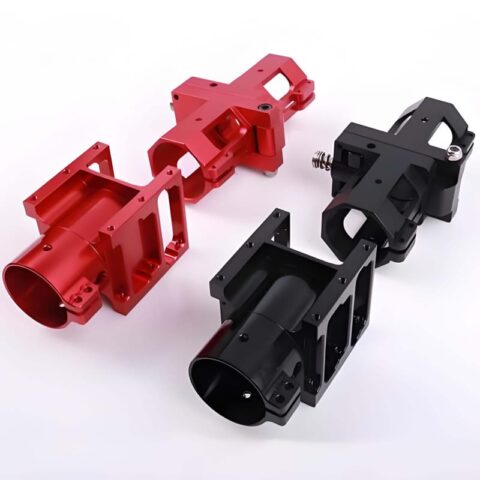
Custom CNC Machined Drone & UAV Parts | OEM Manufacturer
Custom CNC machined drone & UAV components in aluminum, titanium and CFRP. Prototype to production, ±0.01 mm tolerance, DFM quote in 24h.
Custom CNC Machining for Drone & UAV Components: Precision Parts Built to Your Drawings
When a Drone Part Has to Be Right the First Time
A UAV does not forgive a sloppy part. A motor seat bored 0.05 mm off-center shows up as vibration at 4,000 RPM. A frame arm with a weak pocket radius cracks after a hundred hard landings. A gimbal plate that is not flat turns clean footage into jello. Weight, strength, dimensional accuracy — every custom CNC machined drone component has to deliver all three at once.
That is the work our shop lives in. Qingdao Refidus manufactures custom CNC machining drone and UAV components from customer drawings and 3D models — one-off engineering prototypes, 10-piece pilot batches, and repeat production runs in the thousands. We work with drone startups, FPV frame designers, industrial UAV integrators, and research labs across Europe, North America, Russia, South Africa, and the Middle East. If you have a STEP file, we can turn it into a flight-ready part.
Why Serious UAV Programs Choose CNC Machined Parts Over the Alternatives
3D printing is for form. CNC is for flight.
3D-printed drone parts are fine for checking fitment on a bench. Loaded onto an airframe, they soften in summer heat, creep under bolt preload, and fracture on impact you would rather not test. CNC machined UAV parts are cut from solid billet, so you get the real, published properties of the alloy — no layer lines, no infill percentage to gamble on, no anisotropic weakness.
Injection molding needs volume you may never reach
Molded parts only pay off after tooling is amortized. Most drone programs revise frame geometry, mounting holes, and camera layouts dozens of times. CNC machining needs no mold: change the model, change the toolpath, and the revised custom drone part is on the machine the same week. That is why CNC is the default process from prototype well into mid-volume production.
Real tolerances, where they matter
Bearing fits, motor-shaft interfaces, folding hinge bores, propeller tapers — these features live or die in hundredths of a millimeter. Our standard machining tolerance is ±0.01 mm on critical dimensions, with H7/g6 fit classes on mating bores and shafts, and flatness/parallelism held to 0.02 mm on gimbal and mounting plates.
Custom Drone & UAV Components We Machine
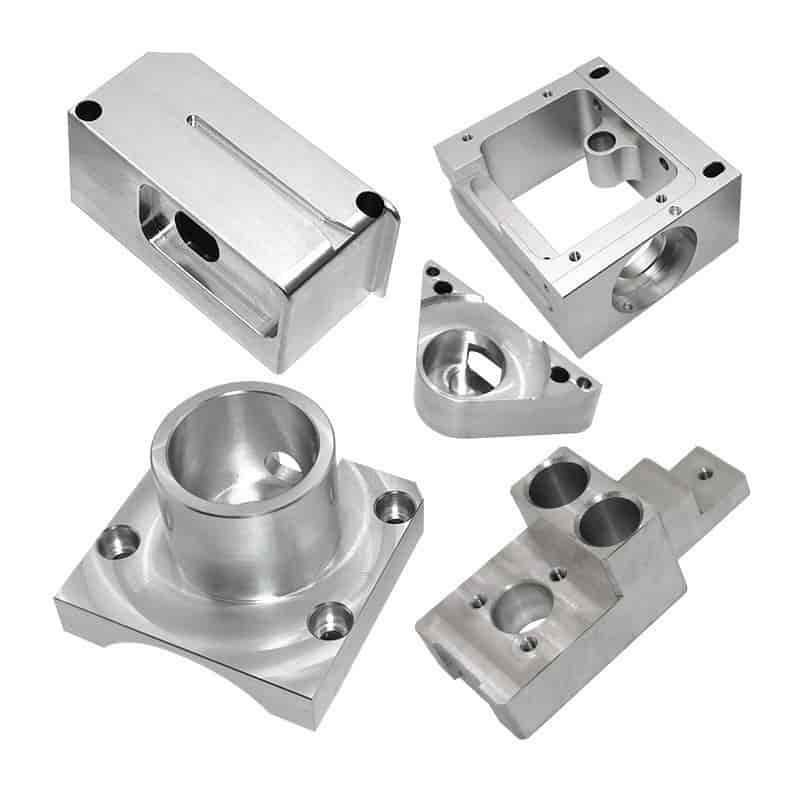
Below is a representative — not exhaustive — list. If your assembly is not on it, send the drawing anyway; most UAV hardware is non-standard by definition, which is exactly the work we are set up for.
Airframe and structural components
- Custom frame arms, booms, and arm-tube clamps
- Top plates, bottom plates, and stacked mid-plates
- Folding hinge bodies, hinge pins, and lock levers
- Landing gear legs, skid brackets, and shock-absorbing mounts
- Quick-release frame joints and twist-lock adapters
- Reinforcement gussets and motor-mount bridges
Propulsion system parts
- Motor mounts and motor bases (X, cross, and flat-mount patterns)
- Propeller adapters, collets, taper locks, and prop nuts
- Shaft couplings, adapter sleeves, and thrust washers
- ESC and motor heatsinks with finned geometry
- Custom cooling brackets and ducting components
Gimbal, camera, and sensor hardware
- Gimbal brackets, yaw/roll arms, and camera mounting plates
- Vibration-damping plates and damper-ball retainers
- Lens and sensor housings
- LiDAR, radar, and thermal-camera brackets
- GPS masts, compass mounts, and antenna brackets
Avionics, battery, and payload parts
- Flight-controller stack mounts and standoff sets
- Battery trays, battery rails, and strap anchors
- Connector panels and switch brackets
- Payload quick-release plates and winch mounts
- Agricultural drone nozzle holders, pump brackets, and tank frames
- Delivery drone release-mechanism bodies and latch components
Custom fasteners and assembly hardware
- Titanium and stainless standoffs, spacers, and threaded inserts
- Quick-release pins, dowel pins, and custom shoulder bolts
- Cable clamps, grommet retainers, and strain-relief brackets
- Laser-engraved serial-numbered parts for batch traceability
We also machine assembly jigs, prop-balancing fixtures, and production test fixtures so your own build line stays repeatable.
Materials We Run for UAV Components
Material selection on a drone is a weight, stiffness, corrosion, and cost decision made part by part. We machine the full range customers actually specify:
| Material | Typical drone/UAV use |
|---|---|
| Aluminum 6061-T6 | Plates, general brackets, housings; anodizes cleanly; best cost-to-weight balance |
| Aluminum 7075-T6 | Frame arms, motor mounts, folding joints — highest strength of the common aerospace aluminums |
| Aluminum 2024-T3 | Fatigue-loaded structures and skins |
| Titanium Grade 5 (Ti-6Al-4V) | High-stress hinges, shafts, fasteners, motor interfaces; exceptional strength-to-weight and corrosion resistance |
| Stainless 304 / 316 / 17-4 PH | Marine and chemical-exposed parts, sprayer hardware, precision shafts |
| Brass / copper | EMC shielding, electrical contact, and thermal components |
| POM (Delrin), PEEK, UHMW-PE, Nylon | Insulators, wear pads, dampers, low-friction release parts |
| Carbon-fiber reinforced plate (CFRP) | Routed frame plates and decks, cut with delamination control and dust extraction |
| Magnesium AZ31B | Ultra-lightweight structural brackets where the design calls for it |
Every production batch ships with material certificates (EN 10204 3.1 mill certs) on request, so what is on the certificate is what flies.
Machining Capabilities Behind Every Order
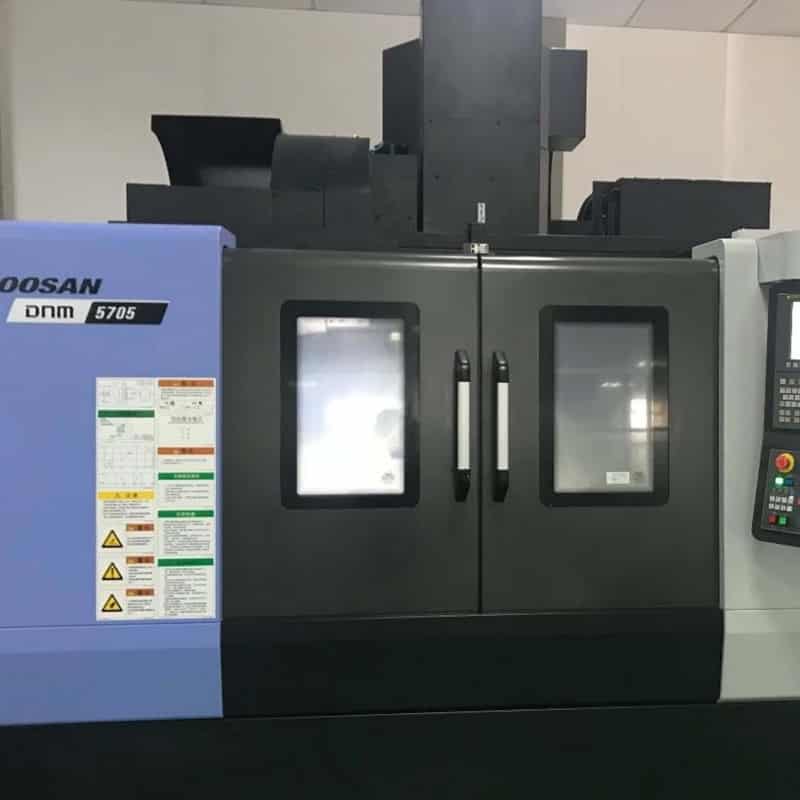
- 3-axis, 4-axis, and 5-axis CNC milling — 5-axis lets us finish contoured gimbal brackets and complex frame parts in a single setup, eliminating stack-up error from multiple fixturings.
- CNC turning and turn-mill / Swiss-type machining for shafts, adapters, sleeves, and small precision fasteners in one cycle.
- Thin-wall and pocket-heavy machining: weight-optimized UAV parts routinely run 0.5–1.0 mm walls and floors without distortion or chatter marks.
- Metric and imperial threading (M, UNC, UNF), helical interpolation for hardened stock, and Helicoil/threaded-insert installation.
- Accepted file formats: STEP, IGES, X_T, SolidWorks files, plus a 2D PDF drawing carrying tolerances, material, finish, and thread callouts.
- Part marking: laser engraving of part numbers, revision letters, and lot IDs for traceability.
Surface Finishes for Drone Parts
A finish on a UAV is functional, not cosmetic. We arrange and coordinate:
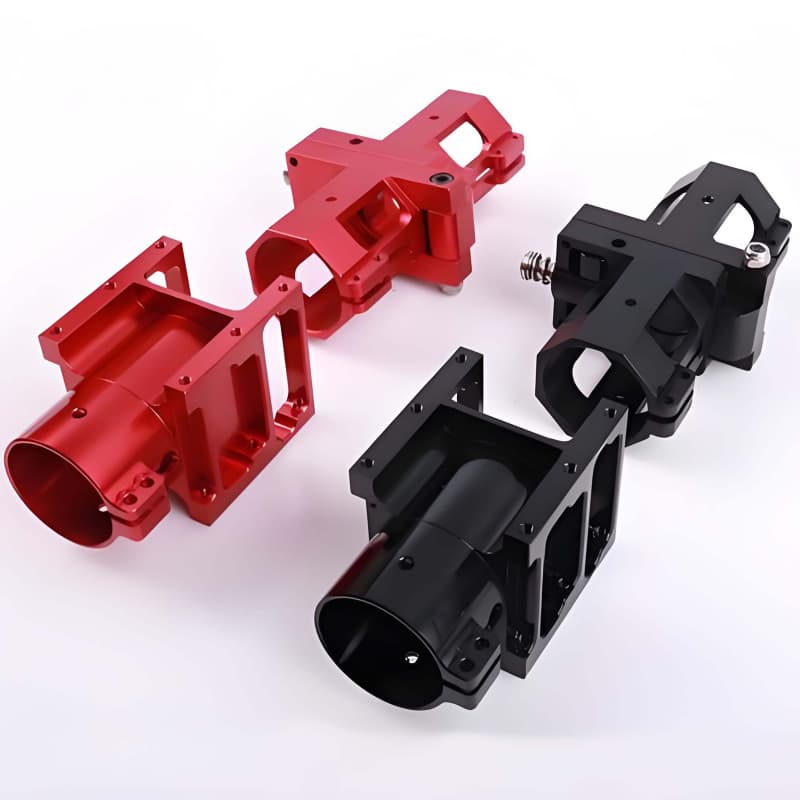
- Type II anodizing in matte or gloss color — wear resistance plus a clean, consistent look for visible frame parts
- Type III hard anodizing (hardcoat) for motor mounts and hinge bores that see abrasion and preload
- Chromate conversion coating (RoHS-compliant) for conductive corrosion protection
- Passivation of stainless parts; electroless nickel / zinc-nickel plating on request
- Black oxide, bead blasting, brushed and polished finishes, powder coating
- Controlled hand deburring — no sharp feather edges inside pockets where wires and battery straps run
One detail we handle so you do not have to: hard anodizing adds roughly 25–50 µm per surface. We compensate bore and shaft dimensions in the machining program so anodized parts still assemble to drawing fit.
Who Buys Custom CNC Machined UAV Components From Us
- FPV racing and freestyle brands iterating frame kits on weekly cycles, where every gram and every arm stiffness curve is a selling point
- Aerial photography and cinema rig builders who need gimbal flatness and damping precision
- Agricultural spraying drone manufacturers needing chemical-resistant 316 stainless, POM, and coated-aluminum brackets at production volumes
- Mapping and surveying UAV integrators mounting LiDAR, RTK GPS, and cameras on rigid, dimensionally stable brackets
- Delivery and logistics drone programs with fatigue-rated folding booms and payload release mechanisms
- Infrastructure inspection teams (powerline, oil and gas, maritime) needing salt-air-resistant 316 and titanium hardware
- University labs and robotics R&D groups ordering one-off and five-off experimental airframe parts
Quality Control: How We Prove a Part Is Correct
For flight hardware, “looks good” is not an inspection report. Our process runs:
- Incoming material verification against mill certificates; alloy and temper recorded per lot.
- First Article Inspection (FAI) in the AS9102 format on request, covering every drawing characteristic.
- In-process inspection after first piece and at set intervals through the run.
- 100% inspection of critical features — bores, fits, flatness on camera plates, hinge alignment.
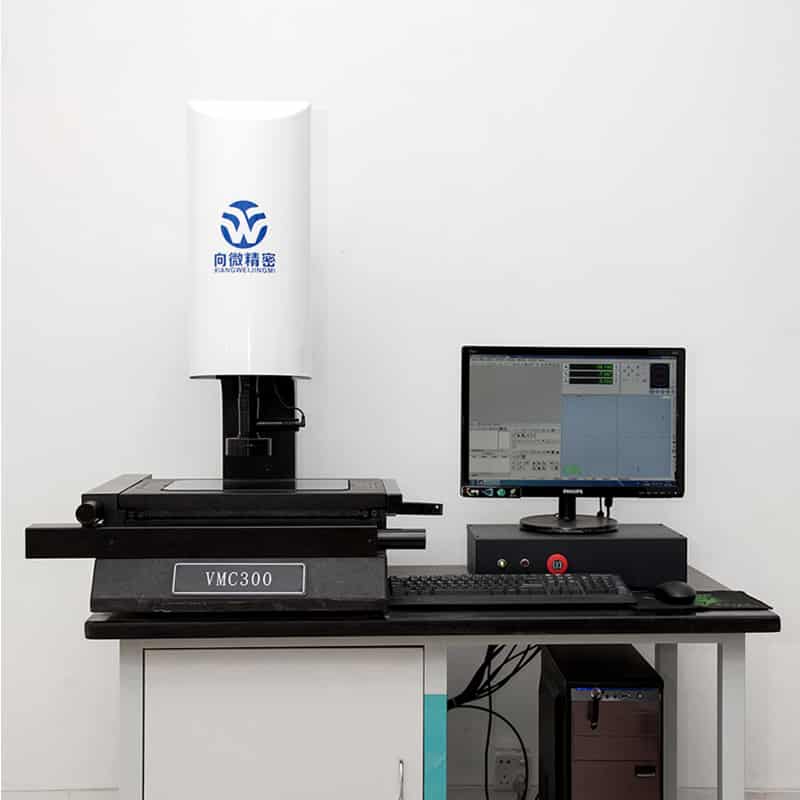
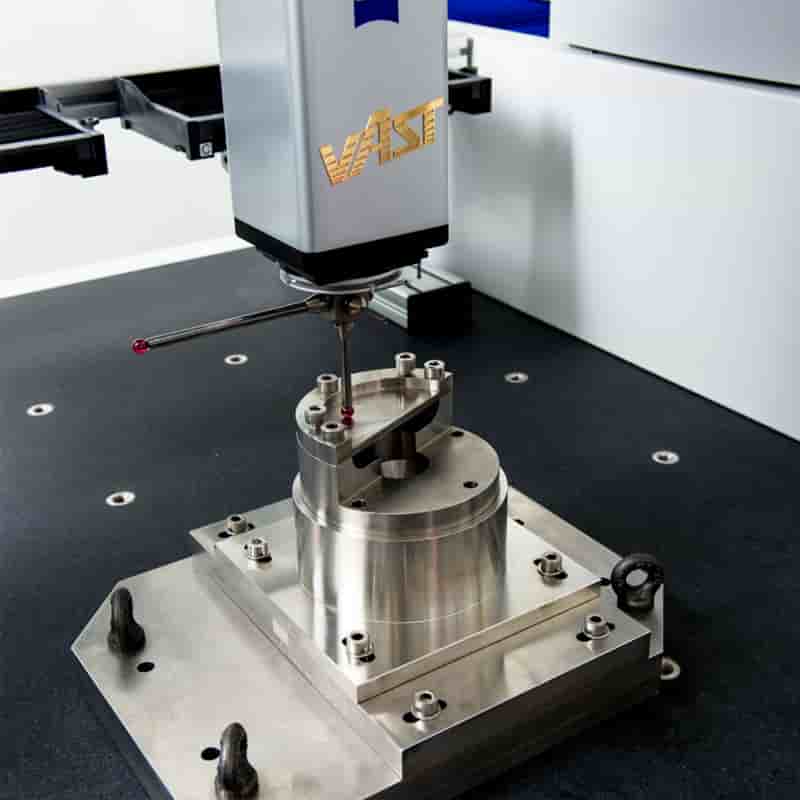
- CMM, height masters, bore gauges, pin gauges, and surface comparators for measured, not guessed, results.
- Outgoing dimensional report with the shipment, plus material and finishing certificates on request. PPAP documentation is available for programs that need it.
Every part carries a lot number, so any field issue can be traced back to the raw stock and the machine run.
From Your STEP File to Shipped Parts: How an Order Flows
- You send the package — 3D model, 2D drawing, target quantities per batch, material and finish.
- DFM review within 24 hours. We flag thin walls that will chatter, tap depths deeper than 3× diameter, internal corner radii that force a tiny slow tool, and fits where anodizing will steal clearance. Most quotes come back with 2–3 concrete cost-down suggestions — larger pocket radii, standardized raw stock thickness, merged features.
- You approve the quote; prototypes are cut, inspected against the drawing, and shipped by express freight, typically within 5–10 working days.
- Pilot run, then production — 15–25 working days is typical for repeat batches, with blanket orders and scheduled stocking for steady programs.
- Worldwide shipping under your preferred Incoterm, packed for air freight with foam-separated layers so anodized surfaces arrive unmarked.
Why UAV Builders Keep Coming Back to [Company Name]
- We speak the language of drone engineering. When you say a motor seat must run true, we know exactly which feature controls it and how to hold it.
- No MOQ wall on first articles — prove the design before you commit to volume.
- One supplier for milling, turning, CFRP routing, anodizing, plating, and sub-assembly: you manage one PO, not five vendors.
- Engineering-level English communication by email and chat — replies that answer the tolerance question, not generic sales scripts.
- NDAs signed as standard; your frame geometry and customer programs stay yours.
- Non-standard, odd, and “the last shop said it was impossible” parts are our normal workload — non-standard custom machining is the only business we do.
Frequently Asked Questions
What files do you need to quote custom CNC machined drone parts? A STEP/IGES/X_T 3D model plus a 2D PDF drawing with tolerances, threads, material, surface finish, and order quantities. A model alone is enough for an estimate; the drawing locks the quote.
What is the tightest tolerance you hold on UAV components? ±0.01 mm is our routine standard on critical dimensions; ±0.005 mm is achievable on specific mating features, depending on geometry and material. Fit callouts such as H7 bores and g6 shafts are routine.
Can you produce just 1–5 prototype drone parts? Yes. First articles and small engineering batches are a core part of the custom CNC machining drone/UAV components service, with the same inspection discipline as volume orders.
Which aluminum should I use for a custom drone frame? 7075-T6 for high-load arms and motor mounts where stiffness per gram dominates; 6061-T6 for plates and brackets where cost, machinability, and anodizing quality matter more than ultimate strength; titanium Grade 5 for the handful of joints that carry peak loads.
Do you machine carbon-fiber drone frame plates? Yes. We route CFRP panels with dedicated tooling, delamination control, and dust extraction, and can deliver CFRP plates alongside machined metal parts as a matched frame kit.
Will hard anodizing change my assembly fits? It adds roughly 25–50 µm per surface. We dimensionally compensate in machining when Type III is specified, so anodized bores and shafts still assemble as drawn.
Do you sign NDAs before sharing drone designs? Yes, routinely — mutual or one-way, on your template or ours.
Send Us Your Next UAV Part
If you are redesigning a frame arm, fixing a motor mount that keeps failing, scaling from ten handmade units to production hundreds, or sourcing a second supplier for an existing CNC machined UAV component, send the model and drawing to us. You will get a DFM-checked quote within 24 hours — with real prices, real lead times, and an engineer’s notes instead of a form letter.
Custom CNC machining for drone and UAV components, from first prototype to repeat production.