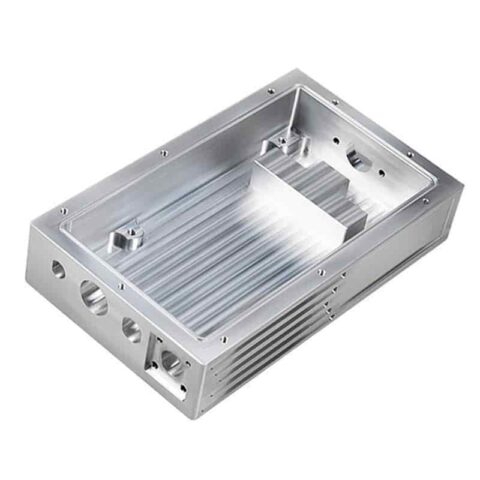
Custom CNC-Machined Aluminum Enclosures for Electronics
Custom CNC-machined enclosures for electronics — aluminum, stainless, brass, copper, and engineering plastics, built exactly to your print, from prototype to production.
Custom CNC-Machined Enclosures for Electronics — Precision Metal Housings Built to Your Drawings
Catalog enclosures are designed for average products. If your electronics were engineered around a specific PCB stack-up, a fixed connector layout, a tight thermal budget, or an outdoor sealing requirement, an off-the-shelf box almost always forces a compromise — a relocated connector, a thicker-than-planned wall, a heat path that should not be there.
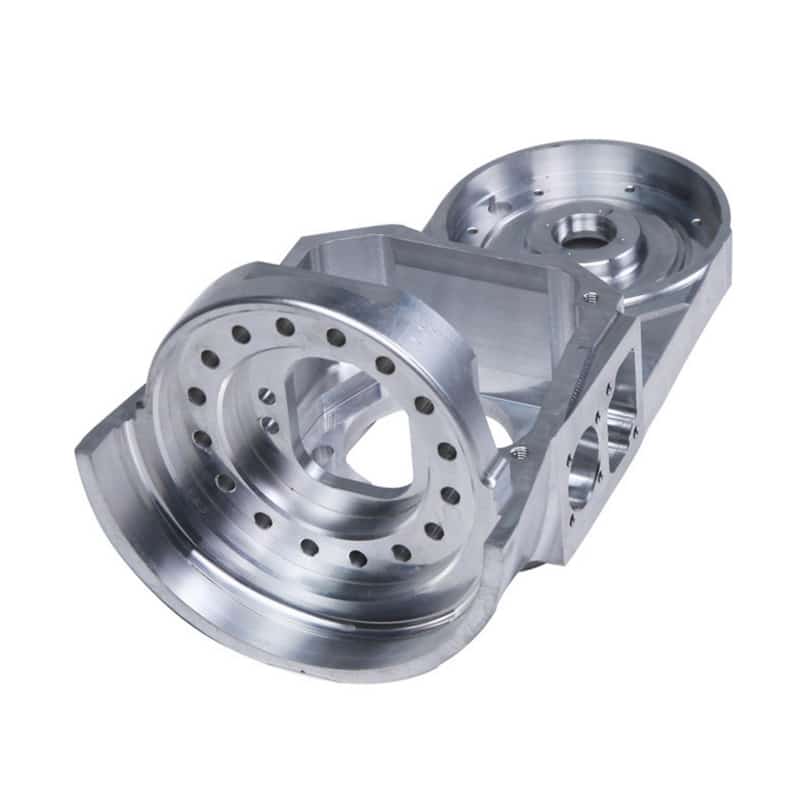
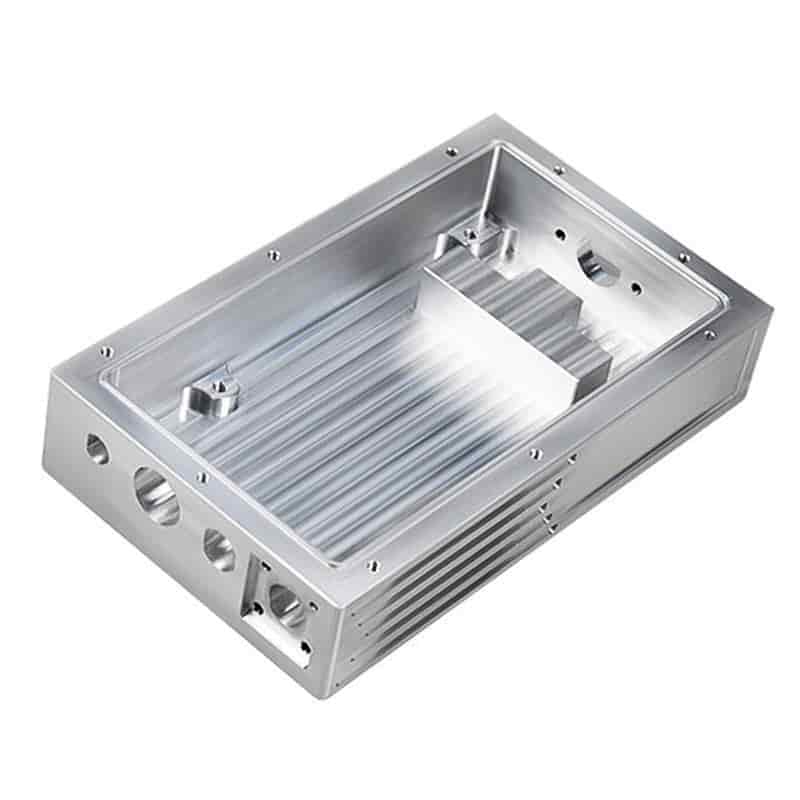
We manufacture custom CNC-machined enclosures for electronics directly from your 3D models and 2D drawings: one-off prototypes, first articles, and repeat production runs. Each housing starts from solid bar, billet, or extruded profile and is milled to your exact geometry — pocket depths, bore positions, thread sizes, O-ring grooves, and PCB mounting bosses all land where your design says they should, with critical features held to ±0.01 mm when the application requires it.
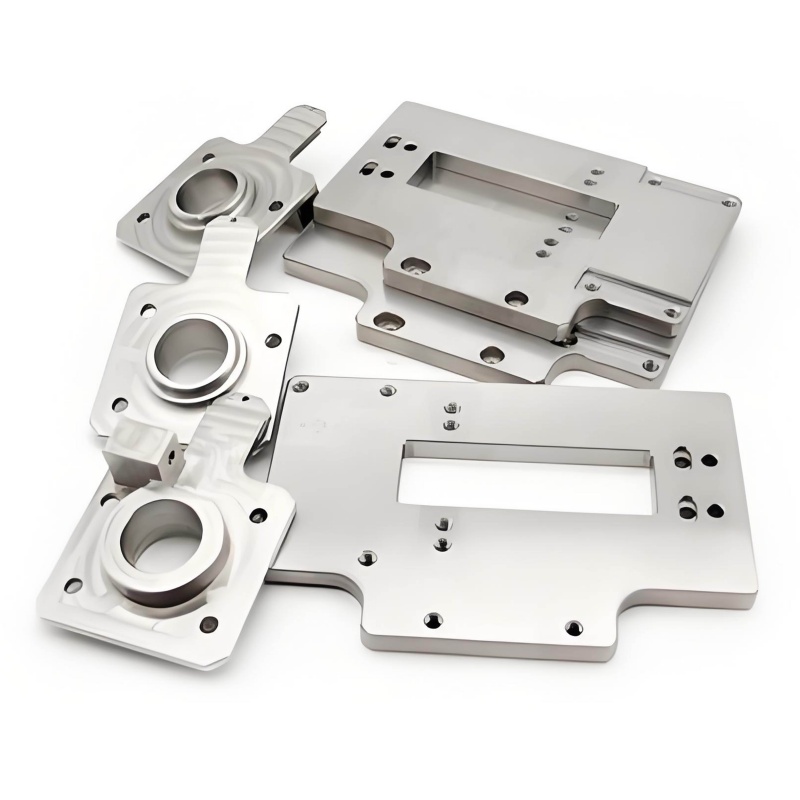
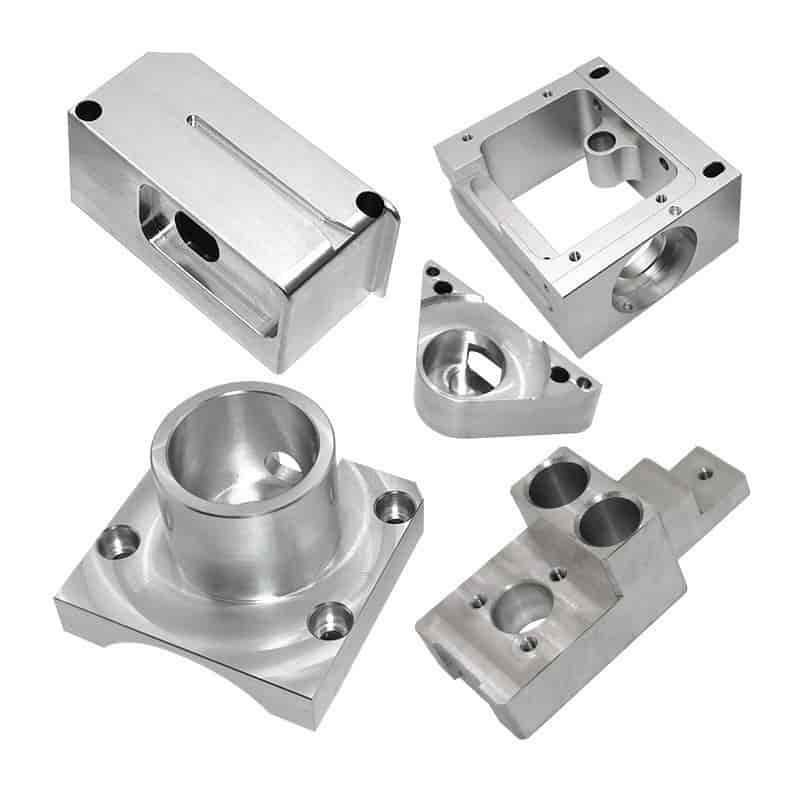
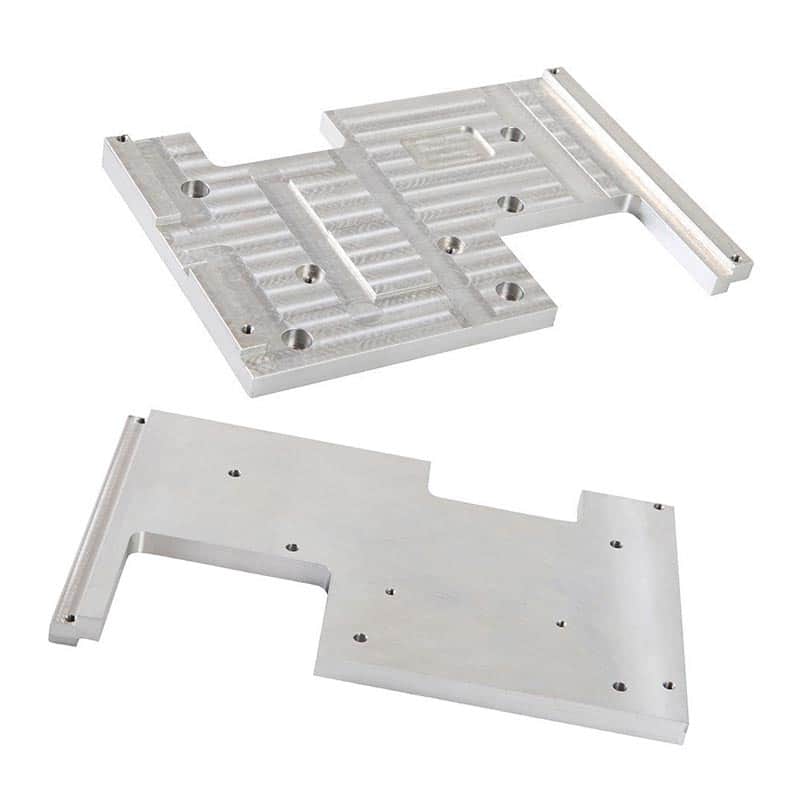
There is no in-house catalog and no “standard model” you are asked to redesign around. Your print is the standard.
What a Custom CNC-Machined Enclosure Means in Practice
A CNC-machined electronics enclosure is typically produced from a solid block or a precision extrusion rather than bent and welded sheet metal. That changes what is possible:
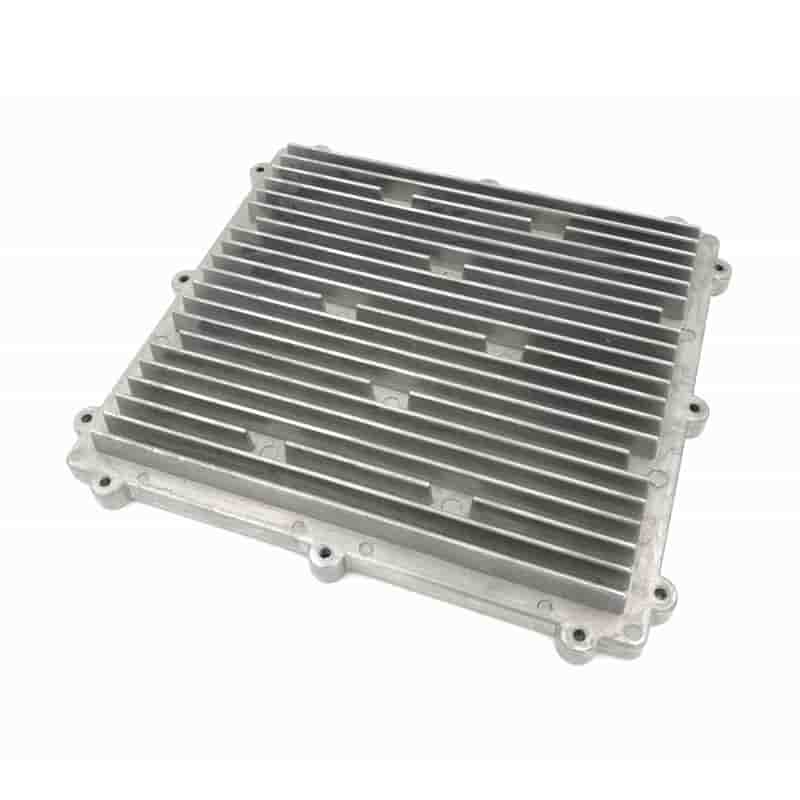
- True 3D geometry in one piece — stepped internal pockets, integrated heat-sink fins, recessed connector faces, angled mounting surfaces, and cavities shaped around specific board outlines.
- Consistent, repeatable accuracy — cover-to-base register holes, sealing grooves, and thread locations repeat across prototype #1 and batch unit #5,000.
- No tooling cost — unlike die casting or injection molding, CNC machining needs no molds, so low-volume and mid-volume enclosures stay economical and design revisions remain cheap.
- Material flexibility — switch from 6061 aluminum to 316 stainless or machined plastic without changing the process, only the stock and tooling.
Custom CNC-machined enclosures for electronics are used wherever the housing is part of the product’s performance — managing heat, blocking interference, keeping water and dust out, or simply presenting a precision cosmetic surface.
Materials We Machine Regularly
We quote the material against the actual job — corrosion exposure, weight target, shielding needs, and finish plan — instead of defaulting every project to one alloy.
| Material | Typical use in electronic enclosures |
|---|---|
| Aluminum 6061-T6 | The default choice: good strength-to-weight ratio, machines cleanly, takes anodizing well. Used for most control boxes, gateways, and instrument housings. |
| Aluminum 6063 | Smoother anodized appearance; commonly used when an extruded profile is CNC-machined into a split-body enclosure. |
| Aluminum 7075-T6 | Higher strength for shock and vibration loads — ruggedized, mobile, and vehicle-mounted equipment. |
| Aluminum 5052 | Selected where some forming is combined with machined features. |
| Stainless steel 304 / 304L | Chemical resistance, washdown environments, and structural housings. |
| Stainless steel 316 / 316L | Marine, coastal, outdoor, and food/medical-adjacent equipment where chloride corrosion is a concern. Mill test certificates (EN 10204 3.1) available. |
| Brass / copper (C36000, C11000) | RF bodies, grounding components, connector shells, and cosmetic faceplates. |
| Engineering plastics — POM/Delrin, ABS, PC, PEEK, PTFE | Insulated covers, RF-transparent lids, chemically resistant parts, and non-marring contact surfaces. |
Material certificates, heat-lot traceability, and RoHS/REACH declarations are supplied with the shipment when requested at order stage.
In-House Machining Capabilities
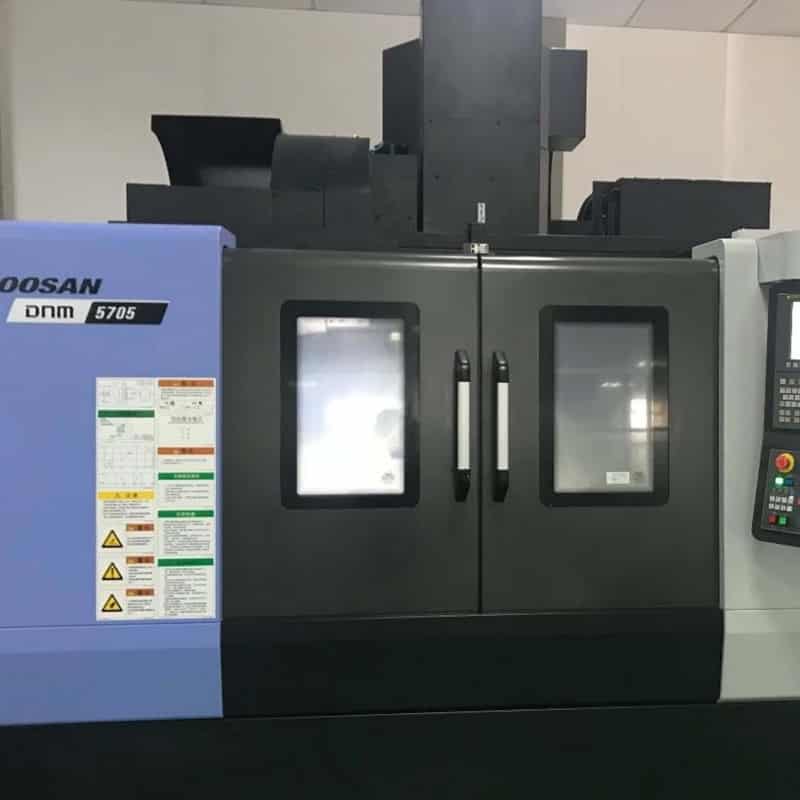
- 3-axis, 4-axis, and 5-axis CNC milling, plus turn-mill for round sensor cans, barrel housings, and parts combining turned and milled features in one setup.
- Envelope from 20 mm miniature sensor bodies to 500 mm+ control cabinets; larger fabrications evaluated case by case.
- Thin walls down to 0.5 mm where geometry and fixturing allow, without chatter marks or dimension drift.
- Tapping and thread milling in metric (M2–M12 and beyond), unified (UNC/UNF), and pipe threads (NPT, G/PF, PG) for cable glands and conduit fittings.
- Reaming, boring, spot-facing, counterboring, and countersinking for clean seating of connectors and fasteners.
- Press-in and heat-set threaded inserts, helical thread inserts (Heli-Coil style), dowel pins, captive-screw bosses, and PEM-style studs installed in-house.
- Part marking by CNC engraving or laser — logos, pin-outs, port labels, serial numbers, and date codes.
Engineering Features We Build Into Electronics Housings
Thermal management
Heat does not respect cosmetic enclosures. We machine features that make the housing part of the cooling path:
- Integral heat-sink fins on the body or lid, with fin thickness and spacing matched to your airflow model.
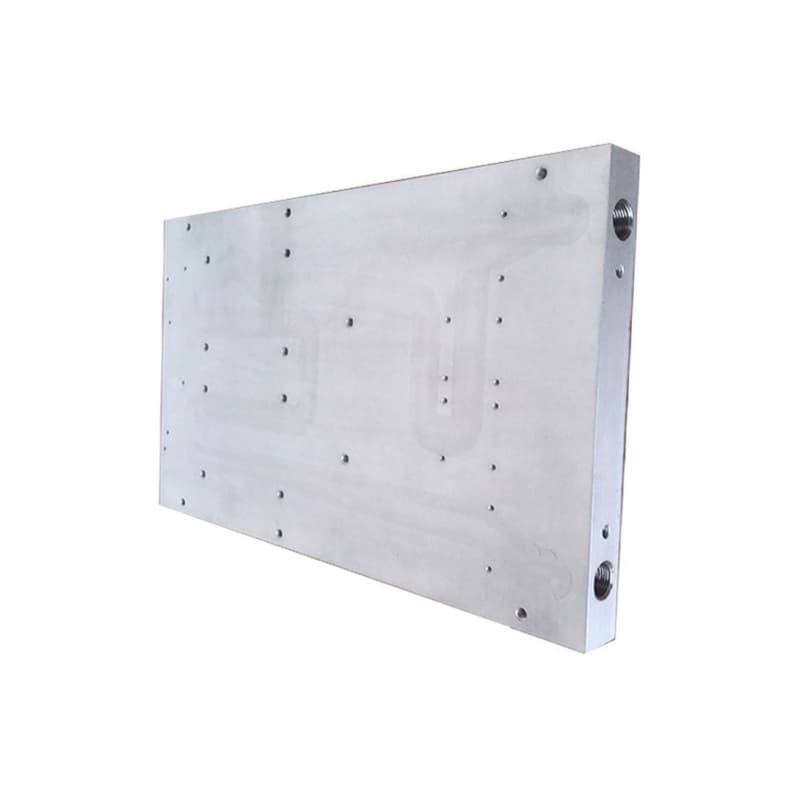
- Controlled baseplate flatness (down to 0.02 mm) where a PCB power module or TIM pad contacts the housing.
- Dedicated pockets for thermal pads, heat pipes, or conduction cards.
- Vent-plug bosses (e.g., M12 pressure-equalization vents) on sealed units.
EMI / RFI shielding
A continuous metal body is a Faraday cage by construction. We make it work in assembly:
- Gasket grooves dimensioned for conductive elastomer, finger stock, or knitted-wire mesh.
- Lap-joint and tongue-and-groove cover seams to avoid straight-through gaps.
- Grounding pads and tapped earth points machined flat for low-impedance contact.
- Trivalent chromate conversion coating where you need electrical conductivity through the finish (note: standard anodizing is insulating — we flag this rather than let it surface during EMC testing).
Sealing and ingress protection
- O-ring grooves cut to proper gland dimensions (not decorative channels) for IP54, IP65, IP67, and IP68 designs.
- Face-seal and radial-seal geometries; gasket compression controlled in the drawing stack-up.
- Welded and machined stainless options for permanent hermetic-style bodies, with leak testing arranged on request.
Assembly and service features
- PCB standoffs, card-guide slots, battery compartments, and display/keypad windows machined to the real component dimensions.
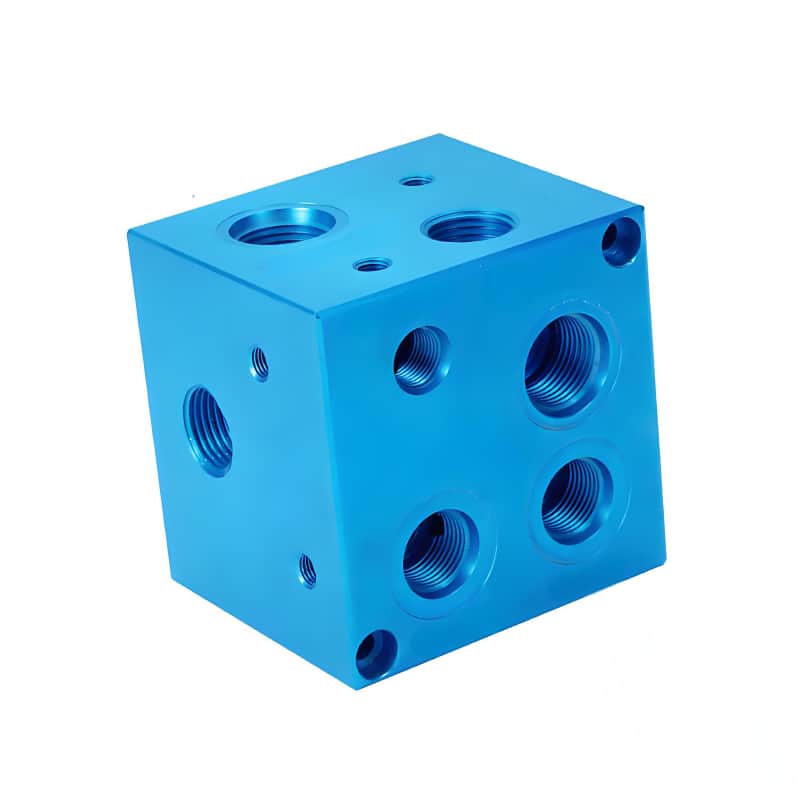
- Cutouts and pockets for D-sub, M8/M12, USB, RJ45, N/SMA-type, circular military-style connectors, and cable glands.
- Alignment dowel holes so cover and base repeat position without fumbling on the assembly line.
- Captive hardware, hinge features, and quarter-turn latch details where service access matters.
Surface Finishes Offered
The finish is specified on your drawing; we never substitute without written confirmation.
- Anodizing, Type II — clear, black, and custom colors; smooth dyed appearance on 6061/6063.
- Hard-coat anodizing, Type III — wear-resistant, typically 40–60 µm layer, for abrasive environments.
- Bead blasting and brushing before coating for uniform, directional, or matte cosmetics.
- Trivalent chromate / chemical film for conductive, corrosion-protected aluminum.
- Passivation and electropolishing for stainless steel.
- Powder coating and wet spray in RAL/Pantone-matched colors, including textured outdoor-grade powders.
- Nickel, tin, and zinc plating on selected metals.
- Laser marking and silk-screening for labels, certification marks, and port ID.
Industries and Applications
Custom CNC-machined enclosures for electronics are produced for:
- Industrial automation — PLC and I/O boxes, VFD and servo drive housings, sensor junction boxes, machine-vision camera bodies.
- Telecom and networking — 5G/radio units, outdoor CPE, antenna modules, hardened switch housings.
- IoT and gateways — compact trackers, environmental sensor nodes, agricultural and asset-monitoring devices.
- Test and measurement — benchtop instrument chassis, calibration fixtures, handheld meter bodies.
- Medical and laboratory — diagnostic device housings, pump and controller bodies (manufactured to customer specification; regulatory approval remains with the device maker).
- Power electronics and e-mobility — BMS enclosures, DC/DC converter cases, charging and battery-monitoring hardware.
- Pro audio — headphone-amplifier chassis, preamp and DAC cases, pedal enclosures with premium cosmetic finishes.
- Marine, outdoor, and ruggedized equipment — IP67 stainless housings, vehicle-mounted controllers, robotics and drone components.
Quality Control and Documentation
Machining is only half of the job; proving the result is the other half.
- Incoming material verification with mill test certificates available per order.
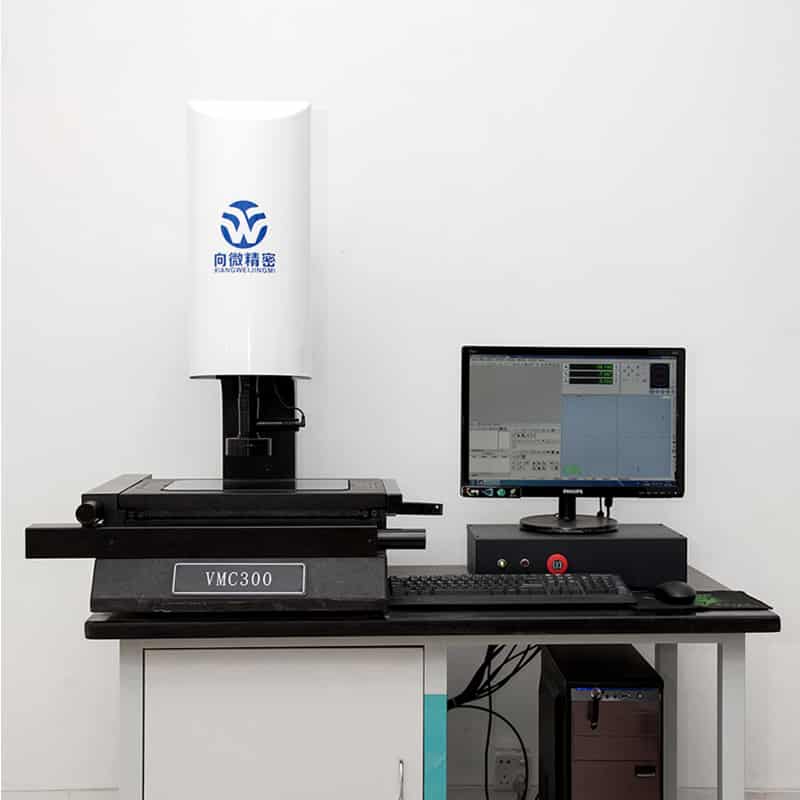
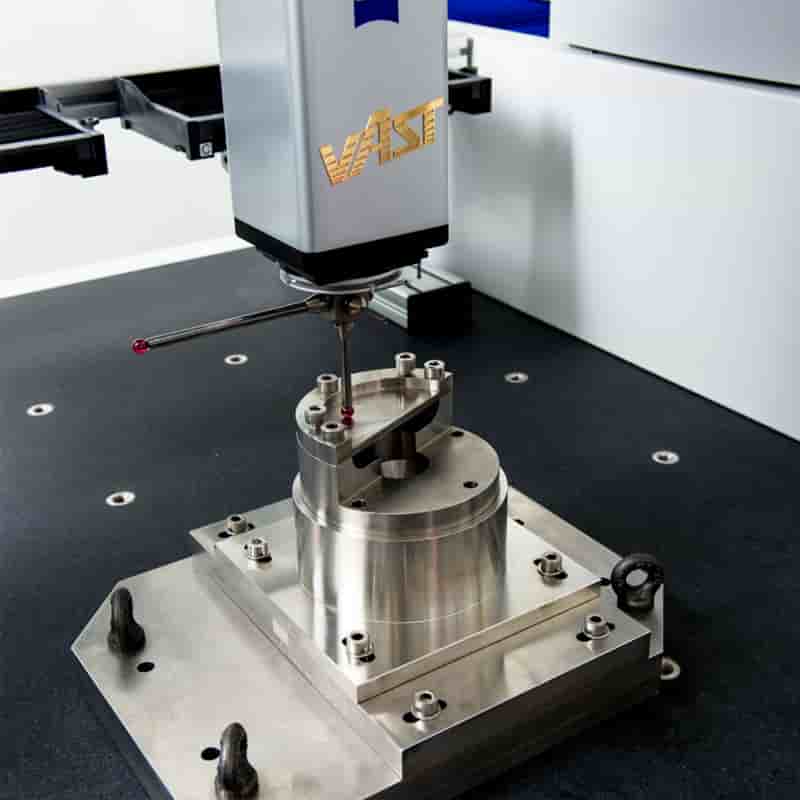
- First Article Inspection (FAI) with a full dimensional report before production is released — CMM, height gauges, bore and pin gauges, and GO/NO-GO thread gauges.
- In-process patrol inspection and final random inspection per lot, with records retained.
- Critical dimensions, cosmetic standards, and acceptance criteria agreed before cutting, based on your drawing — never after a dispute.
- Export-grade packaging: individual bagging, foam-divided trays, cartons, and plywood crates for heavy stainless parts to survive ocean freight.
- Familiar with shipping to the EU, North America, Russia, the Middle East, South Asia, and Africa; commercial invoice, packing list, certificate of origin, and other customs documents prepared to your forwarder’s requirements.
From RFQ to Delivery — How an Order Flows
- You send the files. STEP/IGES/X_T model plus a PDF or DWG drawing showing tolerances, material, finish, and quantity. A hand sketch or a physical sample also works for reverse-engineering jobs.
- DFM review within 24 hours. A machinist — not a sales agent — checks tool access, internal-corner radii (a cutter cannot leave a sharp internal square corner), minimum wall thickness, thread engagement depth, and finish feasibility, and flags anything that will cost you money or fail inspection.
- Itemized quotation. Material, machining, finishing, inserts, and marking quoted separately, with material/finish alternatives shown side by side so you can choose between cost and performance.
- Prototyping in 3–7 working days, shipped with inspection data so you can test fit, sealing, and EMC before committing to tooling-free volume production.
- Production, typically 10–25 working days depending on quantity and outside processing (anodizing/plating lead times stated up front).
- Inspection, packing, and shipment by DHL/FedEx/UPS for samples, and air or sea freight for production batches, under FOB/CIF/DDP terms as agreed.
Why Buyers Choose Us for Custom Electronics Enclosures
- We are a non-standard parts workshop, not a trading catalog. Every order begins with your file; we do not ask you to adapt your design to a stocked profile.
- Prototype quantities from 1 piece, scaling smoothly to batches of thousands — the same machine shop, the same datum scheme, the same quality paperwork from first article to repeat order.
- Engineering feedback is part of the quote. If a pocket radius, wall thickness, or anodizing choice will cause a problem, you hear it before metal is cut.
- Honest tolerance discussion. We will quote ±0.01 mm where the function needs it and tell you where ±0.05 mm is perfectly adequate — over-tightening every dimension only raises your price.
- Direct factory communication in English, on email and messaging, with photos and inspection data at each milestone.
- Long-term repeat-order support — drawings, programs, and fixture schemes are archived, so reorders run on proven setups rather than starting from zero.
Frequently Asked Questions
Q: What files do you need to quote custom CNC-machined enclosures for electronics? A: A 3D model (STEP preferred; IGES or Parasolid accepted) plus a 2D PDF/DWG drawing with tolerances, material, surface finish, and quantity. If you only have a sample, we can reverse-engineer it and send a drawing for your approval before machining.
Q: Is there a minimum order quantity? A: No hard MOQ. One-piece prototypes are accepted; unit pricing drops substantially as quantity increases, and we will show you the price breaks.
Q: What is the tightest tolerance you can hold? A: ±0.01 mm on selected critical dimensions with suitable material and geometry; ±0.05 mm is a routine general tolerance. The achievable tolerance always depends on feature size and material, which we confirm against your drawing rather than promising a blanket number.
Q: Can you produce a fully sealed, waterproof enclosure? A: Yes. We machine O-ring grooves to correct gland design and can source and fit the gaskets, vents, and inserts so you receive a ready-to-assemble IP65/IP67 housing. Final IP rating is validated on your assembled product.
Q: Can you match an existing enclosure we no longer have drawings for? A: Yes — send the physical part. We measure it, model it, and return a drawing for sign-off before cutting production metal.
Q: Which finish should I choose for EMI shielding? A: Use bare metal with a conductive conversion coating (trivalent chromate) or a conductive plating at mating surfaces; standard anodizing is non-conductive. We will recommend a scheme once we see your shielding and grounding design.
Q: How fast can I get prototypes? A: Typically 3–7 working days for machined aluminum without outside finishing; add 2–4 days for anodizing, plating, or powder coating.
Send Us Your Enclosure Drawing
If your product needs a housing that follows the electronics instead of forcing the electronics to follow the housing, send your model and drawing for a no-obligation quote. DFM feedback within 24 hours, prototypes in days, and production lots with full inspection paperwork.