
Custom precision CNC machining titanium TA2 alloy parts in China
China-based precision machining manufacturer producing custom titanium TA2 (commercially pure Grade 2) components for chemical processing, marine, aerospace, medical, and general engineering applications worldwide.
Precision Machining Built Around Titanium TA2
From one-off prototypes to medium-volume production, every part is machined to your drawings with full material traceability.
For engineering teams and procurement managers sourcing custom CNC machining titanium TA2 alloy parts in China, the critical factors are material authenticity, dimensional consistency, and a shop that understands how titanium behaves under the cutting tool. We focus exclusively on high-precision CNC machining of titanium and related reactive metals, with dedicated machining cells, sharp carbide tooling, rigid fixturing, and high-pressure coolant delivery engineered specifically for titanium.
Our facility handles the complete manufacturing chain in-house: material cutting, CNC milling and turning, threading, EDM, surface finishing, and dimensional inspection. We work from your 3D models and 2D drawings, hold tight tolerances on critical features, and package every order to protect machined surfaces during international shipment.
Why Titanium TA2 Is Specified Across Industries
Commercially pure titanium TA2 balances corrosion resistance, strength, ductility, and weldability in a single engineering material.
Outstanding Corrosion Resistance
TA2 forms a dense, self-healing titanium dioxide (TiO₂) surface layer that resists seawater, chlorides, oxidizing acids, alkalis, and most organic media. This makes it the material of choice for chemical reactors, heat exchangers, desalination equipment, and offshore hardware where stainless steels would suffer pitting or crevice corrosion.
High Strength-to-Weight Ratio
With a density of only 4.51 g/cm³ and a minimum tensile strength of 345 MPa, TA2 delivers structural performance at roughly 60% of the weight of carbon steel. This weight advantage directly reduces fuel consumption in aerospace and automotive applications and lowers installed mass in rotating and reciprocating machinery.
Proven Biocompatibility
Unalloyed titanium TA2 is non-toxic, non-magnetic, and biologically inert. It does not elicit adverse tissue response and is widely used for surgical instruments, orthopedic and dental implant components, medical device housings, and food-contact processing equipment where human safety and cleanability are non-negotiable.
Good Formability and Weldability
Compared with higher-strength alpha-beta titanium alloys such as Ti-6Al-4V, commercially pure TA2 offers superior ductility, cold formability, and weldability. It can be brake-formed, deep-drawn, and welded with GTAW/TIG under proper inert-gas shielding, simplifying the fabrication of complex sheet and tubular assemblies.
TA2 Material Specifications
Typical chemistry and annealed mechanical properties for commercially pure titanium TA2 / Grade 2.
Chemical Composition (wt %, maximum unless noted)
- Titanium (Ti)Balance
- Iron (Fe)0.30 %
- Oxygen (O)0.25 %
- Carbon (C)0.08 %
- Nitrogen (N)0.03 %
- Hydrogen (H)0.015 %
- Other elements (each)0.10 %
- Other elements (total)0.40 %
Mechanical & Physical Properties (annealed, typical)
- Density4.51 g/cm³
- Tensile strength (min)345 MPa
- Yield strength (min)275 MPa
- Elongation (min)20 %
- Elastic modulus105 GPa
- HardnessHB 160 – 200
- Melting point1668 °C
- Thermal conductivity16.4 W/(m·K)
- Thermal expansion8.6 × 10⁻⁶ /°C
Global Grade Equivalents for Titanium TA2
TA2 is known by different designations under national and international standards. The table below maps the most commonly referenced equivalents.
| Region / Standard Body | Standard Number | Grade Designation | UNS / Additional Reference |
|---|---|---|---|
| China | GB/T 3620.1 | TA2 | Commercially pure titanium, Grade 2 equivalent |
| United States | ASTM B348 / B265 / B337 / B338 / B863 | Grade 2 | UNS R50400 |
| Japan | JIS H4600 | TP340 | Minimum tensile strength 340 MPa class |
| International | ISO 28401 / ISO 5832-2 | Ti2 / Grade 2 | Unalloyed titanium, second strength grade |
| Russia | GOST 19807-91 | VT1-0 | Commercially pure titanium, comparable strength level |
| European Union | EN standards (often aligned to ASTM) | Ti-G2 / Grade 2 | Material test report per EN 10204 when requested |
Exact designation and property limits can vary by product form (bar, plate, sheet, tube, wire, forging). Always confirm the applicable standard, grade, and product form with your engineering team before specifying custom CNC machining titanium TA2 alloy parts in China.
In-House CNC Machining Capabilities
A complete machining chain under one roof, from roughing to final surface finishing and inspection.
Multi-Axis CNC Milling
3-axis, 4-axis, and 5-axis vertical machining centers produce complex pockets, 3D contoured surfaces, angled features, and prismatic geometry with high repeatability. Dedicated titanium cells use rigid machine frames and sharp carbide tooling to minimize work hardening and tool wear.
CNC Turning
Precision CNC lathes and turning centers manufacture rotational parts such as shafts, sleeves, bushings, flanges, valve bodies, and threaded connectors. Live-tooling lathes combine turning with secondary milling and drilling operations in a single setup for improved concentricity.
Threading & Tapping
Internal and external threads are produced to NPT, NPTF, BSPT, BSPP, metric (M), unified coarse/fine (UNC/UNF), and custom profiles. Thread depth, pitch diameter, and flank fit are verified with thread ring and plug gauges, and taper threads are checked with sealing-class gauges where required.
Drilling & Boring
Capabilities include conventional drilling, deep-hole gun drilling, counterboring, spot-facing, and precision boring for holes with tight diameter and positional tolerances. Cross-holes, angled holes, and intersecting bore features are programmed with proper chip evacuation and coolant-through tooling.
EDM & Wire Cutting
Sinker (ram) EDM and wire EDM produce intricate internal cavities, sharp internal corners, keyways, splines, and fine features that conventional milling cannot reach. Wire EDM is especially useful for high-hardness titanium and for cutting complex profiles with a fine surface finish and minimal heat-affected zone.
Surface Finishing
Standard as-machined finish is Ra 1.6 to Ra 3.2 μm, with fine machining down to Ra 0.8 μm. Secondary operations include mechanical polishing, mirror polishing, glass-bead blasting, anodizing, passivation, and chemical cleaning. Finishing specifications are documented and verified with a surface roughness tester.
Our Machining Process
A controlled, four-stage workflow that protects dimensional accuracy and material integrity from drawing review to final shipment.
Drawing Review & DFM
Our machining engineers review your 3D model and 2D drawing, identify tight-tolerance features, thin walls, deep pockets, and thread specifications, and provide design-for-manufacturability feedback before any material is cut.
Material Preparation
TA2 titanium bar, plate, or tube is cut to blank size. The heat number, lot number, and material test report are recorded at receiving, and the identity is carried through every operation so each finished part remains fully traceable.
CNC Machining
Programmed CNC operations run on dedicated titanium machining cells using sharp uncoated or AlTiN carbide tooling, rigid custom fixturing, and high-pressure flood coolant to control cutting-edge heat, reduce galling, and extend tool life.
Inspection & Finishing
Each part undergoes dimensional verification with coordinate measuring machines (CMM) and calibrated hand gauges, surface finish measurement, and optional secondary finishing. Accepted parts are individually wrapped, packed with protective dividers, and prepared for shipment.
Industries and Applications
TA2 titanium components are found wherever corrosion resistance, light weight, and biocompatibility drive the material selection.
Chemical Processing
Reactor internals, heat exchanger tubes and tubesheets, valve bodies, pump housings, agitators, and piping systems exposed to acids, chlorides, and corrosive process media.
Marine & Offshore
Shipboard fasteners and hardware, underwater connectors, propeller shafts, rudder components, desalination plant parts, and offshore platform fittings in continuous seawater service.
Aerospace
Structural brackets, clips, and fittings, engine accessory components, hydraulic and pneumatic system parts, ducting, and fasteners where weight savings and fatigue resistance are critical.
Medical & Dental
Surgical instruments, implant components, orthopedic hardware, dental abutments and implants, medical device housings, and sterilizable tooling requiring biocompatible surfaces.
Automotive & Motorsport
Exhaust systems and mufflers, suspension components, valve retainers, connecting rods, wheel fasteners, and performance hardware where reduced rotating and reciprocating mass improves response.
Energy & Power
Gas and steam turbine components, generator hardware, geothermal equipment parts, nuclear waste handling fixtures, and renewable energy system structures exposed to the elements.
Food & Pharmaceutical
Processing equipment, mixing and blending vessels, filling machine components, sanitary fittings, valves, and pump parts requiring clean, non-reactive, and easily sanitized surfaces.
Sporting & Consumer
Bicycle frames and components, golf club heads and shafts, diving and underwater equipment, camera and optical hardware, and high-end consumer products where light weight and premium finish are valued.
Tolerance and Surface Finish Capabilities
Representative capabilities for precision-machined titanium TA2 components. Feature-specific tolerances are confirmed during drawing review.
Dimensional Tolerances
- General tolerance±0.05 mm
- Precision tolerance±0.01 mm
- High-precision (feature-dependent)±0.005 mm
- Position (typical)±0.01 mm
- Concentricity0.005 – 0.02 mm
- Flatness (per 100 mm)0.005 – 0.01 mm
- Cylindricity0.005 – 0.015 mm
- Metric thread tolerance6H / 6g
- Unified thread tolerance2A / 2B
Surface Finish Options
- As-machined (standard)Ra 1.6 – 3.2 μm
- Fine machinedRa 0.8 μm
- Mechanical polishRa 0.2 – 0.4 μm
- Mirror polishRa ≤ 0.05 μm
- Glass-bead blastUniform matte
- Anodizing (Type II / III)Color options
- PassivationChemical clean
- ElectropolishUltra-smooth, corrosion-enhanced
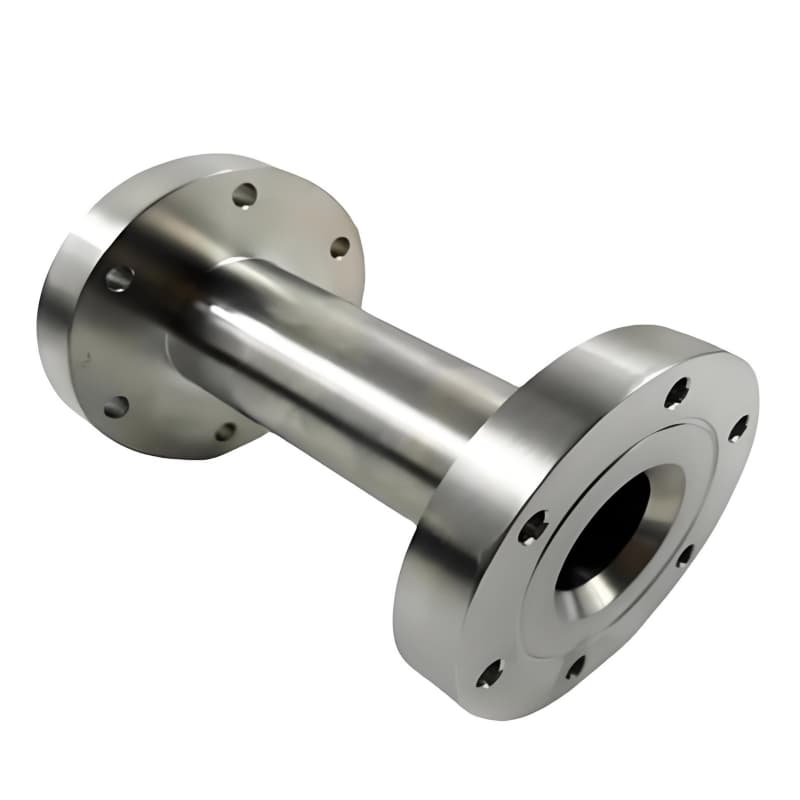
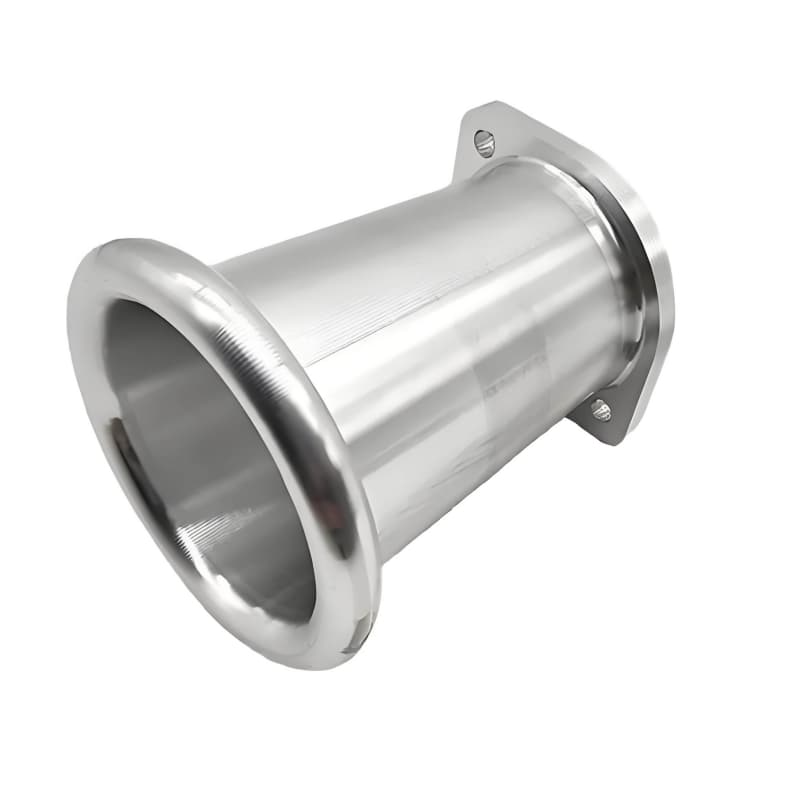
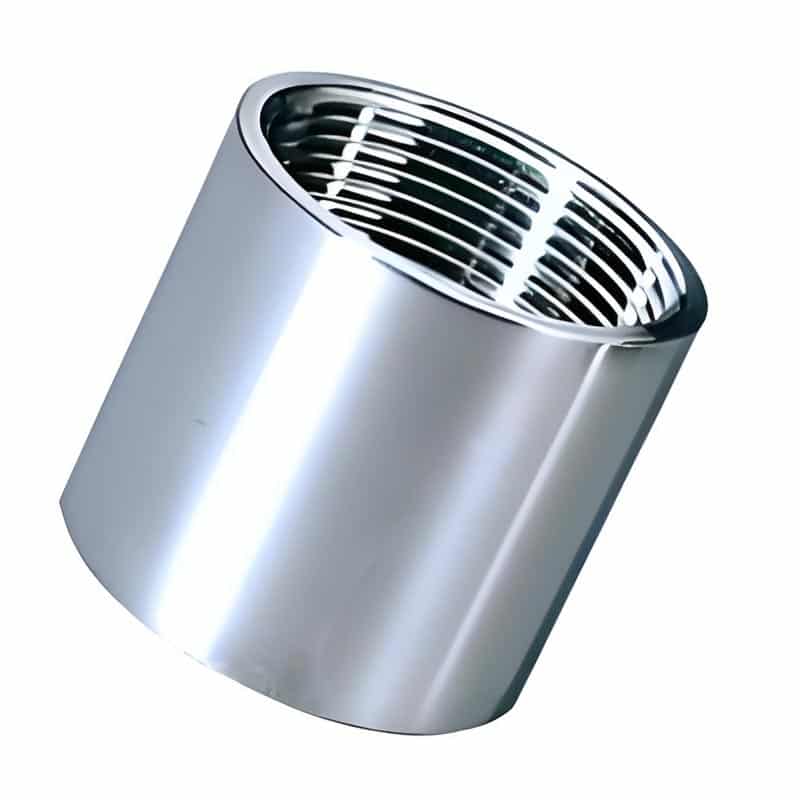
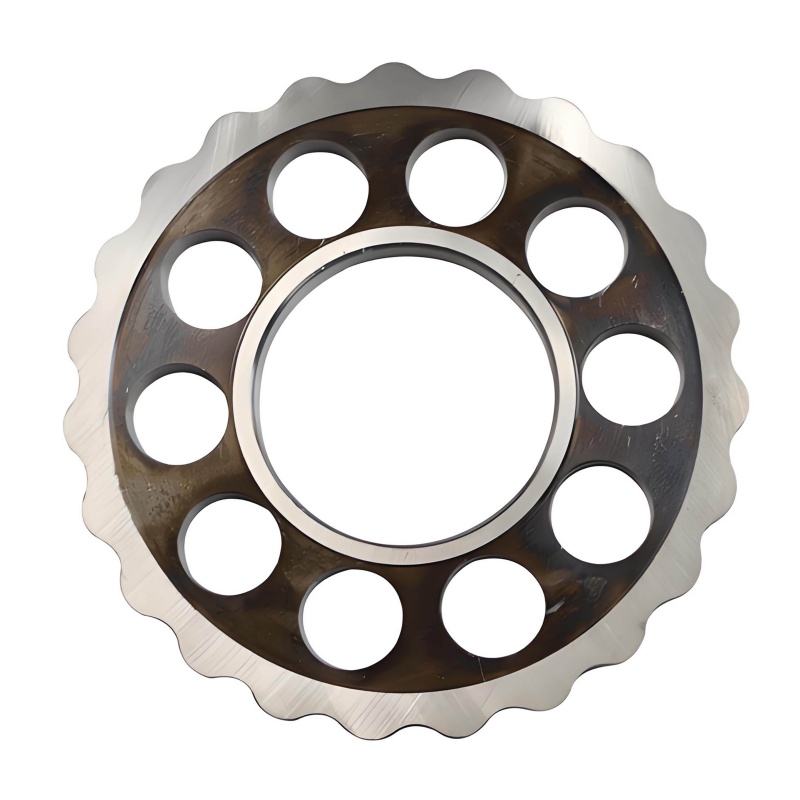
Representative Machined Products
A selection of custom CNC machining titanium TA2 alloy parts in China, produced for customers across fluid handling, power transmission, and general engineering.
Frequently Asked Questions
Common questions from buyers evaluating custom CNC machining titanium TA2 alloy parts in China.