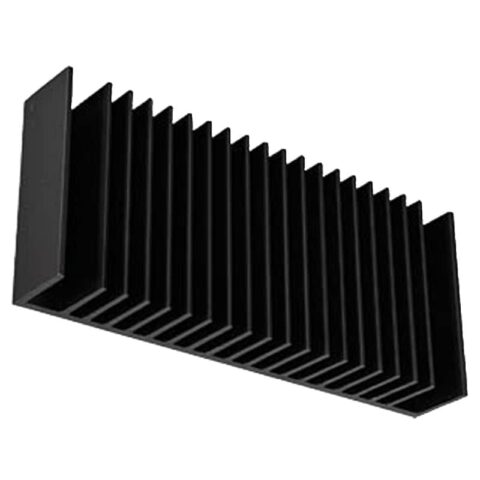
Custom Heat Sink CNC Machining Manufacturer in China
Custom heat sink, CNC heat sink machining, custom heatsink manufacturer China, non-standard heat sink fabrication, thermal management components, precision copper cold plate
Custom Heat Sink Manufacturing
As electronic components grow smaller and achieve unprecedented power densities, thermal management has transformed into a core structural requirement for modern engineering. A high-performance heat sink serves as the primary defense against thermal throttling, system instability, and hardware degradation. Manufacturing custom heat sinks through precision CNC machining, specialized finning processes, and advanced joining methods ensures optimal thermal dissipation tailored to exact operational environments.
Our manufacturing facility in China specializes in non-standard custom CNC machining, producing engineered heat sink components crafted from high-grade aluminum alloys, pure copper, and specialized metal composites. By combining custom milling, precision skiving, liquid cold plate fabrication, and high-pressure die casting, we deliver tailored heatsink solutions designed for demanding global supply chains.
Multi-Industry Applications and Thermal Roles
Different sectors require specific thermal characteristics ranging from elevated thermal conductivity and corrosion resistance to lightweight structures and high shock absorption. Custom machining allows engineers to optimize the geometry, surface area, and fluid dynamics of every heat sink component.
| Industry Vertical | Custom Heat Sink Structure | Primary Thermal & Operational Role |
| Automotive & EV | Liquid cold plates and pin-fin heat sinks | Dissipates intense thermal loads from IGBT modules, battery management systems, and traction inverters. |
| 5G & Telecommunications | High-density finned enclosure heat sinks | Provides reliable passive convection cooling for outdoor base stations and remote radio units. |
| Aerospace & Defense | Lightweight AlSiC and titanium heat sinks | Protects radar transceiver modules and avionics under strict weight limits and pressure cycles. |
| High-Performance Computing | Micro-channel liquid-cooled heat sinks | Cools high TDP server GPUs and CPUs to maintain maximum processing output without thermal throttling. |
| Medical Electronics | Precision copper-embedded heat sinks | Ensures stable operating temperatures for diagnostic imaging, lasers, and surgical devices. |
| Industrial & Power Supply | Large profile skived fin heat sinks | Handles heavy heat surges in solar inverters, high-bay lighting, and industrial motor drives. |
Automotive and Electric Vehicles
Electric vehicles operate under high current densities and demanding environmental conditions. Liquid cold plates mounted directly against silicon carbide or IGBT power modules manage rapid temperature spikes during acceleration. Precision surface flatness on the contact base minimizes thermal interface material resistance, ensuring maximum heat transfer to the coolant fluid.
Telecommunications Infrastructure
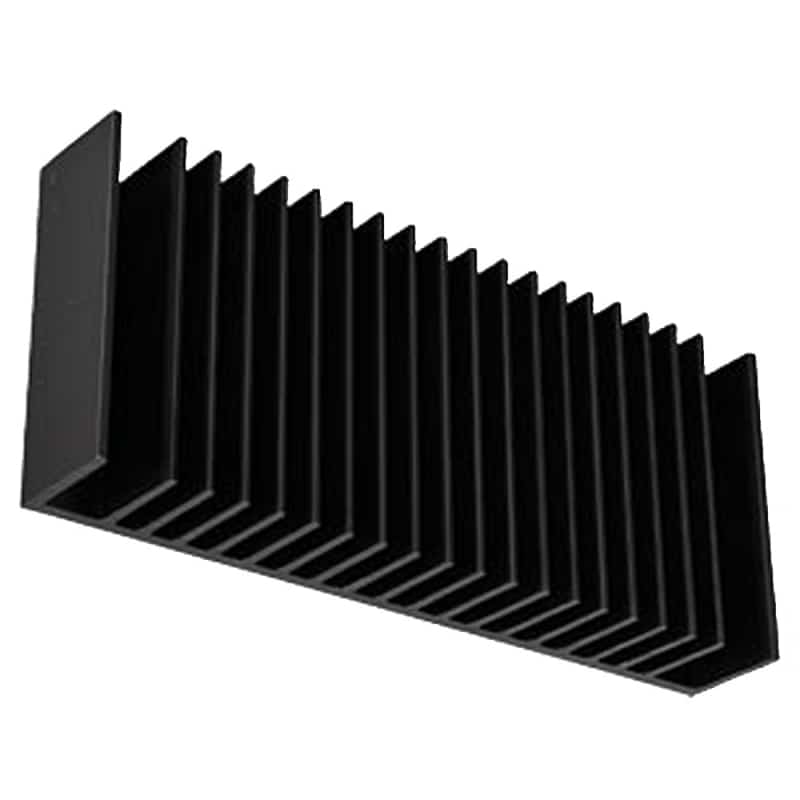
Outdoor 5G base stations require passive cooling solutions that operate continuously without moving parts. Custom extruded and CNC-milled aluminum heat sink enclosures maximize natural air convection while providing weather-tight protection. Surface treatments such as anodizing increase emissivity and shield the alloy against environmental corrosion.
High-Performance Computing and Data Centers
Server architectures generating high thermal design power require cooling methods capable of handling concentrated thermal densities. Hybrid heat sink designs with copper micro-channels allow liquid coolants to absorb heat directly from the chip die, lowering overall energy usage and maintaining high uptime.
Aerospace and Avionics
Weight restrictions and thermal shock resistance are paramount in flight systems. Non-standard CNC machining enables the production of thin-walled, high-strength heat sinks using specialized alloys. These parts maintain structural integrity while cycling rapidly between broad temperature extremes.
Heat Sink Manufacturing Technologies and Processes
Selecting the ideal manufacturing process depends on target heat dissipation metrics, production volume, material choices, and geometric complexity. Below is a comparative overview of core fabrication methods available for custom heat sink production.
| Manufacturing Process | Primary Materials | Key Advantages | Typical Applications |
| Liquid Cold Plate | AL6061-T6, AL6063, C1100 Copper | Maximum heat transfer, custom flow channels, leak-proof sealed assemblies | EV traction inverters, server liquid cooling, high-power radar |
| Skived Fin Heat Sink | C1100 Pure Copper, AL6063 Aluminum | High aspect ratio fins, continuous metal structure, zero thermal contact resistance | High TDP CPU coolers, solar inverters, power electronics |
| Extruded Aluminum Heat Sink | AL6063-T5, AL6061-T6 | Cost-effective for medium to high volumes, easily modified with CNC post-processing | Power supplies, LED lighting modules, motor drives |
| Die-Cast Heat Sink | ADC12, A380, A356 Alloys | Complex 3D geometries, integrated mounting features, high volume efficiency | Outdoor telecom enclosures, automotive lighting, industrial control boxes |
| CNC Machined Heat Sink | AL7075, AL6061, Pure Copper, AlSiC | Complete geometric freedom, tight tolerances, zero tooling costs for custom prototypes | Aerospace avionics, optical lasers, prototype validation |
Liquid Cold Plates
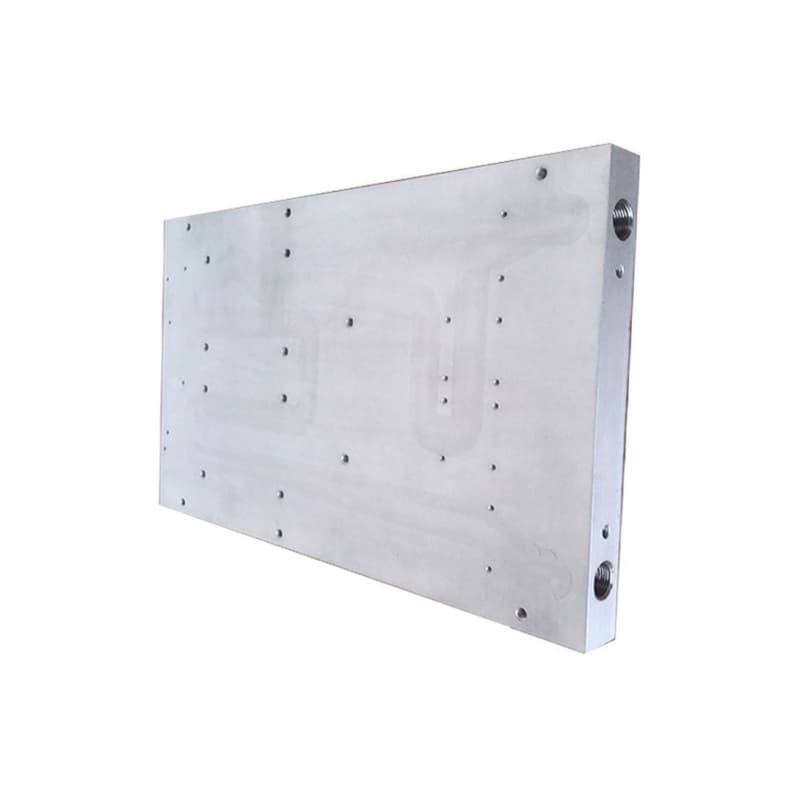
Liquid cold plates feature internal flow networks milled into an aluminum or copper baseplate. The assembly is sealed using Friction Stir Welding (FSW), vacuum brazing, or controlled atmosphere brazing. This construction achieves superior thermal transport for high-heat-density applications and undergoes helium leak testing to guarantee seal integrity.
Skived Fin Heat Sinks
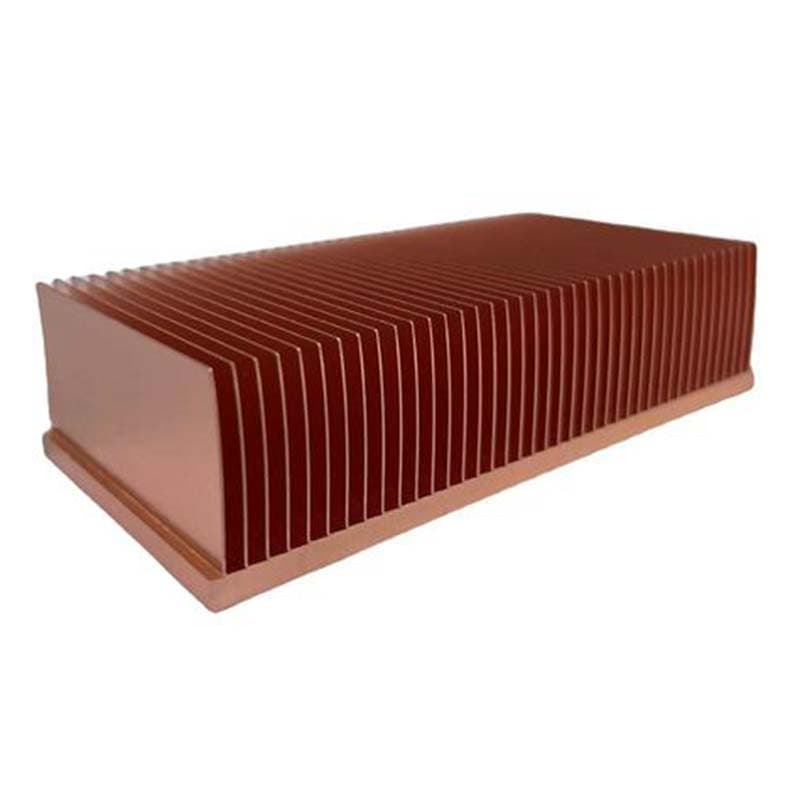
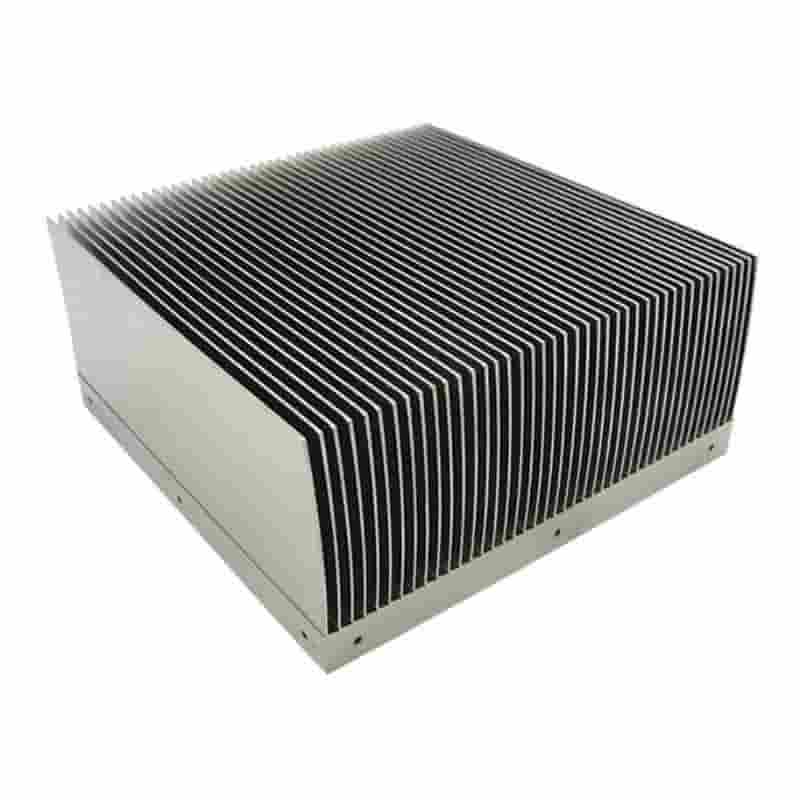
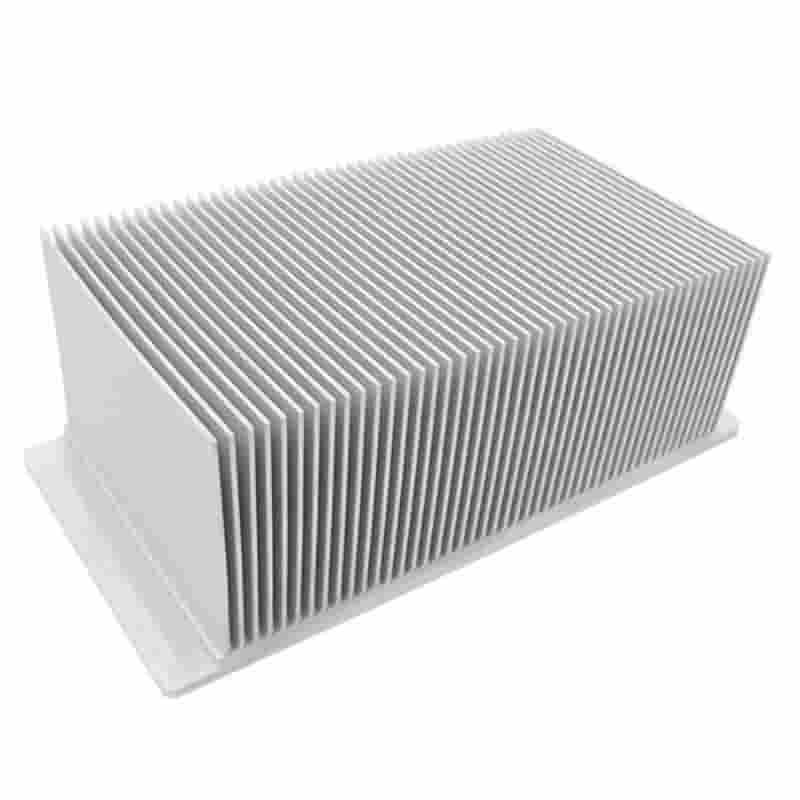
Skiving utilizes a specialized cutting tool to slice thin fins directly from a solid metal block and bend them upright at uniform intervals. Because the fins and base are part of one continuous piece of material, there is no joint thermal resistance. This process is ideal for creating dense fin arrays from pure copper, which has a thermal conductivity near $390\text{ W/m}\cdot\text{K}$.
Extruded Aluminum Heat Sinks
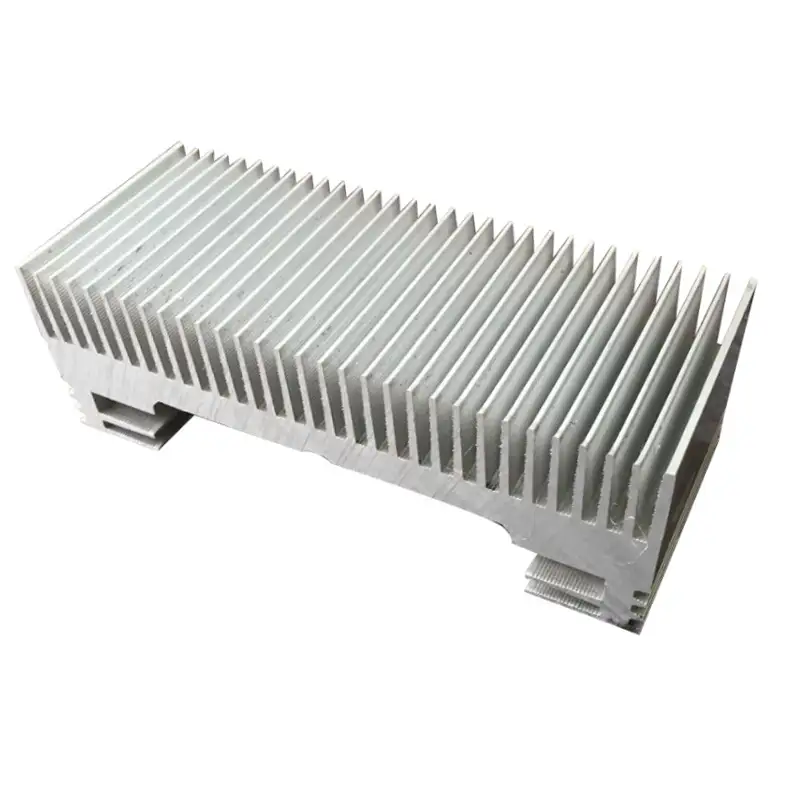
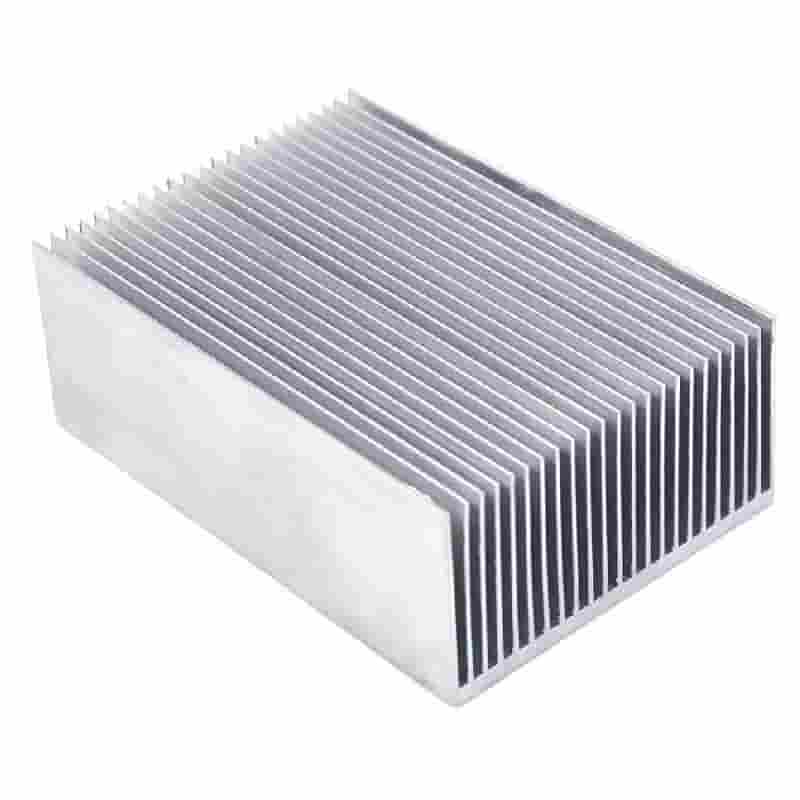
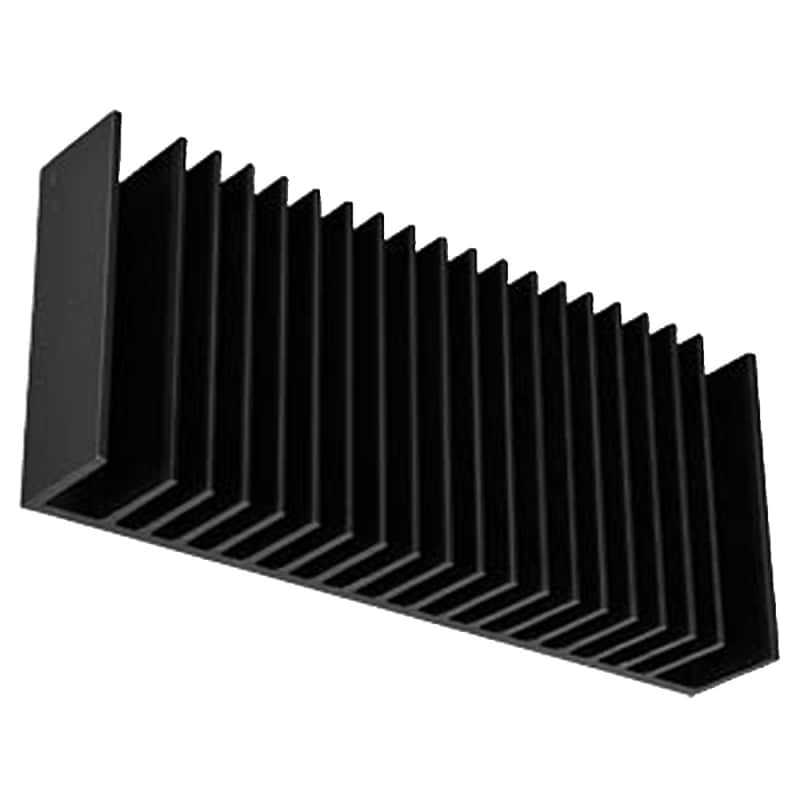
Aluminum extrusion forces heated metal through a custom steel die to create continuous finned profiles. These extrusions are then cut to length and finished on 5-axis CNC machines to add mounting patterns, cable pass-throughs, and flat contact faces. It remains one of the most efficient methods for linear convection cooling.
Die-Cast Aluminum Heat Sinks
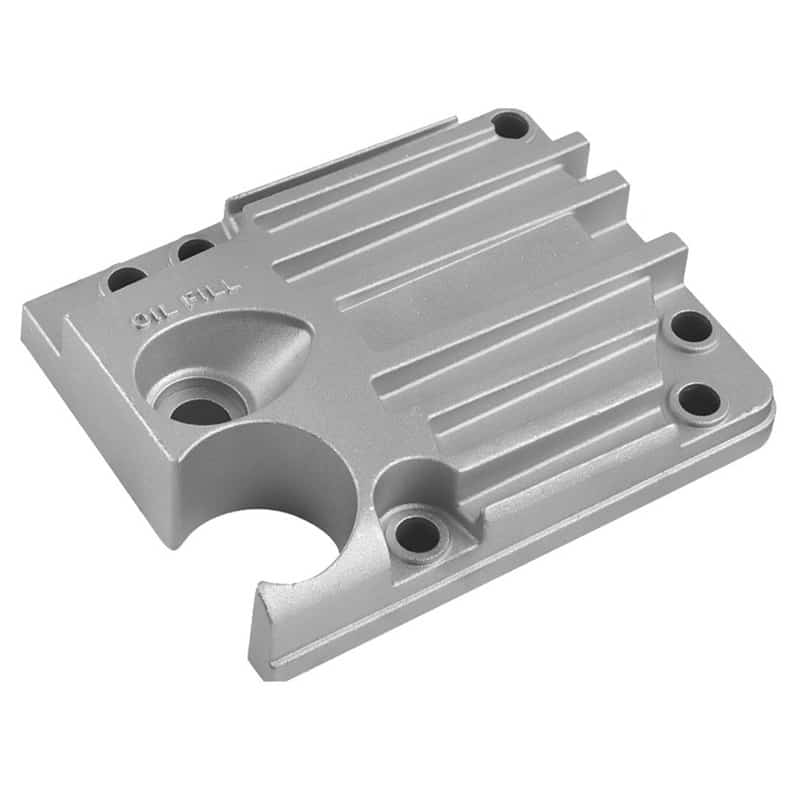
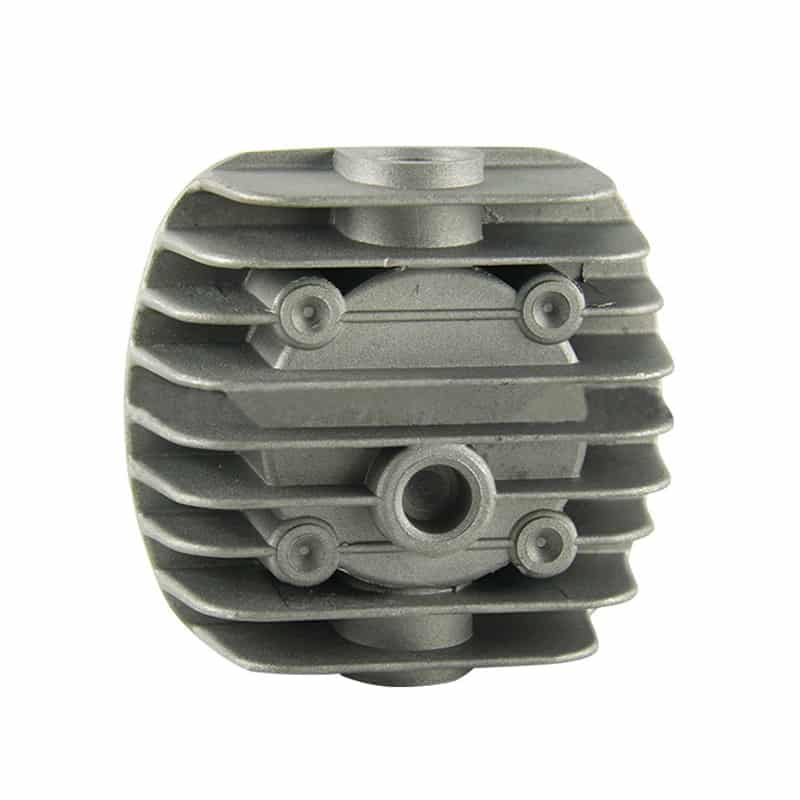
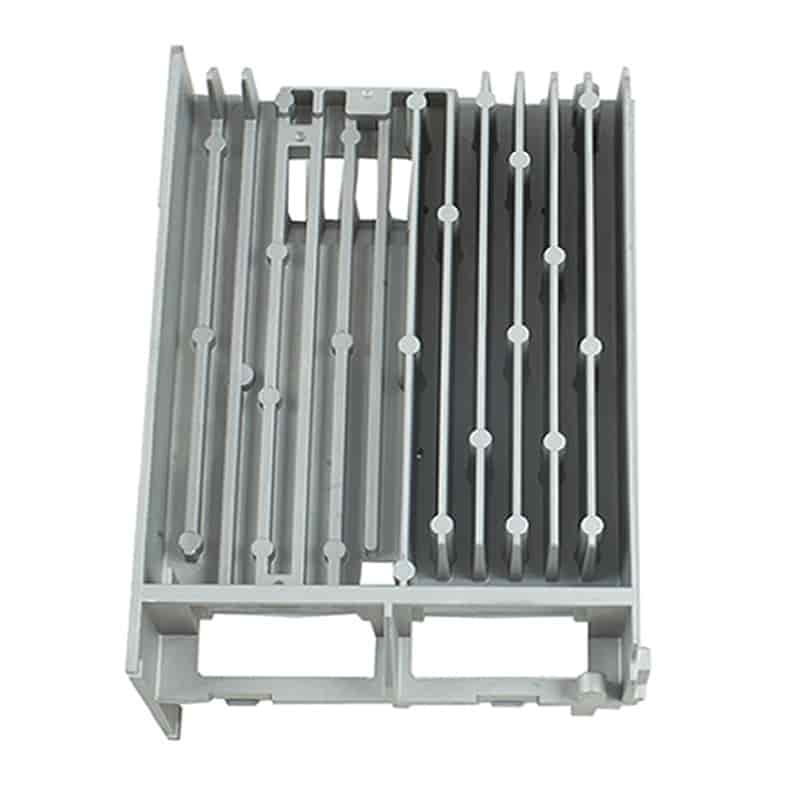
High-pressure die casting forces molten aluminum alloy into precise metal molds. This technique allows complex features such as pin-fin structures, mounting bosses, and internal cavities to be formed simultaneously. Die casting is well suited for high-volume enclosures that combine structural housing with active or passive heat dissipation.
Fully Custom CNC Machined Heat Sinks
For non-standard geometries, short production runs, or aerospace-grade applications, multi-axis CNC machining offers unmatched precision. Machining holds tolerances down to $\pm 0.01\text{ mm}$ and allows engineers to evaluate prototype heat sinks without investing in expensive casting or extrusion tooling.
Manufacturing Advantages of Custom CNC Machining in China
Sourcing non-standard heat sink components from an established manufacturing partner in China combines high-precision engineering with agile supply chain integration.
Turnkey Manufacturing Solutions
From initial raw material selection to complex 5-axis CNC milling, friction stir welding, and surface finishing, managing the entire lifecycle under one roof ensures consistent quality control and reduces total turn-around time.
Rapid Prototyping and Flexible Volumes
Low-volume prototype orders can be machined and delivered in short turnaround windows, enabling rapid iteration cycles before committing to mass production. There are no minimum order quantity barriers for non-standard custom projects.
Precision Quality Assurance
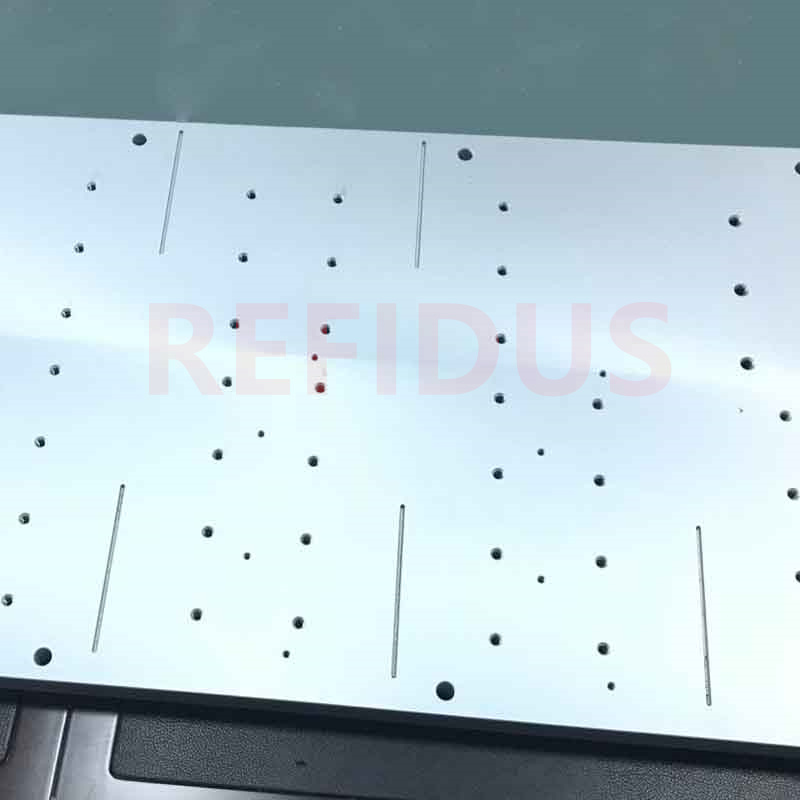
Comprehensive inspection protocols include Coordinate Measuring Machine (CMM) dimensional checks, surface flatness verification down to $0.005\text{ mm}$, thermal performance testing, and pressure testing for liquid-cooled plates.
Advanced Surface Finishes
To optimize thermal radiation and environmental resistance, custom heat sinks can be finished with clear or black anodizing, chromate conversion coatings, electroless nickel plating, thermal spray coatings, or powder painting.