
Custom precision CNC machining stainless steel 17-4PH parts in China
We manufacture high-precision 17-4PH stainless steel components through CNC milling, turning, and multi-axis machining, from one-off prototypes to medium-volume production. With tight-tolerance capability, in-house heat treatment coordination, and full process control, we deliver custom CNC machining stainless steel 17-4PH parts in China that meet the most demanding engineering specifications.
What Is 17-4PH Stainless Steel?
17-4PH, also known as AISI 630 or UNS S17400, is a martensitic precipitation-hardening stainless steel. Its chemistry contains approximately 17% chromium, 4% nickel, 4% copper, and a small addition of niobium (columbium). The copper-rich precipitates formed during aging give the alloy its exceptional strength while retaining good corrosion resistance.
In the H900 condition, 17-4PH reaches a tensile strength of roughly 1310 MPa and a hardness of 38–43 HRC, yet it machines well in the solution-annealed state and stabilizes dimensionally after aging. This combination makes it a preferred material for custom CNC machining stainless steel 17-4PH parts in China across aerospace, oil and gas, marine, medical, and motorsport applications.
Unlike austenitic grades such as 304 or 316, 17-4PH can be heat treated to a range of hardness and toughness levels (H900 through H1150), allowing engineers to tailor the material to the specific load and corrosion environment of each component.
Material at a Glance
- UNS DesignationS17400
- Density7.80 g/cm³
- Melting Range1400–1440 °C
- Tensile (H900)~1310 MPa
- Yield (H900)~1170 MPa
- Hardness (H900)38–43 HRC
- Elongation~10%
- Thermal Conductivity~18 W/m·K
- Max Service Temp~315 °C
Key Properties and Machining Advantages
Four characteristics make 17-4PH especially well suited to precision-machined components operating under stress and in corrosive environments.
High Strength-to-Weight Ratio
Precipitation hardening delivers tensile strength above 1300 MPa in H900 condition, allowing thinner and lighter component designs without sacrificing load capacity. This is particularly valuable for aerospace and motorsport parts where every gram matters.
Corrosion Resistance
With 17% chromium, 17-4PH offers corrosion resistance broadly comparable to grade 304 in many atmospheric and mild chemical environments. It resists rust, oxidation, and mild acid attack, making it suitable for marine, food-processing, and outdoor industrial equipment.
Tunable Heat Treatment Response
From H900 (maximum strength) to H1150 (maximum toughness), the aging temperature lets engineers dial in the exact balance of hardness, impact resistance, and ductility. Parts can also be supplied in Condition A for customer-side hardening after machining.
Machinability and Dimensional Stability
In the solution-annealed state, 17-4PH machines cleanly with good chip formation and moderate tool wear. The low-distortion aging cycle means that tight tolerances held during machining remain stable after hardening, reducing the need for post-heat-treatment finishing.
International Grade Equivalents
17-4PH is known by different designations under national and international standards. All refer to the same precipitation-hardening stainless steel chemistry, and we can supply parts to any of these specifications.
| Region / Standard | Grade Designation | Common Specifications |
|---|---|---|
| United States | AISI 630 / UNS S17400 | ASTM A564, ASTM A693, AMS 5643, AMS 5622 |
| European Union / Germany | EN 1.4542 / X5CrNiCuNb16-4 | Wst. 1.4542, EN 10088-3 |
| Japan | JIS SUS630 | JIS G4303, JIS G4304 |
| China | GB/T 0Cr17Ni4Cu4Nb | GB/T 1220, also designated 05Cr17Ni4Cu4Nb |
| United Kingdom | BS 17-4PH | BS 970 Part 4 |
All listed designations correspond to the same 17Cr–4Ni–4Cu precipitation-hardening alloy. Chemical composition and mechanical property requirements are harmonized across standards.
CNC Machining Capabilities
Our shop floor covers the full range of subtractive and finishing processes needed for custom CNC machining stainless steel 17-4PH parts in China, from roughing to final inspection.
3-Axis & 5-Axis CNC Milling
Vertical and horizontal machining centers with 5-axis simultaneous capability produce complex geometries, undercuts, and curved surfaces in a single setup.
CNC Turning & Lathe Work
CNC lathes with live tooling and sub-spindles handle shafts, sleeves, bushings, and rotary parts with concentricity down to 0.005 mm.
Swiss-Type Screw Machining
Sliding-head lathes produce small, slender precision components with high length-to-diameter ratios, ideal for medical and instrumentation parts.
Wire EDM & Sinker EDM
Electrical discharge machining cuts hardened 17-4PH with zero cutting force, producing sharp internal corners, narrow slots, and complex die profiles.
Surface Grinding & Lapping
Precision grinding and lapping achieve flatness below 0.002 mm and surface finishes as fine as Ra 0.2 μm for sealing and mating surfaces.
Deburring, Polishing & Passivation
Manual and vibratory deburring, electropolishing, and citric/nitric passivation remove contamination and restore the passive chromium oxide layer.
Typical Applications and Industries
The strength, corrosion resistance, and hardenability of 17-4PH make it a workhorse across these demanding sectors.
Aerospace & Defense
Structural fittings, actuator components, landing gear parts, and missile hardware requiring high strength and fatigue resistance.
Oil & Gas
Valve stems, seats, downhole tools, and subsea components exposed to sour gas, seawater, and high-pressure well environments.
Marine & Offshore
Propeller shafts, pump shafts, fasteners, and rigging hardware that must resist saltwater corrosion and cyclic loading.
Medical & Dental
Surgical instruments, orthopedic device components, and dental handpiece parts requiring sterilization compatibility and high strength.
Food Processing & Pharmaceutical
Pump impellers, mixer shafts, valve bodies, and conveyor components needing corrosion resistance and cleanability in washdown environments.
Motorsports & Racing
Valve retainers, injector components, rocker arms, and transmission parts where high strength at elevated temperature is critical.
Tolerances, Surface Finish and Heat Treatment
We hold tight dimensional control and can deliver parts in any standard precipitation-hardening condition, or solution-annealed for your in-house hardening.
Tolerances & Surface Finish
| Parameter | Typical Capability |
|---|---|
| General linear tolerance | ±0.01 mm |
| Precision feature tolerance | ±0.005 mm |
| Bore tolerance (H7) | ±0.005 mm |
| Thread tolerance | 6H / 6g (metric thread standard) |
| Standard surface finish | Ra 0.8 μm |
| Ground / lapped finish | Ra 0.2 μm |
| Electropolished finish | Ra 0.1 μm or better |
| Concentricity | 0.005 mm TIR |
Heat Treatment Conditions
| Condition | Aging Temp | Approx. Hardness |
|---|---|---|
| Condition A | Solution annealed only | ~30 HRC (machinable) |
| H900 | 480 °C / 900 °F | 38–43 HRC (max strength) |
| H1025 | 550 °C / 1025 °F | 35–40 HRC |
| H1100 | 595 °C / 1100 °F | 31–36 HRC |
| H1150 | 620 °C / 1150 °F | 28–33 HRC (max toughness) |
Parts are typically machined in Condition A, then age-hardened to the specified condition. The low-distortion aging cycle preserves machined tolerances.
Related Custom Machined Products
A selection of component types we regularly produce in 17-4PH and other engineering alloys.
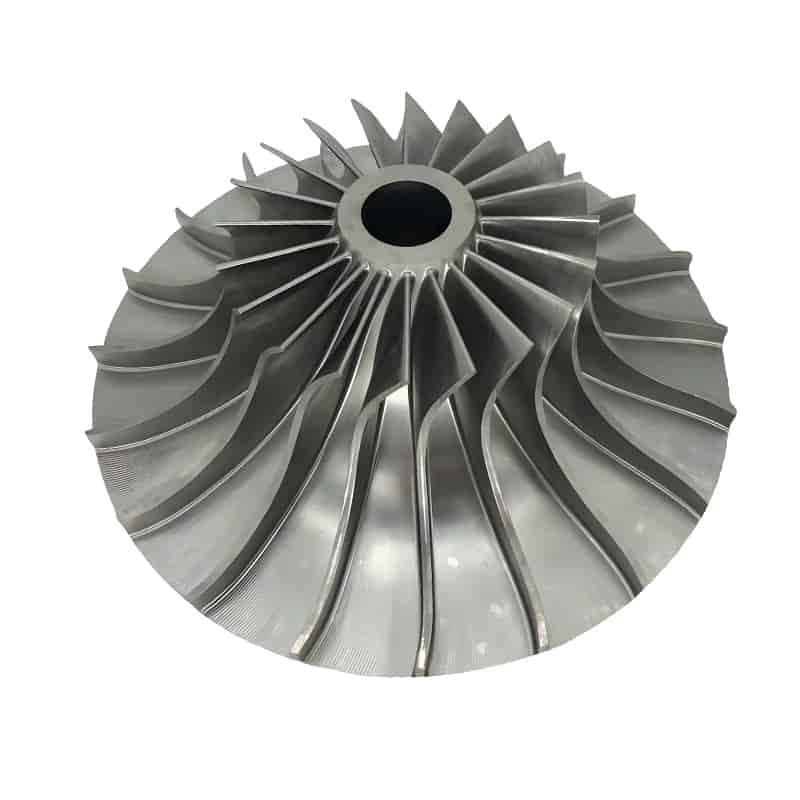
Impeller
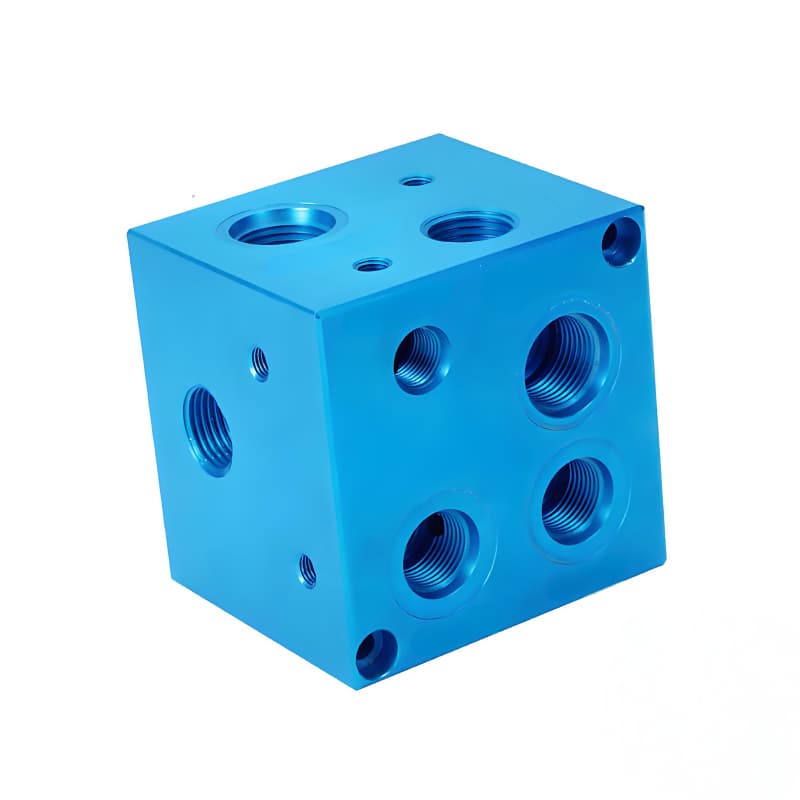
Hydraulic Manifold
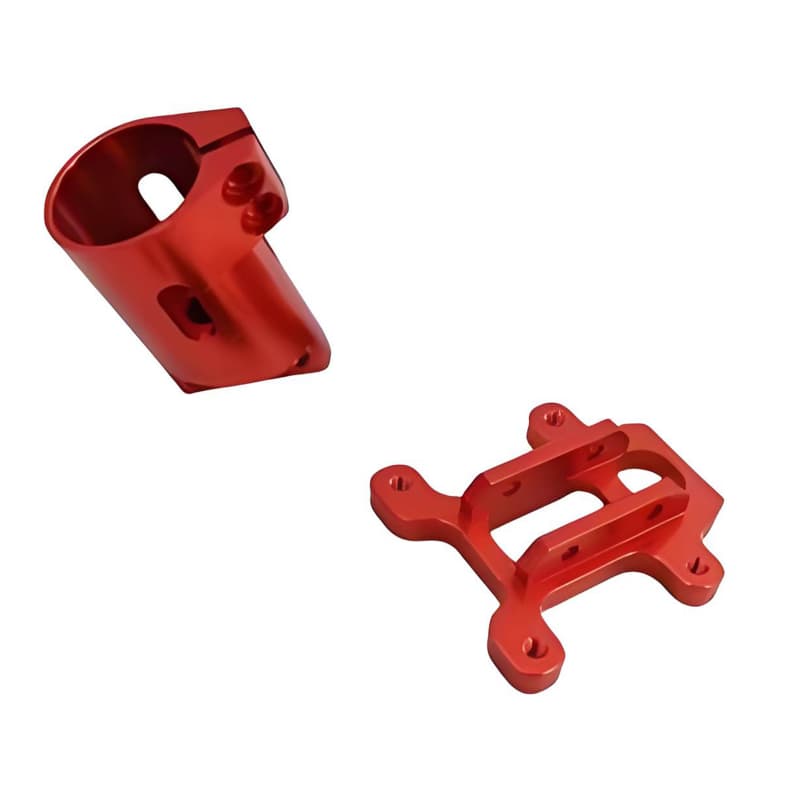
Housing
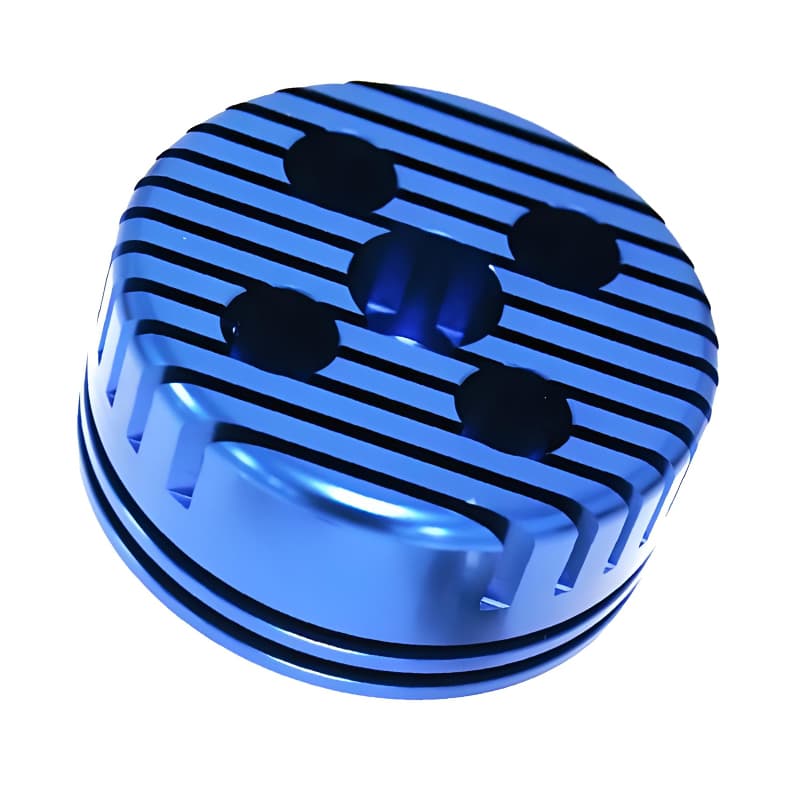
Machinery Part
Why Source 17-4PH Parts from China
Combining advanced CNC equipment, experienced machinists, and competitive material sourcing, we deliver precision without the premium price tag.
Cost-Effective Precision Manufacturing
Lower labor and overhead costs, combined with local access to 17-4PH bar stock and forgings, translate into competitive pricing without compromising dimensional accuracy or surface quality.
Scalable Production Volume
From a single prototype for fit-check testing to batches of several thousand pieces, our production planning scales seamlessly. Custom CNC machining stainless steel 17-4PH parts in China are not limited to large orders.
Short Lead Times & Flexible Scheduling
In-house material stock and a multi-machine shop floor allow rapid response. Standard prototypes ship within two to three weeks, and production runs are scheduled to match your project timeline.
English-Friendly Engineering Communication
Our engineering team reviews drawings in STEP, IGES, XT, DWG, DXF, and PDF formats, and communicates technical questions and DFM feedback clearly in English to avoid costly misunderstandings.
Frequently Asked Questions
Common technical questions about custom CNC machining stainless steel 17-4PH parts in China.
What is 17-4PH stainless steel?
17-4PH is a martensitic precipitation-hardening stainless steel containing approximately 17% chromium, 4% nickel, and 4% copper, with niobium as a stabilizer. It is supplied in the solution-annealed condition (Condition A) and hardened by a low-temperature aging process that forms copper-rich precipitates, yielding high strength with good corrosion resistance.
What tolerances can you hold on 17-4PH parts?
General tolerances of ±0.01 mm are standard, and precision features such as bores and sealing diameters can be held to ±0.005 mm. Concentricity of 0.005 mm TIR and surface finishes down to Ra 0.2 μm (or Ra 0.1 μm with electropolishing) are achievable. Tighter requirements are reviewed on a per-print basis.
Can you supply parts heat-treated to a specific condition?
Yes. Parts can be supplied in Condition A (solution-annealed, ready for your in-house hardening) or fully age-hardened to H900, H1025, H1100, or H1150. We coordinate heat treatment with approved local furnaces and can provide hardness test reports per international metric thread standards and material specifications.
What file formats do you accept for quotes?
We accept STEP (.stp/.step), IGES (.igs), XT (.x_t), DWG, DXF, and PDF drawings. Including the material specification, required condition, tolerance notes, and surface finish requirements on the drawing helps us provide an accurate quote and lead time quickly.