
Custom Precision CNC Machining Aluminum 7075 Parts in China
Aerospace-grade strength, tight tolerances and dependable repeatability. Custom CNC machining aluminum 7075 parts in China gives OEM engineers a single workshop for precision-milled, turned and finished 7075 components — from one-off prototypes to full production runs.
Aluminum 7075 for Custom Precision CNC Parts
Understand the alloy, its numbers and how it is machined — the essentials before you send a drawing for custom precision parts.
Aluminum 7075 is an aluminium–zinc–magnesium–copper alloy developed for aerospace structures, where every gram of weight has to earn its place under load. In the T6 temper it reaches a typical ultimate tensile strength of around 572 MPa — close to many low-carbon steels — at roughly one third of their density. That combination is why it stays the default choice for components that must remain light and remain strong.
Machined in the T6 or T651 temper, 7075 keeps good dimensional stability, so thin-walled features and large plates hold their geometry through cutting and after the clamps come off. It also responds well to anodizing, which adds a protective oxide layer and a clean, uniform surface for finished goods.
- Alloy chemistry and available tempers
- Key mechanical properties at a glance
- Grade names across national standards
- CNC processes, tolerances and finishes
- Applications and design-for-machining tips
Why Choose Aluminum 7075 for Custom Parts
Four reasons engineers specify 7075 for custom CNC machining aluminum 7075 parts in China — and keep coming back for production batches.
High Strength-to-Weight Ratio
At about 2.81 g/cm³, 7075-T6 reaches a typical ultimate tensile strength of 572 MPa, giving designers more strength per gram than most other aluminium alloys.
Excellent Fatigue Resistance
Its fine, controlled microstructure resists repeated loading, which is why 7075 is a long-standing choice for cyclic-loaded aircraft and motorsport components.
Good Machinability in the Workshop
In T6 and T651 tempers the alloy machines cleanly on modern CNC spindles; carbide tooling and proper chip control deliver stable tolerances part after part.
Compatible with Anodizing and Coatings
A natural anodized film bonds well to the surface, improving corrosion protection and wear resistance for parts that live outdoors or in demanding environments.
Aluminum 7075 at a Glance — Key Properties
Typical values for the T6 temper used in CNC machining. Exact figures depend on temper, section thickness and supplier lot.
Density
2.81 g/cm³
Ultimate Tensile Strength
≈ 572 MPa (83,000 psi), T6
Yield Strength (0.2% Offset)
≈ 503 MPa (73,000 psi), T6
Elongation at Break
≈ 11% in thin sections, T6
Brinell Hardness
≈ 150 HB
Modulus of Elasticity
≈ 71.7 GPa
Values shown are typical reference data published for 7075-T6. Always confirm the exact material specification and temper with the supplier before production.
Aluminum 7075 Grade Names Across National Standards
The same alloy travels under different names around the world. If your drawing calls out custom CNC machining aluminum 7075 parts in China for an overseas customer, match the designation below to the standard on your print.
| National Standard | Grade Designation | Notes |
|---|---|---|
| China — GB/T 3190 | 7075 | Standard designation used on Chinese drawings and material orders. |
| United States — AA / UNS | 7075 / A97075 | Widely used reference grade; common in ASTM B209 plate and sheet specifications. |
| Germany — DIN 1725 | AlZnMgCu1.5 / 3.4365 | German chemical name AlZnMgCu1.5 with material number (Werkstoffnummer) 3.4365. |
| United Kingdom — BS | 7075 / 2L95 | Current BS 7075; earlier British references also used L95 / 2L95. |
| France — NF (AFNOR) | A-Z5GU | French alloy designation A-Z5GU per the NF A02-120 nomenclature. |
| Japan — JIS | A7075 | JIS H4000 / H4080 series for plate, sheet and strip products. |
| Russia — GOST | B95 (V95) | GOST 4785 designation written as «В95», transliterated B95 or V95. |
| International — ISO / EN | AlZn5.5MgCu / EN AW-7075 | ISO 209 name AlZn5.5MgCu; European equivalent EN AW-7075 (EN AW-AlZn5.5MgCu). |
Compositions are closely similar, but impurity limits and testing methods can differ slightly between standards. Confirm the exact grade, temper and reference standard before quoting or producing.
Custom CNC Machining Capabilities for 7075 Parts
A full machining cell for custom CNC machining aluminum 7075 parts in China — milling, turning and finishing under one roof, with in-process checking on every batch.
Precision Milling
3-axis and 4-axis milling for brackets, housings, plates and structural shapes, held to tight positional tolerances across thin sections.
Precision Turning
CNC turning and mill-turn operations for shafts, spindles, inserts and cylindrical parts with strong roundness and concentricity.
Multi-Axis Complex Machining
5-axis setups cut compound angles, contoured faces and undercuts in a single clamping, reducing setups and holding accuracy.
Secondary Operations
Threading, tapping, drilling, reaming, counterboring and deburring finish the part completely before it leaves the workshop.
Tolerances and Surface Finishes That Match the Design
Realistic numbers that keep cost down and function high. Tell us what the part does, and the workshop holds the tolerance it actually needs.
Typical Machining Tolerances
- Linear dimensions: ±0.01 mm standard, ±0.005 mm on request
- Hole diameters: H7 / H6 where the drawing specifies
- True position: ±0.02 mm on critical features
- Flatness and parallelism: 0.02 mm on machined faces
Common Surface Finishes
- As-machined: Ra 0.8–1.6 μm, ready for most functional uses
- Fine finish: Ra 0.4 μm for sealing or bearing surfaces
- Clear or black anodize: corrosion protection and a uniform look
- Bead blasting before anodize: a smooth, matte, consistent texture
Where Custom 7075 Parts Are Used
From airborne structures to shop-floor tooling, custom CNC machining aluminum 7075 parts in China serves industries that cannot afford to trade strength for weight.
Aerospace & Aviation
Brackets, fittings, structural plates and UAV frames that stay light under high and repeated loads.
Automotive & Motorsport
Suspension mounts, brackets, housings and drivetrain parts for performance and racing builds.
Bicycles & Lightweight Sports
Handlebar stems, cranks, frame lugs and competition parts where strength-to-weight decides the result.
Robotics & Automation
Arms, end-effectors, joint housings and fixture plates that stay stiff without adding moving mass.
Mold & Tooling
Jig plates, fixture blocks, mold inserts and checking fixtures that hold geometry through heavy service.
Marine & Industrial Equipment
Corrosion-protected fittings and structural hardware for demanding outdoor and industrial duty.
Design for Machinability — Four Tips That Save Time and Money
Small design choices decide machining cost. Apply these rules and the quote for your 7075 CNC machining project comes down with the cycle time.
Mind the Minimum Wall Thickness
Keep walls above 0.8–1.0 mm where possible, so thin sections stay rigid during cutting and resist vibration.
Specify Only the Tolerance You Need
Call out ±0.05 mm where that is enough. Extra-tight tolerances add machining and inspection time; match the tolerance to the function.
Design Threads for the Tool
Use standard thread sizes and provide enough depth and clearance for taps and thread mills to reach without short, fragile tooling.
Let the Tool Breathe
Add generous radii in internal corners and leave paths for coolant and chips; end mills cut faster and leave a better finish.
Custom Machined Products
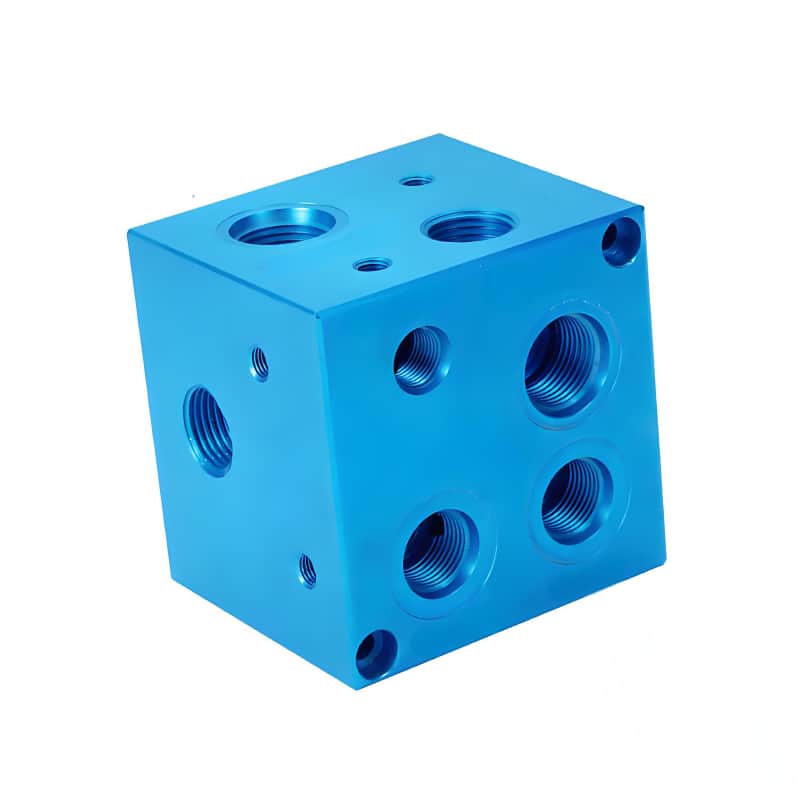
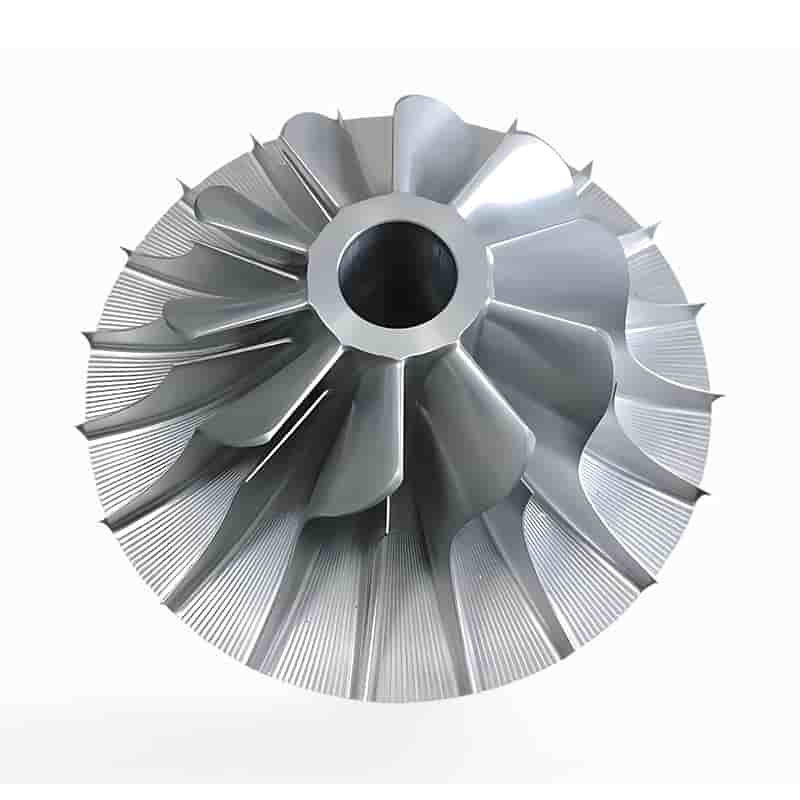
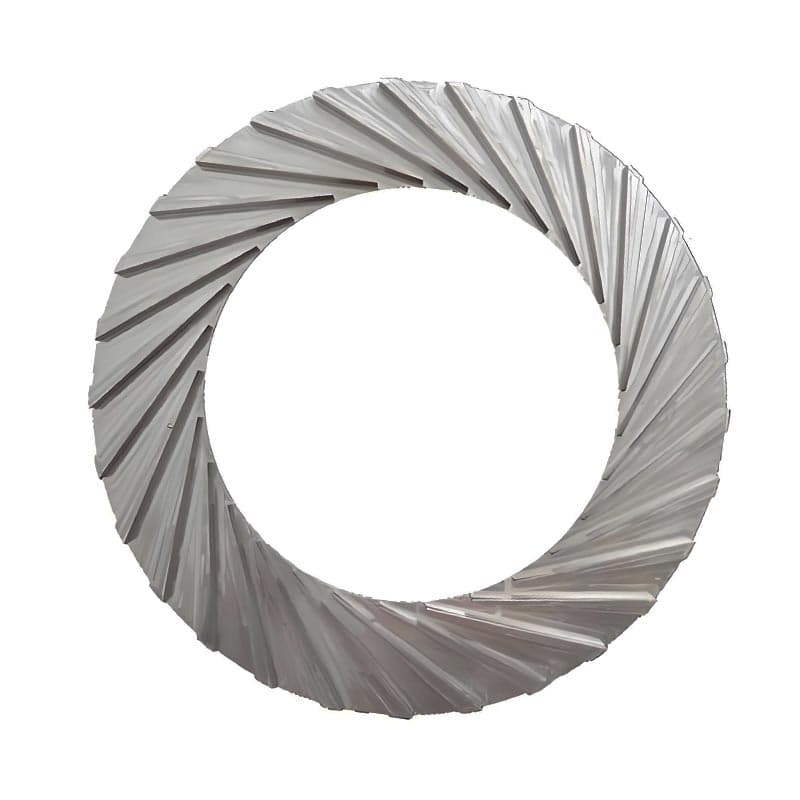
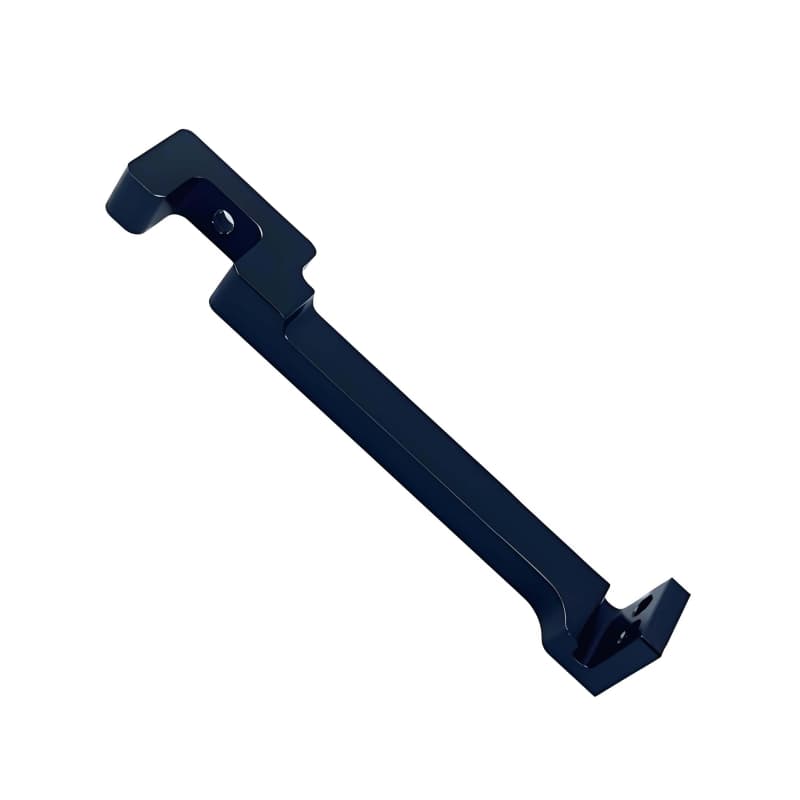
A selection of parts made to drawing — custom CNC machining aluminum 7075 parts in China for hydraulic, compressor and precision applications.
Start Your Custom 7075 Machining Project
From a single prototype to full production batches, custom CNC machining aluminum 7075 parts in China delivers an aerospace-grade alloy, tight tolerances and dependable delivery in one dedicated workshop. Share your drawings with material, temper and finish notes, and the engineering team will turn the part into a production-ready plan.